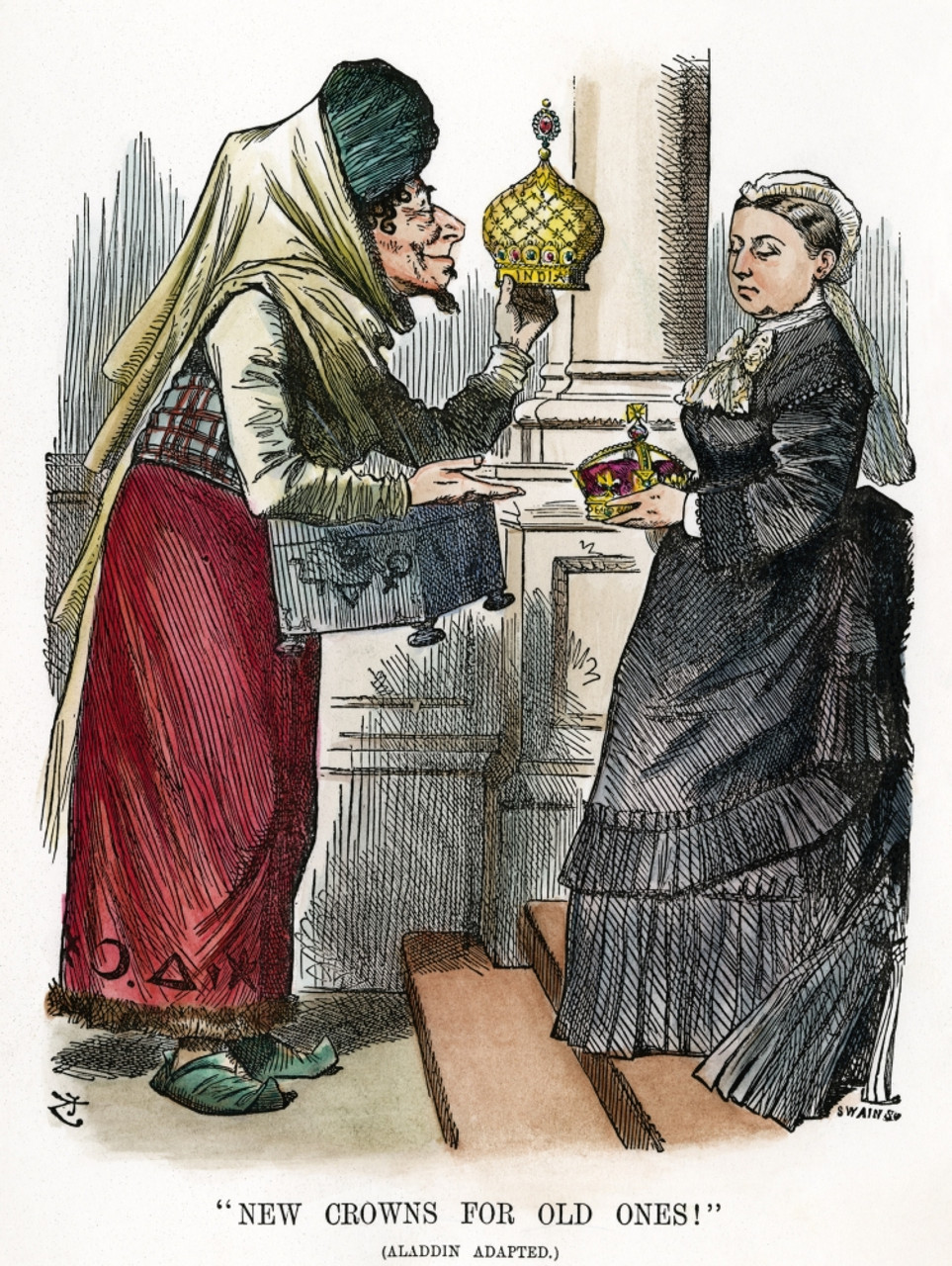
Which slogan best reflects the point of view of Cecil Rhodes as shown in this
cartoon?
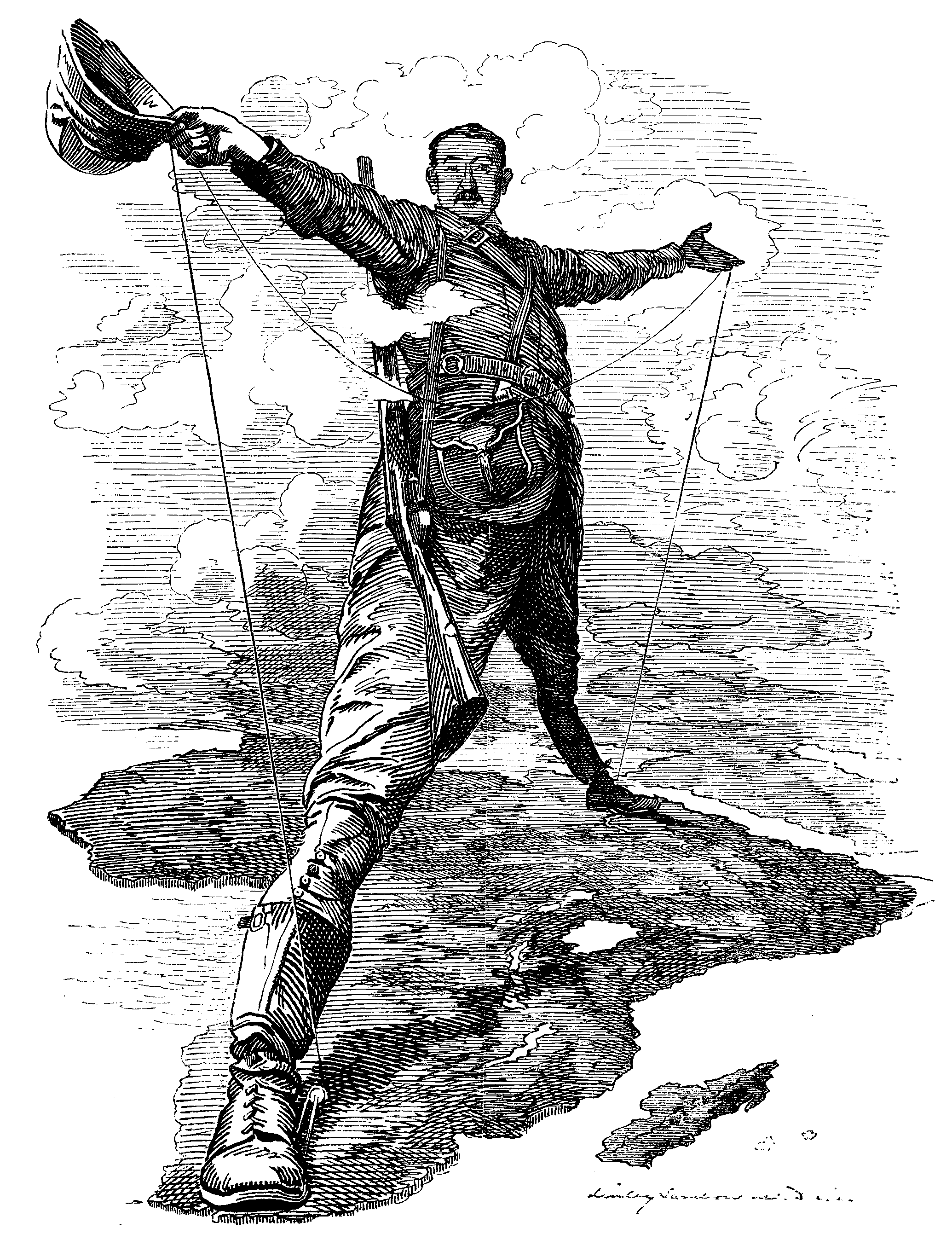
Which slogan best reflects the point of view of Cecil Rhodes as shown in this cartoon?
Which area of the world was most directly affected by the decisions made at the Berlin
Conference?
Which statement best expresses the Western (European) perspective regarding Rudyard Kipling’s “white man’s burden”?
One result of the Opium War was that China
Which slogan best reflects the point of view of Cecil Rhodes as shown in this cartoon?
. . . “From the beginning,” says Marquis Ito, “we
realized fully how necessary it was that the
Japanese people should not only adopt Western
methods, but should also speedily become
competent to do without the aid of foreign
instruction and supervision. In the early days we
brought many foreigners to Japan to help to
introduce modern methods, but we always did it
in such a way as to enable (allow) the Japanese students
to take their rightful place in the nation after they
had been educated.” . . .
— Alfred Stead, Great Japan: A Study of National
Efficiency, John Lane Co., 1906
Which occurrence in Japanese history is described in the passage?
. . . “From the beginning,” says Marquis Ito, “we
realized fully how necessary it was that the
Japanese people should not only adopt Western
methods, but should also speedily become
competent to do without the aid of foreign
instruction and supervision. In the early days we
brought many foreigners to Japan to help to
introduce modern methods, but we always did it
in such a way as to enable (allow) the Japanese students
to take their rightful place in the nation after they
had been educated.” . . .
— Alfred Stead, Great Japan: A Study of National
Efficiency, John Lane Co., 1906
The author of the passage suggests that Japan
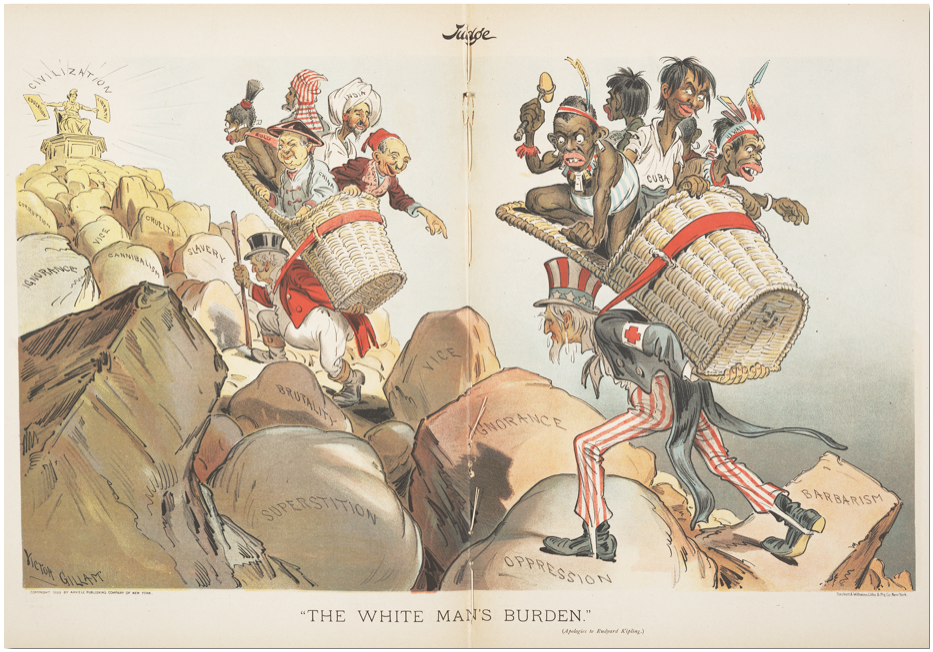
This political cartoon best reflects the idea of
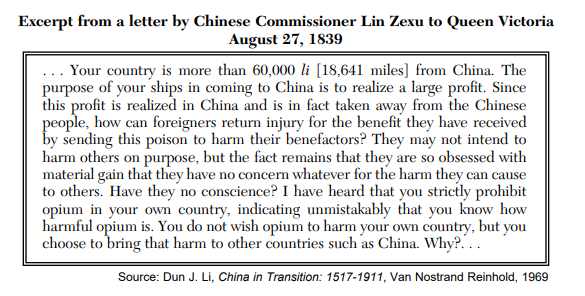
What was Lin Zexu’s purpose for writing this letter to Queen Victoria?
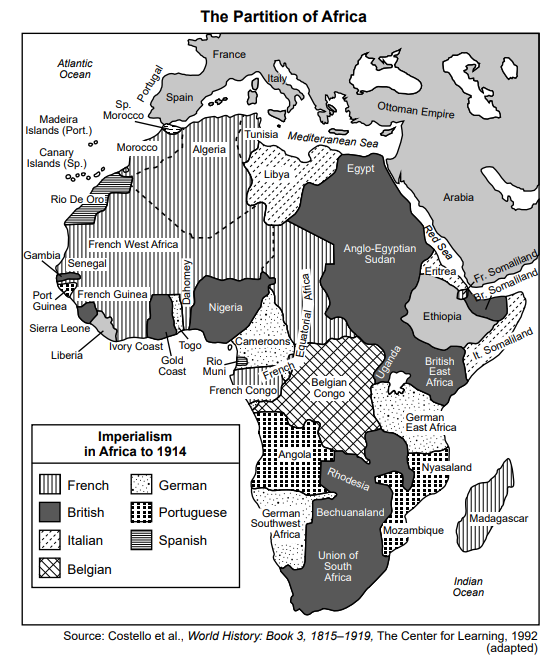
What was a result of the political situation shown on this map?
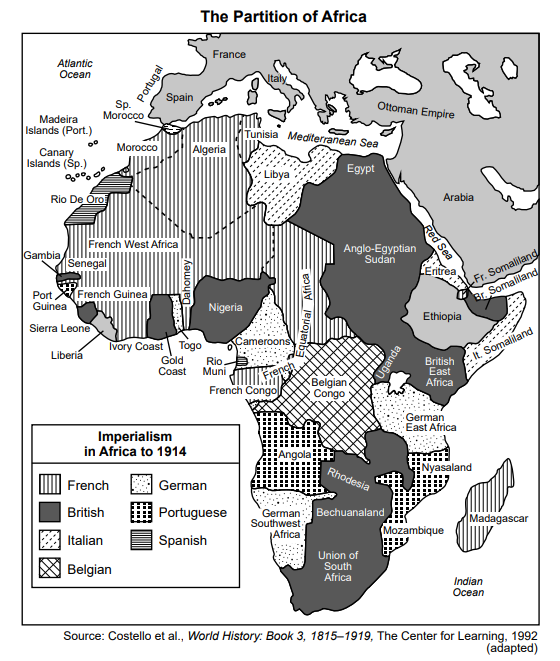
Which African state organized the most successful resistance movement to the European actions shown on this map?
Base your answer on the passage below and on your knowledge of social studies.
“Let it be admitted at the outset that European brains, capital, and energy have … not been, and never will be, expended in developing the resources of Africa from motives of pure philanthropy; that Europe is in Africa for the mutual benefit of her own industrial classes, and of the native races in their progress to a higher plane; that the benefit can be made reciprocal, and that it is the aim and desire of civilized administration to fulfill this dual mandate. By railways and roads, by reclamation of swamps and irrigation of deserts, and by a system of fair trade and competition, we have added to the prosperity and wealth of these lands, and have checked famine and disease. We have put an end to the awful misery of the slave trade and inter-tribal war, to human sacrifice and the ordeals of the witch-doctor. Where these things survive they are severely suppressed. We are endeavoring to teach the native races to conduct their own affairs with justice and humanity, and to educate them alike in letters and in industry.”Lord Lugard, The Dual Mandate in British Tropical Africa, 1922
According to Lord Lugard, Europeans have achieved all of the following in Africa except (not)
Base your answer on the passage below and on your knowledge of social studies.
The period of imperialism has witnessed many wars. Most of these wars have been caused by attacks of white races upon so-called “lower races.” They have resulted in the taking of territory by force. . . . Their chief work is to organize labor for their support. In the typical colony, the most fertile lands and the mineral resources are owned by white foreigners. These holdings are worked by natives under their direction. The foreigners take wealth out of the country. All the hard work is done by natives.
-adapted from Imperialism by J.A. Hobson, a British scholar.
A student has been asked to find a source that presents a negative view of imperialism in Africa. Would this excerpt from J.A. Hobson meet this requirement?
"The railroads facilitated, linked, and coordinated a wide variety of socioeconomic processes and cooperated with other large-scale transportation and communication systems. For example, the railroads enabled national markets with converging prices for food grains which reduced the gap between prices throughout India; the same railroads made it possible for peasant villagers to undertake quick pilgrimages (within a few days or less) during their brief respites [relief] from the demands of agriculture. The hard backbone of British colonial rule in India, the British soldier and his weaponry, could be quartered in fewer places in the knowledge that the railroads could transport troops rapidly to trouble spots. The publications of what became the outpourings of many presses owned by Indians and printed in Indian languages and in English found profitable markets. The railroads, synergistically [mutually] cooperating with the post office, facilitated the inexpensive, bulk shipments of books, magazines, and newspapers…"
Source: Ian J. Kerr, Engines of Change: The Railroads That Made India, Praeger
Which early 19th century invention enabled the transformation described in the passage?
Base your answer to the question on the map below and on your knowledge of social studies.
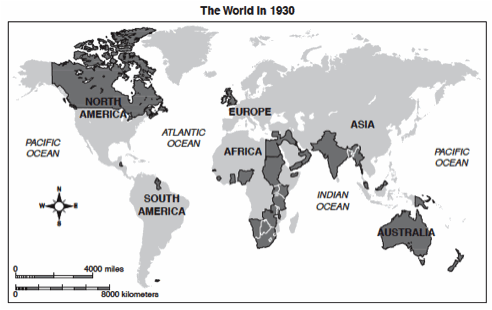
What do the dark-gray areas on this map represent?
Base your answer to the question on the cartoon below and on your knowledge of social studies.
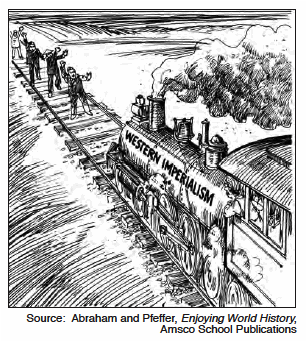
This cartoon suggests that political power is often acquired through
During the 1840s, China signed “unequal treaties” with Western nations mainly because
Base your answer to the question on the time line below and your knowledge of social studies.
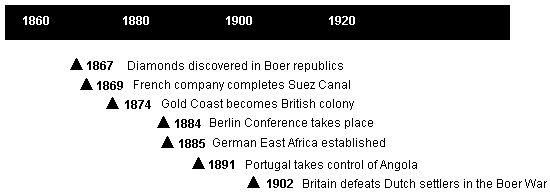
Which would be the best title for this time line?
Which policy is most directly associated with the terms spheres of influence, extraterritoriality, and protectorate?
What country is represented in this cartoon?
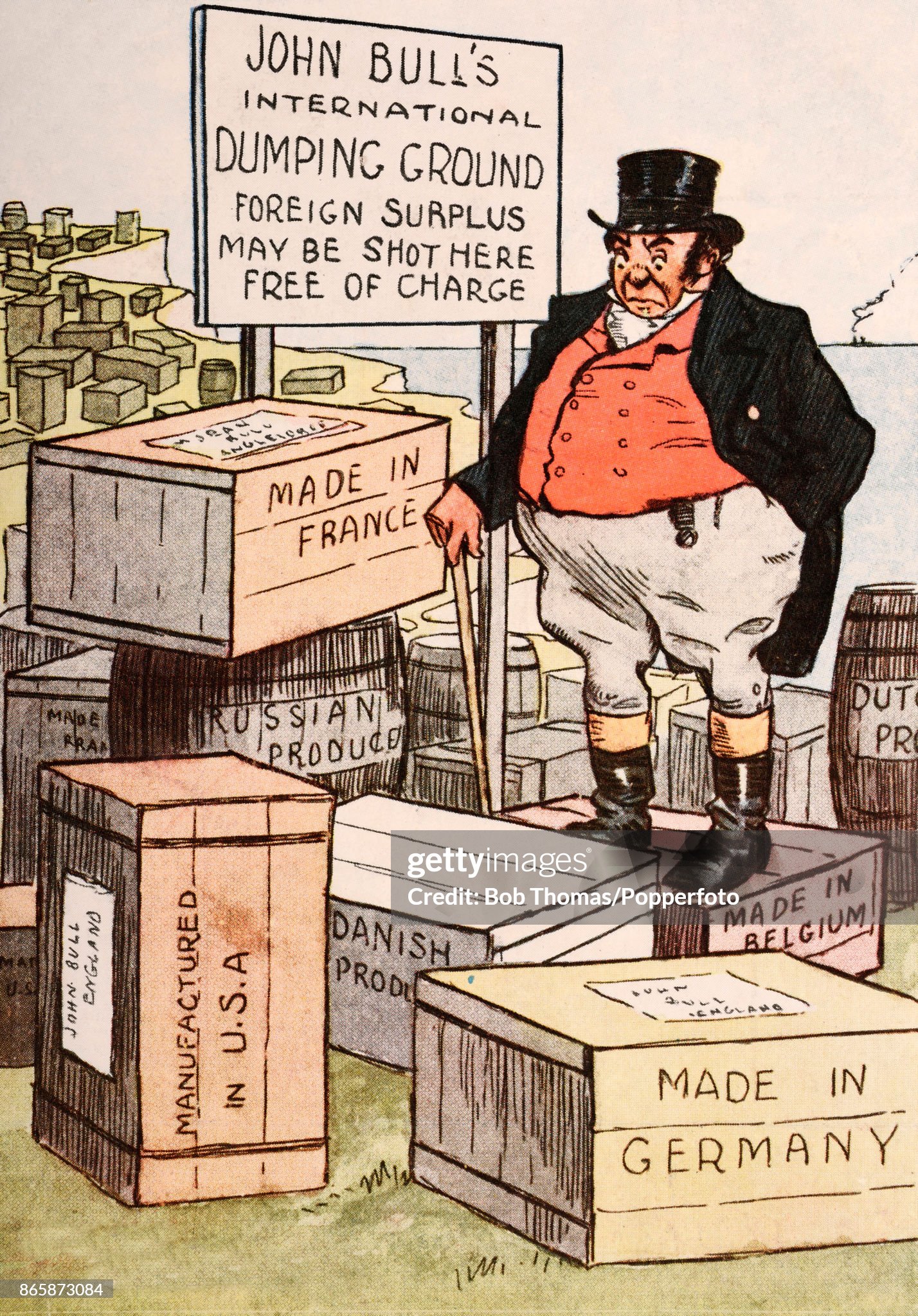
What country is represented in this cartoon?
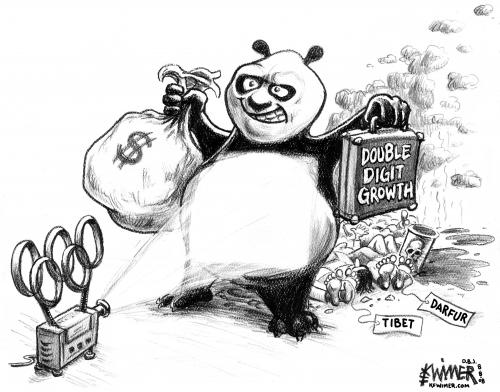
What country is represented in this cartoon?
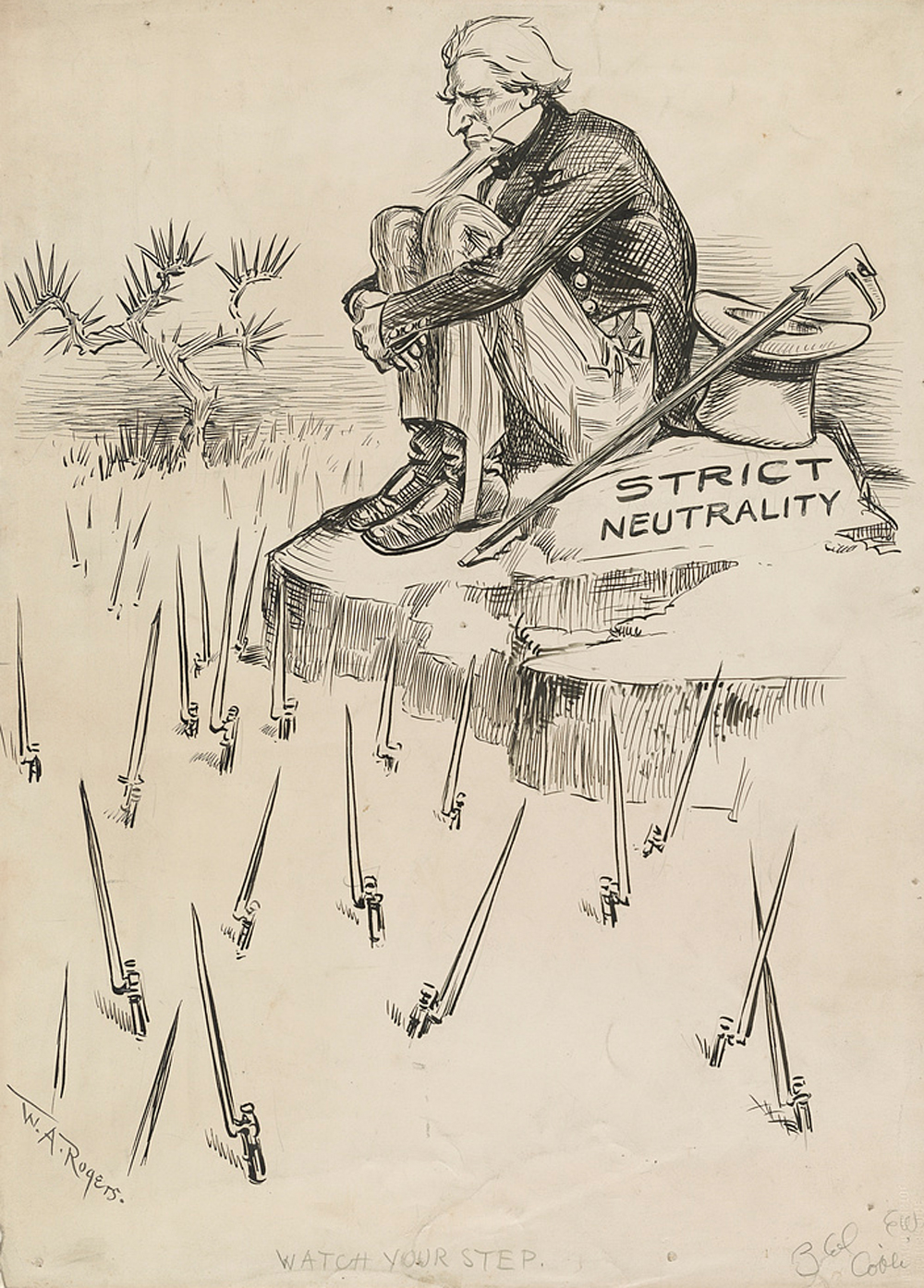
What country is represented as a rooster in this cartoon?
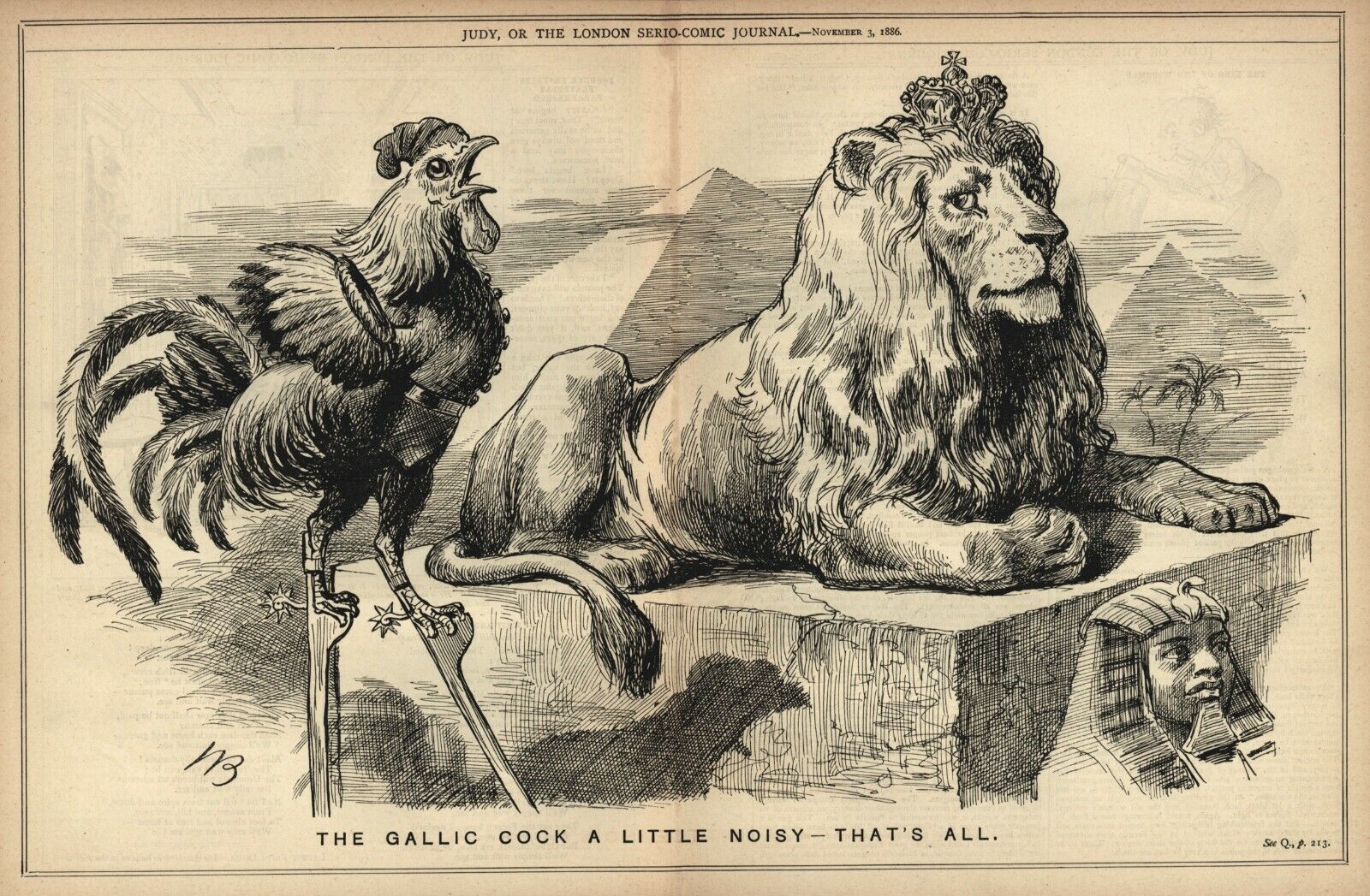
What country is represented as a lion in this cartoon?
What country is represented as a bear in this cartoon?
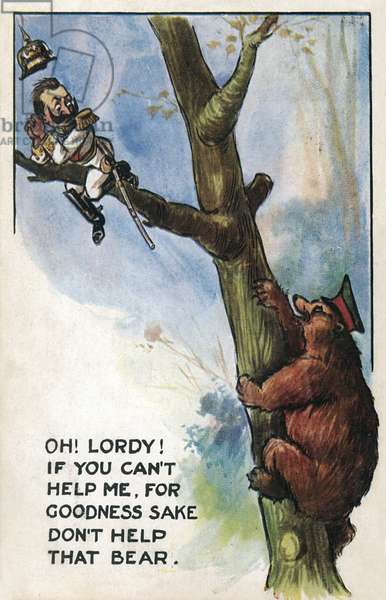
What country is represented as the man in the tree in this cartoon?
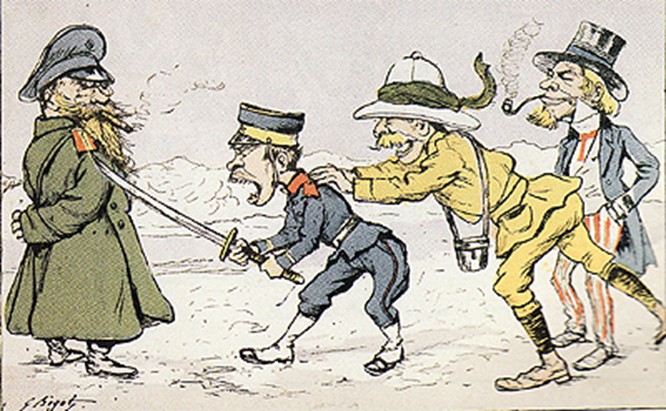
What imperial power is represented with a sword in this cartoon?
What country is being depicted on it's knees in this cartoon?
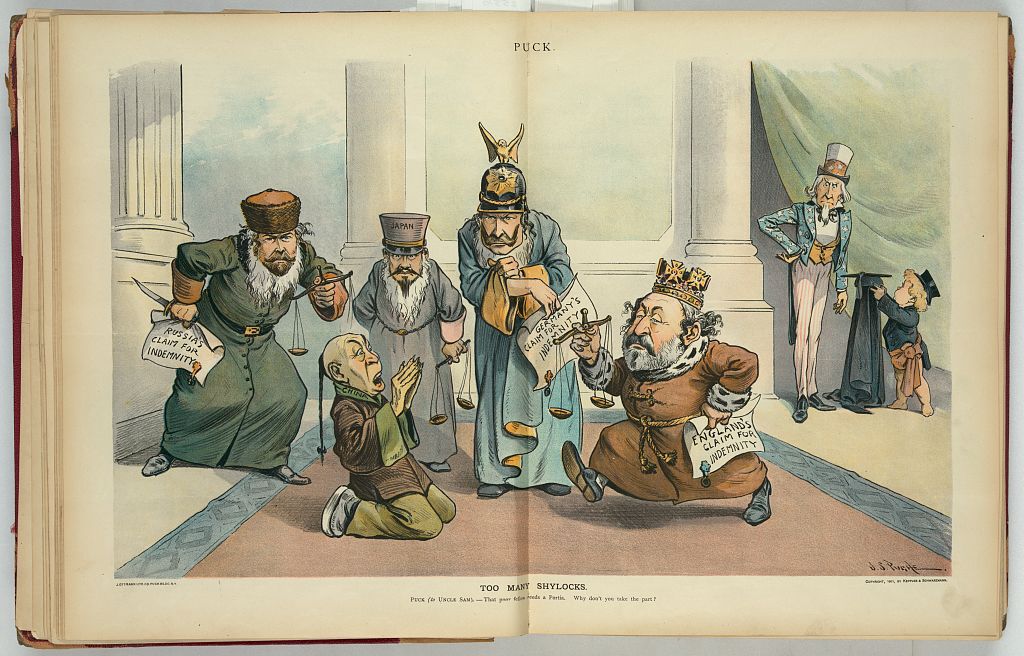
What country is being depicted in this cartoon?
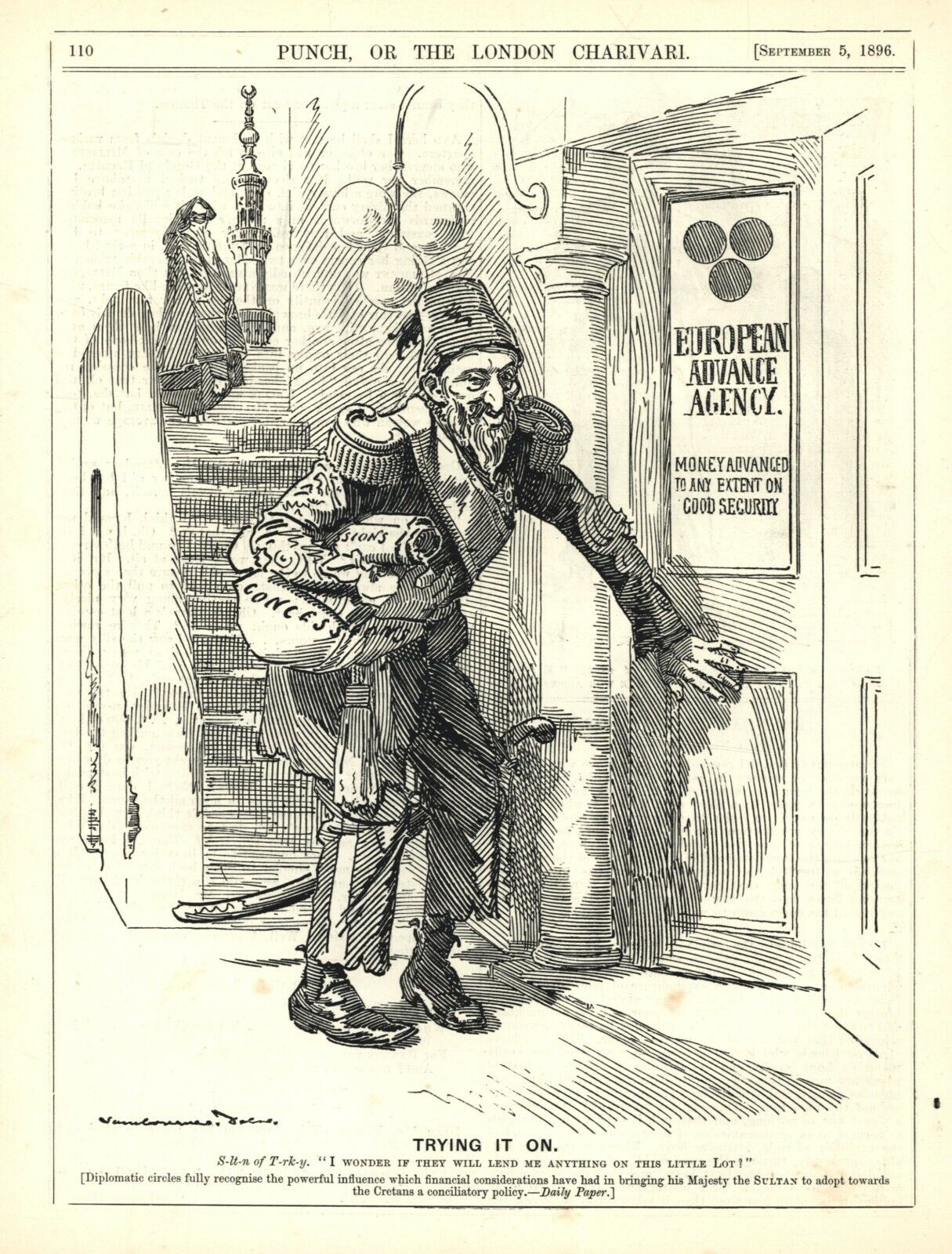
What European ruler is depicted in this cartoon?
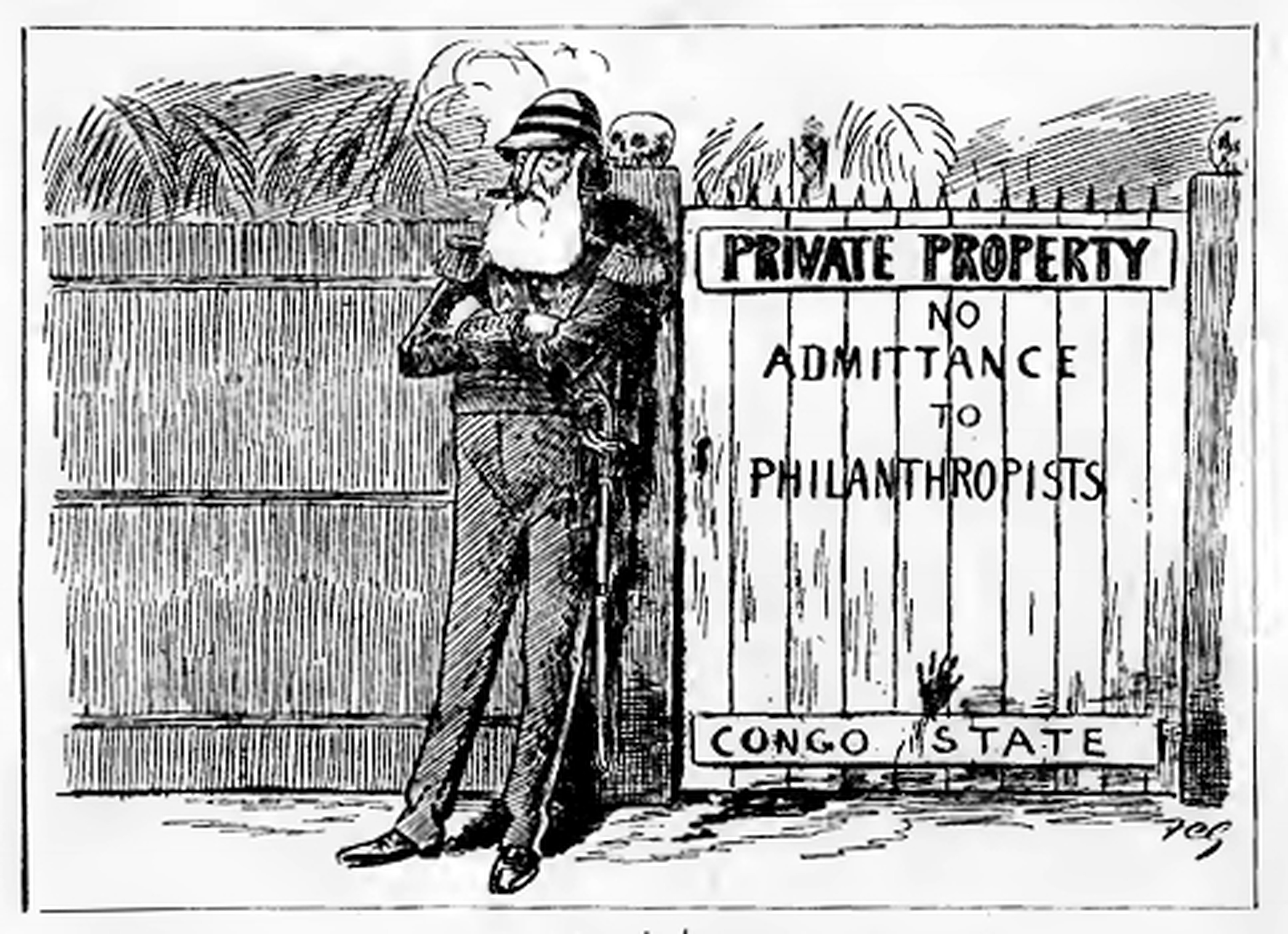
What European ruler is depicted in this cartoon?