GOV: Unit 1 Lesson 1
star
star
star
star
star
Last updated over 5 years ago
9 Nsɛmmisa
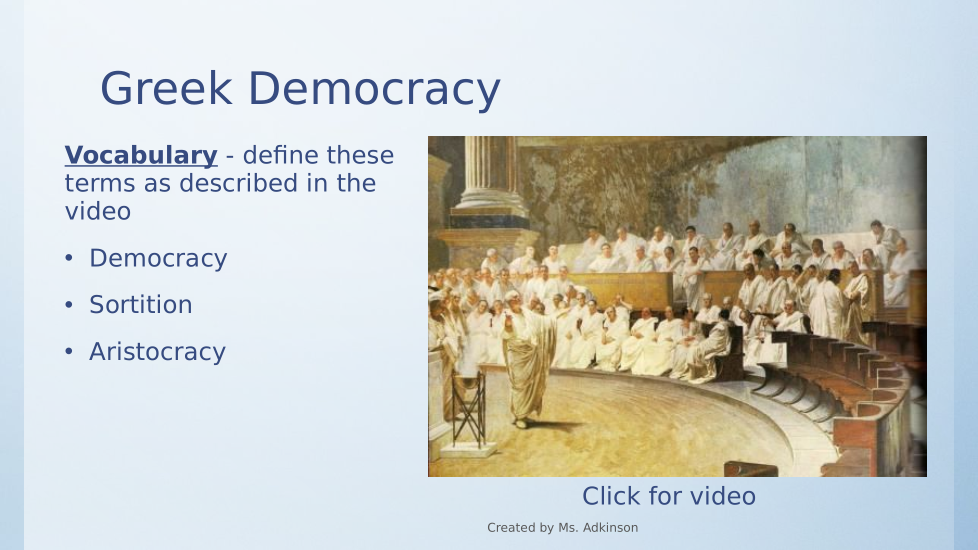
Match the term to its definition as described in the video.
| Draggable item | arrow_right_alt | Corresponding Item |
|---|---|---|
Aristocracy | arrow_right_alt | an eligible citizen could attend monthly meetings, address citizens, propose a law, or bring a suit |
Democracy | arrow_right_alt | randomized selection process |
Sortition | arrow_right_alt | rule by the experts or those best suited for the job |
What was the responsibility of the boule?
Why were specialized positions filled by election instead of lottery?
What tools were implemented to prevent governing classes/political parties from forming?
What percent of the population remained that was eligible to participate in governing?
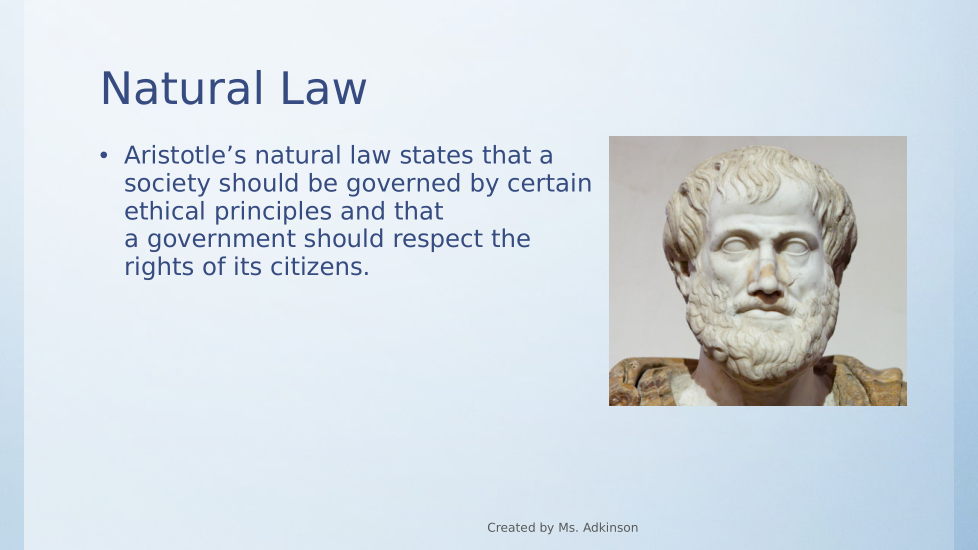
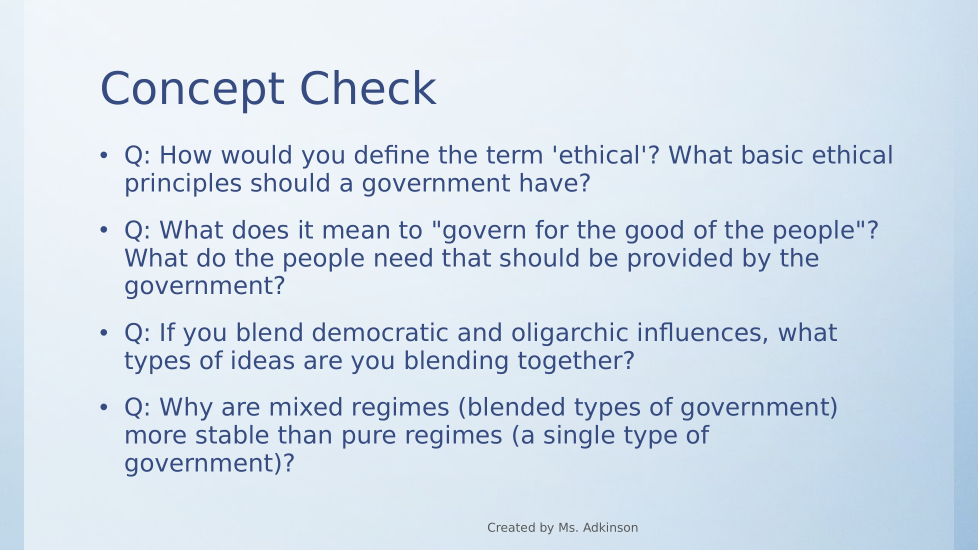
How would you define the term 'ethical'?
What does it mean to 'govern for the good of the people'? What do the people need that should be provided by the government?
If you blend democratic and oligarchic influences, that types of ideas are you blending together?
Why are mixed regimes (blended types of government) more stable than pure regimes (a single type of government)?