TE 3.3
star
star
star
star
star
Last updated over 3 years ago
15 Nsɛmmisa
1
1
1
1
0
0
0
1
1
1
1
0
5
0
1
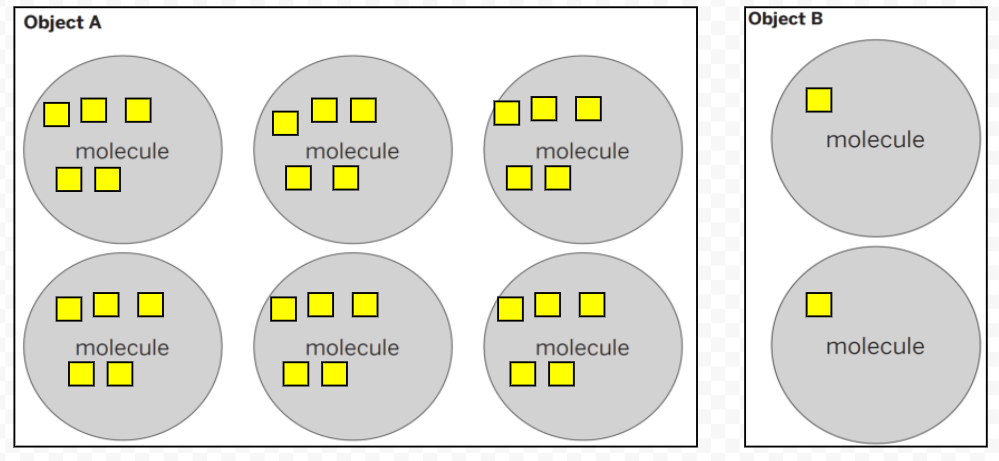
What is the total kinetic energy of Object A?
What is the average kinetic energy of Object A?
What is the total kinetic energy of Object B?
What is the average kinetic energy of Object B?
Look at the amount of energy from the model in Object A and Object B.
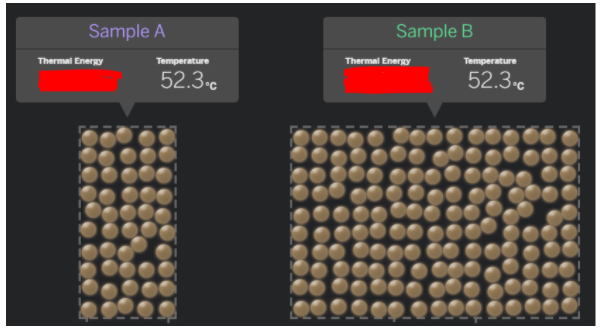
Is the system stable? Explain.
Sentence Starter:
The system is (not stable/stable) because....
Which of the following statements is NOT true about the system below?
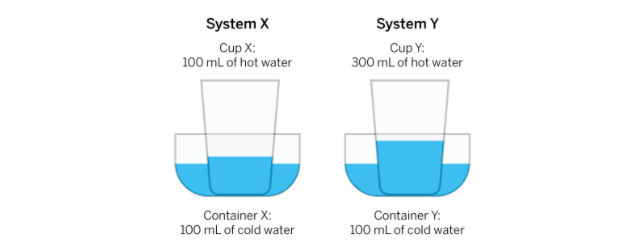
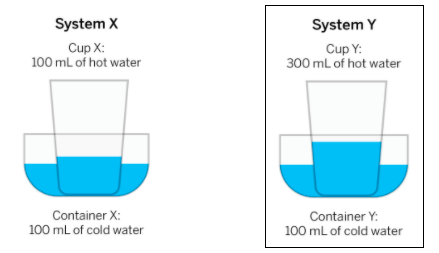
Two bowls are each filled with 100 mL of cold water at the same temperature. A small cup of hot water is placed in the first bowl. A larger cup of hot water at the same temperature is placed in the second bowl.
The containers were then left alone over time.
What will happen to the temperature of water in each system?
Categorize the statements into the categories provided.
Do you agree or disagree with the statements?
The water in Cup X will end up at the same temperature as the water in Container X.
The water in Cup Y will end up at the same temperature as the water in Container Y.
All of the water in both containers and cups will end at the same temperature.
AGREE
DISAGREE
Looking back at the model, you can probably guess that the water in both systems X and Y will change temperature as they are left alone over time. Will both systems reach equilibrium at the same temperature? Or will one system have a different ending equilibrium temperature than the other?
Link to sim if you want to try this on your own!
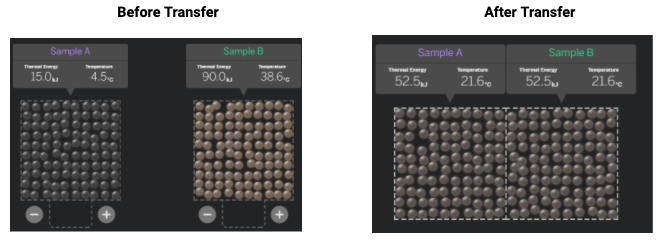
Setup: Two medium-size samples.
Sample A represents the bowl of cold water set at 4.5ºC
Sample B represents the small cup of hot water set at 38.6 ºC
Complete the chart using information from the screenshots of the SIM, before and after this system was combined.
(you can also try it on the sim to try it for yourself!)
SIM Model: System Y
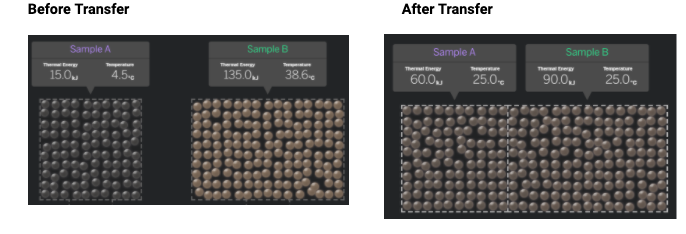
Setup: One medium size sample, one large size sample
Sample A represents the medium bowl of cold water set at 4.5ºC
Sample B represents the large 300 mL cup of hot water set at 38.6 ºC
Complete the chart using information from the screenshots of the SIM.
(you can also try it on the sim to try it for yourself!)
Analyze: In both systems, how did the starting TOTAL kinetic energy in each system compare to the ending TOTAL thermal energy of the system?
At the start, System X had ______ total kinetic energy than System Y.
At the start, System Y had ______ total kinetic energy than System X.
Higher
Lower
The Same As
Which system reached a higher equilibrium temperature? (higher temperature at the end)
Why do you think this system reached equilibrium at a higher temperature?
Hint: Look at the AFTER part of the model.
Sentence Starter:
I think that System __ had a higher equilibrium temperature because....
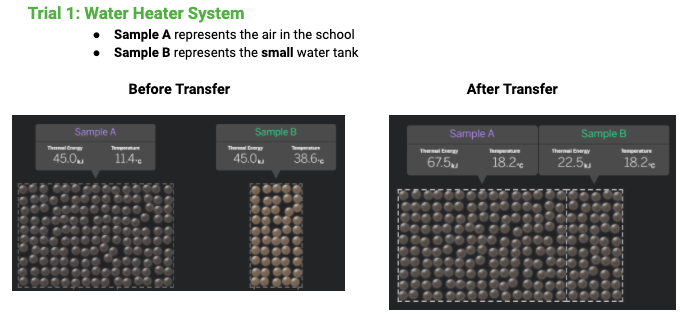
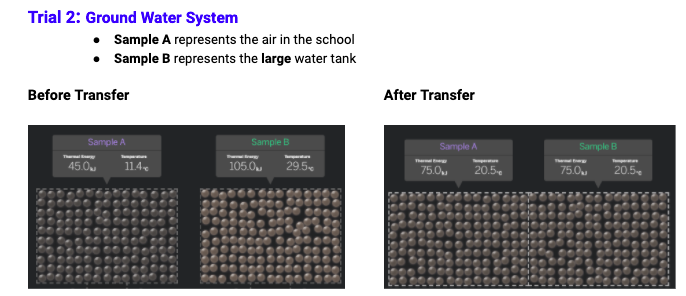
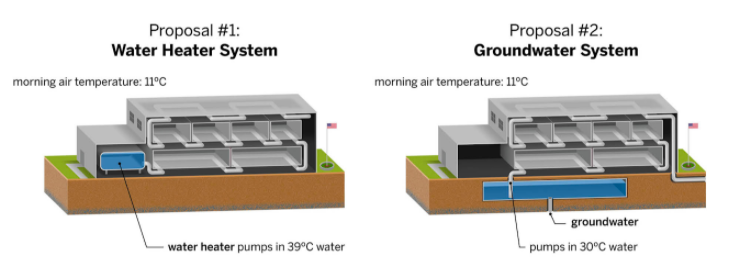
Let’s look at a final SIM test to finally discover which heating system will have enough thermal energy to warm the school air more. Think about how the differences in temperature and tank size might affect each system’s ability to warm the school
Link to sim if you want to try this on your own!
https://apps.learning.amplify.com/thermalenergy
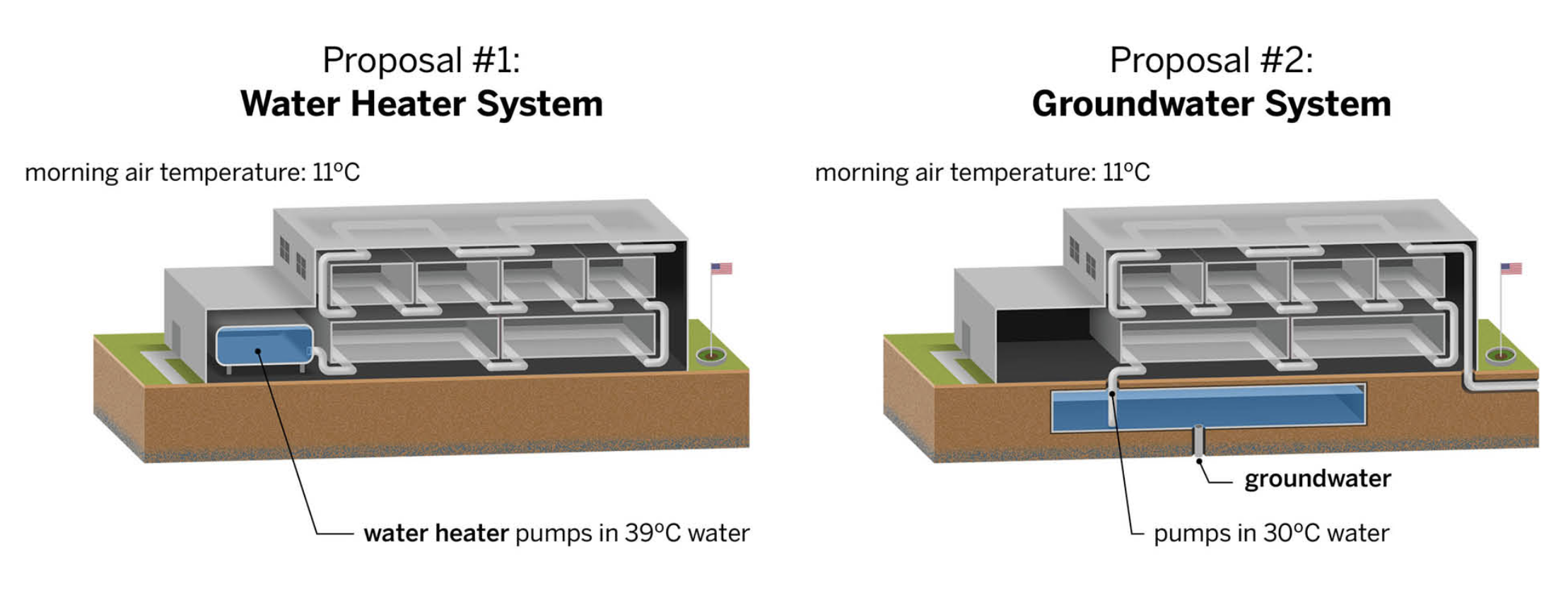
Based on the simulation tests you completed, categorize the items into its correct system.
Use the image above to categorize the data into its appropriate category.
This practice is helpful in being able to extract data from scientific models.
Sample A represents the cold air in both systems!
Sample B in the Before images represents both heating systems!
Hint:
Groundwater system category has 4 items
Water Heater system category has 4 items
Both Systems category has 2 items
No item is used more than once!
Lower Final Equilibrium
Higher Final Equilibrium
Lower Starting Thermal Energy of water tank
Sample B represents water tanks
Larger Tank
Smaller Tank
Higher Starting Thermal Energy of water tank
Higher Starting Water Temperature
11.4 C Degree Air
Lower Starting Water Temperature
Ground Water System
Water Heater System
Both Systems
Based on what you just completed, which Heating system would heat up the school more?
How do you know?
Sentence Starter:
I think that the _____ System would heat up the school more because....
I know this because...
Would you like a free point on today's lesson?