GOV: Unit 1 Lesson 3

Last updated almost 5 years ago
7 questions
1

How are checks and balances different from separation of powers?
1

What does it mean for the court system to set a precedent and why do they prefer to avoid doing that?
1

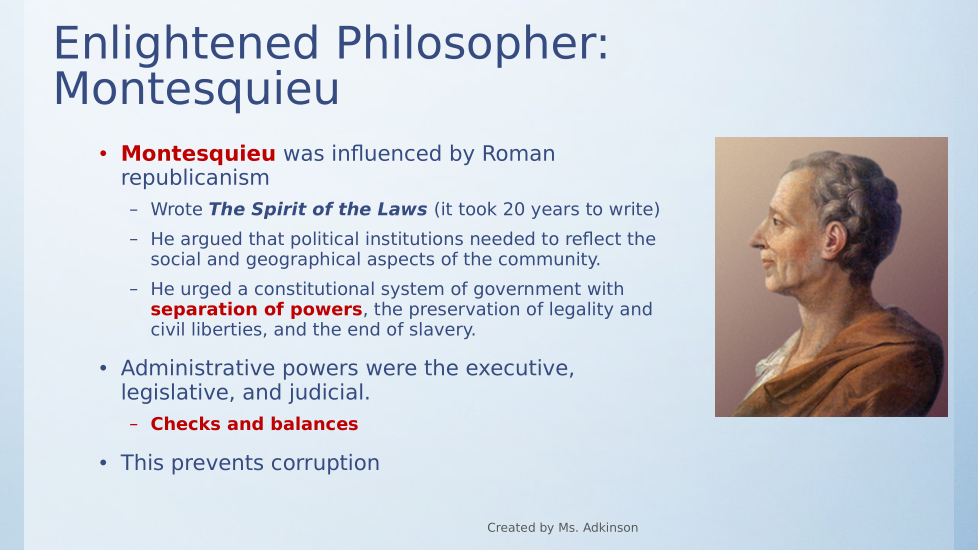
Montesquieu listed and described the administrative powers. What are our three branches of government?
1

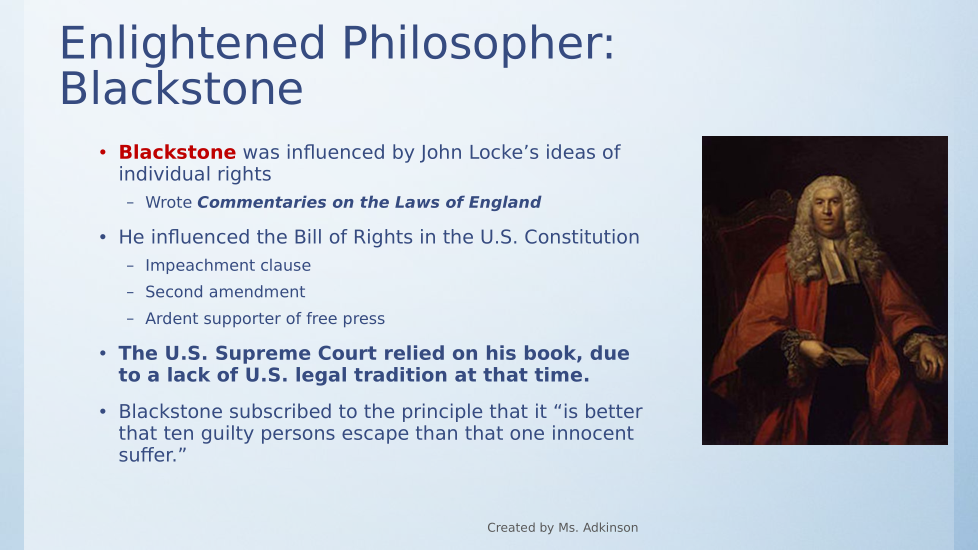
Why would the U.S. justifiably be able to use Blackstone’s Commentaries on the English Law as a guide for its newly established court system?

1

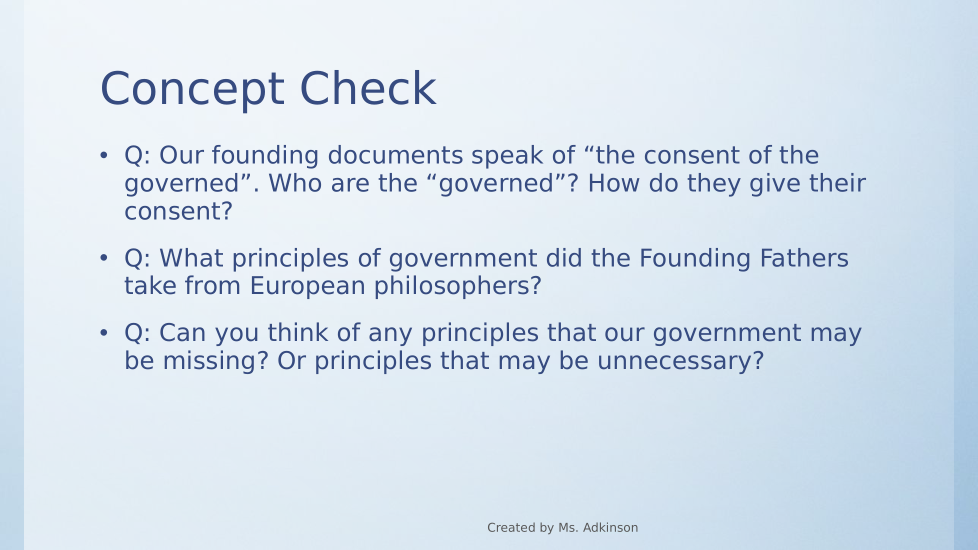
Our founding documents speak of “the consent of the governed”. Who are the “governed”? How do they give their consent?
1

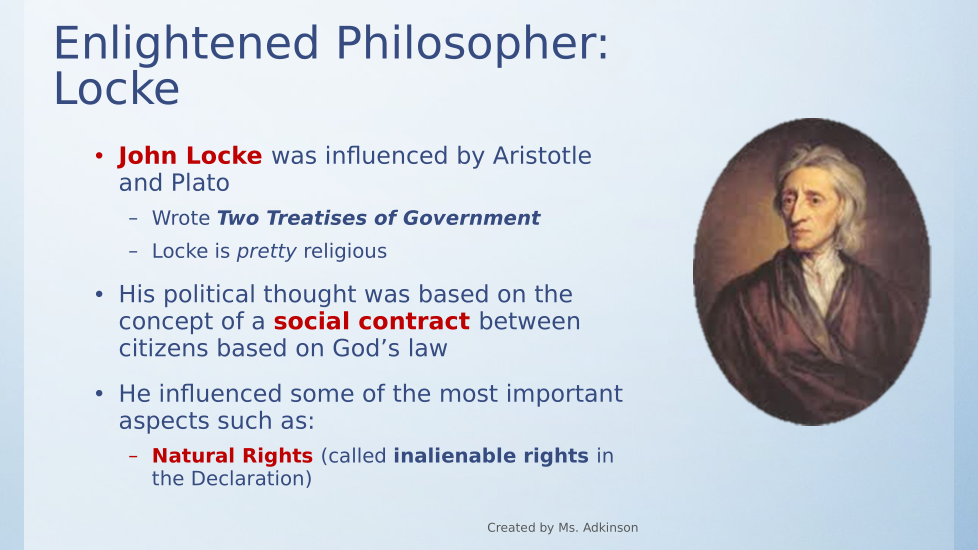
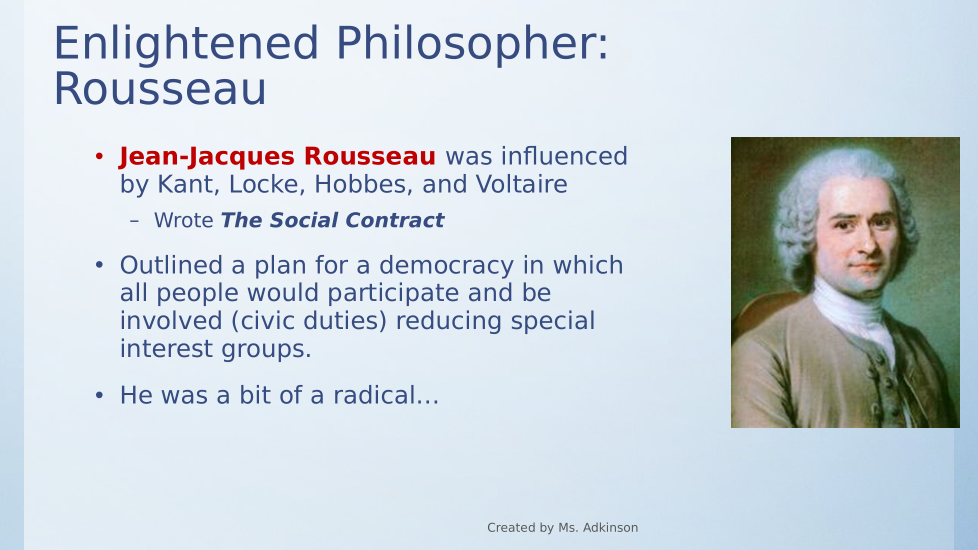
What principles of government did the Founding Fathers take from European philosophers?

1

Can you think of any principles that our government may be missing? Or principles that may be unnecessary?

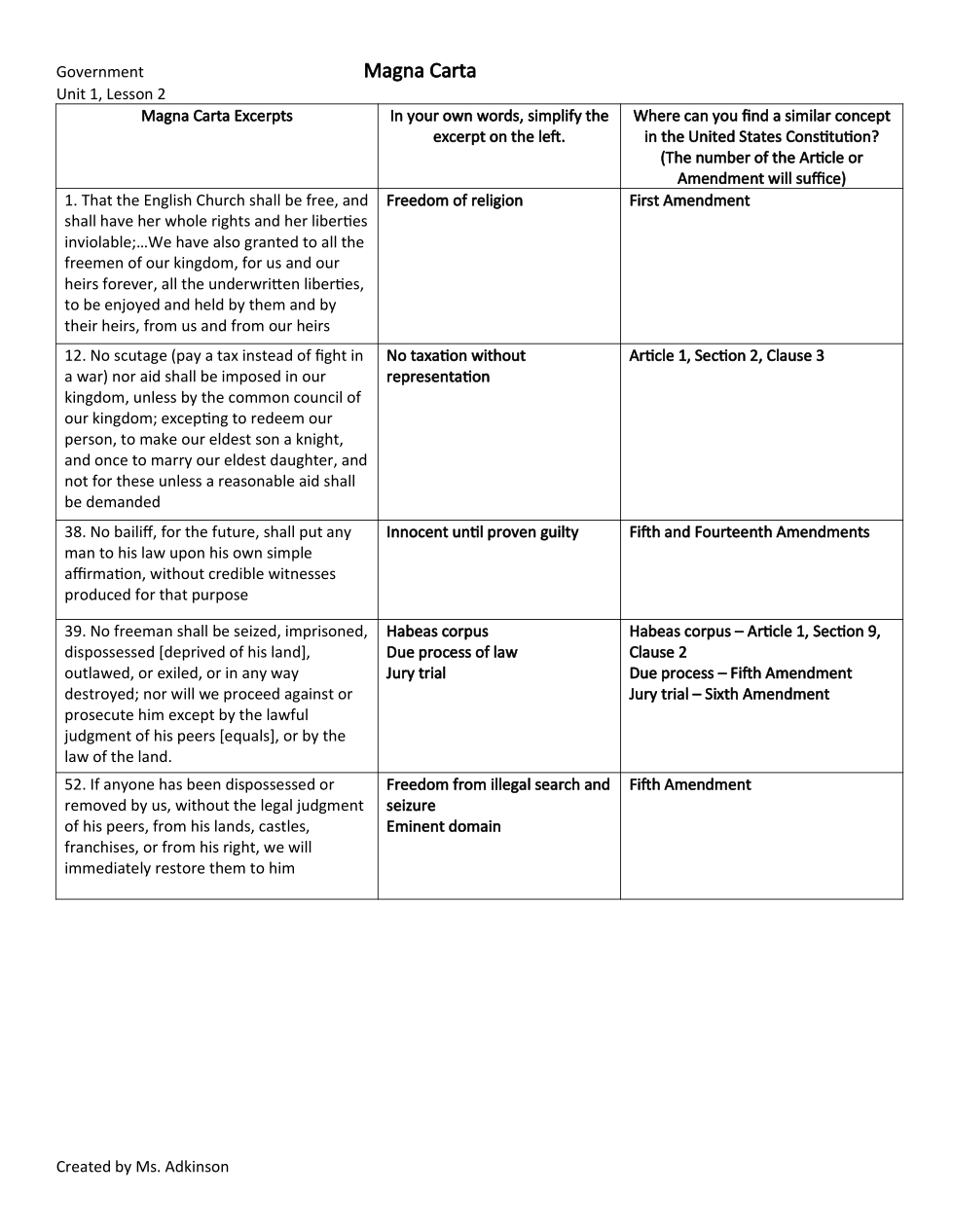
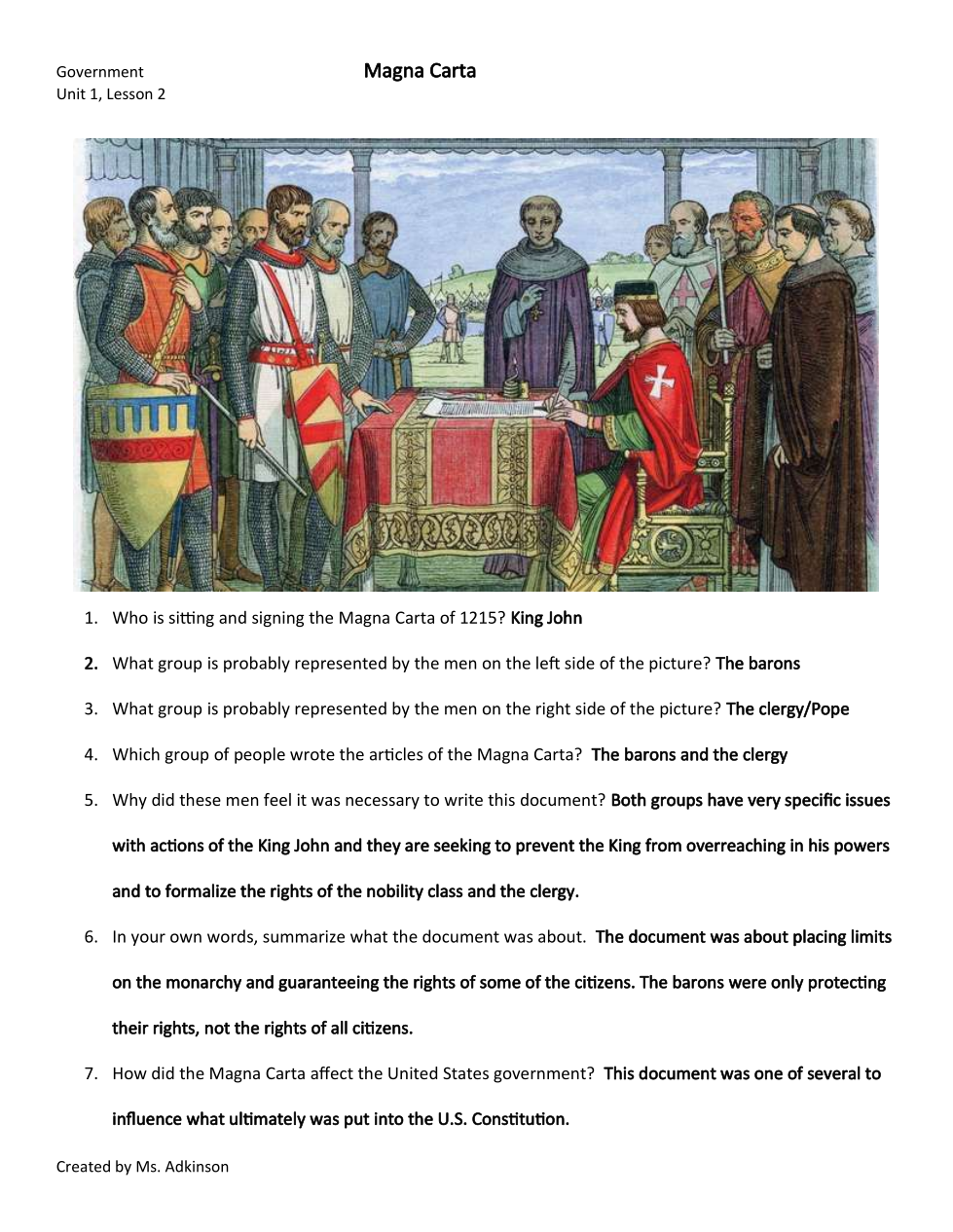
Review the Magna Carta Worksheet
First Amendment: Congress shall make no law respecting an establishment of religion, or prohibiting the free exercise thereof; or abridging the freedom of speech, or of the press; or the right of the people peaceably to assemble, and to petition the Government for a redress of grievances.
Art.1, Sec 2, Cla 3 :Representatives and direct Taxes shall be apportioned among the several States which may be included within this Union, according to their respective Numbers, which shall be determined by adding to the whole Number of free Persons, including those bound to Service for a Term of Years, and excluding Indians not taxed, three fifths of all other Persons.
Add: Right to a witness to the middle column
Add: Sixth amendment to the right hand column
Fifth amendment: The right of the people to be secure in their persons, houses, papers, and effects, against unreasonable searches and seizures, shall not be violated, and no Warrants shall issue, but upon probable cause, supported by Oath or affirmation, and particularly describing the place to be searched, and the persons or things to be seized.
Fourteenth amendment: ...The right of the people to be secure in their persons, houses, papers, and effects, against unreasonable searches and seizures, shall not be violated, and no Warrants shall issue, but upon probable cause, supported by Oath or affirmation, and particularly describing the place to be searched, and the persons or things to be seized.
Art 1, Sec 9, Cl 2: The Privilege of the Writ of Habeas Corpus shall not be suspended, unless when in Cases of Rebellion or Invasion the public Safety may require it.
Sixth Amendment: In all criminal prosecutions, the accused shall enjoy the right to a speedy and public trial, by an impartial jury of the State and district wherein the crime shall have been committed, which district shall have been previously ascertained by law, and to be informed of the nature and cause of the accusation; to be confronted with the witnesses against him; to have compulsory process for obtaining witnesses in his favor, and to have the Assistance of Counsel for his defence.