2/24 Acid Rain AP

Last updated 7 months ago
21 questions
1

Describe 3 effects of acid rain.

1

Explain how to reduce these effects.

Introduction
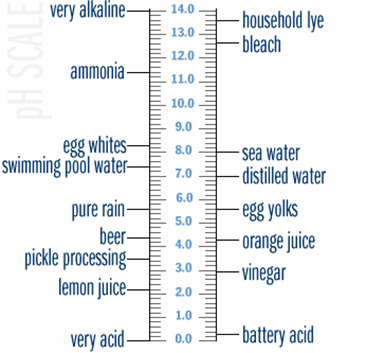
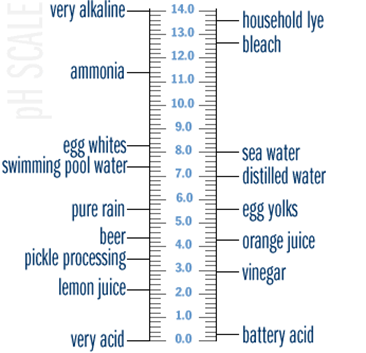
The pH scale is used to determine if a substance is an acid, base, or neutral. This is an important chemical analysis tool of environmental science, as most living things have a specific range of pH levels they can thrive in. While the scale is easy to understand, the actual differences between the pH levels is not.
1

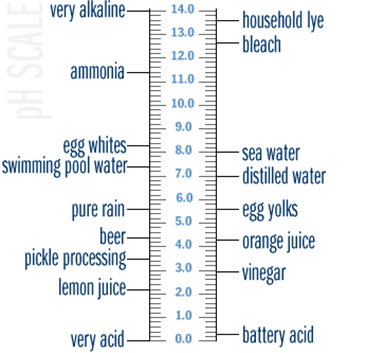
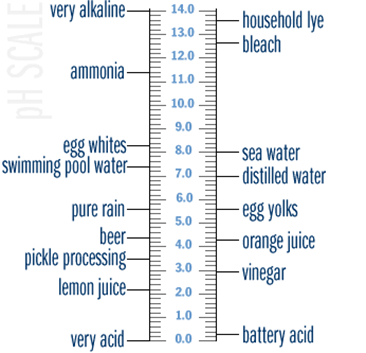
Identify in the boxes which half of the pH scale is basic and which is acidic.

1

Given the examples shown above, what pH do you think would be ideal for a saltwater aquarium containing species of fish found in a coral reef?
1

Justify your answer.

1

How many times more basic is ammonia than sea water? Show your work.

1


What pH do you think would be ideal for the soil that most trees grow in?

1

Justify your answer.

1


What is the normal pH of pure rainwater?

1

Would you consider this to be a strong or weak acid or base?

1

Acid precipitation occurs when rain or snow falls that has a pH lower than is expected from pure rain. What kinds of effects would you expect to see on plant life from acid rain?

1

What causes these effects?

Acid Precipitation in the United States
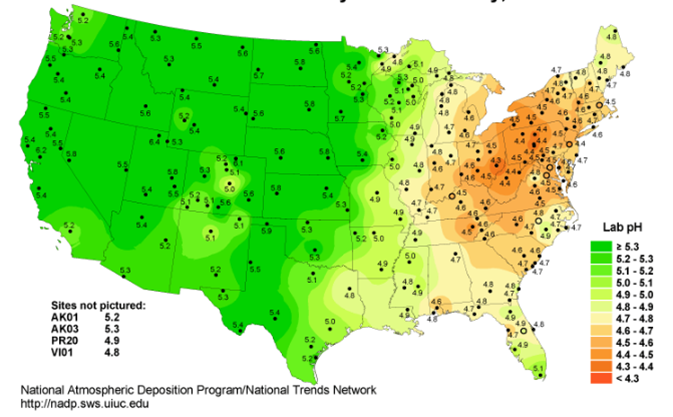
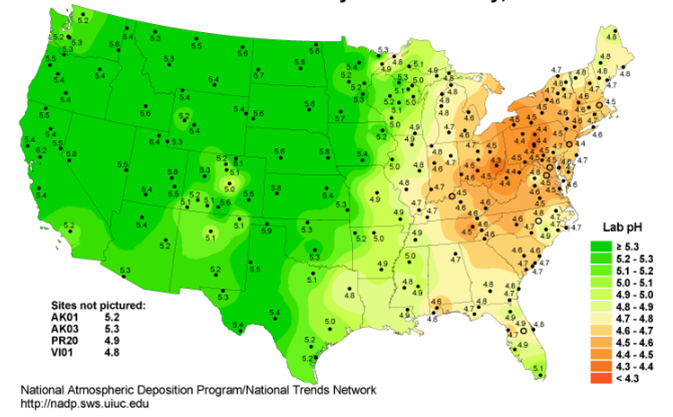
This data is taken from the United States Geological Survey (USGS). Soil samples were taken from several specific points around the United States. A pH measurement was made of each soil sample. Based on these pH measurements, the following map was generated.
1

What region of the country seems to have the biggest problem with acid precipitation?

1

Why would this region of the country have the biggest problem with acid precipitation (Hint: what activity leads to this)?

1


What is the lowest tested pH found anywhere on this map?

1


What is the tested pH level of the soil in Houston, based on this data?

1

Why does our region have the pH level that is shown above?

1

Describe the effects of acid precipitation on the environment.

1

Explain what causes acid deposition?

1

Identify the type of material can be added to soils and lakes to neutralize acidity?

Conclusion Drawings:
You must create a graphic design for acid rain. Each bullet point must have a picture (except formulas).
  1. Acid Deposition
  • The burning of coal (mostly powerplants for electricity) releases SO2 and the burning of petroleum (from transportation) releases NO2. These combine with water in the atmosphere to create acid rain.
  • 2SO2 + O2 🡪 2SO3 then SO3 + H2O 🡪 H2SO4 (sulfuric acid)—the biggest culprit of acid rain
  • 3NO2 + H2O 🡪 2 HNO3 (Nitric acid)+ NO (Nitric Oxide)
  • Acid Rain clouds blow north to Canada which makes the Canadians angry. Eh.
  • Acid rain dissolves marble and limestone which can eat away at tombstones, statues, and buildings.
  • Acid rain causes environmental problems by changing soil chemistry and elevating aluminum in the soil hindering water and nutrient uptake by plants.
  • Lakes become more acidic which hurts the organisms in the lakes and crops are damaged.
  • Prevention methods include electricity conservation (turning off lights, Energy Star appliances, etc.) and alternative fuel/high mpg/electric cars and transportation.
1

You must create a graphic design acid rain. For each topic (in bold), each bullet point must have a picture (except formulas).