ER 41 Quiz
star
star
star
star
star
Last updated 6 months ago
14 Nsɛmmisa
1
1
1
1
5
1
5
1
5
1
9
1
8
1
Fill in the missing infinitive, using the principal parts provided.
Servus Quīntī Valeriī dīcitur dominum ____________________ [to have rescued].
[ēripiō, ēripere, ēripuī, ēreptus: to rescue]
Fill in the missing infinitive, using the principal parts provided.
Quīntus Valerius dīcitur ā servō suō ____________________ [to have been rescued].
[ēripiō, ēripere, ēripuī, ēreptus: to rescue]
Fill in the missing infinitive, using the principal parts provided.
Quīntus Valerius cogitātur domum ____________________. [to be about to arrive].
[adveniō, advenīre, advēnī, adventus: to arrive]
Fill in the missing infinitive, using the principal parts provided.
Prīnceps senātōrem ____________________ iussit. [to speak].
[loquor, loquī, locūtus sum: to speak]
Translate into English.
Epistulae antīquae in cērīs aut chartīs scrīptae esse dīcuntur; cērae stilō, chartae pennā īnscrīptae esse crēduntur.
vocabulary help:
epistula, -ae, f.: letter
antīquus, -a, -um: ancient
cēra, -ae, f.: wax tablet
charta, -ae, f.: paper (made from papyrus); a sheet of paper
stilus, -ī, m.: stylus (a pointed implement for writing on wax tablets)
penna, -ae, f.: pen (a pen made from a feather or reed and dipped in ink)
īnscrībō, īnscrībere, īnscrīpsī, īnscrīptus: to write on
crēdō, crēdere, crēdidī, crēditus: to believe
Identify the tense and voice of the underlined infinitive.
Epistulae antīquae in cērīs aut chartīs scrīptae esse dīcuntur; cērae stilō, chartae pennā īnscrīptae esse crēduntur.
vocabulary help: īnscrībō, īnscrībere, īnscrīpsī, īnscrīptus: to write on
Translate into English.
Scrībae sciuntur librōs in chartīs scrīpsisse et hās chartās in volūmina volvisse.
vocabulary help:
scrība, -ae, m.: scribe
sciō, scīre, scīvī, scītus: to know
liber, librī, m.: book
charta, -ae, f.: paper
volūmen, volūminis, n.: scroll
volvō, volvere, volvisse, volūtus: to roll
Identify the tense and voice of the underlined infinitive.
Scrībae sciuntur librōs in chartīs scrīpsisse et hās chartās in volūmina volvisse.
vocabulary help: volvō, volvere, volvisse, volūtus: to roll
Translate into English.
Pauca volūmina antīqua crēduntur hodiē exsistere, quod chartae lūce et āēre et igne et aquā facillimē dēlentur.
vocabulary help:
paucī, paucae, pauca: few, not many
antīquus, -a, -um: ancient
volūmen, volūminis, n.: scroll
crēdō, crēdere, crēdidī, crēditus: to believe
hodiē: today
exsistō, exsistere, exstitī, exstitus: to exist
lux, lūcis, f.: light
āēr, āēris, m.: air
ignis, ignis, m.: fire
dēleō, dēlēre, dēlēvī, dēlētus: to destroy
Identify the tense and voice of the underlined infinitive.
Pauca volūmina crēduntur hodiē exsistere, quod chartae lūce et āēre et igne et aquā facillimē dēlentur.
vocabulary help: exsistō, exsistere, exstitī, exstitus: to exist
Translate into English.
Multa volūmina Herculāneī et Stabiīs, oppida quae in ēruptiōne Montis Vesuviī dēlēta esse sciuntur, inventa sunt. Haec volūmina tamen nec ēvolvī nec legī possunt, quod fragilissima sunt.
vocabulary help:
Herculāneum, Herulāneī, n.: Herculaneum (a town near Pompeii)
Stabiae, Stabiārum, f. pl.: Stabiae (a town near Pompeii)
oppidum, oppidī, n.: town
ēruptiō, ēruptiōnis, f.: eruption
Mōns Vesuvius, Montis Vesuviī, m.: Mt. Vesuvius
dēleō, dēlēre, dēlēvī, dēlētus: to destroy
sciō, scīre, scīvī, scītus: to know
inveniō, invenīre, invēnī, inventus: to find
nec . . . nec: neither . . . nor
ēvolvō, ēvolvere, ēvolvī, ēvolutus: to unroll
legō, legere, lēgī, lēctus: to read
Identify the tense and voice of the underlined infinitive.
Multa volūmina Herculāneī et Stabiīs, oppida quae in ēruptiōne Montis Vesuviī dēlēta esse sciuntur, inventa sunt. Haec volūmina tamen nec ēvolvī nec legī possunt, quod fragilissima sunt.
vocabulary help: ēvolvō, ēvolvere, ēvolvī, ēvolutus: to unroll
Translate into English.
Multī doctissimī haec volūmina ēvolere et legere cōnātī sunt, sed frūstrā. Sed technologia nova aetātis nostrae crēditur haec volūmina sine ēvolūtiōne īnspectūra esse.
vocabulary help:
doctus, -a, -um: learned, educated
ēvolvō, ēvolvere, ēvolvī, ēvolutus: to unroll
cōnor, cōnārī, cōnātus sum: to attempt, try
frūstra: in vain, without success
technologia. -ae, f.: technology
novus, -a, -um: new
aetās, aetātis, f.: time, age
noster, nostra, nostrum: our, our own
crēdō, crēdere, crēdidī, crēditus: to believe
sine (+ abl.): without
ēvolūtiō, ēvolūtiōnis, f.: unrolling
īnspiciō, īnspicere, īnspēxī, īnspectus: to examine, look closely at, inspect
Identify the tense and voice of the underlined infinitive.
Sed technologia nova aetātis nostrae crēditur haec volūmina sine ēvolūtiōne īnspectūra esse.
vocabulary help: īnspiciō, īnspicere, īnspēxī, īnspectus: to examine, look closely at, inspect
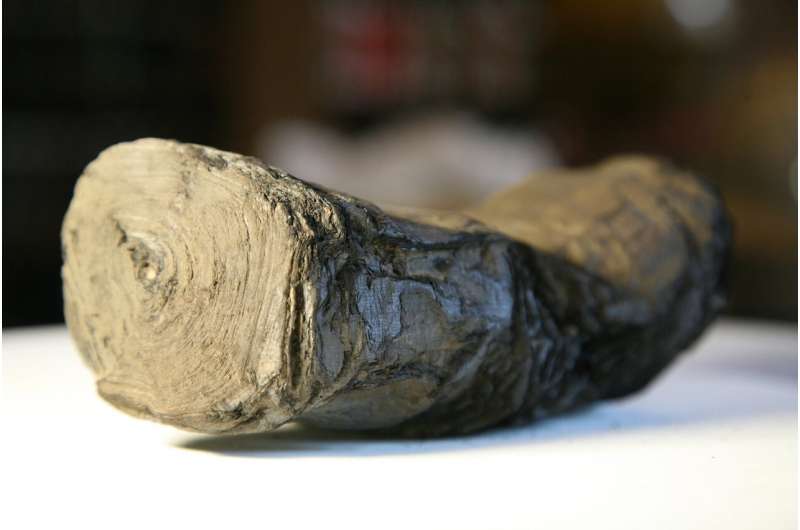
Above: Photograph of a charred scroll from Herculaneum. [End view of one of the two Herculaneum scrolls from L'Institut de France being scanned at Diamond Light Source by the University of Kentucky, Digital Restoration Initiative team. Credit: Diamond Light Source; https://phys.org/news/2019-10-team-year-old-herculaneum-scrolls.html]
To learn more about these scrolls and the process of reading them, check out these articles: