1
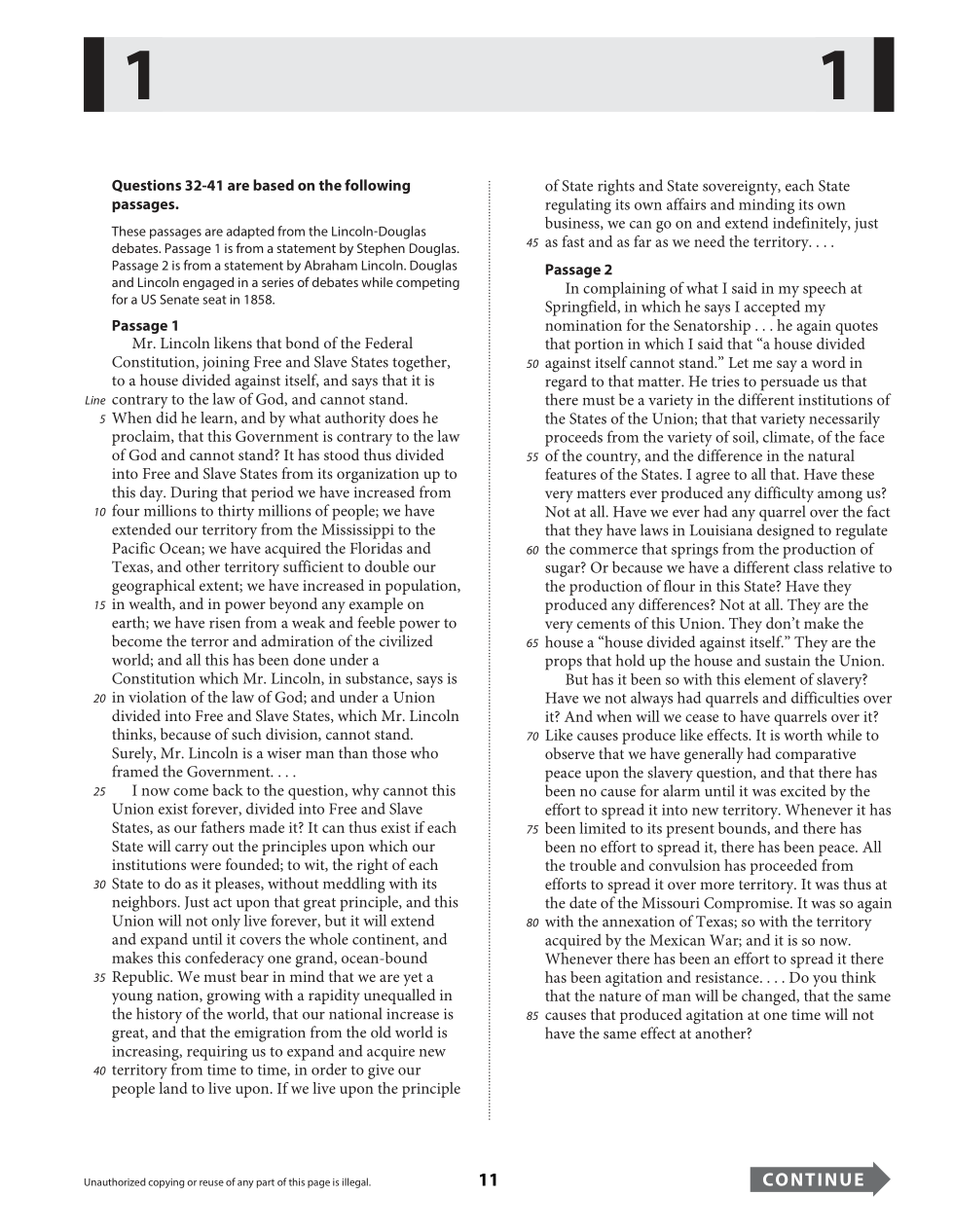
Access Prior Knowledge: What do you know about the author of either Passage 1 or 2?
Access Prior Knowledge: What do you know about the author of either Passage 1 or 2?
1
RAG.01
1
RAG.02
1
Access Prior Knowledge: What do you know about the author of either Passage 1 or 2?

What is the author's claim in Passage 1?
What is the author's claim in Passage 2?
Do you think the authors would agree or disagree? Explain why.
In the first paragraph of Passage 1, the main purpose of Douglas’s discussion of the growth of the territory and population of the United States is to
What does Passage 1 suggest about the US government’s provisions for the institution of slavery, as framed in the Constitution?
Which choice provides the best evidence for the answer to the previous question?
As used in line 67, “element” most nearly means
Based on Passage 2, Lincoln would be most likely to agree with which claim about the controversy over slavery?
Which choice provides the best evidence for the answer to the previous question?
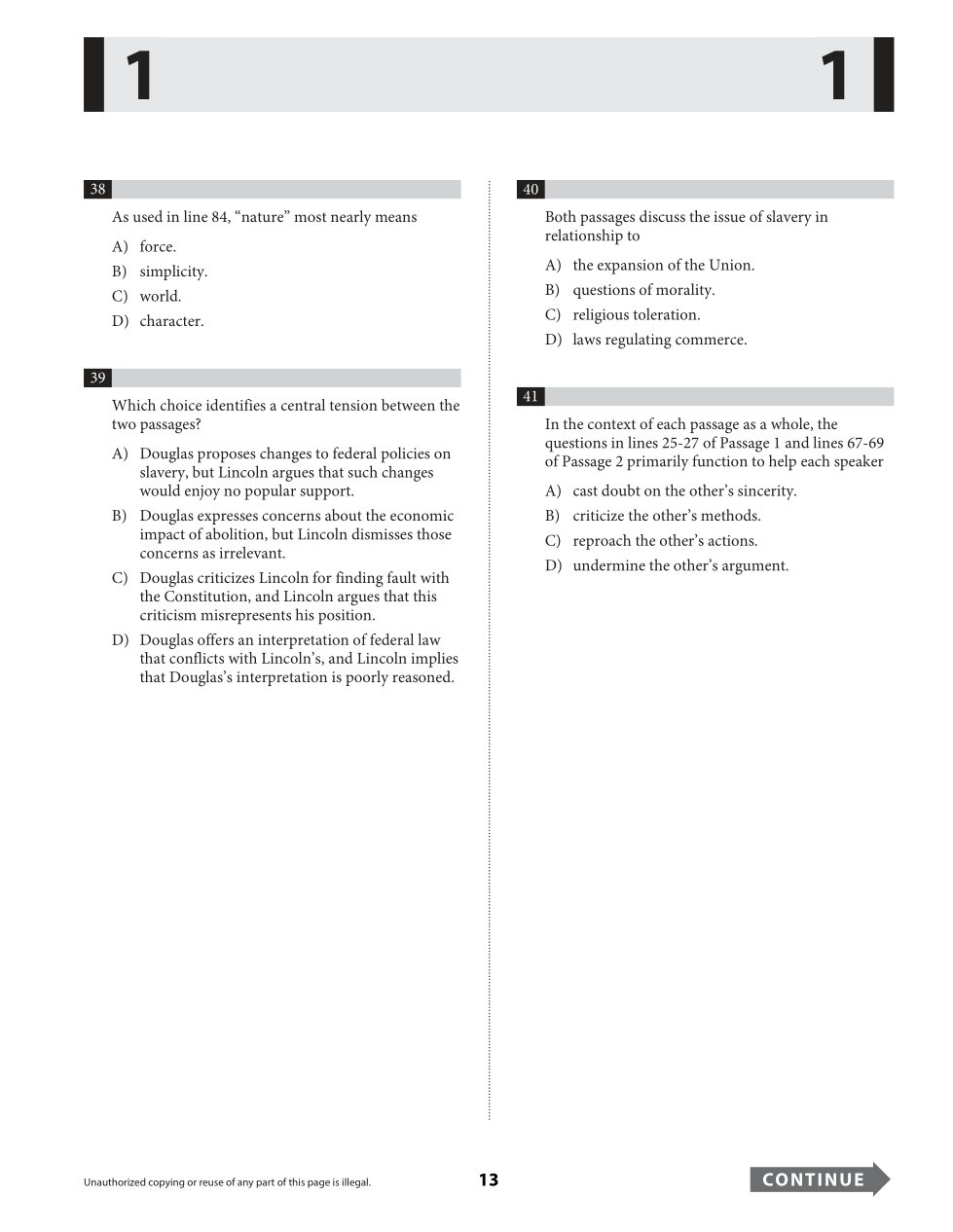
As used in line 84, “nature” most nearly means
Which choice identifies a central tension between the two passages?
Both passages discuss the issue of slavery in relationship to
In the context of each passage as a whole, the questions in lines 25-27 of Passage 1 and lines 67-69 of Passage 2 primarily function to help each speaker