Log in
Sign up for FREE
arrow_back
Library
Chem Unit 5 Atomic Emissions
By Susan Repasky
star
star
star
star
star
Share
share
Last updated 1 day ago
20 questions
Add this activity
Note from the author:
in lieu of a real flame lab; would be good as a prelab
1
1
1
1
1
1
1
zoom_in
zoom_in
zoom_in
zoom_in
play_arrow
Trim End | 03:09
Question 1 | 00:42
Question 2 | 00:54
Question 3 | 01:20
Question 4 | 02:52
00:00/00:00
closed_caption_disabled
slow_motion_video
fullscreen
Question 1
00:42
Question 2
00:54
Question 3
01:20
Question 4
02:52
Question 5
5.
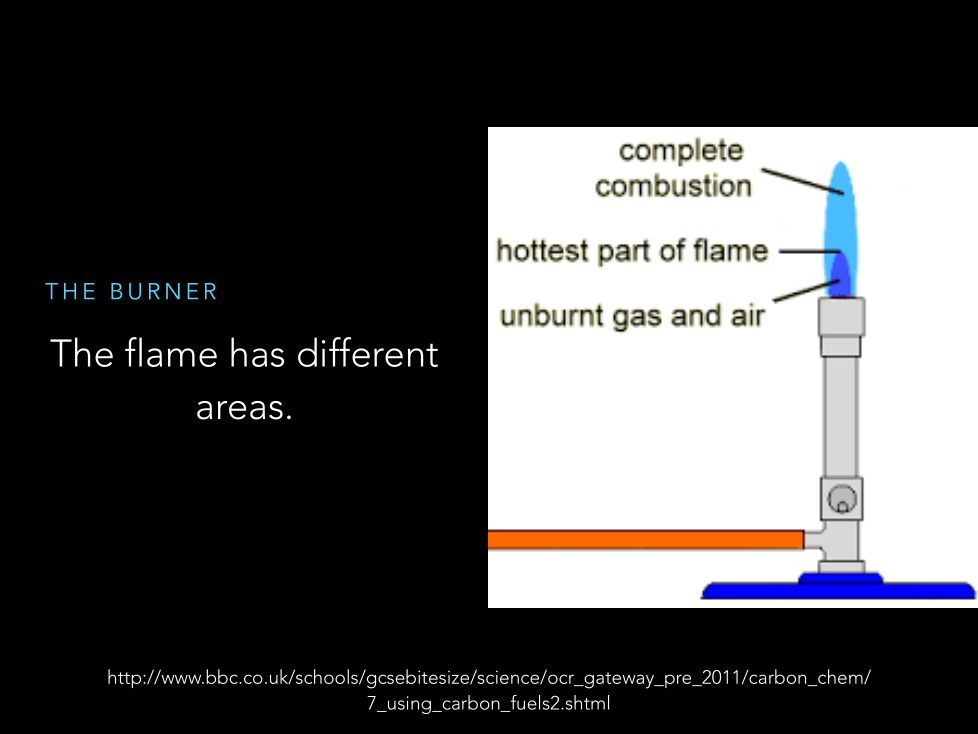
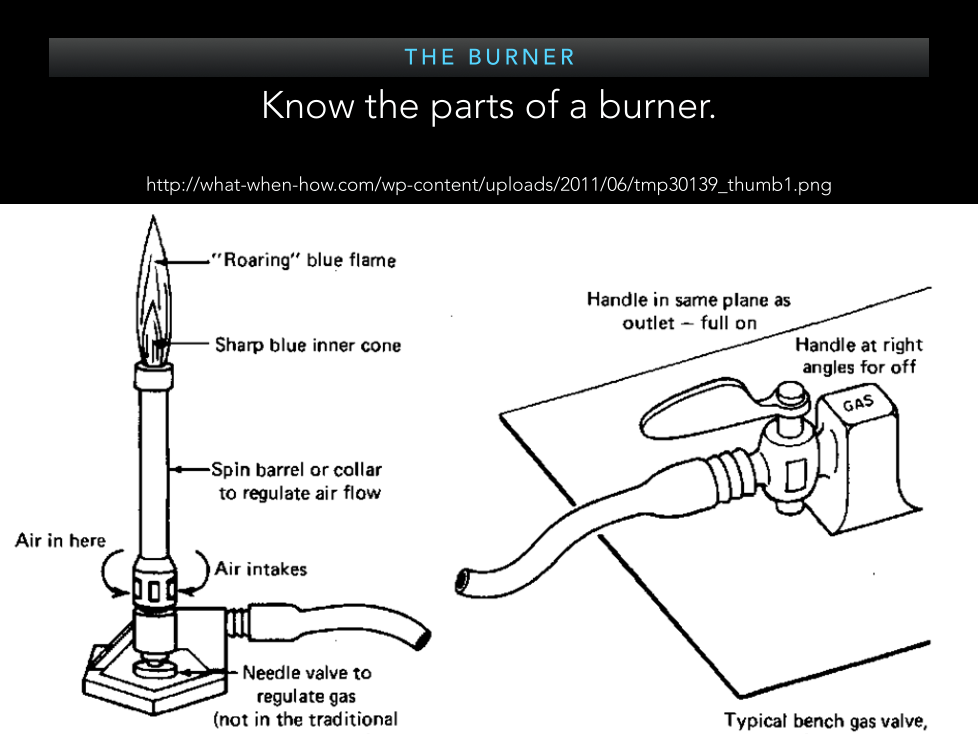
Which part of the burner is used to adjust the amount of gas flow and the height of the flame?
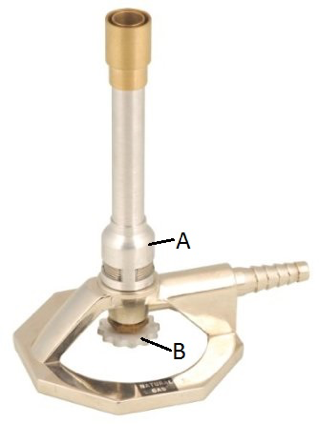
A
B
Question 6
6.
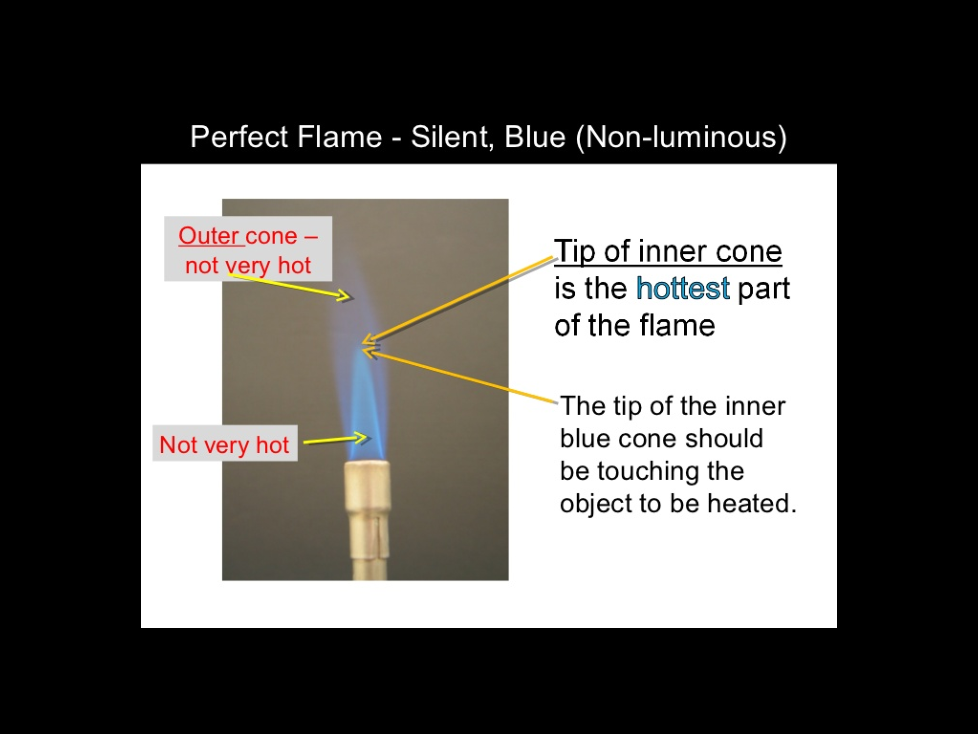
Which position around the flame has the hottest temperature?
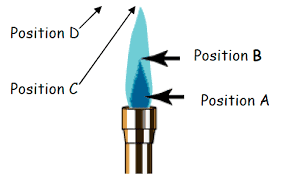
position A
position B
position C
position D
Question 7
7.
In this image, is the gas flowing or is the gas turned off?
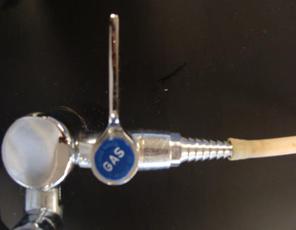
The gas is turned on and flowing.
The gas is turned off.
zoom_in
Question 8
8.
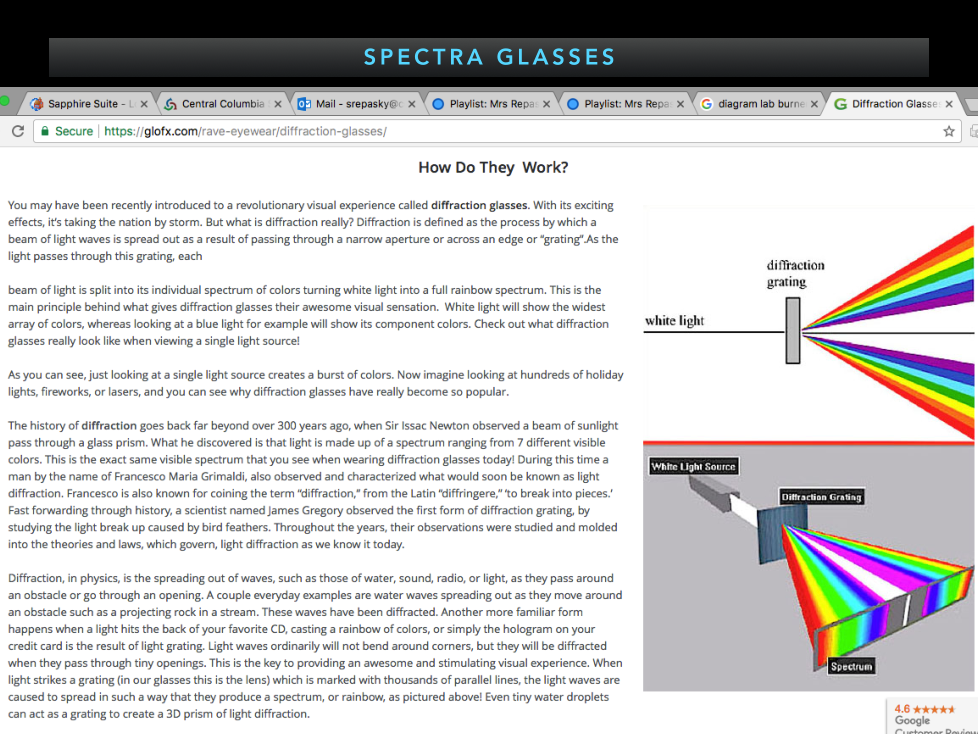
What is the purpose of a diffraction grating?
to break light into its component parts
to give energy to create the light
to make the light brighter
play_arrow
Trim End | 06:03
Question 9 | 00:20
Question 10 | 00:47
Question 11 | 03:39
00:00/00:00
closed_caption_disabled
slow_motion_video
fullscreen
Question 9
00:20
Question 10
00:47
Question 11
03:39
12
zoom_in
1
Question 12
12.
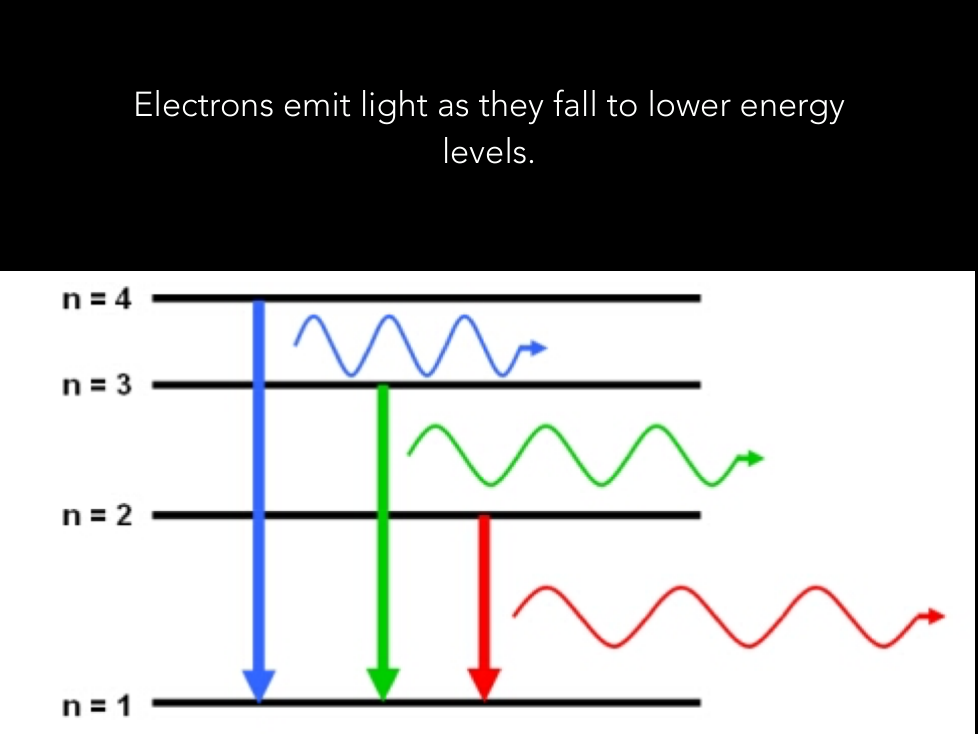
Why does each transition have a different wavelength and color?
To make the picture pretty. All emitted light is actually white.
The wavelengths are random and could be any value.
The distance of each transition is different, so the energy change is different for each transition.
13
zoom_in
1
Question 13
13.
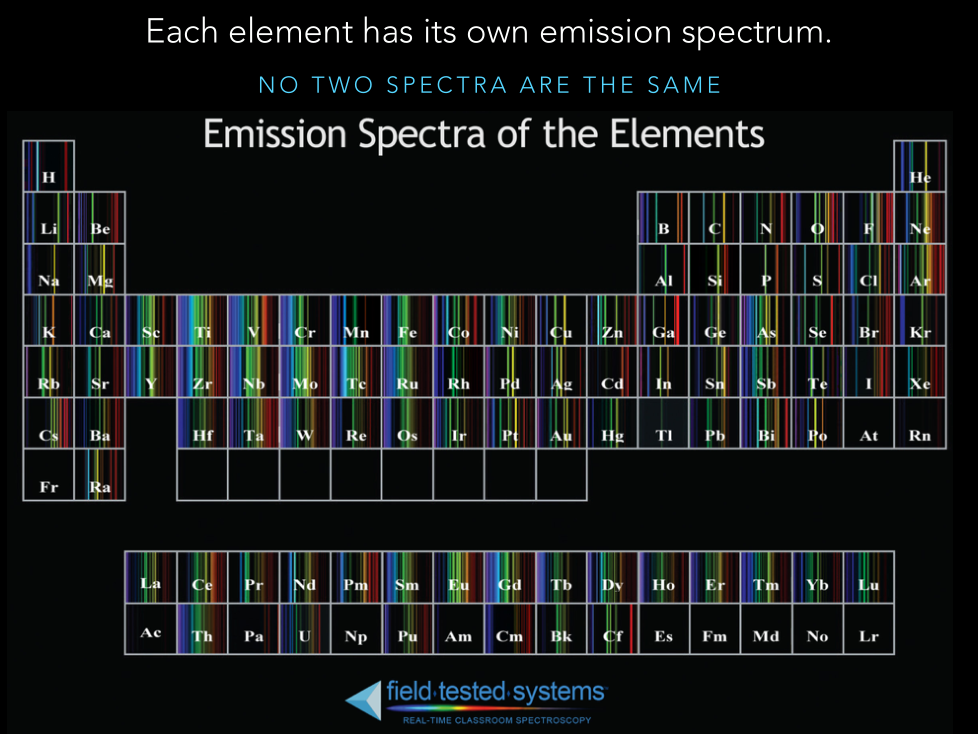
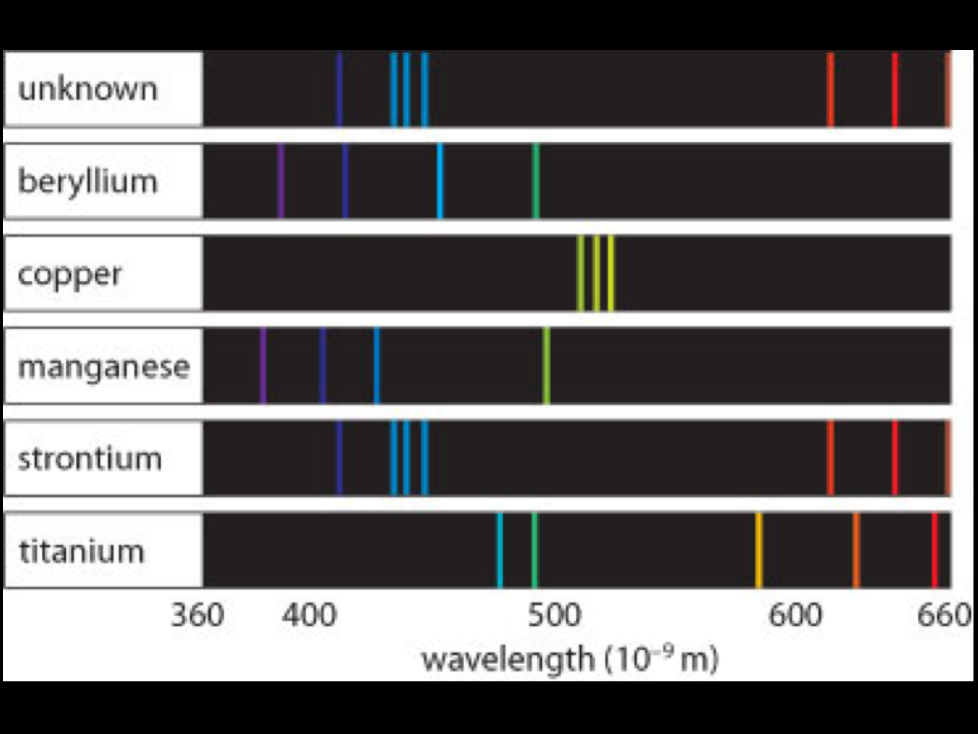
Do any of the elements emit the exact same set of colors?
no
yes
1
15
zoom_in
1
Question 16
16.
Which part of the atom is active during the emission of the bright-line spectrum?
electrons
electrons and protons
neutrons
protons
Question 17
17.
An electron will emit energy when it changes its position in what way?
as the electron jumps up to a higher energy level
as the electron falls down to a lower energy level
zoom_in
zoom_in
play_arrow
Trim End | 02:07
Question 18 | 00:29
Question 19 | 01:52
00:00/00:00
closed_caption_disabled
slow_motion_video
fullscreen
Question 18
00:29
Question 19
01:52
Question 20
20.
What are practical uses of emission spectra?
Select all options.
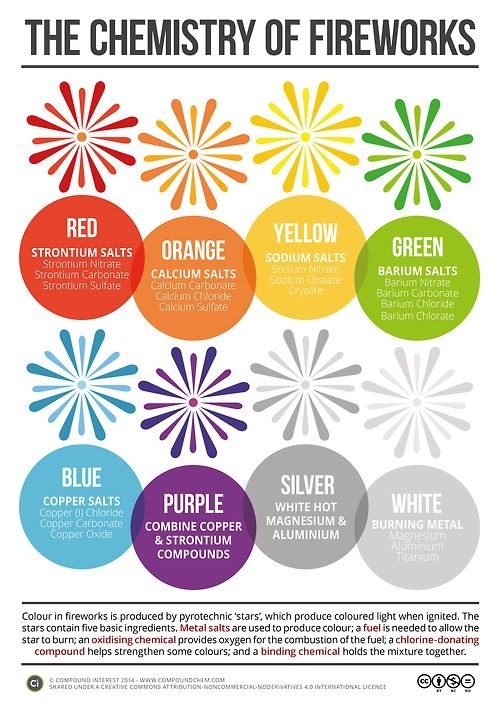
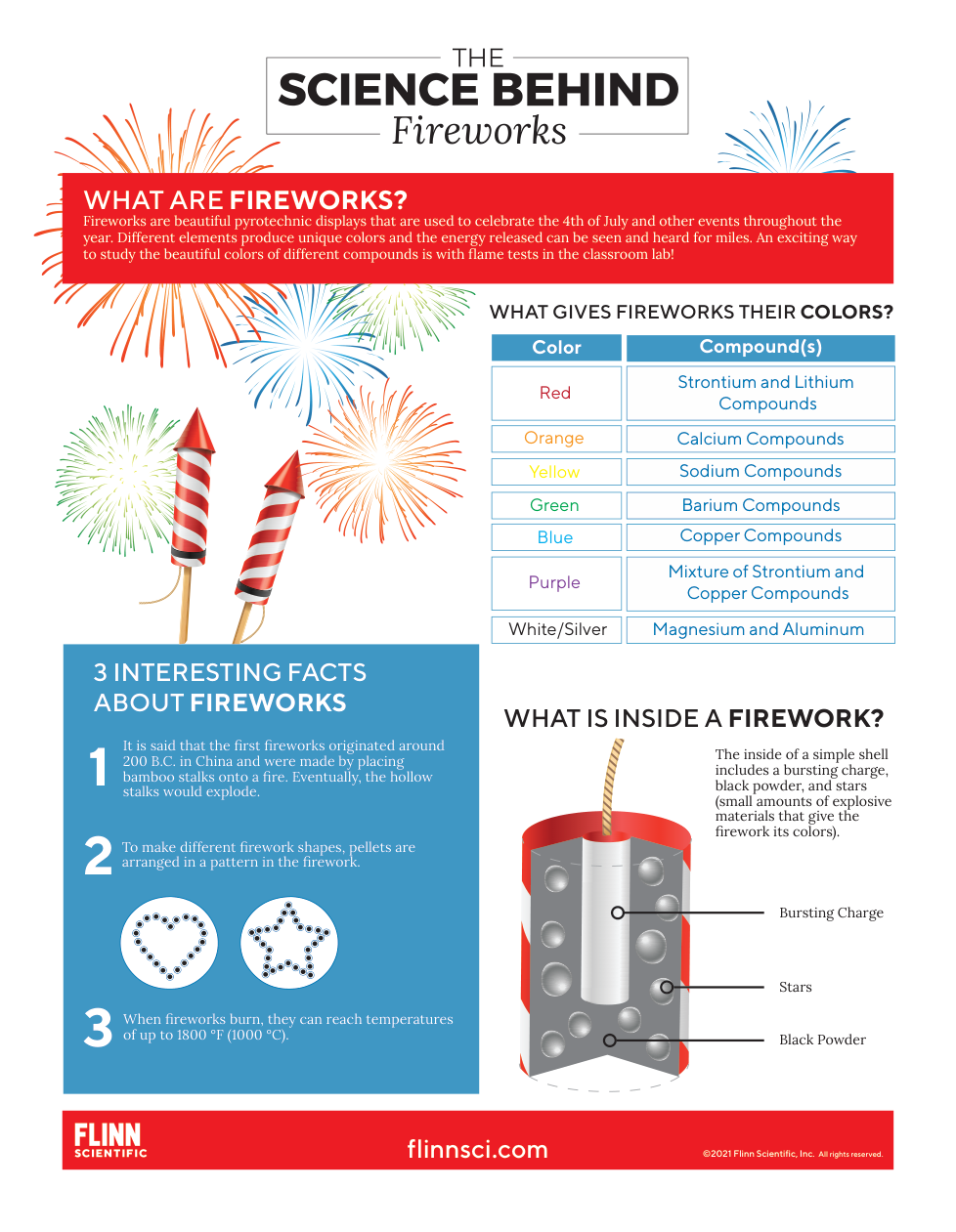
for fireworks in different colors
to create light bulbs and light tubes
to identify the composition of stars in astronomy
Question 14
14.
Do any elements emit the entire rainbow?
Yes
No
Question 15
15.
What is the unknown element?
it is unknown
beryllium
copper
manganese
strontium
titanium