WS 6.1
star
star
star
star
star
Last updated over 4 years ago
45 questions

1
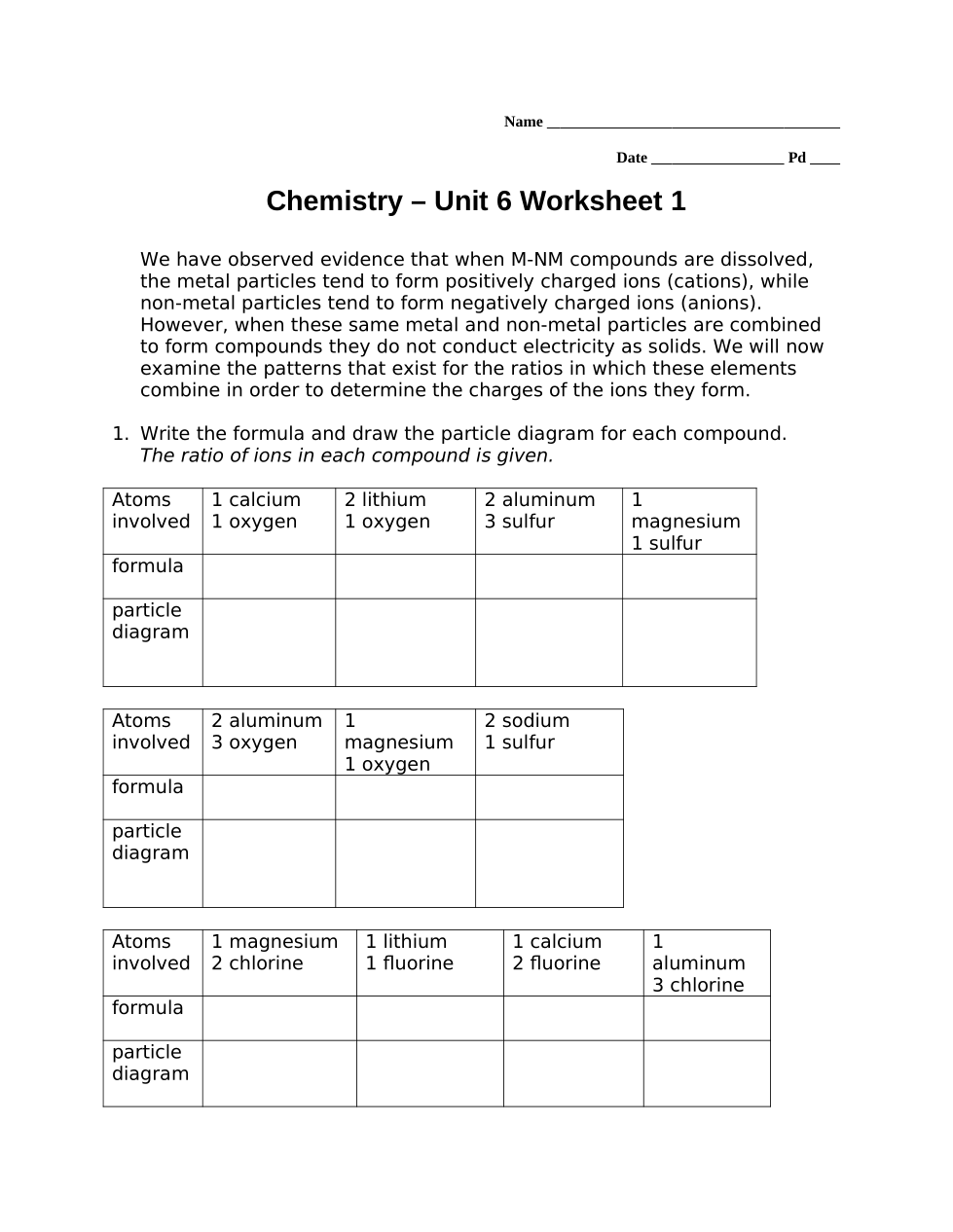
Formula
Formula
1
Formula
Formula
1
Formula
Formula
1
Formula
Formula
1
Particle level diagram
1
Particle level diagram
1
Particle level diagram
1
Particle level diagram
1
Formula
Formula
1
Formula
Formula
1
Formula
Formula
1
Particle level diagram
1
Particle level diagram
1
Particle level diagram
1
formula
formula
1
formula
formula
1
formula
formula
1
formula
formula
1
Particle level diagram
1
Particle level diagram
1
Particle level diagram
1
Particle level diagram

1
Formula
Formula
1
Formula
Formula
1
Formula
Formula
1
Particle level diagram
1
Particle level diagram
1
Particle level diagram
1
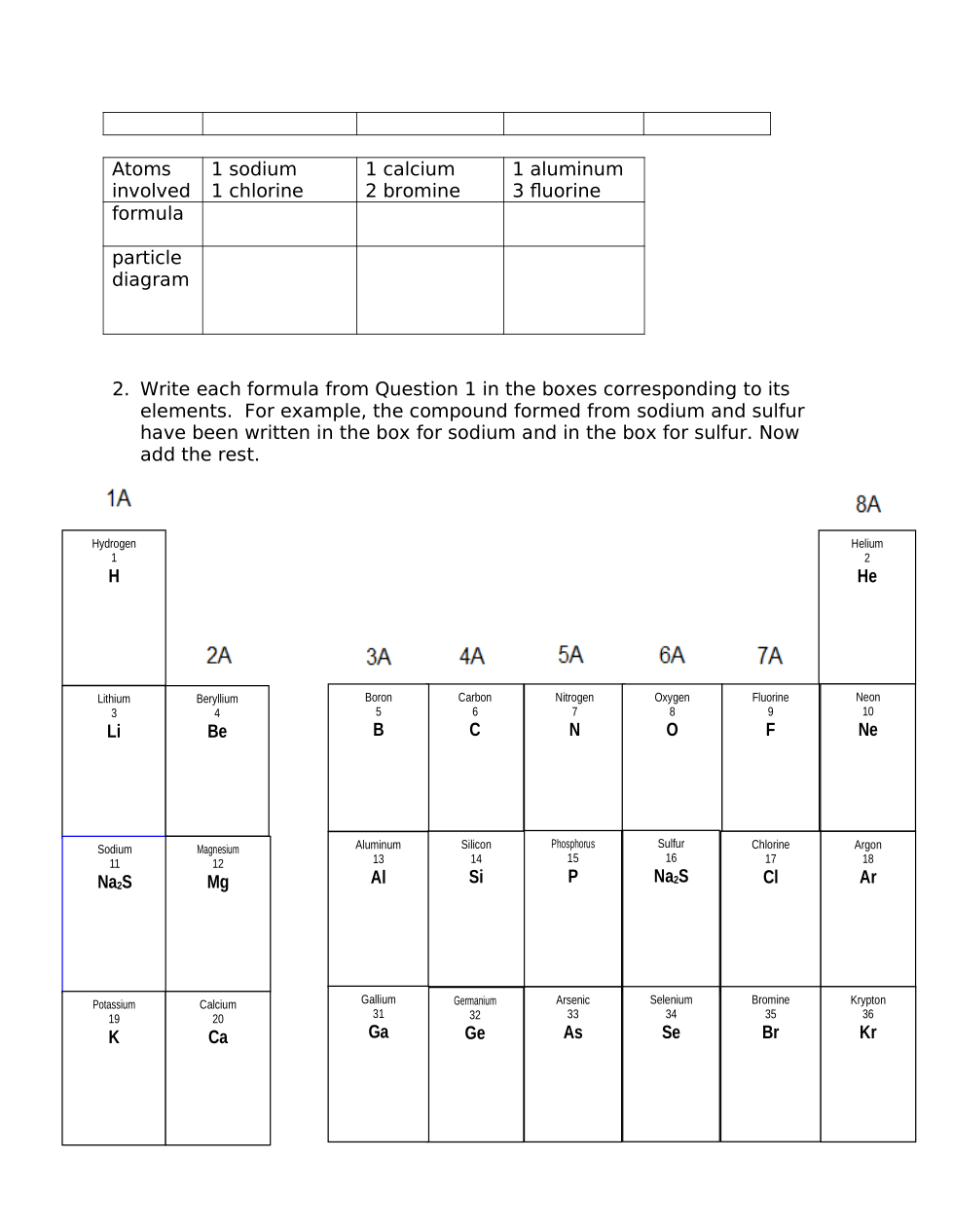
Write each formula from Question 1 that contains lithium in the answer box.
1
Write each formula from Question 1 that contains oxygen in the answer box.
1
Write each formula from Question 1 that contains fluorine in the answer box.
1
Write each formula from Question 1 that contains sodium in the answer box.
1
Write each formula from Question 1 that contains magnesium in the answer box.
1
Write each formula from Question 1 that contains aluminum in the answer box.
1
Write each formula from Question 1 that contains sulfur in the answer box.
1
Write each formula from Question 1 that contains chlorine in the answer box.
1
Write each formula from Question 1 that contains calcium in the answer box.

1
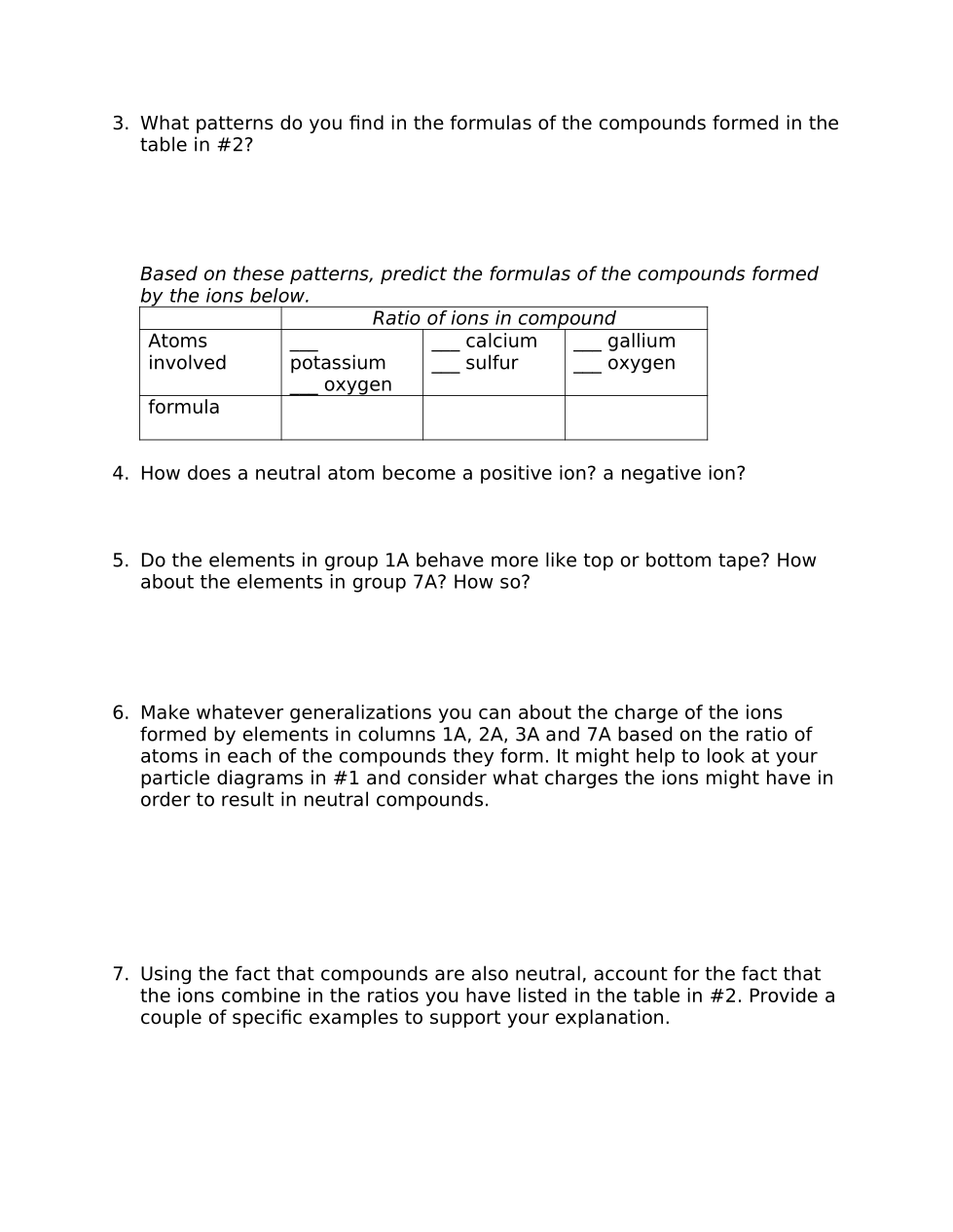
What patterns do you find in the formulas of the compound formed in the table?
1
Write the ratio of ions in the compound that contains potassium and oxygen. Include the formula of the compound.
1
Write the ratio of ions in the compound that contains calcium and sulfur. Include the formula of the compound.
1
Write the ratio of ions in the compound that contains gallium and oxygen. Include the formula of the compound.
1
How does a neutral atom become a positive ion? a negative ion? Use terminology from the sticky tape lab.
1
Do the elements in group 1A behave more like top or bottom tape? How about the elements in group 7A? How so?
1
Make whatever generalizations you can about the charge of the ions formed by elements in columns 1A, 2A, 3A and 7A based on the ratio of atoms in each of the compounds they form. It might help to look at your particle diagrams in #1 and consider what charges the ions might have in order to result in neutral compounds.
1
Using the fact that compounds are also neutral, account for the fact that the ions combine in the ratios you have listed in the table in #2. Provide a couple of specific examples to support your explanation.