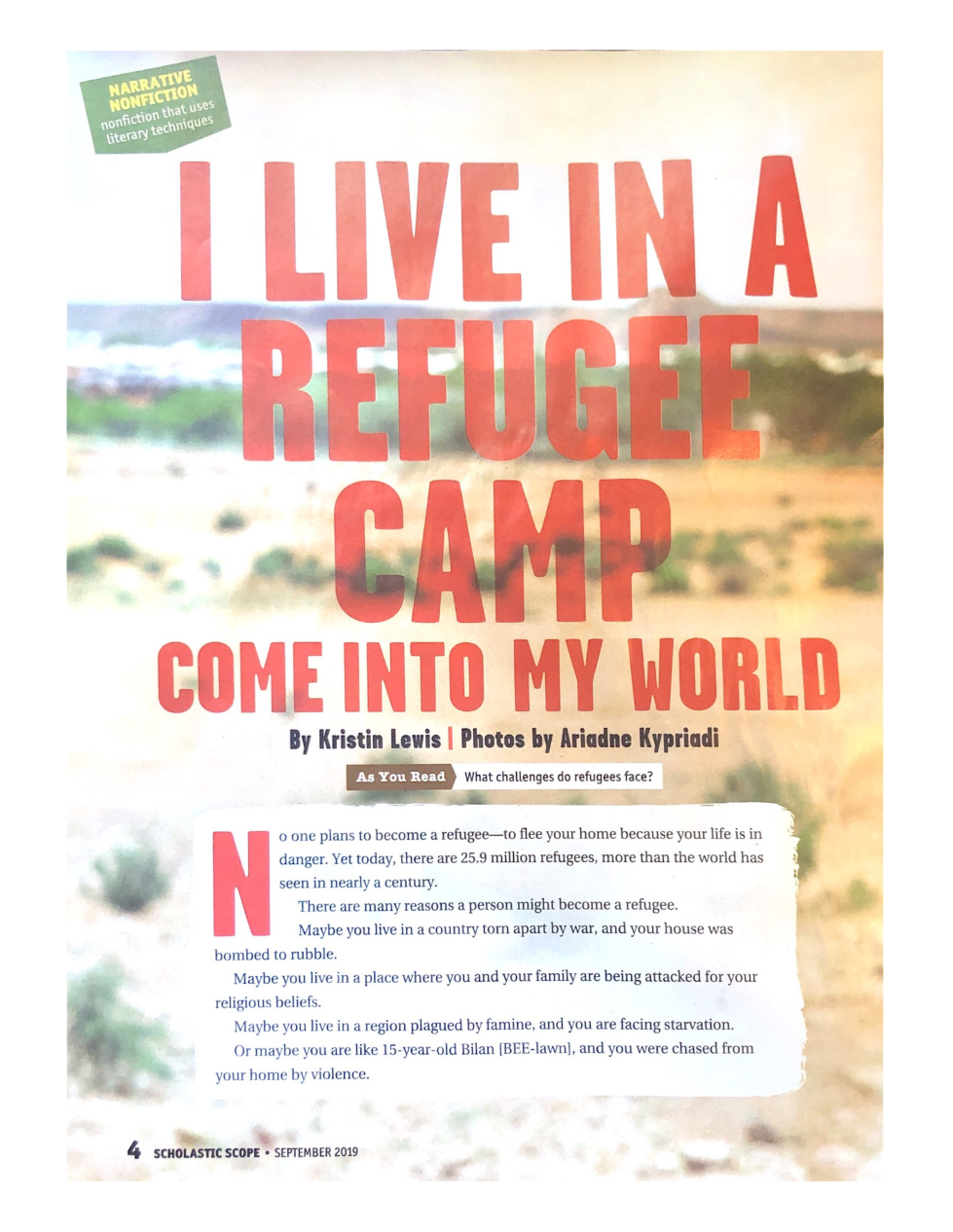
Read the article about Bilan's life below.
Using information from the video, write a definition of the word refugee.
How does the mood of the video shift at 3:29? Consider the narration, visuals, and music.
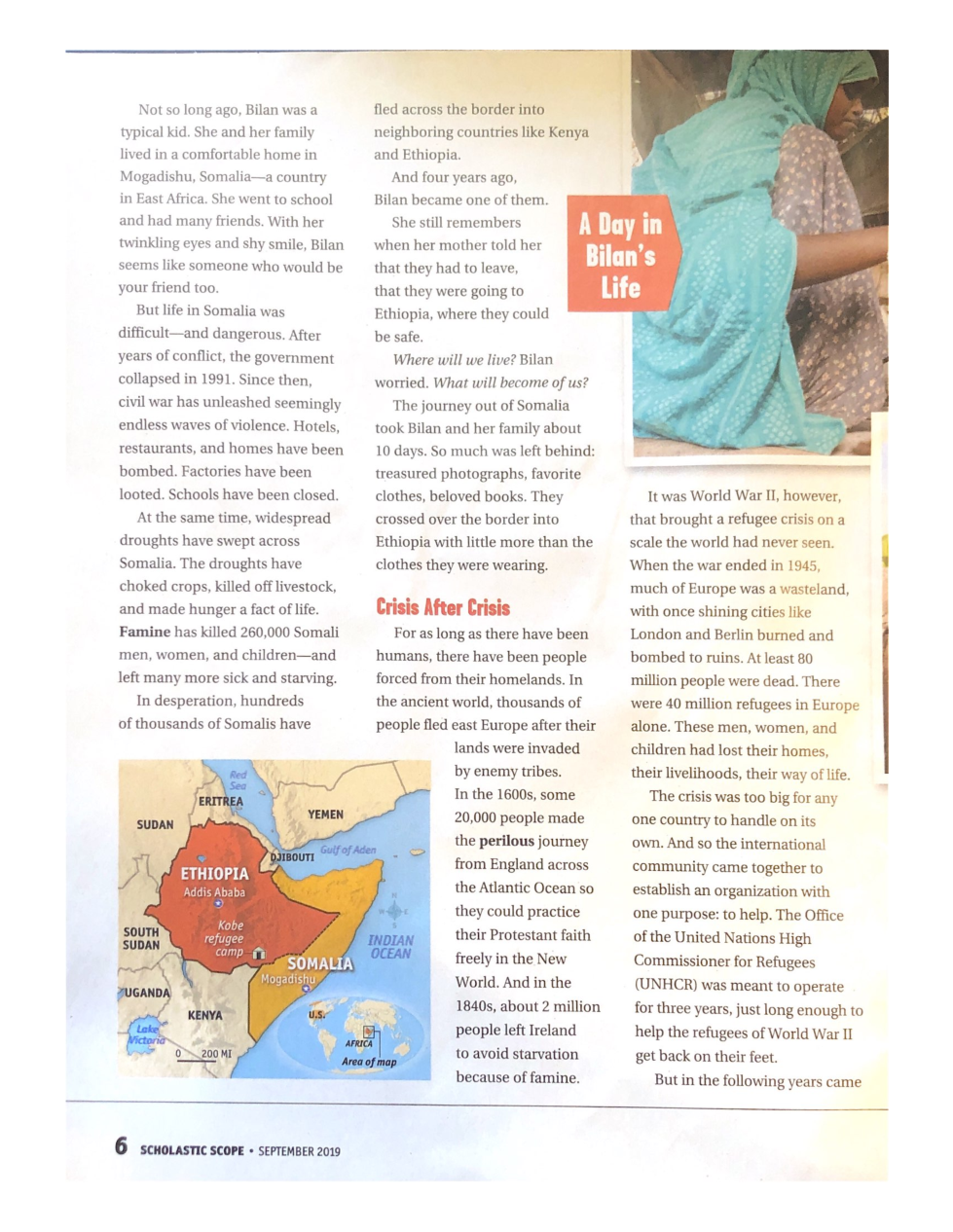
In the introduction, why might author Kristin Lewis switch from third person to second person? (author’s craft)
On page 6, Lewis writes that Bilan was a “typical kid” who went to school and had many friends. Why might Lewis introduce Bilan in this way? (author’s craft)
Describe the structure of the first paragraph of the section “Crisis After Crisis.” How does this paragraph connect to the article’s introduction? (text structure)

What is the purpose of “Crisis After Crisis”? (text structure)

Find the Central Idea
Based on information in “Life in the Camp,” how does life in the Kobe camp compare with life in other refugee camps? (key ideas and details, inference)
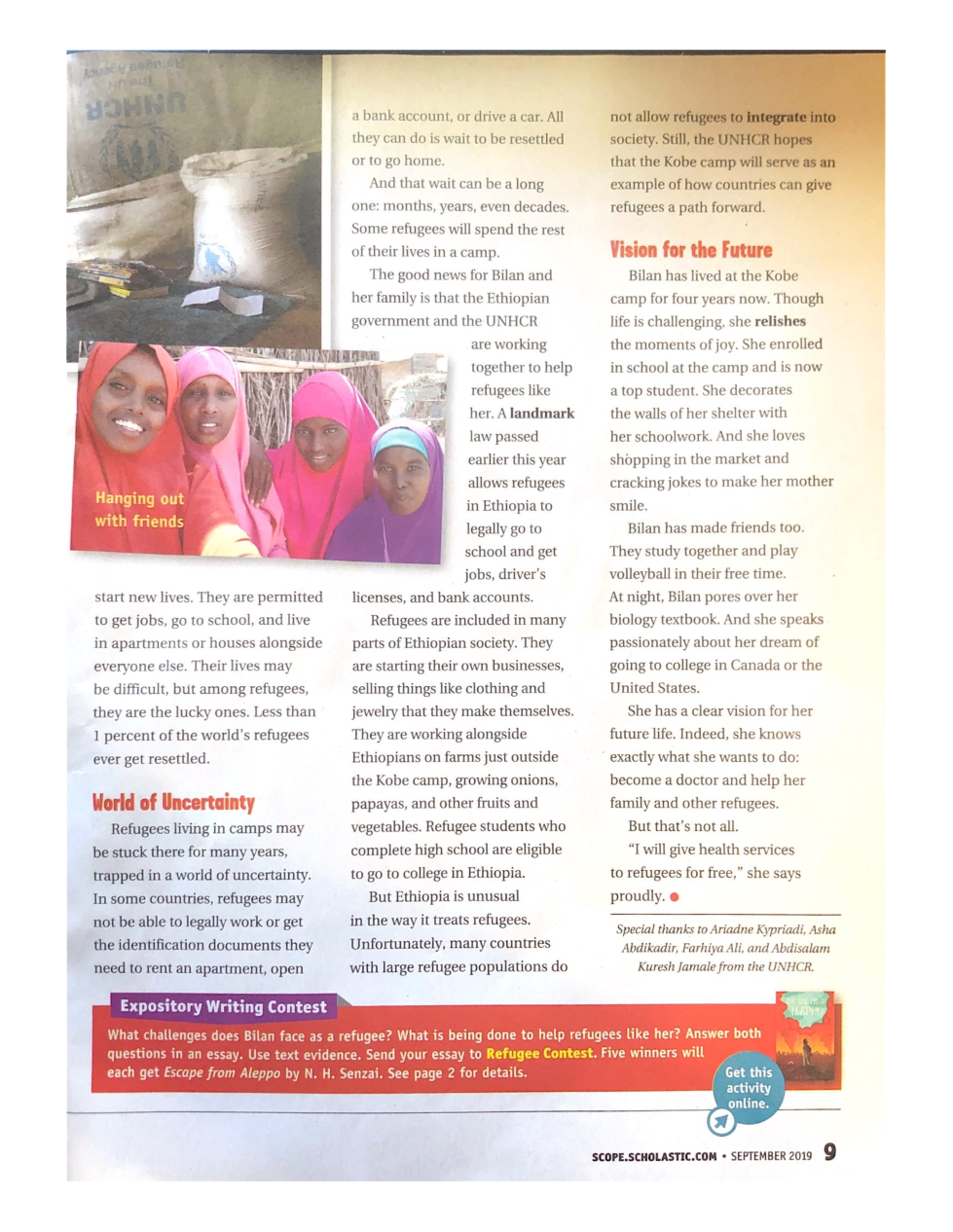
On page 9, Lewis writes that refugees who live in camps are “trapped in a world of uncertainty.” What does she mean? (interpreting text)
. In the section “World of Uncertainty,” what is Lewis’s tone, or attitude, as she talks about how Ethiopia treats refugees? (tone)
After Reading “I Live in a Refugee Camp”
How does the segment about Bilan’s life in the Kobe camp (starting at 2:00) add to your understanding of the article?
At 2:56, narrator Kristin Lewis says, “For many refugee children, education is one of their hardest-won assets.” What does she mean?
Consider Bilan at the end of the article. Is her situation hopeful?
Why is it important to learn about refugees?
What does thid sidebar on page 8 help the reader understand? (text features)