Log in
Sign up for FREE
arrow_back
Library

Digestive System Labeling

star
star
star
star
star
Last updated almost 2 years ago
21 questions
1
1
1
1
1
1
1
1
1
2
3
4
1
1
1
1
1
1
1
1
1
Question 6
6.

Question 7
7.

Question 8
8.

Question 9
9.

Question 10
10.

Question 11
11.

Question 12
12.

Question 13
13.

Question 14
14.

Question 15
15.

Question 16
16.

Question 17
17.

Question 18
18.

Question 19
19.

Question 20
20.

Question 21
21.

Question 1
1.

Question 2
2.

Question 3
3.

Question 4
4.

Question 5
5.

What is the function of the mouth?
teeth physically break down food and saliva break carbohydrates
stores food and chemially breaks down food
absorb nutrients
absorbs excess water
What is the function of the esophagus?
teeth physically break down food and saliva break carbohydrates
stores food and chemially breaks down food
passageway of food from the mouth to the stomach
absorbs excess water
What is the function of the stomach
teeth physically break down food and saliva break carbohydrates
stores food and chemially breaks down food
passageway of food from the mouth to the stomach
absorbs excess water
What is the function of the small intestine?
teeth physically break down food and saliva break carbohydrates
stores food and chemially breaks down food
absorbs nutrients into the blood
absorbs excess water
What is the function of the large intestine?
teeth physically break down food and saliva break carbohydrates
stores food and chemially breaks down food
absorbs nutrients into the blood
absorbs excess water
What is the function of the rectum?
stores feces
stores food and chemially breaks down food
absorbs nutrients into the blood
absorbs excess water
Put the organs of the digestive system in order based on how food travels
mouth
large intestine
stomach
esophagus
small intestine
What type of digestion physically breaks down food?
chemical digestion
mechanical digestion
persistalisis
enzyme digestion
What type of digestion uses enzymes to break down food into monomers?
chemical digestion
mechanical digestion
persistalisis
enzyme digestion
Click on the two organs were mechanical digestion occur?
mouth
large intestine
stomach
esophagus
rectum
Click on the three organs were chemical digestion occurs?
mouth
large intestine
stomach
small intestine
rectum
Complete the table by moving the items to the correct column
water is absorbed
chemical digestion is completed
nutrients are absorbed
undigestible material is collected (makes feces)
Small Intestine
Large Intestine
Diarrhea is a condition in which feces contain too much water. Which part of the digestive system is not working properly for this to occur?
small intestine
stomach
mouth
large intestine
Carbohydrates are broken down in the mouth. What is the monomer of carbohydrates?
nucleic acids
fatty acids
amino acids
monosaccharides
Proteins are broken down in the stomach. What is the monomer of proteins?
nucleic acids
fatty acids
amino acids
monosaccharides
Lipids are broken down in the small intestine. What is the monomer of lipids?
nucleic acids
fatty acids
amino acids
monosaccharides
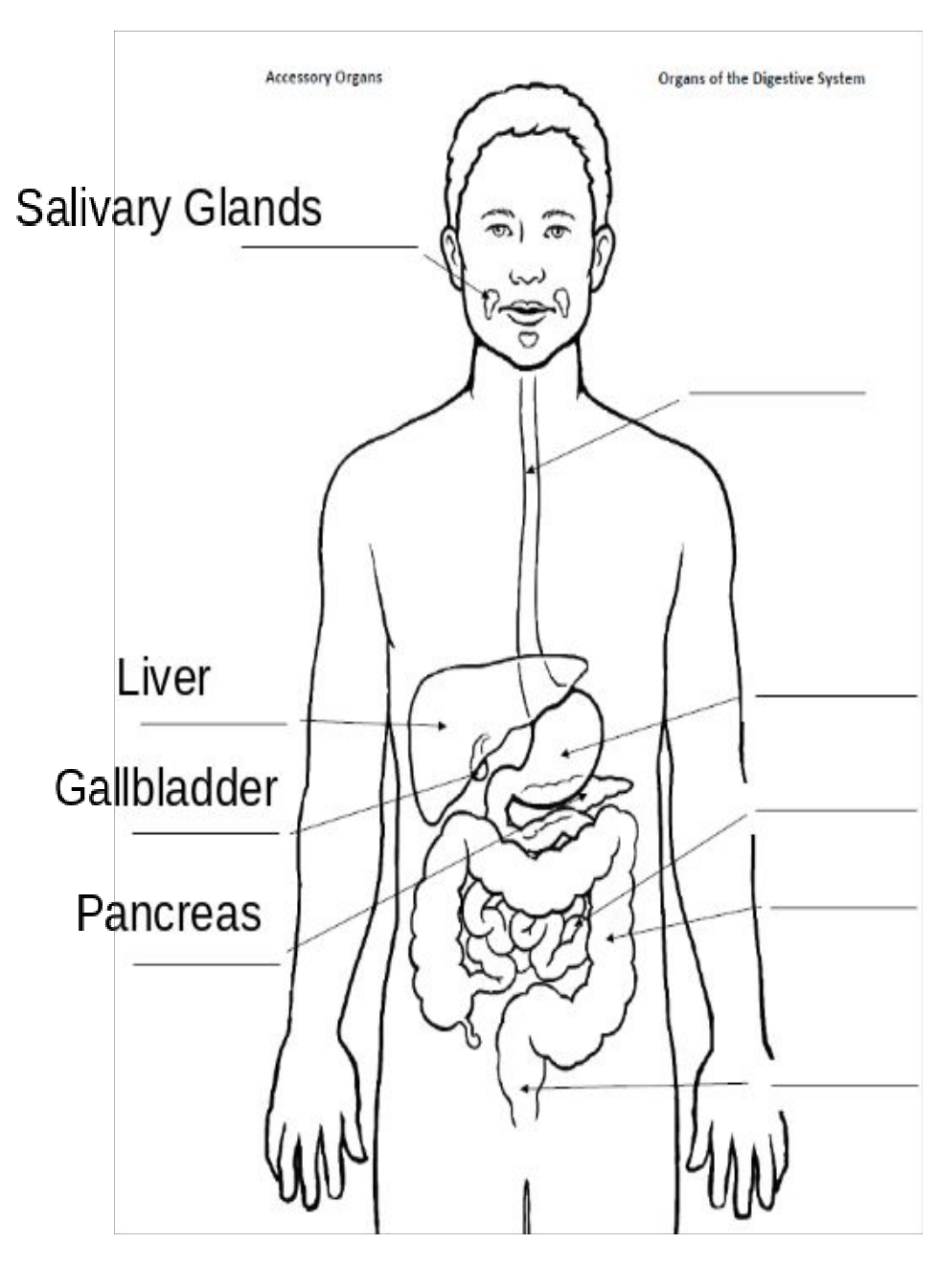
Identify organ number #1
A. mouth
B. small intestine
C. stomach
D. esophagus
Identify is organ #2
A. mouth
B. stomach
C. small intestine
D. large intestine
Identify is organ #3 (organ that is very long and absorbs nutrients)
A. small intestine
B. rectum
C. stomach
D. mouth
Identify organ #4 (absorbs water)
A. rectum
B. anus
C. large intestine
D. appendix
Identify organ #5
A. small intestine
B. colon
C. spleen
D. rectum