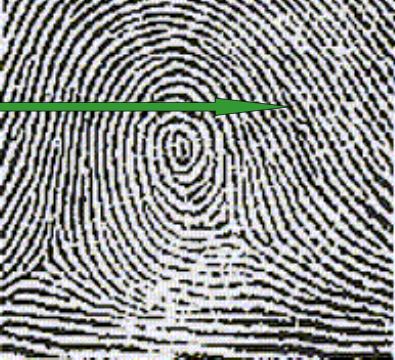
Fingerprints collected by the FBI and local law enforcement is loaded into the fingerprint database known as the __________________ system.
2 points
2
Question 2
2.
This chemical is used only on paper.
2 points
2
Question 3
3.
This chemical produces a white print.
2 points
2
Question 4
4.
This chemical to lift latent fingerprints is toxic to inhale or ingest.
2 points
2
Question 5
5.
Now agencies submitting fingerprints electronically for matching can expect results for criminal investigations within _________ hours.
2 points
2
Question 6
6.
By 1987, the FBI had 23 million criminal fingerprint cards on file, and getting a match with a fingerprint
found at a crime scene and one stored on file required manual searching. It could take as long as __________ months to find a match.
2 points
2
Question 7
7.
Proper evidence collection techniques involve _________________ the fingerprints before they are lifted.
2 points
2
Question 8
8.
_____________________ or magnetic powders can also be used. They are less messy than carbon-based powders.
2 points
2
Question 9
9.
Which chemical needs UV light to see the latent print?
6 points
6
Question 10
10.
Which objects can leave behind traces on the skin?
6 points
6
Question 11
11.
In the future, technologies are currently being developed to use these physical features as identification:
2 points
2
Question 12
12.
Francesca told police that her neighbor, ____________ Ramón Velásquez, had committed the crime.
2 points
2
Question 13
13.
He took the bloody doorpost and fingerprint samples of Pedro Velásquez (Figure 6-18) to Juan Vucetich, who in late 1891 had opened the first fingerprint bureau in South America in __________________.
8 points
8
Question 14
14.
Essay--Write the answer to one essay question in the space provided below.
FCA’s 1. Write in complete sentences and paragraph form. 2. Use Chapter 6 terminology to answer questions(example: minutiae, whorl, ninhydrin, etc...).
3. Provide inferences, other thoughts, or personal experiences in your answer whenever possible.
Question #1 "To get a conviction, I would rather have one good fingerprint than a pound of hair and fiber evidence." Do you agree or disagree? Support your answer(complete sentences).
Question #2 Is it possible to alter fingerprints? Defend your answer.
2 points
2
Question 15
15.
A fingerprint is formed when a finger makes contact with a _________________.
6 points
6
Question 16
16.
Newer processes can obtain much more information about the fingerprint owner.......
2 points
2
Question 17
17.
The sweat glands located on the fingertips are called _________________ glands.
2 points
2
Question 18
18.
What percent of the non drug user population will have cocaine on their fingertips?
6 points
6
Question 19
19.
Which of the following are types of fingerprints?
2 points
2
Question 20
20.
Results need to be checked and ___________________ to prevent false convictions and to maintain the integrity of the science.
2 points
2
Question 21
21.
A small triangular region is one characteristic found in a fingerprint. This triangular region is known as a
2 points
2
Question 22
22.
Oldest known documents showing fingerprints dates from the ______________.
2 points
2
Question 23
23.
_______________________ was the first person to document incoming prisoners with a photograph, the forerunner of the modern mug shot.
2 points
2
Question 24
24.
This book was the first one which used fingerprints as a major breakthrough to dramatically solve a case.
1 point
1
Question 25
25.
He (and colleagues) created a system that divided fingerprint records into groups.
2 points
2
Question 26
26.
Fingerprint mutilation is hardly a new concept. Notorious 1930s bank robber ____________________ attempted to evade identification by using acid to burn his fingertips, according to the National Museum of Crime and Punishment in the District of Columbia.
10 points
10
Question 27
27.
According to the articles on Fingerprint mutilation, describe 5 different ways to mutilate fingerprints.
2 points
2
Question 28
28.
Patent fingerprints, or visible fingerprints, are left on a smooth surface when blood, ink, or some other liquid comes in contact with the hands and is then transferred to that surface.
2 points
2
Question 29
29.
Plastic fingerprints are actual indentations left in some soft material such as clay, putty or wax.
2 points
2
Question 30
30.
Latent fingerprints, or surface fingerprints, are caused by the transfer of skin onto a surface.
2 points
2
Question 31
31.
Contrary to what we see on television, fingerprint matching is not carried out by a computer in a matter of seconds.
2 points
2
Question 32
32.
As soon as fingerprints were discovered to be a reliable means of identification, criminals began to devise ways to alter them so they could avoid being identified. American Public Enemy Number One in the 1930s, John Dillinger, burned his fingertips with a torch to change their appearance.
2 points
2
Question 33
33.
Fingerprint collection began in 1856 by:
2 points
2
Question 34
34.
In 1879, the assistant clerk in the records office at the Police Station in Paris created a way to identify criminals. The system was first used in 1883 to identify a repeating offender. His name is:
2 points
2
Question 35
35.
Beginning in 1896, Sir Edmund Richard Henry, with the help of two colleagues, created a system that divided fingerprint records into groups based on whether they have:
2 points
2
Question 36
36.
The imprint of a fingerprint consists of natural secretions of the sweat glands that are present:
2 points
2
Question 37
37.
Two things a forensic examiner looks for on a fingerprint are the presence of a core and:
2 points
2
Question 38
38.
Fingerprint arches may be:
2 points
2
Question 39
39.
While looking at the basic fingerprint patterns can quickly help eliminate a suspect, in order to positively match a print found at a crime scene to an individual, more is needed. Every individual, including identical twins, has a unique fingerprint due to unique ridge patterns called: