Identify the insertion of the muscle in the diagram below
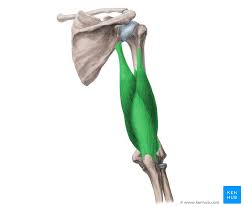
Identify the insertion of the muscle in the diagram below
Which muscle(s) contributes to forearm flexion?
Identify the actions of the flexor carpi ulnaris.
Identify the insertion of the muscle in the diagram below
Identify the insertion of the muscle in the diagram below
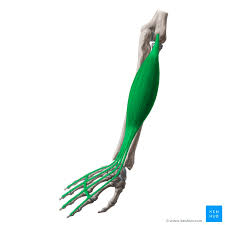
Identify the insertions(s) of the muscle in the diagram below
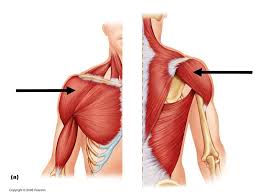
What are the actions of this muscle?

Match the muscles of the lower extremity to the appropriate description
| Draggable item | arrow_right_alt | Corresponding Item |
|---|---|---|
Levator scapulae | arrow_right_alt | O: anterior surface of ribs 3-5; I: coracoid process |
Triceps brachii | arrow_right_alt | I: upper medial border of scapula; A: elevates and adducts scapula |
Deltoids | arrow_right_alt | O: T2-T5, I: medial border of scapula |
Latissimus dorsi | arrow_right_alt | O: C7-T1, A: retracts and rotates scapula to rest position |
Pectoralis minor | arrow_right_alt | A: extends and adducts arm: I: intertubercle groove of humerus |
Biceps brachii | arrow_right_alt | O: acromion, spine of scapula and lateral 1/3 of clavicle, A: abducts, extends and medially & laterally rotates the arm |
Pronator Teres | arrow_right_alt | O: inferior border of scapula, A: medially rotates and adducts arm |
Rhomboid major | arrow_right_alt | A: extends forearm, I: olecranon process |
Teres major | arrow_right_alt | O: supraglenoid tubercle of scapula & coracoid process of the scapula, I: posterior border of bicipital/radial tuberosity of radius |
Rhomboid minor | arrow_right_alt | I: lateral shaft/convexity of radius, A: pronates and flexes forearm |
CQ: Although all the anatomical parts of muscle work together to give it it's characteristics, which of the following proteins listed below would be most associated with the characteristics of excitability?
CQ: Put in the correct order
Tropomyosin covers binding sites, myosin no longer bound
Sliding action of actin over myosin (Sliding Filament Theory)
Myosin heads combine with actin-binding sites
Calcium ions released from SR and binds with troponin
Sodium ions enter the muscle fiber, initiating an action potential that travels down the T-tubules to the Terminal Cisternae
Calcium binds to troponin, shifting tropomyosin to unblock actin-binding sites
Ach released by the synaptic vesicles crosses synaptic cleft; then acetylcholinesterase breaks down Ach
Motor nerve impulses (AP) to the neuromuscular junction
With ATP present, ATPase splits ATP to ADP + P + Energy
Calcium is actively pumped back to SR
Impulse stops, calcium or ATP depleted, calcium ions return to SR