Chapter 9: DĒ CONIŪRĀTIŌNE CATILĪNAE
star
star
star
star
star
Last updated almost 4 years ago
64 Nsɛmmisa
1
1
1
1
1
1
1
1
1
1
1
1
1
1
1
1
1
1
1
1
1
1
1
1
1
1
1
1
1
1
1
1
1
1
1
1
1
1
1
1
1
1
1
1
1
1
1
1
1
1
1
1
1
1
1
1
1
1
1
1
1
1
1
1
https://scsk12.sharepoint.com/:b:/s/LatinII530/EWNoPZkaERRMkag9bsJZIcwBSmYvpQKMK8g1in1Ur2rCOQ?e=FVaDTU
https://scsk12.sharepoint.com/:b:/s/LatinII530/Eezu-qonTA1Ck20gWZ6wsm4BmNKR6RZiLdiBfvboswEQ5Q?e=oD0b8x
https://scsk12.sharepoint.com/:b:/s/LatinII530/EfGE5_tvDg9Ip8_0XKTe9QAB1N4CLnHpLtxGspkneAhQSg?e=liI7xj
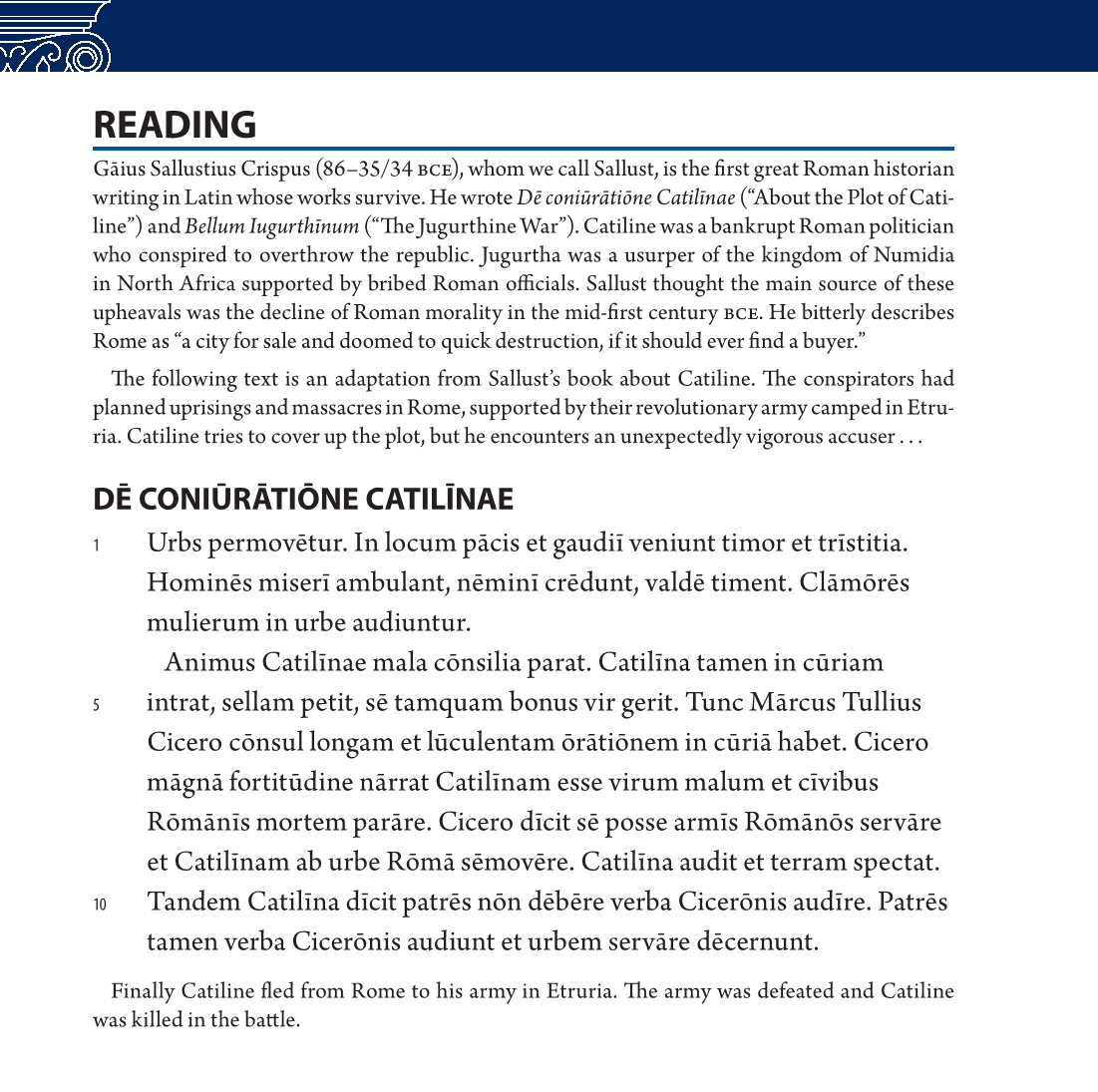
Translate: DĒ CONIŪRĀTIŌNE CATILĪNAE
Catiline
About
of
the
Conspiracy
Identify the verb/s in the following sentence:
Urbs permovētur.
Identify the nominative noun/s in the following sentence:
Urbs permovētur.
Translate the following sentence:
Urbs permovētur.
The city
is perturbed
Identify the verb/s in the following sentence:
In locum pācis et gaudiī veniunt timor et trīstitia.
Identify the nominative noun/s in the following sentence:
In locum pācis et gaudiī veniunt timor et trīstitia.
Identify the accusative noun/s in the following sentence:
In locum pācis et gaudiī veniunt timor et trīstitia.
Identify the genitive noun/s in the following sentence:
In locum pācis et gaudiī veniunt timor et trīstitia.
Translate the following sentence:
In locum pācis et gaudiī veniunt timor et trīstitia.
come
joy
and sadness
in
of
the place
peace
and
fear
Identify the verb/s in the following sentence:
Hominēs miserī ambulant, nēminī crēdunt, valdē timent.
Identify the nominative noun/s in the following sentence:
Hominēs miserī ambulant, nēminī crēdunt, valdē timent.
Translate the following sentence:
Hominēs miserī ambulant, nēminī crēdunt, valdē timent.
nobody
<being> miserable
fear
walk
believe
greatly
people
Identify the verb/s in the following sentence:
Clāmōrēs mulierum in urbe audiuntur.
Identify the nominative noun/s in the following sentence:
Clāmōrēs mulierum in urbe audiuntur.
Identify the genitive noun/s in the following sentence:
Clāmōrēs mulierum in urbe audiuntur.
Identify the dative noun/s in the following sentence:
Clāmōrēs mulierum in urbe audiuntur.
Translate the following sentence:
Clāmōrēs mulierum in urbe audiuntur.
are heard
women
cries
the city
in
of
Identify the verb/s in the following sentence:
Animus Catilīnae mala cōnsilia parat
Identify the nominative noun/s in the following sentence:
Animus Catilīnae mala cōnsilia parat
Identify the accusative noun/s in the following sentence:
Animus Catilīnae mala cōnsilia parat
Identify the genitive noun/s in the following sentence:
Animus Catilīnae mala cōnsilia parat
Translate the following sentence:
Animus Catilīnae mala cōnsilia parat
plans
Catiline
the mind
is devising
of
bad
Identify the verb/s in the following sentence:
Catilīna tamen in cūriam intrat, sellam petit, sē tamquam bonus vir gerit.
Identify the nominative noun/s in the following sentence:
Catilīna tamen in cūriam intrat, sellam petit, sē tamquam bonus vir gerit.
Identify the accusative noun/s in the following sentence:
Catilīna tamen in cūriam intrat, sellam petit, sē tamquam bonus vir gerit.
Translate the following sentence:
Catilīna tamen in cūriam intrat, sellam petit, sē tamquam bonus vir gerit.
seeks
a seat
comes
behaves
the senate
however
into
like
Catiline
a good
man
Identify the verb/s in the following sentence:
Tunc Mārcus Tullius Cicero cōnsul longam et lūculentam ōrātiōnem in cūriā habet.
Identify the nominative nouns/s in the following sentence:
Tunc Mārcus Tullius Cicero cōnsul longam et lūculentam ōrātiōnem in cūriā habet.
Identify the accusative nouns/s in the following sentence:
Tunc Mārcus Tullius Cicero cōnsul longam et lūculentam ōrātiōnem in cūriā habet.
Identify the accusative adjective/s in the following sentence:
Tunc Mārcus Tullius Cicero cōnsul longam et lūculentam ōrātiōnem in cūriā habet.
Identify the ablative noun/s in the following sentence:
Tunc Mārcus Tullius Cicero cōnsul longam et lūculentam ōrātiōnem in cūriā habet.
Translate the following sentence:
Tunc Mārcus Tullius Cicero cōnsul longam et lūculentam ōrātiōnem in cūriā habet.
long
the consul
speech
a
the
senate
splendid
and
delivers
in
Then
Marcus Tullius Cicero
Identify the verb/s in the following sentence:
Cicero māgnā fortitūdine nārrat Catilīnam esse virum malum et cīvibus Rōmānīs mortem parāre.
Identify the nominative noun/s in the following sentence:
Cicero māgnā fortitūdine nārrat Catilīnam esse virum malum et cīvibus Rōmānīs mortem parāre.
Identify the accusative noun/s in the following sentence:
Cicero māgnā fortitūdine nārrat Catilīnam esse virum malum et cīvibus Rōmānīs mortem parāre.
Identify the accusative adjective/s in the following sentence:
Cicero māgnā fortitūdine nārrat Catilīnam esse virum malum et cīvibus Rōmānīs mortem parāre.
Identify the ablative noun/s in the following sentence:
Cicero māgnā fortitūdine nārrat Catilīnam esse virum malum et cīvibus Rōmānīs mortem parāre.
Identify the ablative adjective/s in the following sentence:
Cicero māgnā fortitūdine nārrat Catilīnam esse virum malum et cīvibus Rōmānīs mortem parāre.
Identify the dative noun/s in the following sentence:
Cicero māgnā fortitūdine nārrat Catilīnam esse virum malum et cīvibus Rōmānīs mortem parāre.
Identify the dative adjective/s in the following sentence:
Cicero māgnā fortitūdine nārrat Catilīnam esse virum malum et cīvibus Rōmānīs mortem parāre.
Translate the following sentence:
Cicero māgnā fortitūdine nārrat Catilīnam esse virum malum et cīvibus Rōmānīs mortem parāre.
for Roman citizens
tells that
Cicero
with great courage
and that
a bad man
death
is
Catiline
he is preparing
Identify the verb/s in the following sentence:
Cicero dīcit sē posse armīs Rōmānōs servāre et Catilīnam ab urbe Rōmā sēmovēre.
Identify the nominative noun/s in the following sentence:
Cicero dīcit sē posse armīs Rōmānōs servāre et Catilīnam ab urbe Rōmā sēmovēre.
Identify the accusative noun/s in the following sentence:
Cicero dīcit sē posse armīs Rōmānōs servāre et Catilīnam ab urbe Rōmā sēmovēre.
Identify the ablative noun/s in the following sentence:
Cicero dīcit sē posse armīs Rōmānōs servāre et Catilīnam ab urbe Rōmā sēmovēre.
Translate the following sentence:
Cicero dīcit sē posse armīs Rōmānōs servāre et Catilīnam ab urbe Rōmā sēmovēre.
remove
Catiline
and
Cicero
the Romans
from
weapons
the city Rome
says that
he can
with
save
Identify the verb/s in the following sentence.
Catilīna audit et terram spectat.
Identify the nominative noun/s in the following sentence.
Catilīna audit et terram spectat.
Identify the accusative noun/s in the following sentence.
Catilīna audit et terram spectat.
Translate the following sentence.
Catilīna audit et terram spectat.
looking at
is listening
the floor (earth)
Catiline
and
Identify the verb/s in the following sentence:
Tandem Catilīna dīcit patrēs nōn dēbēre verba Cicerōnis audīre.
Identify the nominative noun/s in the following sentence:
Tandem Catilīna dīcit patrēs nōn dēbēre verba Cicerōnis audīre.
Identify the accuastive noun/s in the following sentence:
Tandem Catilīna dīcit patrēs nōn dēbēre verba Cicerōnis audīre.
Identify the genitive noun/s in the following sentence:
Tandem Catilīna dīcit patrēs nōn dēbēre verba Cicerōnis audīre.
Translate the following sentence:
Tandem Catilīna dīcit patrēs nōn dēbēre verba Cicerōnis audīre.
Catiline
the words
not
says that
listen to
of Cicero
the senators
should
At last
Identify the verb/s in the following sentence:
Patrēs tamen verba Cicerōnis audiunt et urbem servāre dēcernunt.
Identify the nominative noun/s in the following sentence:
Patrēs tamen verba Cicerōnis audiunt et urbem servāre dēcernunt.
Identify the accusative noun/s in the following sentence:
Patrēs tamen verba Cicerōnis audiunt et urbem servāre dēcernunt.
Identify the genitive noun/s in the following sentence:
Patrēs tamen verba Cicerōnis audiunt et urbem servāre dēcernunt.
Translate the following sentence:
Patrēs tamen verba Cicerōnis audiunt et urbem servāre dēcernunt.
to save
of Cicero
and
decide
do listen to
the words
the senators
the city
however
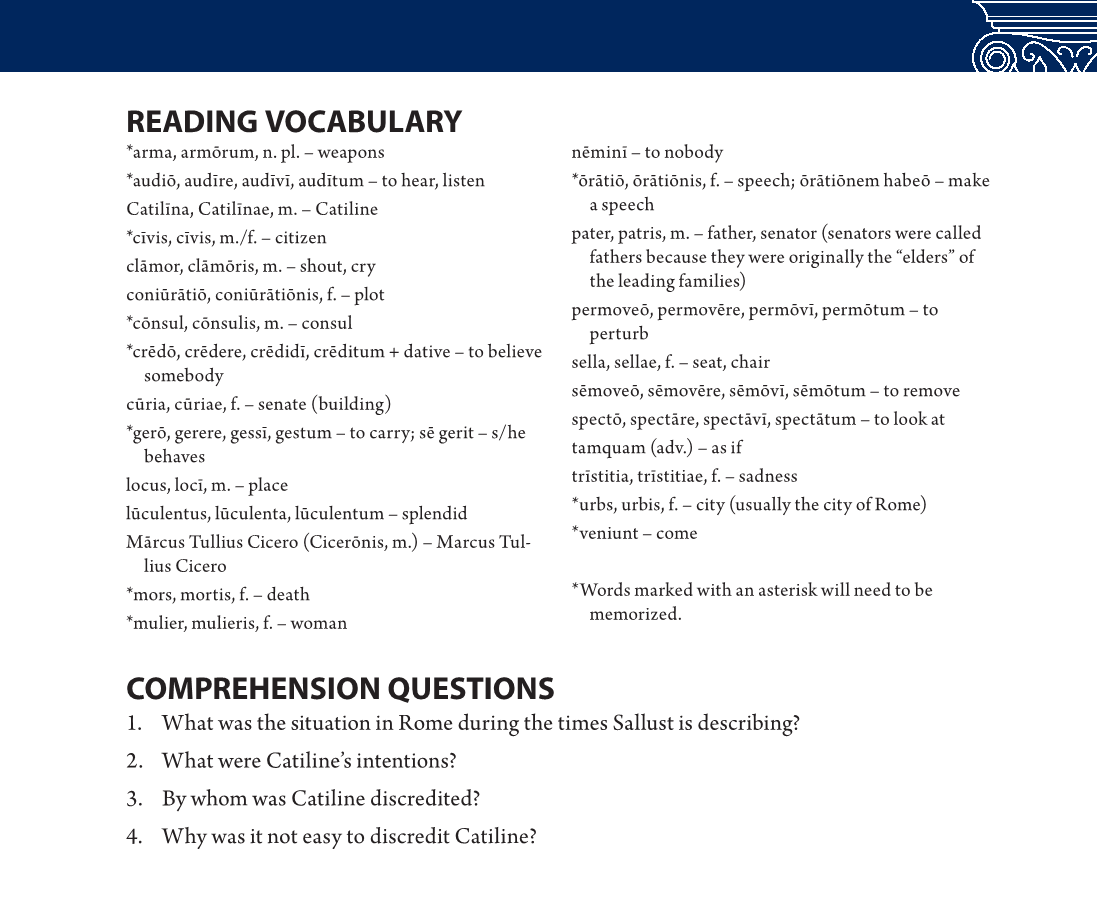
What was the situation in Rome during the times Sallust is describing?
What were Catiline’s intentions?
By whom was Catiline discredited?
Why was it not easy to discredit Catiline?