Log in
Sign up for FREE
arrow_back
Library

APUSH Chapter 20 - Girding for War 1861-1865

star
star
star
star
star
Last updated over 1 year ago
14 questions
1
RPV.01
0
0
Welcome to your Chapter 20 reading! We are cutting out half of this chapter in the interest of time.

As always, "Focus Questions" should guide your reading and notes, but you do not necessarily have to explicitly answer them.
1
Question 1
1.

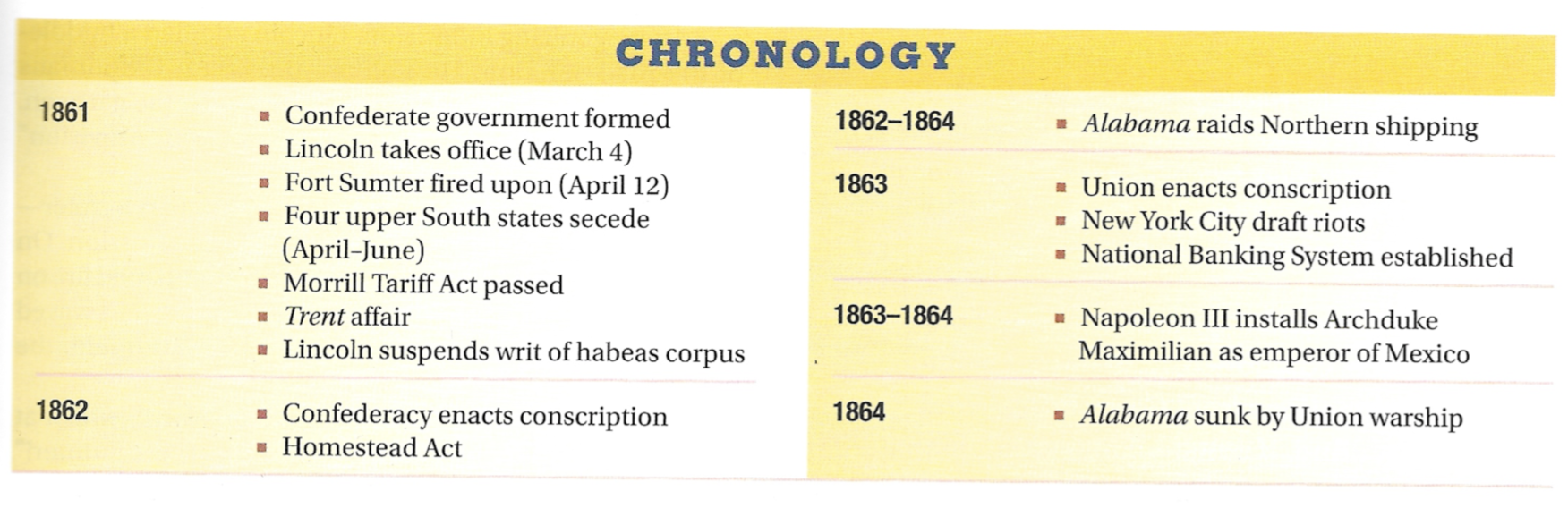
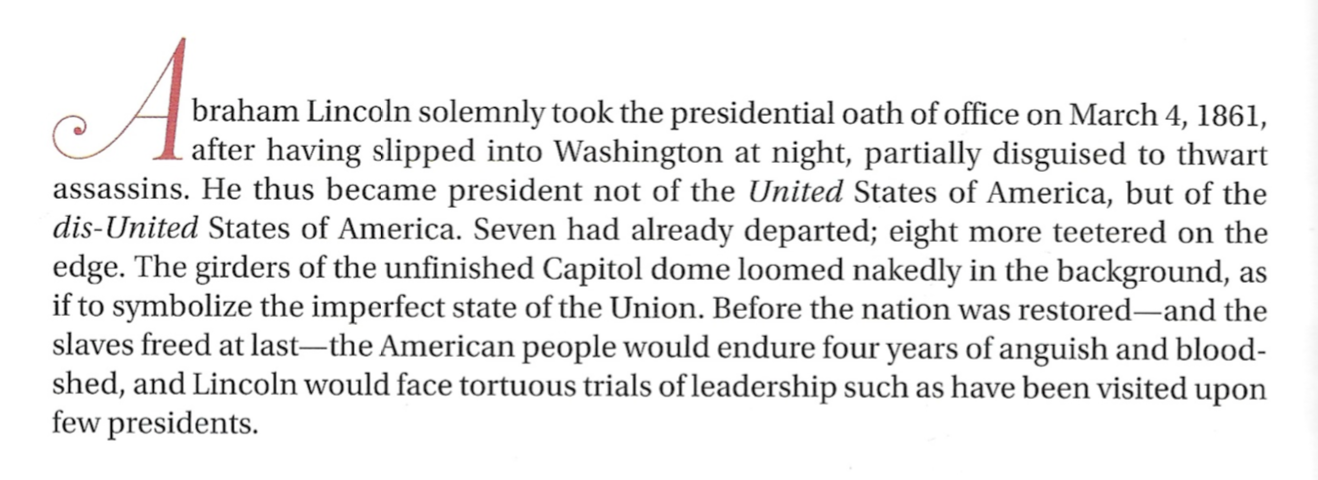
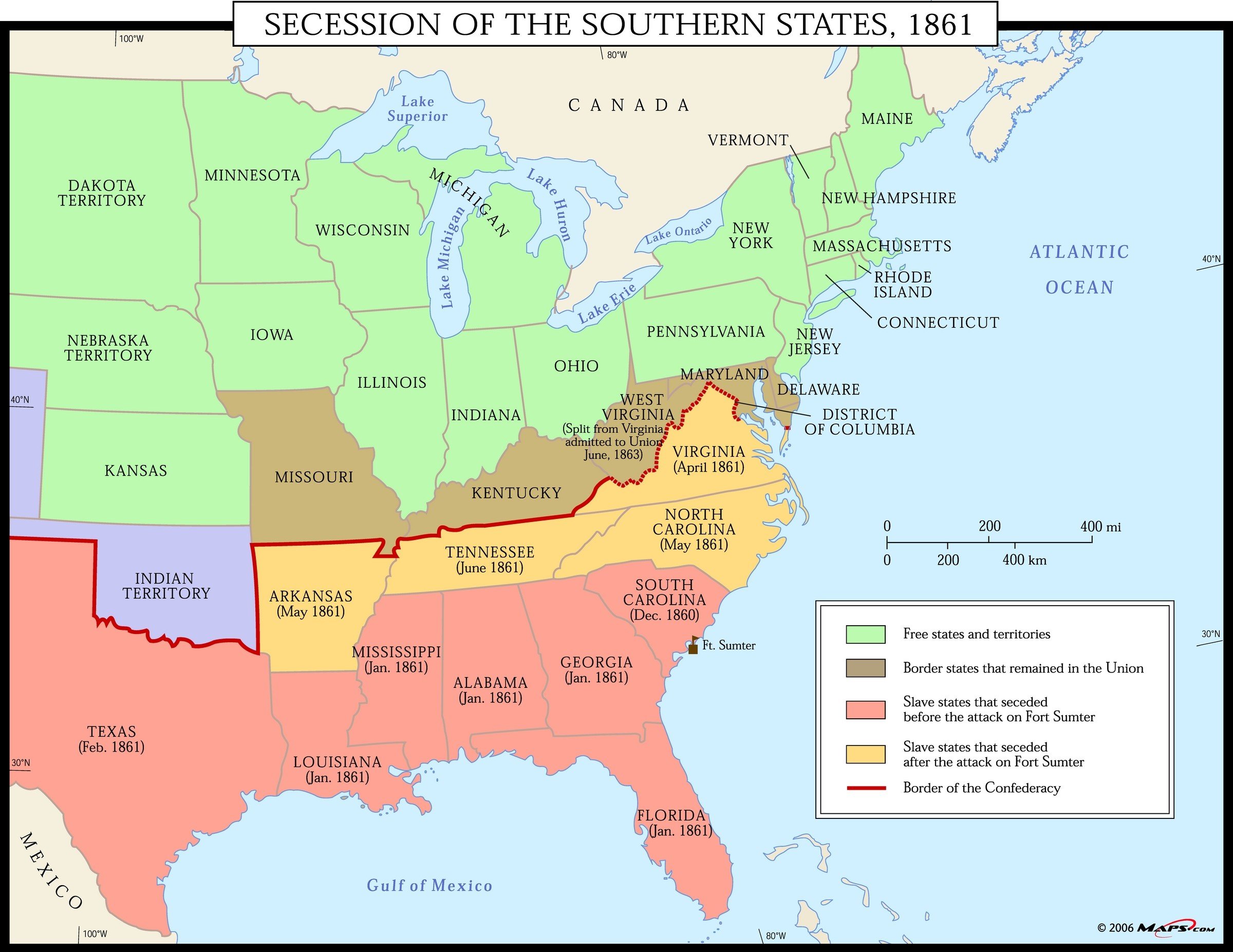
According to the figure, "seven had already departed" refers to the
SQN.01
1
Question 2
2.

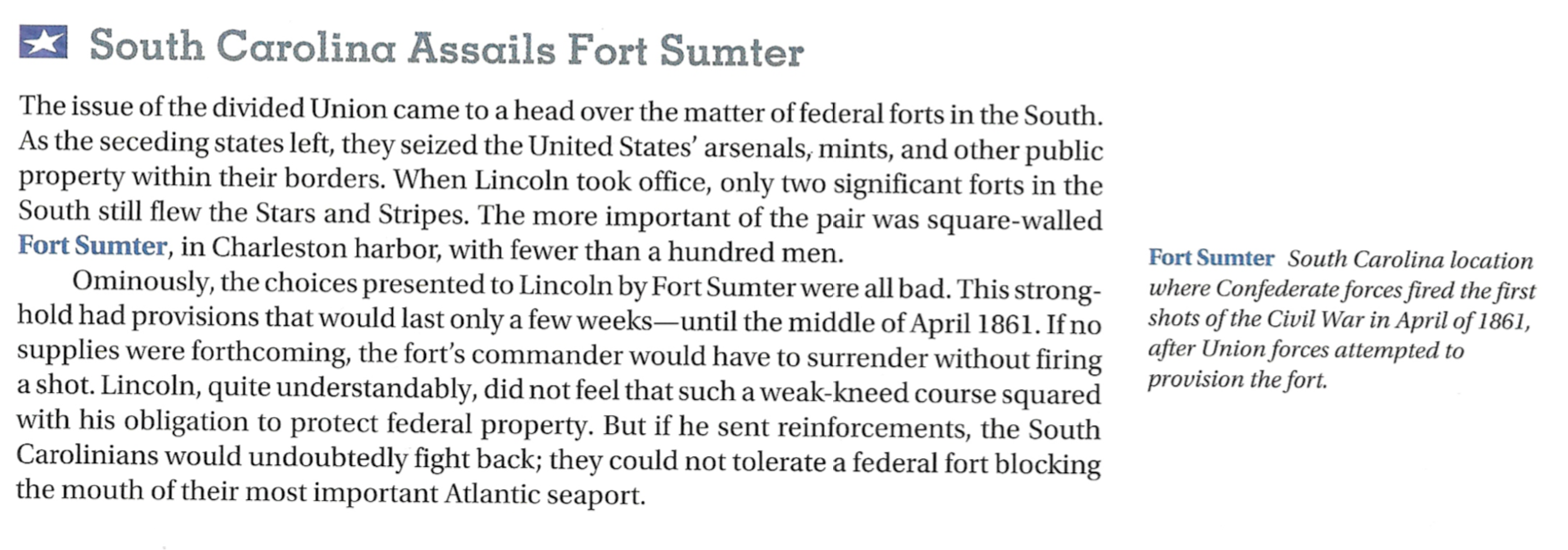
What is Lincoln most likely suggesting in his inaugural address by stating, "physically speaking, we cannot separate"?
RWC.01
1
Question 3
3.

IIWD.01
Question 4
4.

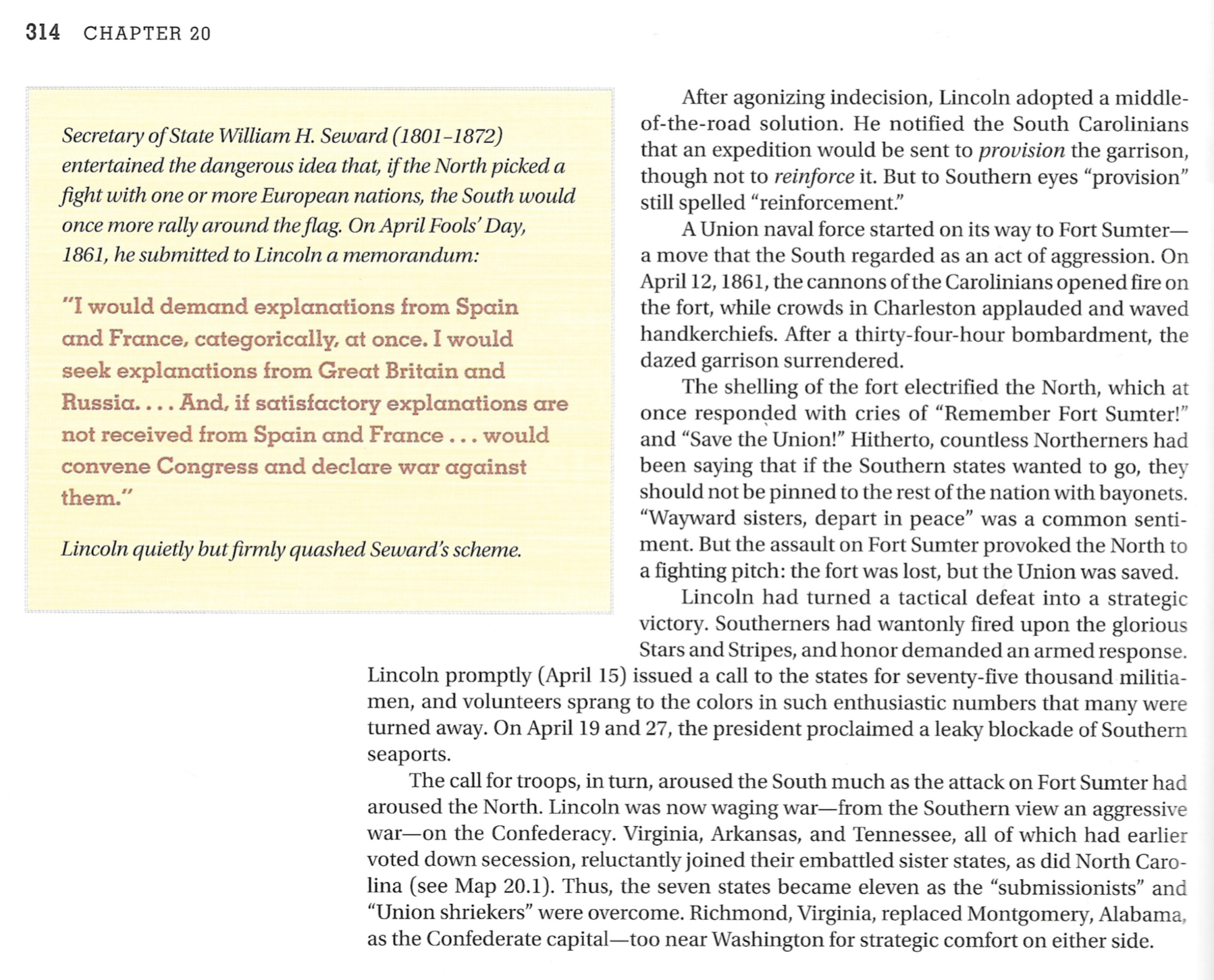
In approaching the situation at Fort Sumter in his first weeks in office, President Lincoln can be best described as
1
IIRC.01
1
IITE.01
1
Question 7
7.

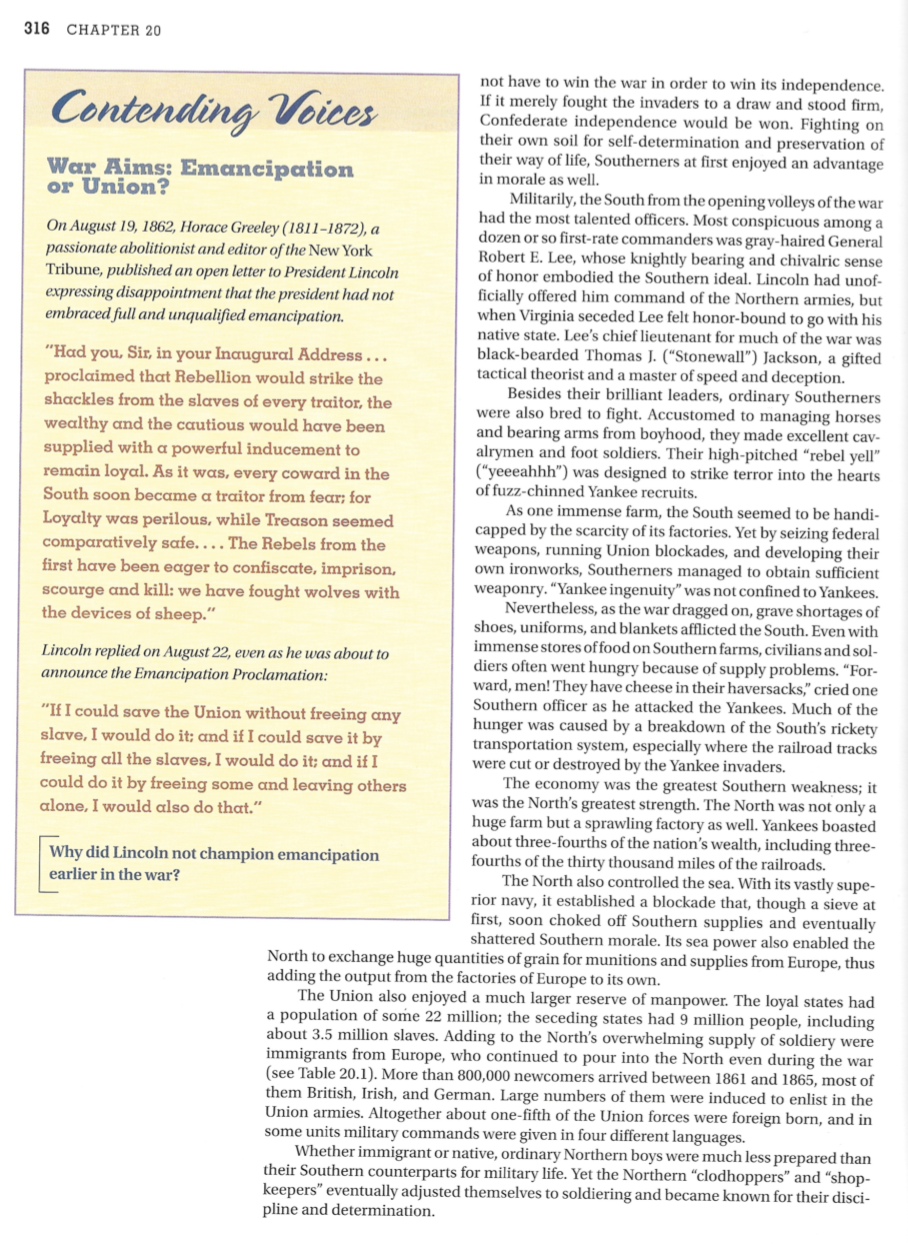
What were the strengths of the Union army [the North] in the Civil War? Underline at least 3 strengths.

IITE.01
1
Question 8
8.

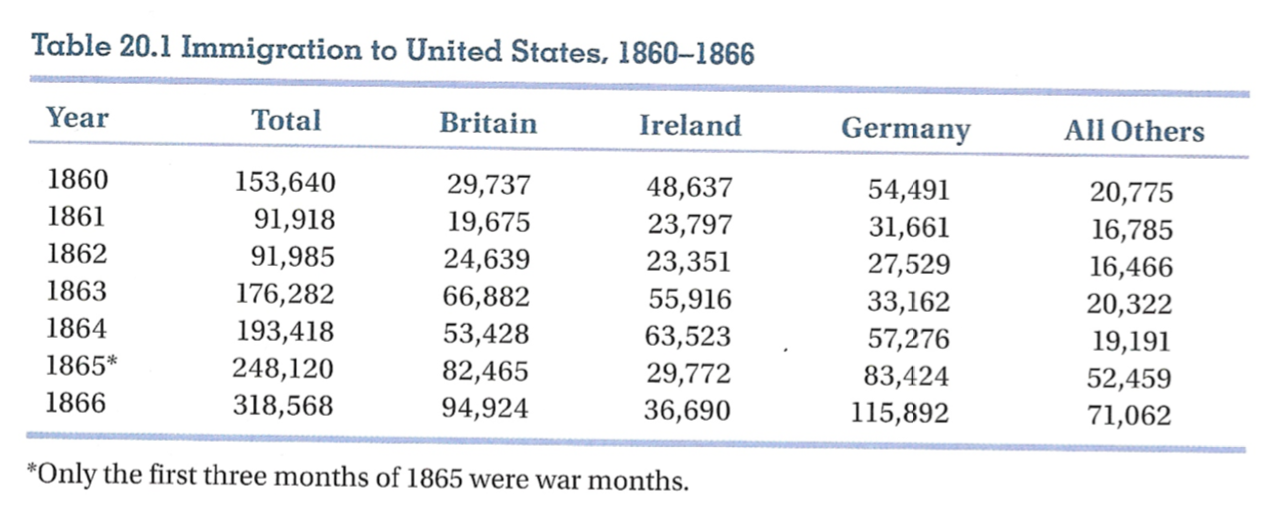
The data in Table 20.1 most directly supports which of the following claims made by the authors?

SQN.01
1
Question 9
9.

IIRC.01
Unrelated to this part of the reading, but still interesting!
1
Question 10
10.

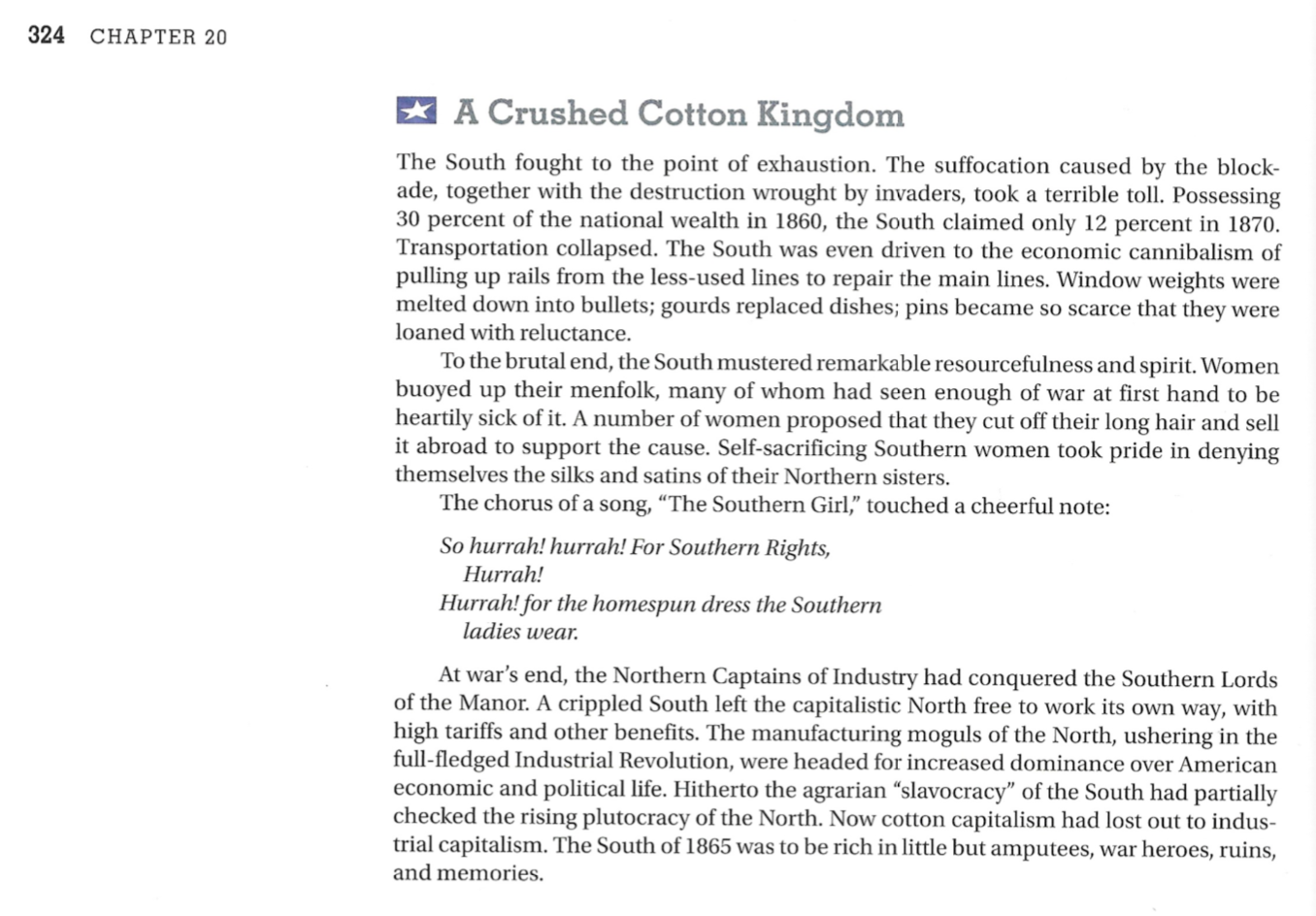
As used in line 4, "cannibalism"

IIWD.01
0
Question 11
11.

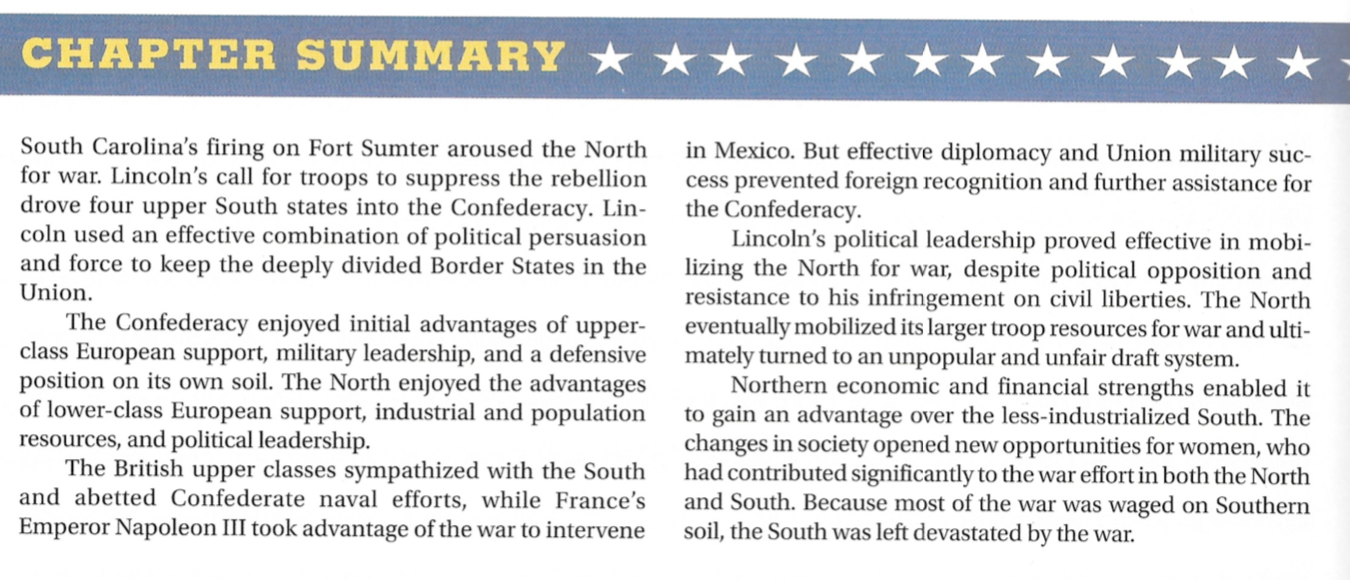
Excellent reading! Close out this Chapter by reviewing the "Chapter Summary" and using the "rectangle" tool to box the 3 most important key terms in the space provided.

0
Question 12
12.

Do you have any feedback or questions about the Formative reading or comprehension questions that you want to go over in class?

Do NOT proceed beyond this point. The question below will be answered in-class on Thursday-Friday, March 4-5th, 2021.
Question 13
13.

In your esteemed historical opinion, was the Civil War preventable or inevitable?

Question 14
14.

Explain why to Question #14 using specific key term and historical reasoning in at least 3 sentences.

Sentence Starters:
  • The American Civil War was preventable/inevitable because...
  • Take for instance, key term, which was...
  • Hence, key term demonstrates how...

border states that remained in the Union [brown].
free states and territories [green].
slave states that left the Union after the attack on Fort Sumter [yellow].
slave states that left the Union before the attack on Fort Sumter [red].
Creating separate international borders between North and South were too costly.
The railroads connecting North and South had created too many commercial and
transport ties for the regions to separate.
The North and South are bound together by geography without an obvious division
by a mountain range or river.
The North and South had to remain united because they were sandwiched between the
great powers of Canada and Mexico.
As used in line 3, "provision" most nearly means
arranging
arming
supplying
militarizing
Question 5
5.

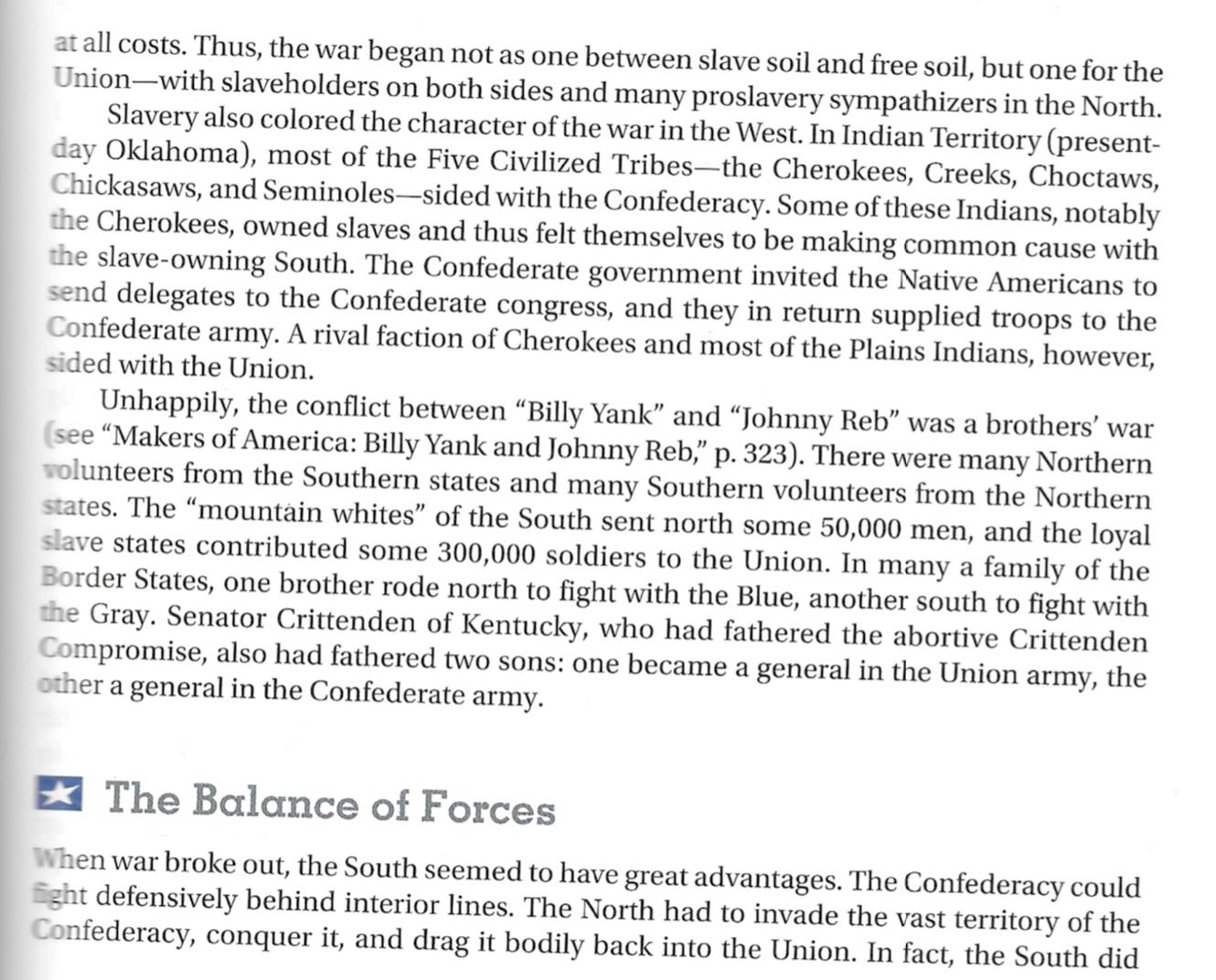
The passage indicates that Lincoln's initial declaration that the North fought only to preserve the Union and not to abolish Slavery
Question 6
6.

Which choice provides the best evidence for the answer to the previous question?

Paragraph 3, Line 1-3 ("Besides their... to fight")
Paragraph 6, Line 3-5 ("Yankees boasted... the railroads")
Paragraph 8, Line 1-3 ("The Union... million slaves")
Paragraph 8, Line 5-7 ("More than... million slaves")
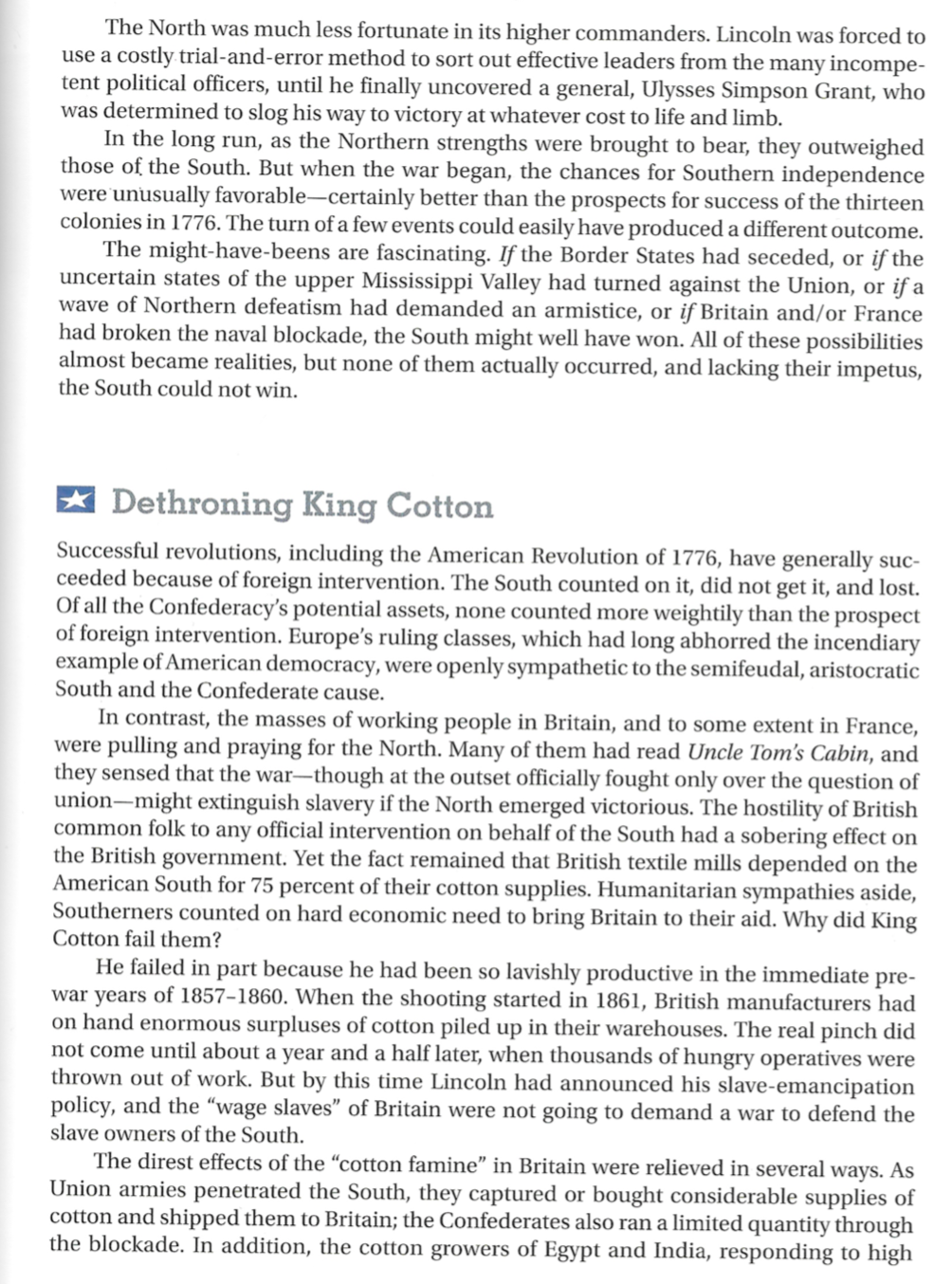
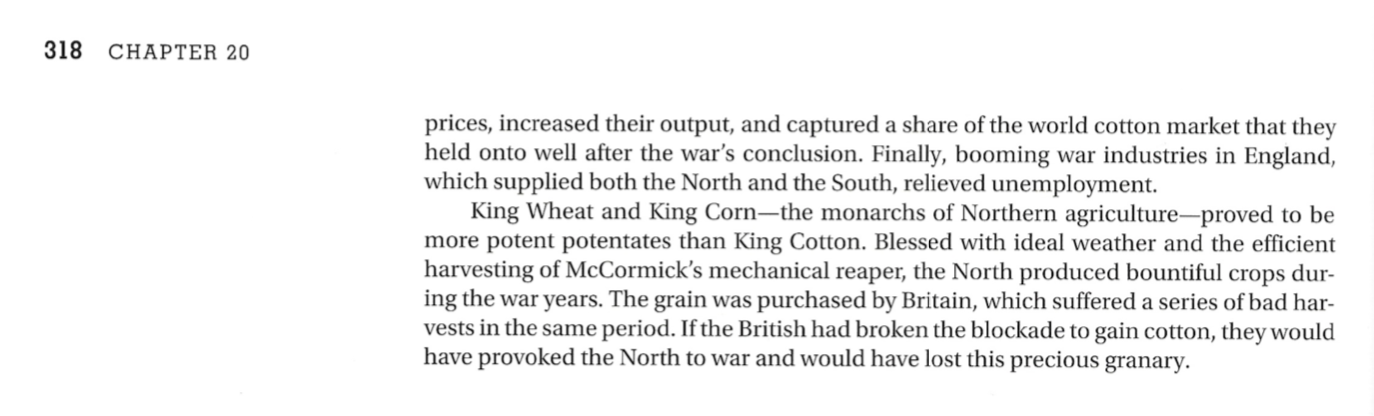
According to the passage, an asset that the South counted on at the start of the Civil War that never materialized was
intervention by Britain and France.
the fighting skill of Southern males.
its ability to fight on its own soil.
effective military leadership.
disassembling
absorption
acquisition
Paragraph 3, Line 4-6 ("An anti-slavery... prejudiced Southerners")