TES 2.1-2.2
star
star
star
star
star
Last updated about 1 month ago
15 Nsɛmmisa

1
1
1
1
1
1
1
1

1
1
1

1
1
1
1
You can do this experiment at home
Have the following materials ready:
Experiment 1 - From last night / few days ago
You should have put a cup in the freezer last night or a few days ago. You will need to take this cup out later to make observations.
Experiment 2 - Not right now, but later during the lesson in about 30 minutes.
2 plastic cups filled with the same amount of ice and water
1 plastic ziploc bag that the cup of water can fit in.
How do you think drops of water form? Sentence Starter: Water drops form when _____________
Other than rain, what are times you’ve seen drops of water forming? Sentence Starter: Water drops form on _____________
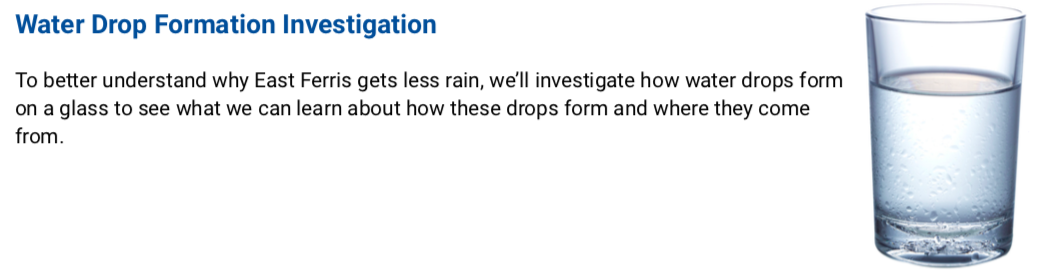
Before the ice was added... What does the outside of the cup of water look like? Sentence Starter: The outside of the cup of water looks like _____________
Right when the ice was added... What did you observe on the outside of the cup? Sentence Starter: On the outside of the cup, I observed _____________
Several minutes after the ice was added… (this is shown around 55 seconds in the video clip!) What did you observe on the outside of the cup? Sentence Starter: On the outside of the cup, I observed _____________
You can do this experiment at home
Last night or a few days ago, you put an empty cup in the freezer.
Take out the empty cup from the freezer and place it next to you.
We will make observations in a few minutes for question 7.
Go to Google Classroom, Science, Classwork to find the TES 2.1-2.2 Model document. Follow the directions to make your model.
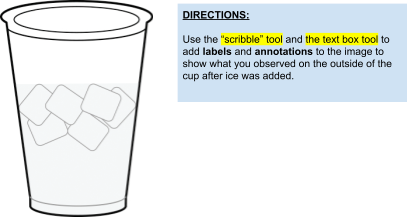
Where do you think the water on the outside of the cup came from? Sentence Starter: I think the water on the outside of the cup came from _____________
I put an empty cup in the freezer and then took it out after a while. Why do you think drops of water appeared on the outside of this empty cup? Sentence Starter: The drops of water appeared on the outside of this empty cup because _____________
Based on what we observed, do you think the water on the outside of the cup comes directly from the water and ice on the inside of the cup? Why or why not?
Sentence Starter: The water on the outside of the cup ____________ (Choose 1: comes or does not come) directly from the water and ice on the inside of the cup because _____________
You can do this experiment at home
Have the following materials ready:
2 plastic cups filled with the same amount of ice and water
1 plastic ziploc bag that the cup of water can fit in.
Put 1 cup of ice water in the ziploc bag. Try to squeeze out most of the air before closing the ziploc bag.
We saw in the previous lesson that water drops formed on the outside of a cup of ice water or a cold cup. Both of these cups were exposed to the air. One idea is that the water drops come from the air.
To test if the water drops come from the air we would need to compare a cup exposed to the air and a cup not exposed to the air.
Make a prediction - what do you think will happen with the two cups over time?
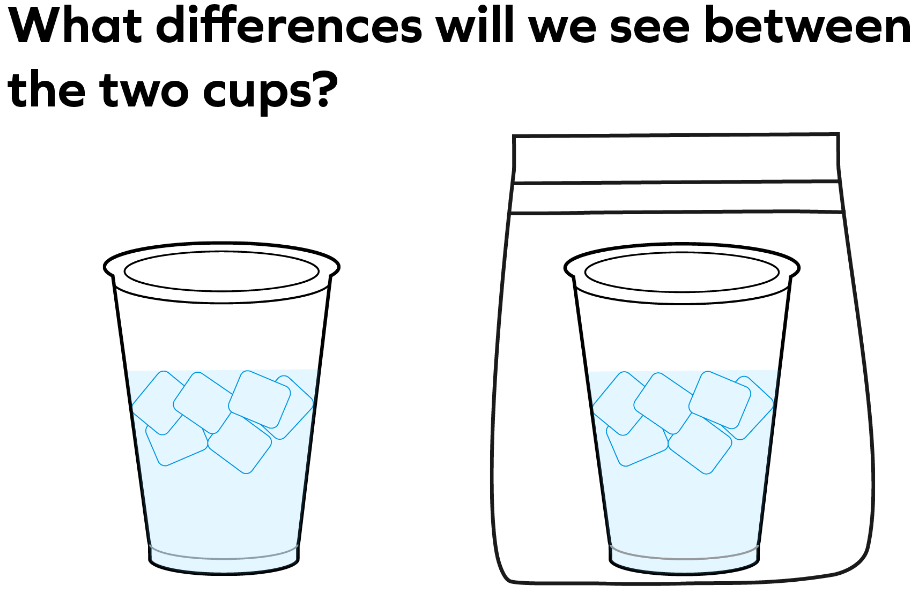
Sentence starter: I think ________________
You can do this experiment at home
Observe the drops of water on the outside of the cup with no bag.
Observe the drops of water on the outside of the cup inside of the ziploc bag.
Go to Google Classroom, Science, Classwork to find the TES 2.1-2.2 Model document. Follow the directions to make your model.
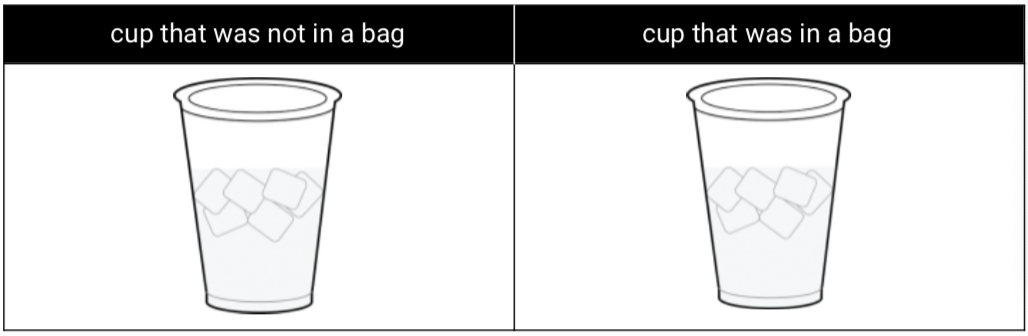
Why do you think more water drops formed on the cup that was not in the bag? Sentence starter: I think more water drops formed on the cup that was not in the bag because ________________
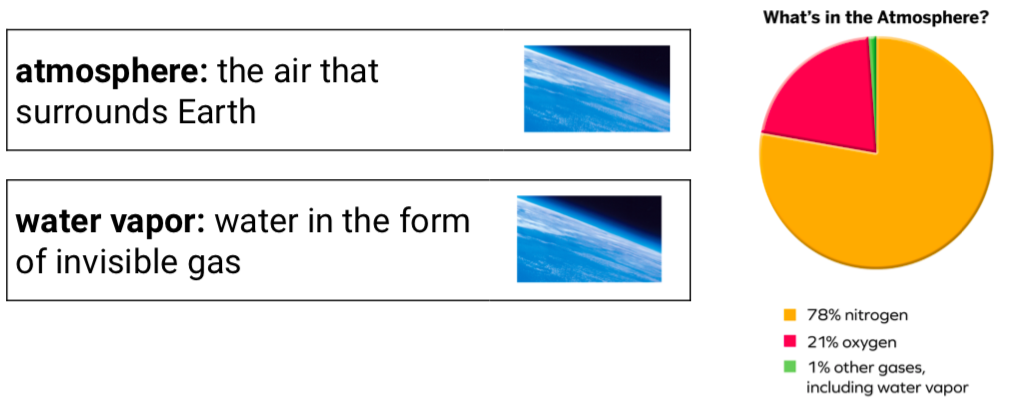
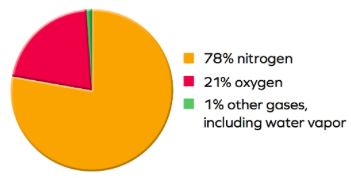
Knowing that there’s water vapor in the air (which is water as a gas), why did more water drops form on the cup that wasn’t in a bag? Sentence starter: More water drops form on the cup that wasn’t in a bag because ________________
Is there water in the air?
What is the water in the air called?
What phase (state) of matter is the water in the air?
Based on our key concept, which of the following explains why there were fewer drops of water on the cup in a bag?