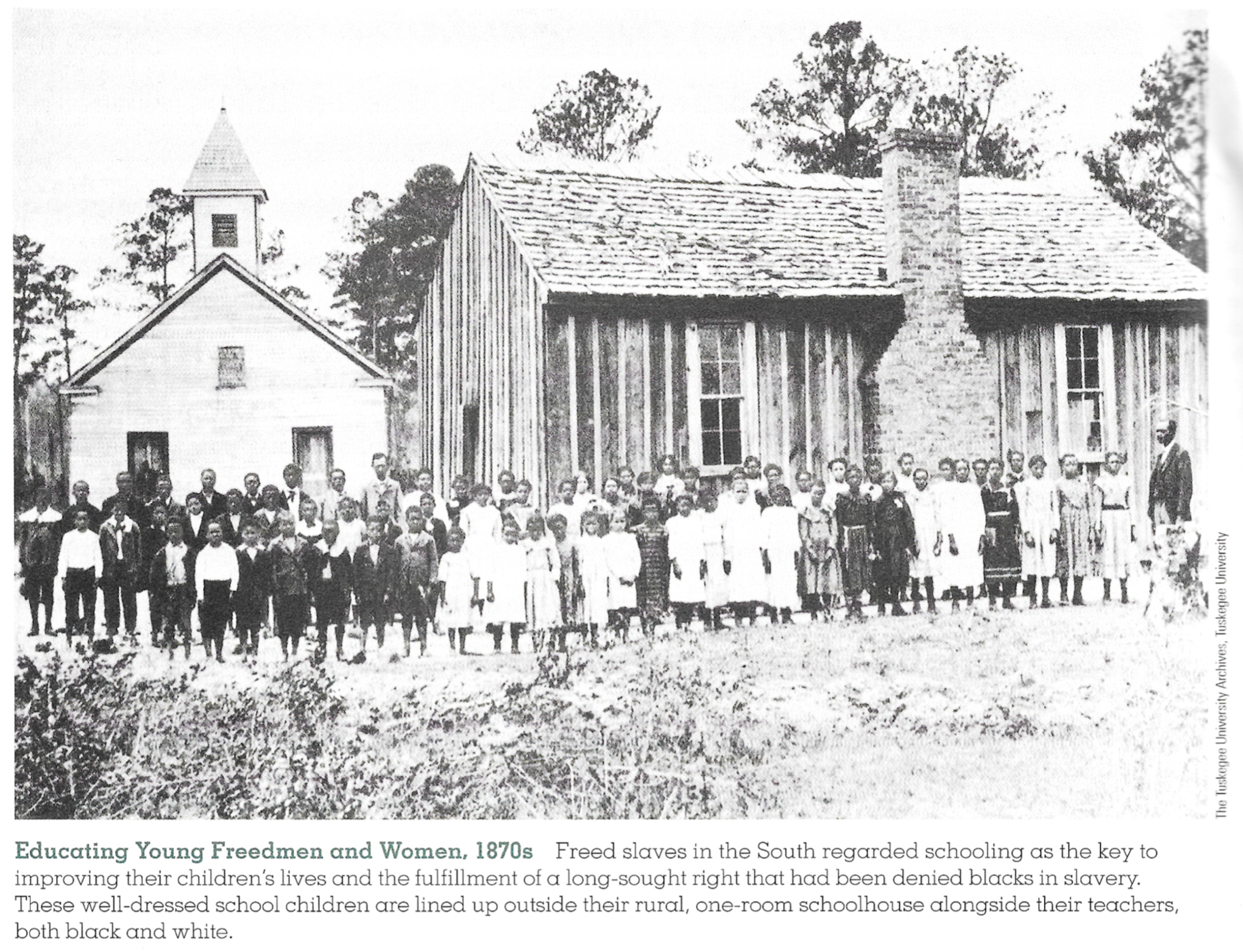
USH Chapter 22, Part 1: The Ordeal of Reconstruction
star
star
star
star
star
Last updated over 1 year ago
12 questions
1
IITE.01
1
RPV.01
1
IITE.01
Welcome to your Chapter 22 reading! As you read, consider the following essential question:
Was the Reconstruction Period a success or failure?
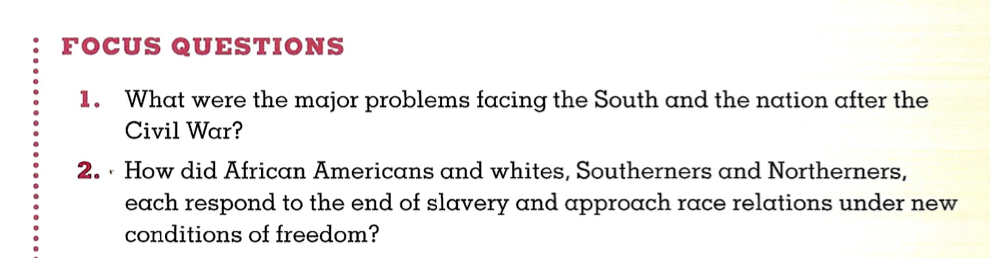
As always, "Focus Questions" should guide your reading and notes, but you do not necessarily have to explicitly answer them.
1
Question 1
1.
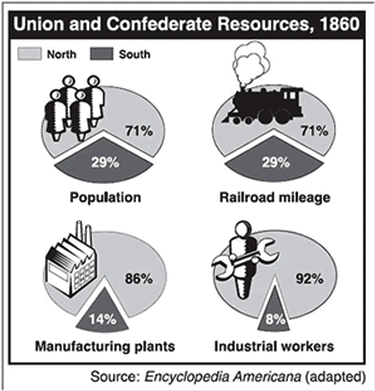
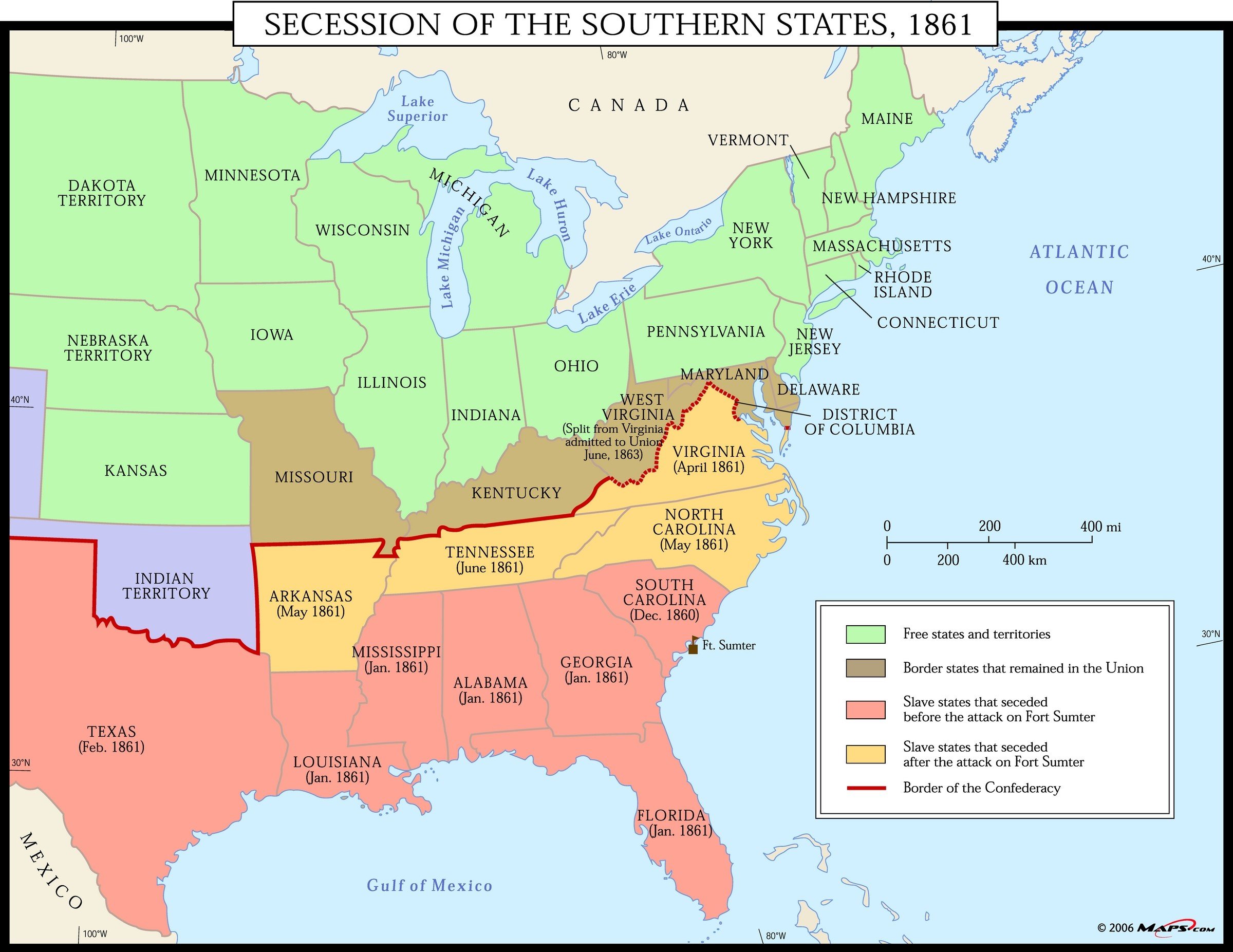
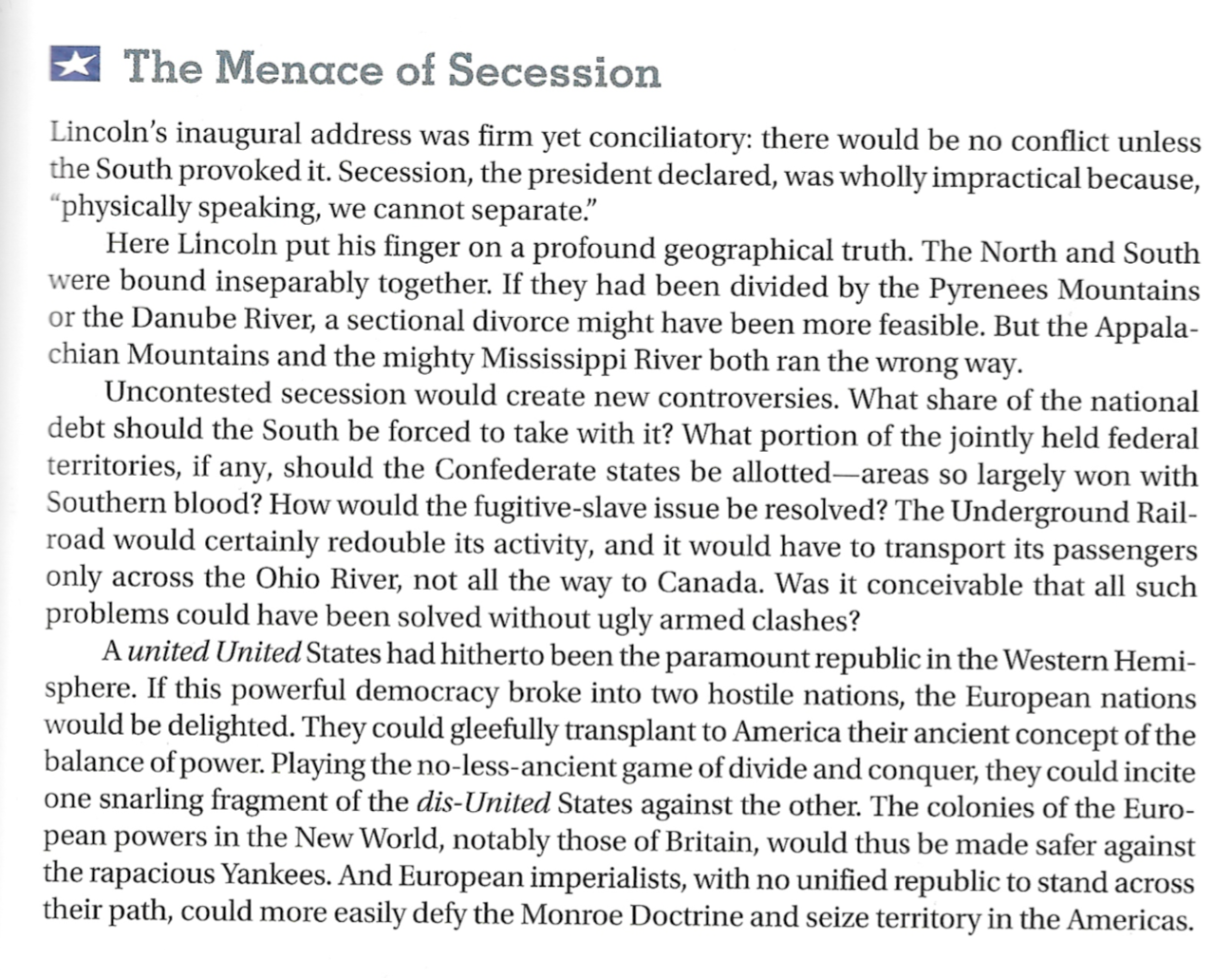
According to the figure, before the Civil War began in 1861,
SMT.01
The first seven Confederate States to secede from the Union were South Carolina, Mississippi, Florida, Alabama, Georgia, Louisiana, and Texas. Shortly after, Virginia, Arkansas North Carolina, and Tennessee followed suit.
While President Lincoln is known for freeing the slaves in the Emancipation Proclamation, he only freed slaves in the Confederate South [red]. Slavery was still allowed in the Border States [brown] until the 13th Amendment formally abolished slavery from the Union.
In our study of U.S. History, we care most about the causes and effects of major wars. Hence, we will be skipping over the textbook chapters that cover the Civil War.
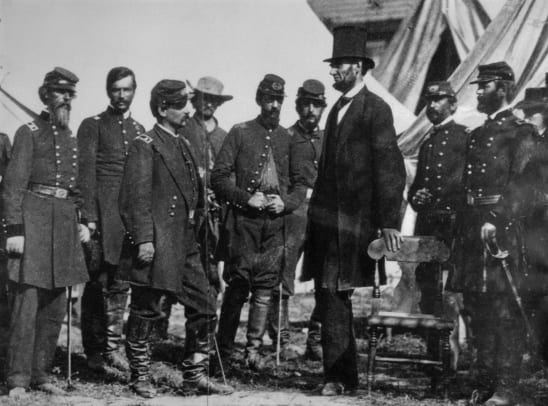
tldr; The North wins, and the Union is preserved. The Confederacy loses, and the South is nearly wrecked by war. President Lincoln is assassinated.
1
Question 2
2.
What do you already know about the Reconstruction period?
If you do not know anything about Reconstruction, what is one question you would want answered by the end of this learning cycle?
1
Question 3
3.
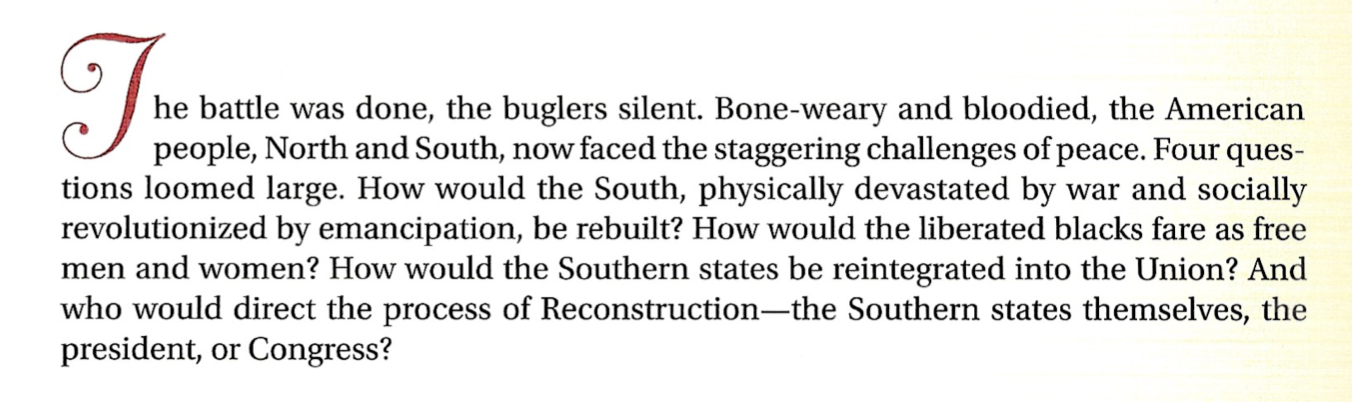
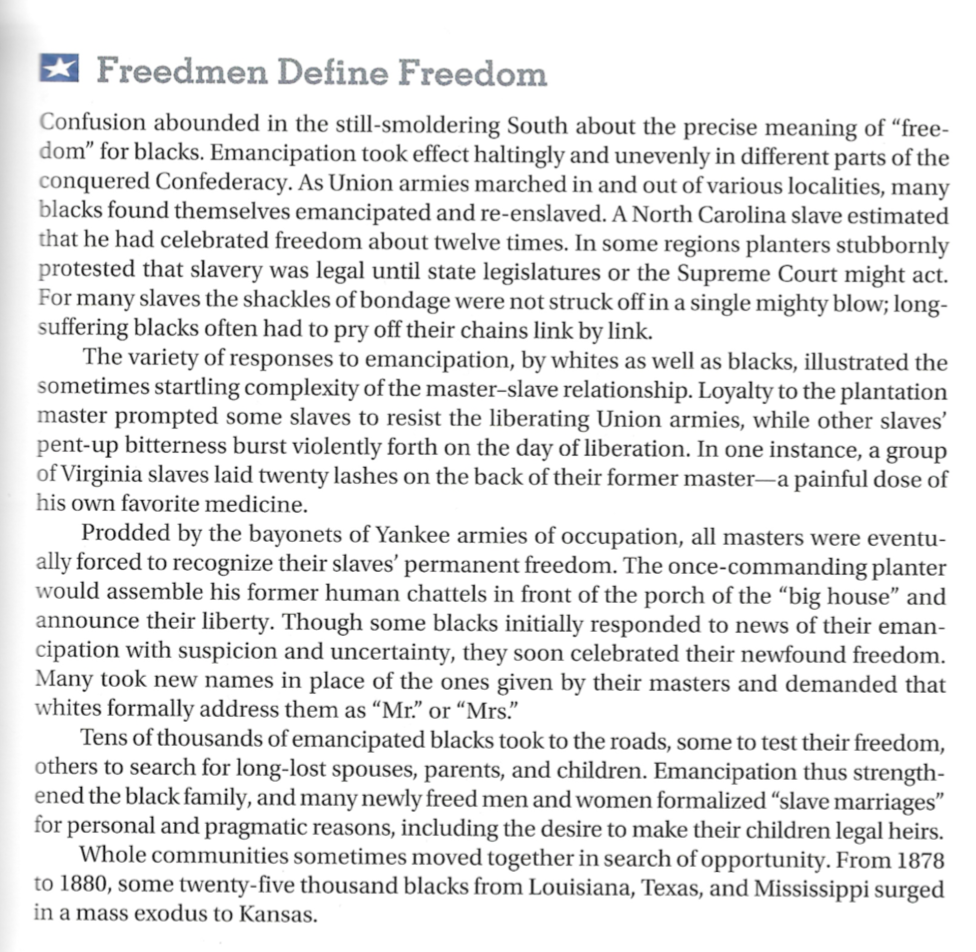
The passage indicates that, after the Civil War ended in 1865, Confederate leaders
IIRC.01
1
Question 4
4.
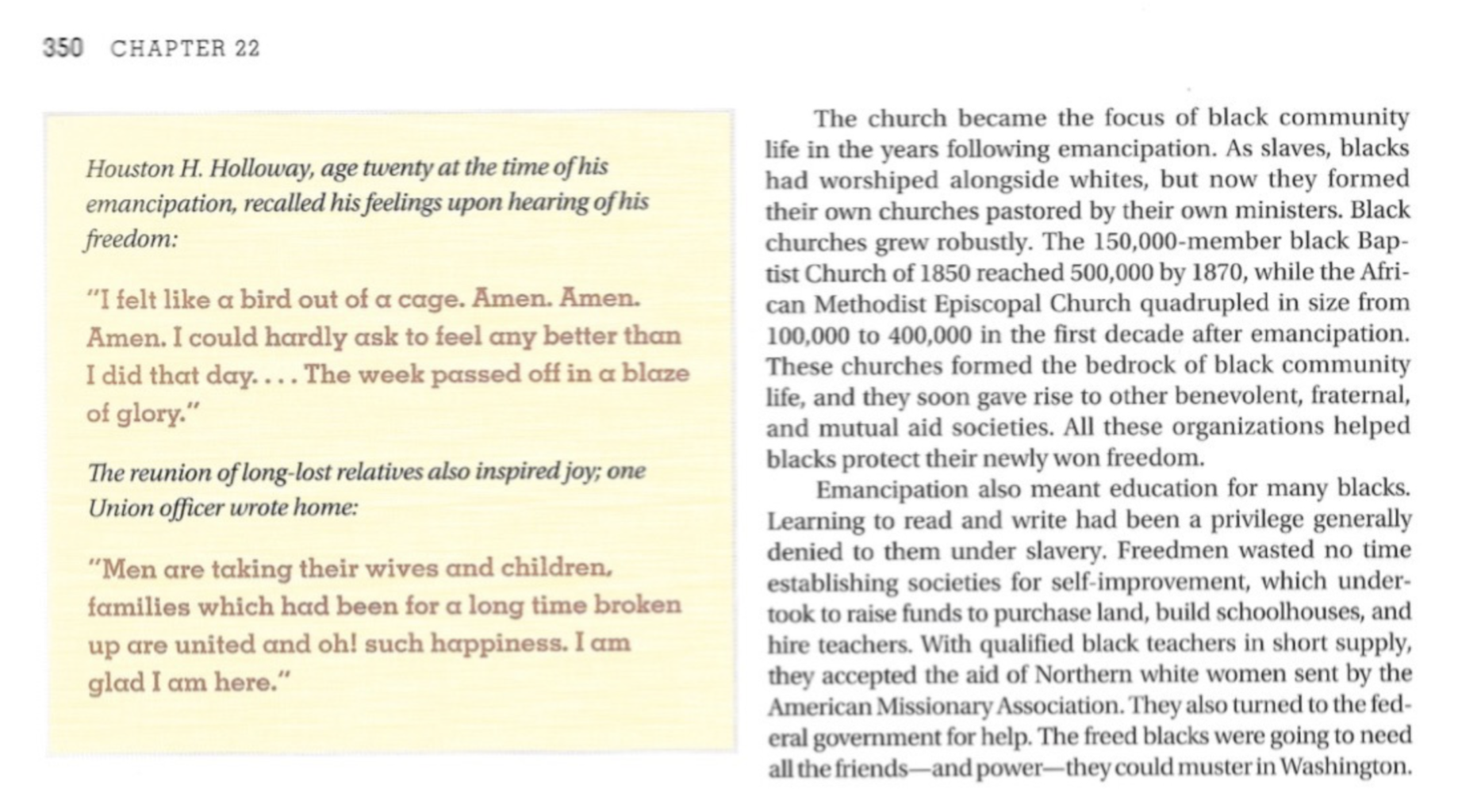
The passage suggests that freedom for Southern blacks at the end of the Civil War
IIRC.02
Question 5
5.
Which choice provides the best evidence for the answer to the previous question?
1
IIWD.01
Question 7
7.
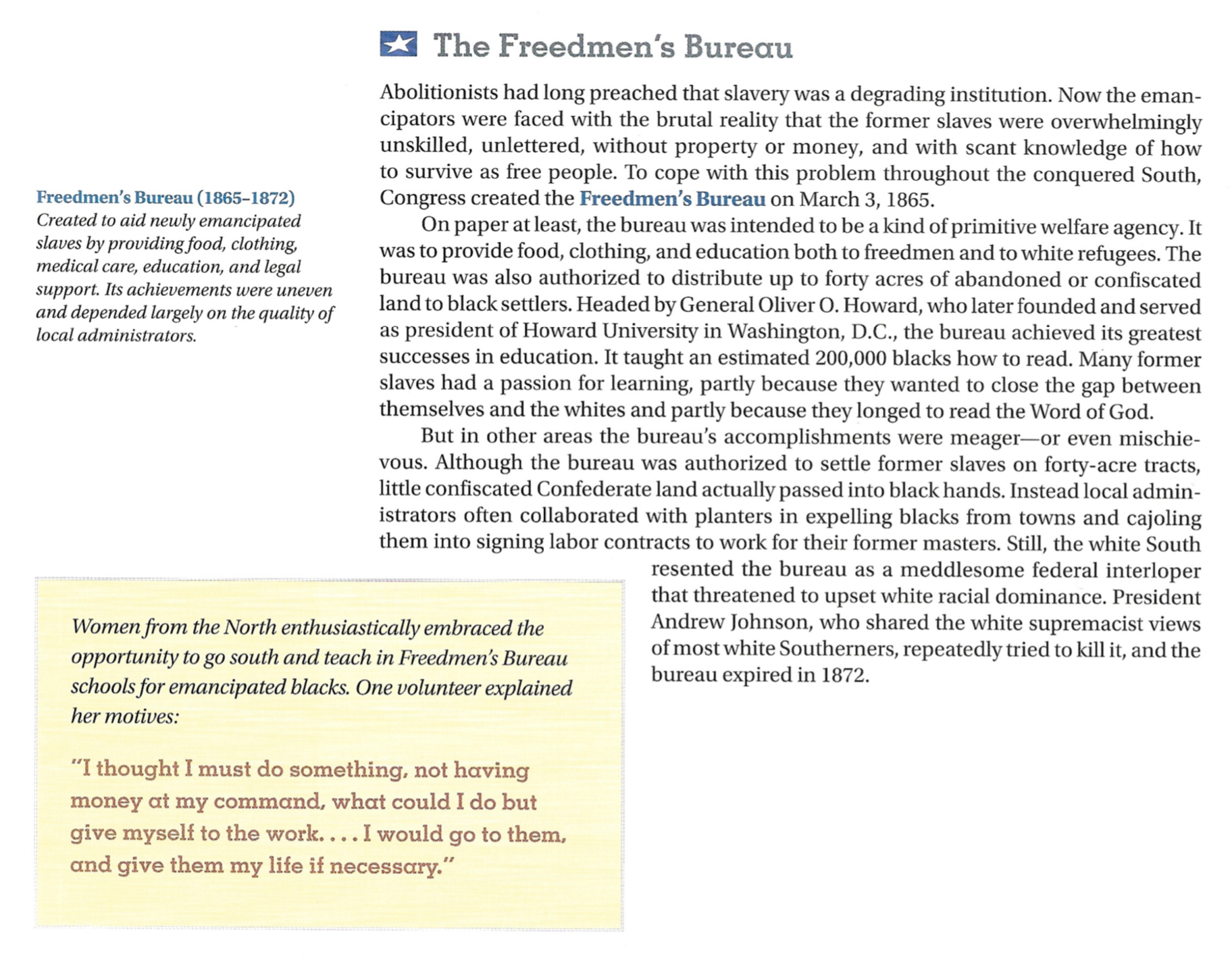
Which choice best reflects the perspective of the white South regarding the Freedmen's Bureau?
1
Question 8
8.
IIRC.02
Question 9
9.
Which choice provides the best evidence for the answer to the previous question?
1
Question 10
10.
IIWD.01
0
Question 11
11.
Do you have any feedback or questions about the Formative reading or comprehension questions that you want to go over in class?
0
Question 12
12.
Please take a second and rate how well you understood this reading.
Before you submit, ask yourself:
Have I listened to OR read ALL of the reading? (Yes/No)
Did I double check that I have answered ALL the questions? (Yes/No)
If you answered yes to BOTH questions - you can submit your pre-work!
What should you do next?
Go back to Google Classroom.
Make sure you watched the "Chapter 18 Quiz - Answer Explanation" video.
Mastery grades count for 60% of your U.S. History grade, so this can help a lot!
the North and South were equally matched in terms of industrial resources.
the North was more dependent on international trade than the South.
the North had the upper hand due to transportation, people, and industry.
the South was superior in terms of labor and manufacturing capability.
were all pardoned by December 1868, even Davis and Lee.
were barred from holding political office ever again.
were all pardoned except Davis and Lee, who received life sentences.
were jailed for varied but extended periods of time.
came haltingly and unevenly in different parts of the conquered Confederacy.
was officially recognized by the 15th Amendment.
caused the widespread scattering of black families.
led large numbers to move to the big cities in the North.
Paragraph 5, Line 26-28 ("From 1878... to Kansas")
Question 6
6.
As used in line 1, "focus" most nearly means
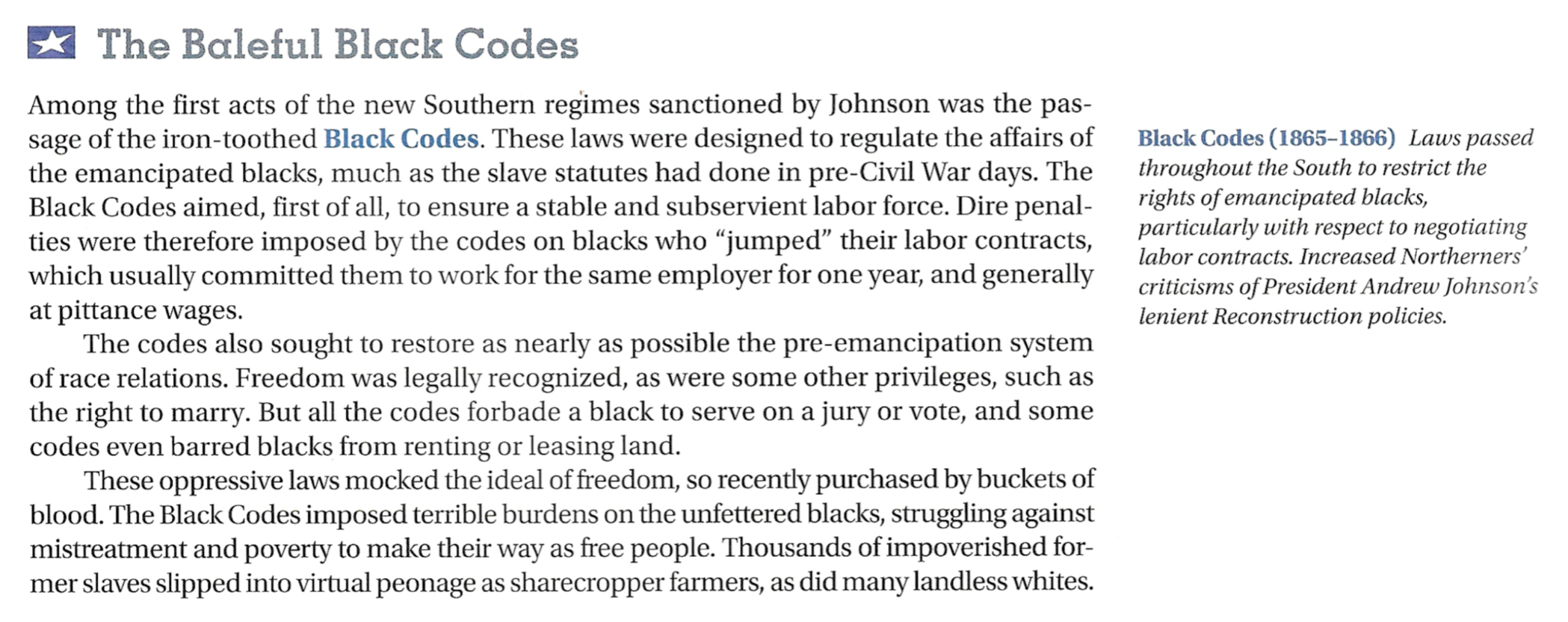
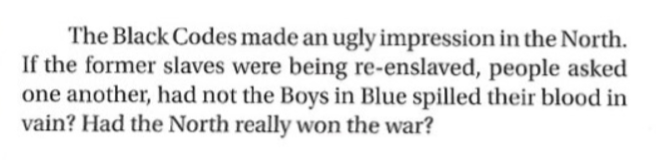
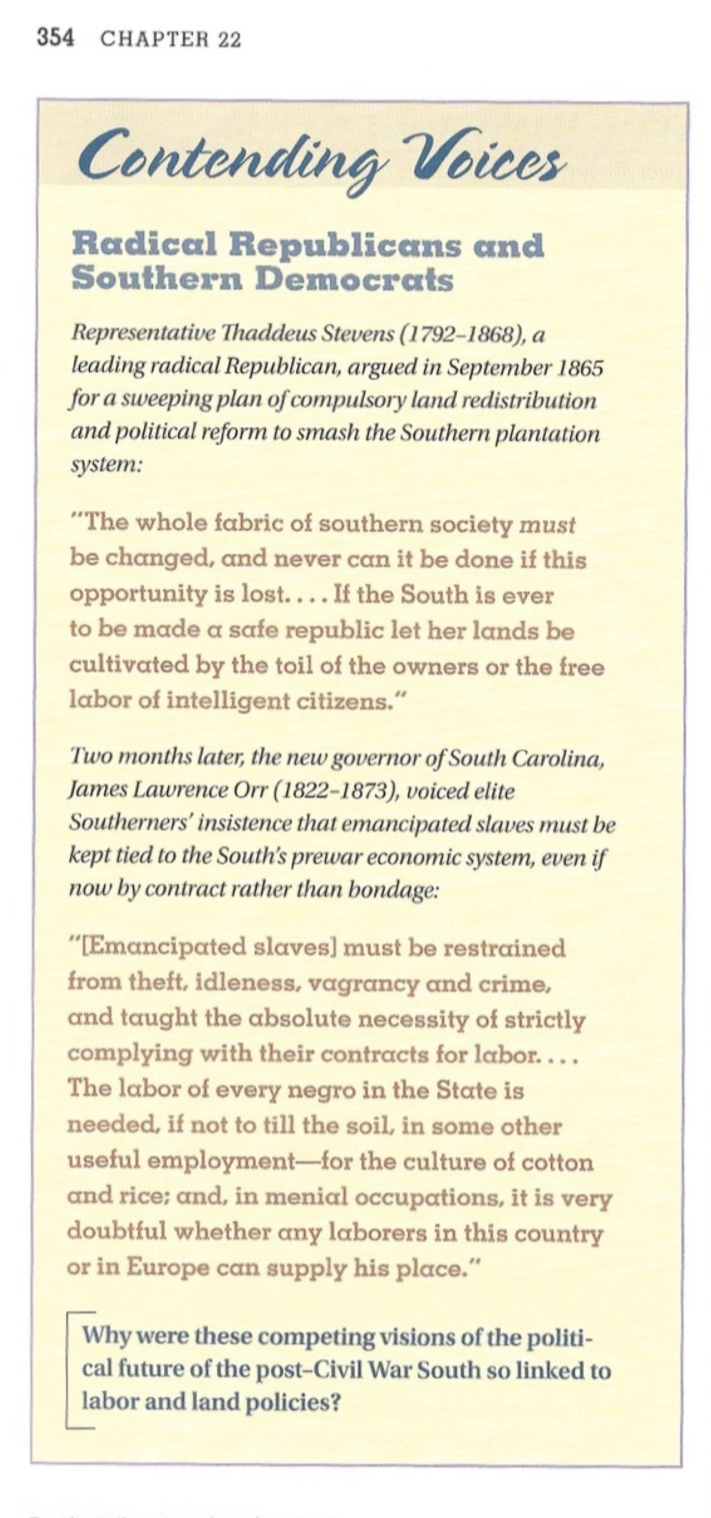
It can be reasonably inferred that the main purpose of the Black Codes was to
ensure that freed blacks were still reliable and subordinate workers.
create a system of justice for the formerly enslaved.
prevent blacks from becoming sharecroppers.
allow blacks to legally register their marriages.
Paragraph 3, Line 14-15 ("Thousands of... landless whites")