Log in
Sign up for FREE
arrow_back
Library

Unit 5 Waves Review - Sanchez

star
star
star
star
star
Last updated over 2 years ago
13 questions
0
0
0
0
0
0
0
0
0
0
0
0
1
Respond to the questions and/or prompts below and do your best. Remember - don't leave anything blank! You may use the following on this test:
  • YOUR interactive notebook and/or paper notebook
  • blank scratch paper and pen or pencil
  • calculator
  • the mathematical models (equations) below
Question 1
1.

Match the definition below with the corresponding waves vocabulary term.

  • The speed and direction of the wave which is given by its frequency times its wavelength.
  • A sound wave is emitted and the distance is determined by the time delay between the sound emission and when the echo returns.
  • The number waves each second.
  • The distance from the crest or trough to the equilibrium position.
  • The distance measured from crest to crest or from trough to trough.
  • wave velocity
  • frequency
  • wavelength
  • amplitude
  • echolocation
Question 2
2.

In the "Show Your Work" section below, draw a diagram of a loud sound, soft sound, high-pitched sound and a low-pitched sound. Circle in purple the one with the highest frequency. Circle in red the one with the highest amplitude. (Ask if you're not sure how to pick colors and shapes in Formative - we can help you.)

Question 3
3.

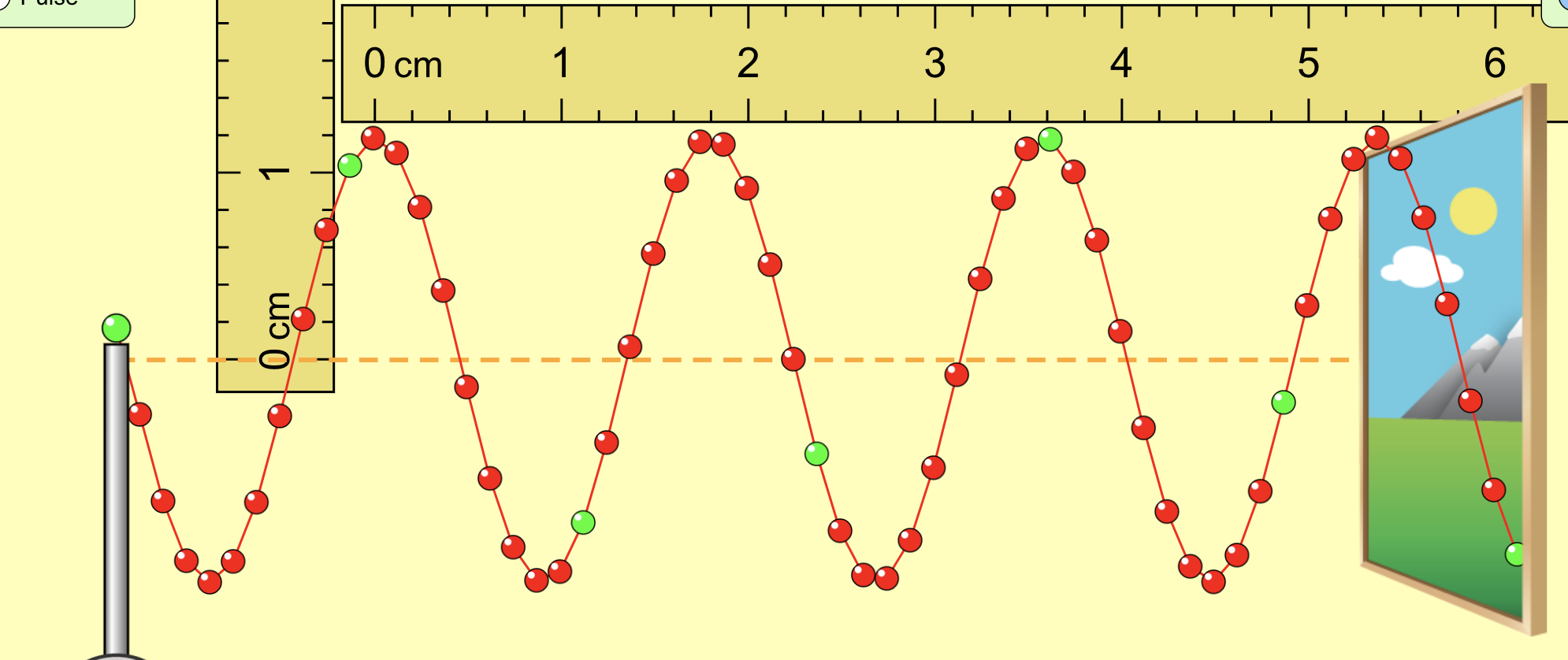
Measure the wavelength of the wave pictured below. The rulers have been set up for you. Enter the NUMBER ONLY in the space provided.

Question 4
4.

Measure the amplitude of the wave pictured below. The rulers have been set up for you. Enter the NUMBER ONLY in the space provided.

Question 5
5.

For the wave on a string simulation that we used in "Tinkering with Waves" and "Waves Lab", describe how you would measure the wave velocity.

Question 6
6.

A 680 Hz sound wave travels at 343 m/s in air. What is its wavelength? (Use the problem solving steps we learned in class and show your work below.)

Question 7
7.

An oceanic depth-sounding ship surveys the ocean bottom with ultrasonic sound that travels at 1430 m/s in sea water. They find a 20 s delay of the echo to the ocean floor and back. What is the depth? (Use the problem solving steps we learned in class and show your work below.)

Question 8
8.

If you increase amplitude, will the wavelength increase, decrease or stay the same?

Question 9
9.

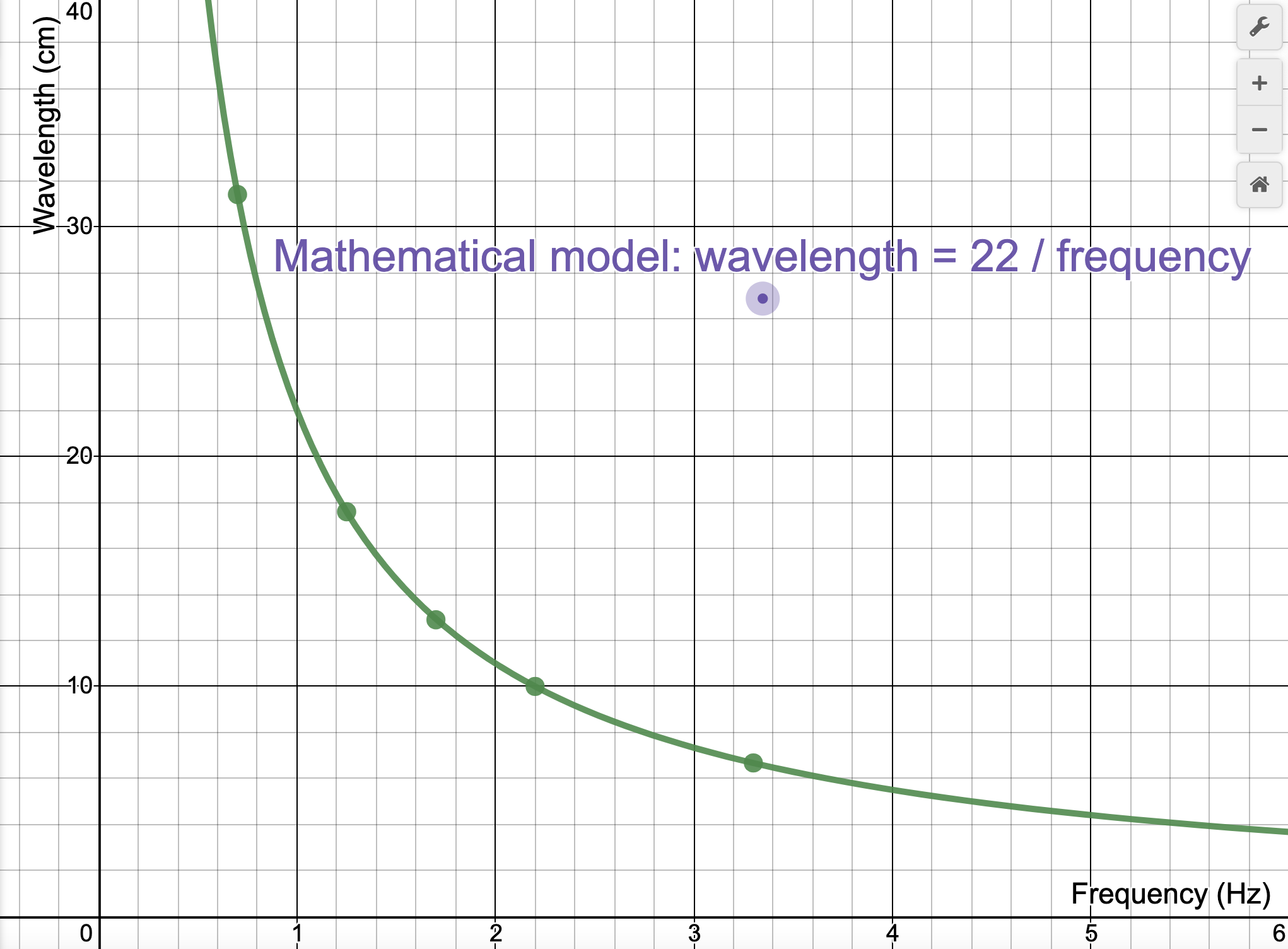
A graph about waves is shown below. Check all of the options that match the graph.

Question 10
10.

In this graph, which wave characteristic does the "22" represent?

Question 11
11.

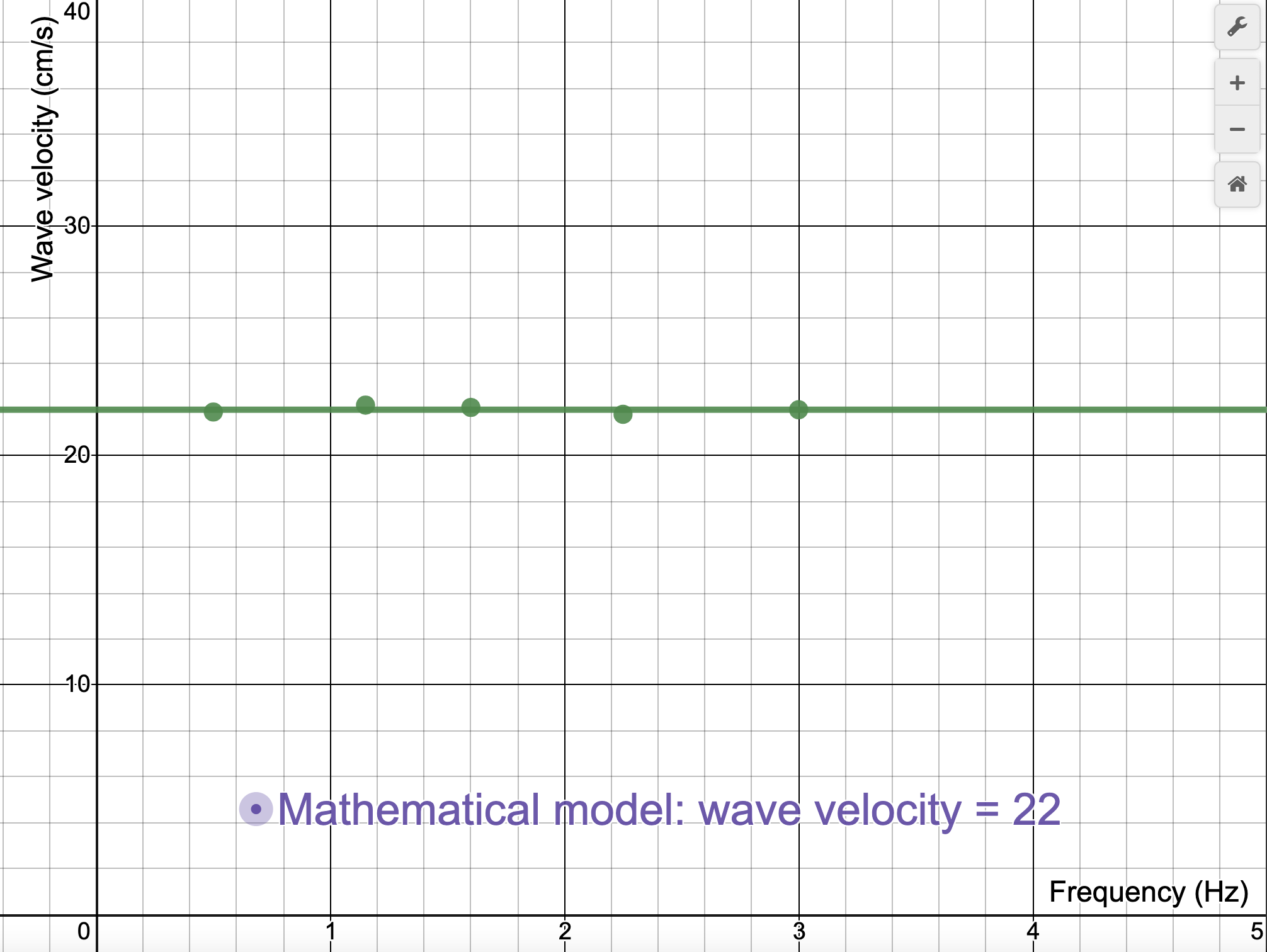
A graph about waves is shown below. Check all of the options that match the graph.

Question 12
12.

What areas do you need to study?

Question 13
13.

Want credit for this assignment (regardless of how you did)? Check YES below.