3
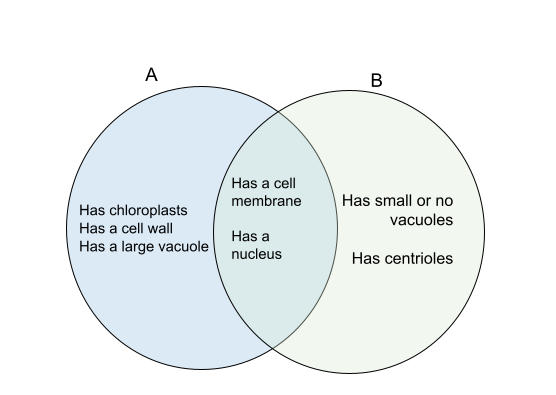
What can you conclude about cells A and B?
What can you conclude about cells A and B?
What can you conclude about cells A and B?
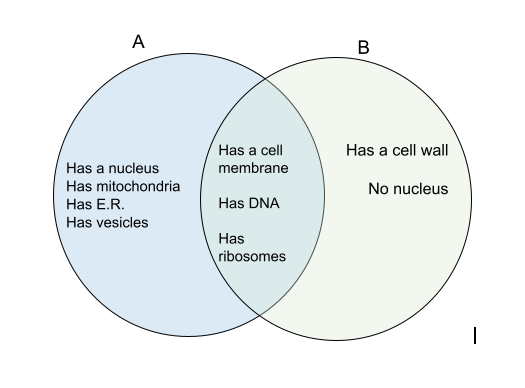
What can you conclude about cells A and B?
The presence of which structure allows you to conclude that a cell is a eukaryotic cell?
Which organelle is found in both the prokaryotic and eukaryotic cells?
Match each cell type to a desciption of the cell's contents. Do so by clicking on the blue arrow and dragging the word up or down the list until it lines up with the answer.
| Draggable item | arrow_right_alt | Corresponding Item |
|---|---|---|
Eukaryotes, but only plant cells | arrow_right_alt | Contain organelles surrounded by a membrane (like the nucleus, ER, and mitochondria) |
Eukaryotes, but only animal cells | arrow_right_alt | Do not contain organelles surrounded by a membrane (like the nucleus, ER, and mitochondria) |
Eukaryotes | arrow_right_alt | Contain DNA, ribosomes, and cytoplasm |
All cells | arrow_right_alt | Contain organelles surrounded by a membrane as well as centrioles. Do not have a cell wall or chloroplasts. |
Prokaryotes | arrow_right_alt | Contain organelles surrounded by a membrane as well as chloroplasts, a cell wall, and a large vacuole |
Cells are small because ____.
All _____ are made of cells
The nucleolus makes ___.
One cell can live on its own.
All animal cells are the same.
Bacterial cells contain a nucleus.
Organelles float in cytoplasm.
Centrosomes make microtubules.
Flagella help some cells swim around.
What organelle is made up of microtubules and filaments and used in organelle movement? (This also helps the cell keep its shape)
Match each organelle to its description. Drag it up or down until it lines up. Starting with the first word on the top right is the easiest. Find the definition and drag it to the top. Then, continue down the list.
| Draggable item | arrow_right_alt | Corresponding Item |
|---|---|---|
Special vesicles that conatin enzymes to break down stuff | arrow_right_alt | Chloroplast |
Makes ribosomes | arrow_right_alt | Ribosomes |
Make proteins | arrow_right_alt | Smooth E.R. |
Allows plant cells to photosynthesize | arrow_right_alt | Nucleolus |
Makes lipids | arrow_right_alt | Lysosomes and peroxisomes |
Match each organelle to its description. Drag it up or down until it lines up. Starting with the first word on the top right is the easiest. Find the definition and drag it to the top. Then, continue down the list.
| Draggable item | arrow_right_alt | Corresponding Item |
|---|---|---|
Membrane bubbles that carry things around the cell | arrow_right_alt | Rough E.R. |
packages proteins from the Rough E.R. into vesicles, usually to export (to send out of the cell) | arrow_right_alt | Nucleus |
Conatins DNA inside of a Eukaryotic cell | arrow_right_alt | Vesicles |
Make microtubules and sometimes help cells divide | arrow_right_alt | Golgi body |
Covered in ribosomes | arrow_right_alt | Vacuole |
Large in plant cells; stores water | arrow_right_alt | Centrosomes |
Organs are made of tissues
Organsims are inside of cells and perform specific jobs.
Organ systems are made of many organs working together.
Choose one question to answer. Answer as completely as you can. Any copied and pasted information will receive zero points.
1. Explain why not all animal cells are the same. Give an example of a cell type that may need more or less of a certain organelle.
2. Explain the products and reactants of photosynthesis. Make sure to say which are which.
3. Explain how proteins are made and transported until they exit the cell.
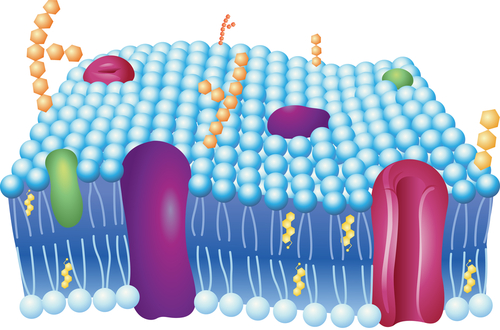
This entire image is a picture of __.
This is an example of a ___.
This is an example of a ___.
This is an example of a ___.
This area is described as ___.
This area is described as ___.
Phospholipid heads are described as ___.
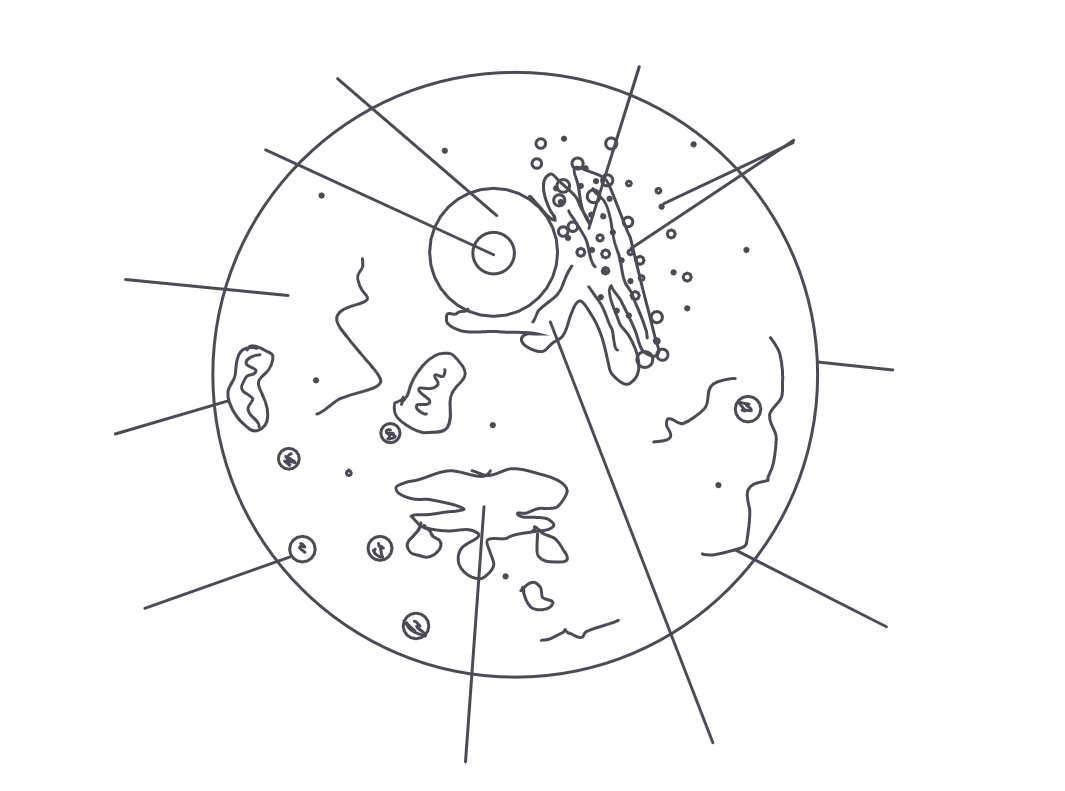
What is the name of this organelle?
What is the name of this organelle?
What is the name of this organelle?
What is the name of this organelle?
What is the name of this organelle?
What is the name of this organelle?
What is the name of this organelle?
What is the name of this organelle?
What is the name of this organelle?
What is the name of this organelle?
What is the name of this organelle?
Name an organelle that could have apeared in the cell pictured, but was not shown or labeled in this diagram.