Challenge: Explain why copper is used for electrical wires.
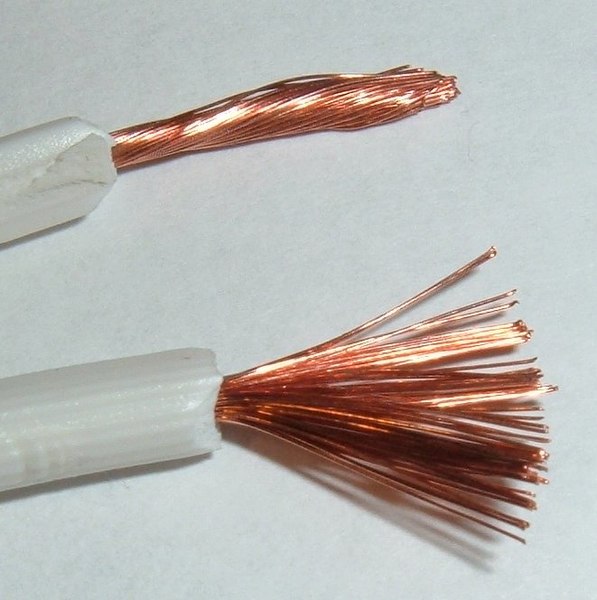
Challenge: Explain why copper is used for electrical wires.
Define ‘electrical conductor’.
Explain why electrical charge cannot travel through insulators.
Name the 2 sub-atomic particles which are found in the nucleus of an atom
Define ‘control variable’.
Convert 35cm into mm.
Challenge: Explain why copper is used for electrical wires.
Which component does this symbol represent?
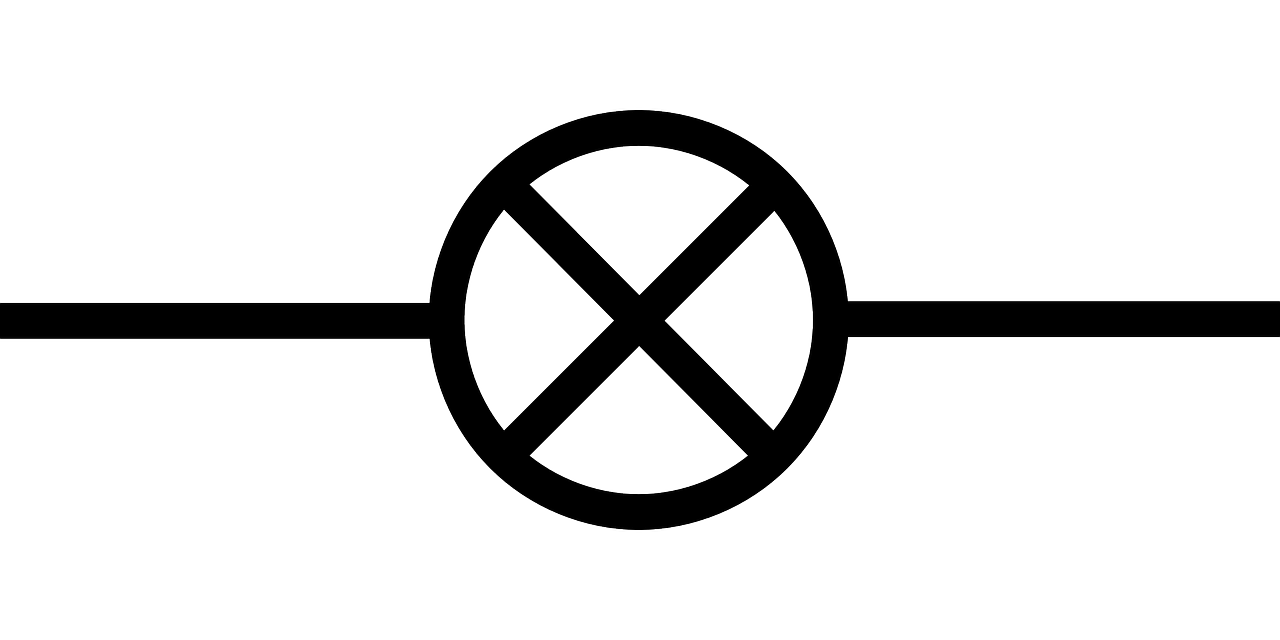
Which component does this symbol represent?

Which component does this symbol represent?
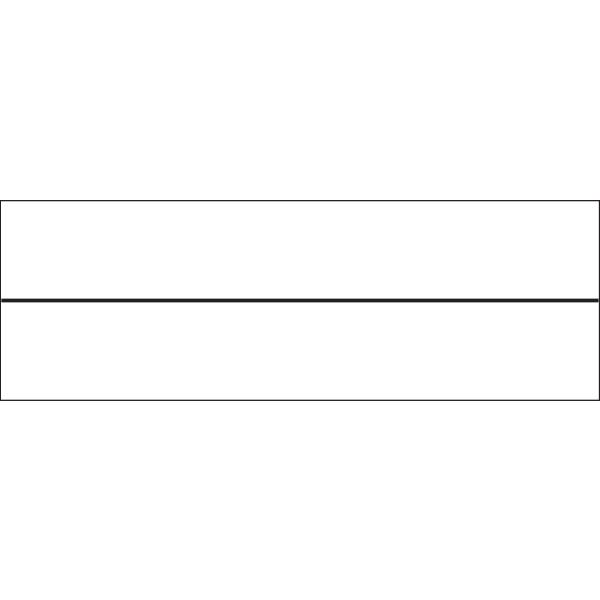
Which component does this symbol represent?

Which component does this symbol represent?
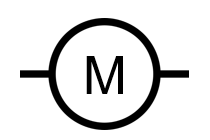
Which component does this symbol represent?

Which component do these symbols represent?

Click on the table to enlarge and complete
What is this the symbol for?

Draw the symbol for a bulb.
What is this the symbol for?
What is this the symbol for?
Draw the symbol for a resistor
What is this the symbol for?
Draw a circuit containing a cell, a bulb and a motor.
Draw a circuit containing a battery, a bulb, a switch and a resistor.
A cell, a bulb and a switch
A cell, a motor and a bulb
A cell, a motor and a buzzer
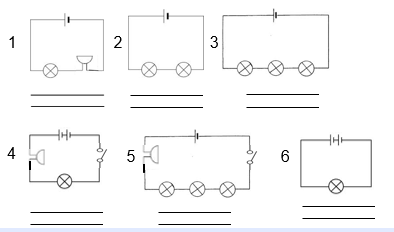
Identify the components in each circuit