5.2 Covalently Bonding and Interactions Quiz
star
star
star
star
star
Last updated almost 4 years ago
6 Nsɛmmisa
1
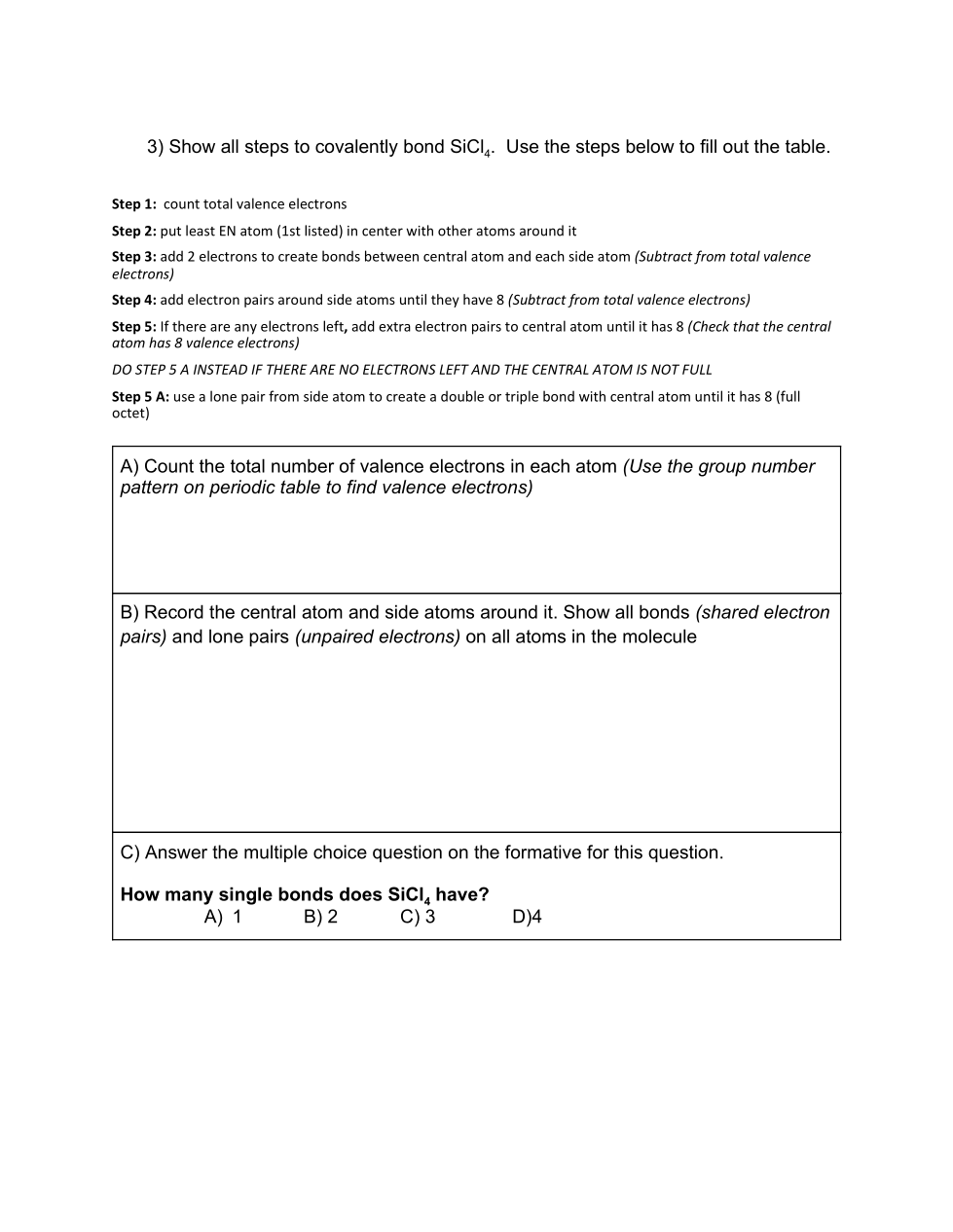
CLICK SHOW YOUR WORK TO FILL OUT THE TABLE FOR THIS QUESTION. AFTER YOU HAVE SHOWN YOUR WORK, THEN YOU CAN CHOOSE THE CORRECT ANSWER BELOW BASED ON YOUR MOLECULE. (Note: you must show the steps given for your molecule. Do not Google it...it is often wrong, incomplete, and doesn't follow the steps required)
M.C. Question for Part C:
How many single bonds does SiCl4
have?

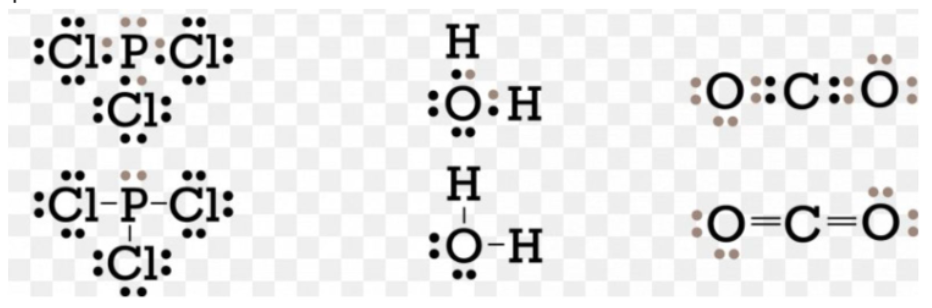
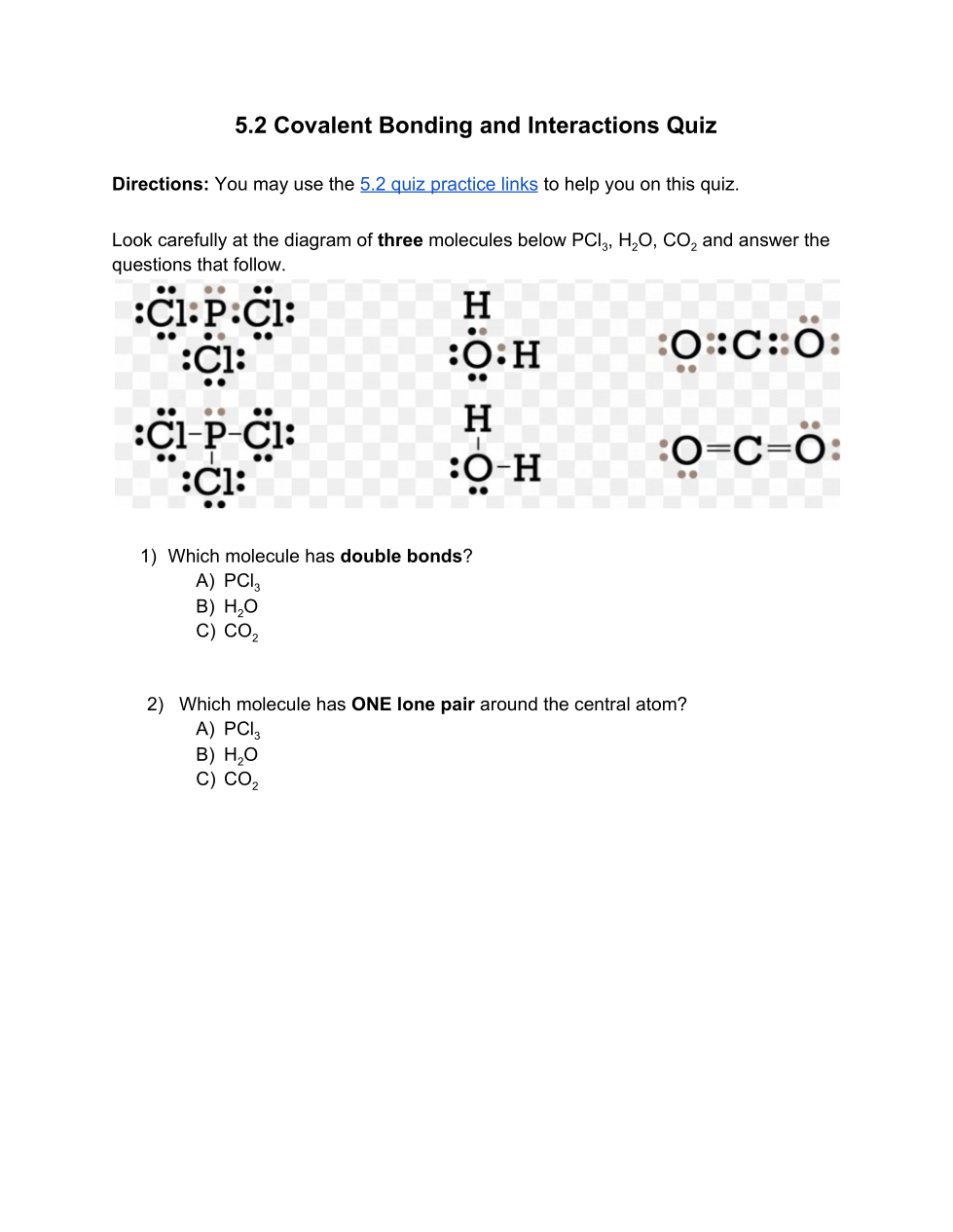
Which molecule above has double bonds?
Which molecule above has ONE lone pair around the central atom?
Select evidence that could be used to support the claim: The surface tension of water allows a spider to walk on water. (Select all that apply)
Which reasoning BEST explains why a spider can walk on water?
CLICK SHOW YOUR WORK TO FILL OUT THE TABLE FOR THIS QUESTION. AFTER YOU HAVE SHOWN YOUR WORK, THEN YOU CAN CHOOSE THE CORRECT ANSWER BELOW BASED ON YOUR MOLECULE. (Note: you must show the steps given for your molecule. Do not Google it...it is often wrong, incomplete, and doesn't follow the steps required)
M.C. Question for Part C:
How many lone pairs does S
have?