EMS: Flex 2 (3/9) Version B
star
star
star
star
star
Last updated about 3 years ago
8 Nsɛmmisa

0

0
0
0
0
0
2
1
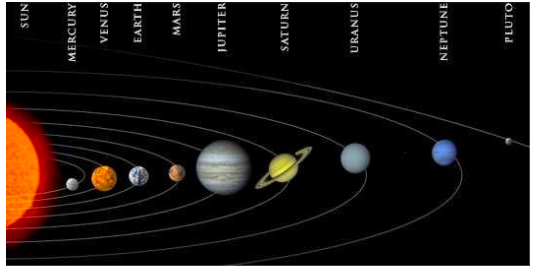
Makes as many observations as you can about the model below. (Describe what is given and what that means.)
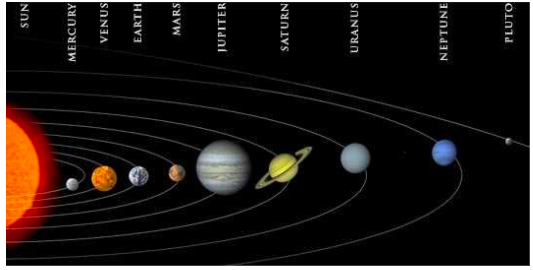
(Think: Where is the sun? Which planet has the smallest/largest orbit? which planet is largest?)
Which planetary object has the longest orbit? how do you know?
"I think that the planet with the longest orbit is ... . I know this because ... "
Which planet takes the longest time to orbit the sun? How do you know?
"I think that the planet that takes the longest time to orbit the sun... . I know this because ... "
Why doesn’t Mercury block light from reaching all the other planets?
"I think that Mercury does not block light from reaching other objects... . I know this because ... "
When astronauts visit the Moon and look back at Earth, they see phases, too! Like the phases of the Moon that we see from Earth, the phases of Earth that astronauts see from the Moon are determined by the position of the Moon in its orbit around Earth. Today, you’re going to investigate the phases of Earth.
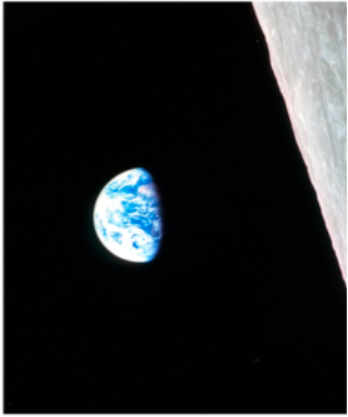
This photograph of Earth was taken by NASA astronauts from the Moon during the Apollo 8 mission in 1968. Which phase does Earth appear to be in?
Identify the location of the Sun, Earth, Moon (astronaut) to help you answer this question.
(Think: Where is the sun located? Where does is the moon located?)
If space astronauts were to stay on the moon, how long would they have to wait to see the same Earth Phases as seen in the image above?
CFS:
Accurately identifies the light on the moon based on its position
Accurately describes the cause and effect relationship between rotational movements and illuminated objects
"I think if astronauts were to stay on the moon they would have to wait ____ days to see the same moon phase. this is because ... "
(Think: How long is the moon cycle/orbit?)
A student is modeling the moon phases and is trying to understand the timing when each phase occurs. Use the time stamps and images below to answer the following questions.
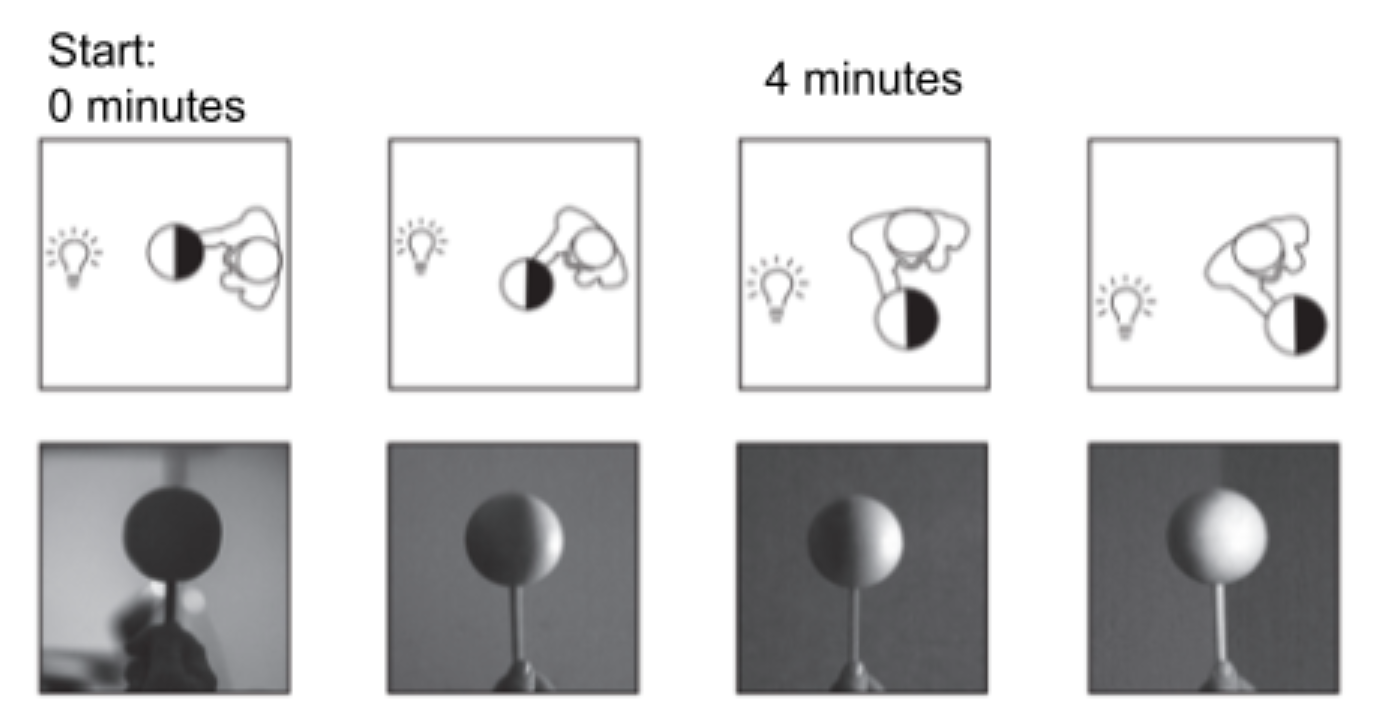
How can you predict the time the Moon will take to make 1 complete orbit?
CFS:
Accurately identifies the light on the moon based on its position
Accurately describes the cause and effect relationship between rotational movements and illuminated objects
"I think that the moon will take _______ minutes to make a complete orbit.
I think this because .... "
How long does it take for 1 complete orbit to occur from the start?