Speech delivered at the United Nations Earth Summit in 1992
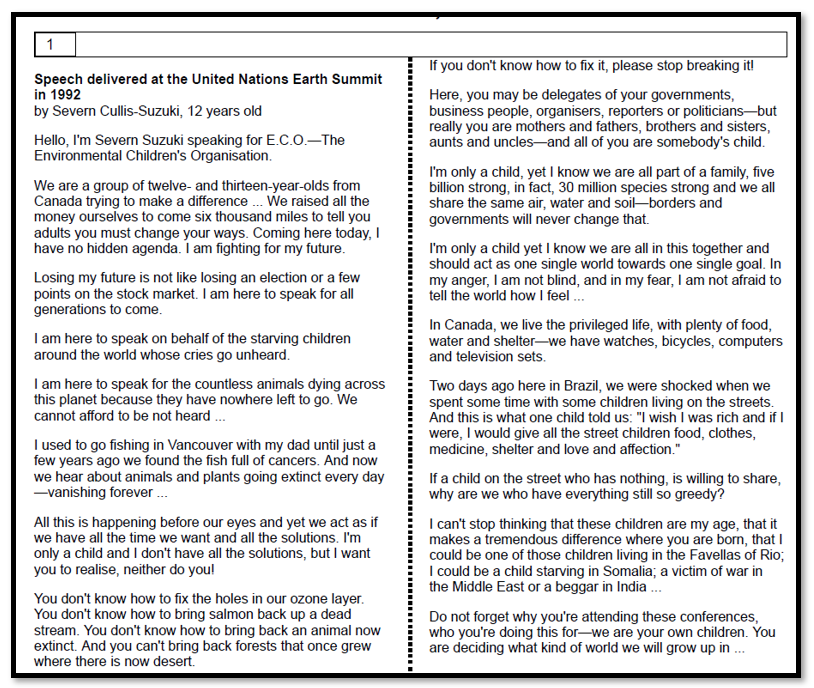
Cullis-Suzuki’s purpose for giving this speech is to
Speech delivered at the United Nations Earth Summit in 1992
Cullis-Suzuki’s purpose for giving this speech is to
7th Grade SpringBoard Summative Assessment Unit 2/Part 2
Speech delivered at the United Nations Earth Summit in 1992
Cullis-Suzuki’s purpose for giving this speech is to
Part A:
Which type of rhetorical device does the speaker use to strengthen the central argument?
Part B:
Which choice provides the best evidence for the answer to Part A?
Read the excerpt from the passage:
I'm only a child, yet I know we are all part of a family, five billion strong, in fact, 30 million species strong and we all share the same air, water and soil—borders and governments will never change that.
Which choice best explains how this excerpt connects to the speaker's argument about responsibility?
Read the excerpt from the passage:
If you don't know how to fix it, please stop breaking it!
Which choice best explains how the speaker uses reasoning to support the demand in the excerpt?
To GMO* or Not to GMO?
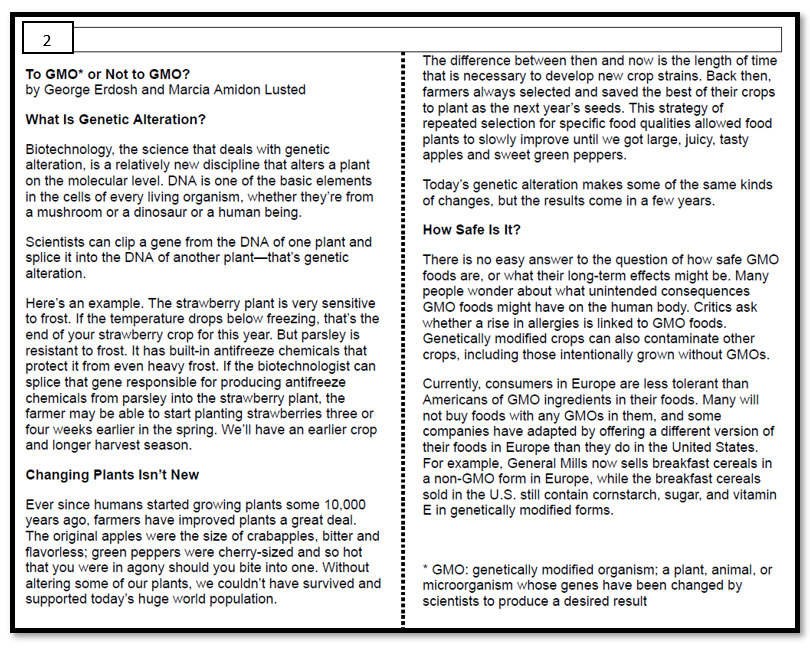
The authors most likely wrote this passage because they wanted to
Which of the following options best summarizes the passage?
Part A:
Which choice describes the most likely intended audience of the passage?
Part B:
Which choice provides the best evidence for the answer to Part A?
Which choice best describes how some companies adapt food ingredients for consumers who live in different locations?
Read the excerpt from "To GMO or Not to GMO?":
There is no easy answer to the question of how safe GMO foods are, or what their long-term effects might be. Many people wonder about what unintended consequences GMO foods might have on the human body. Critics ask whether a rise in allergies is linked to GMO foods. Genetically modified crops can also contaminate other crops, including those intentionally grown without GMOs.
Based on the excerpt, how do the critics' concerns about GMO foods best relate to Severn Suzuki's speech?
How do Severn Suzuki and the authors of "To GMO or Not to GMO?" use evidence to support their arguments?