Intro to Chemical Equations
star
star
star
star
star
Last updated 5 months ago
15 Nsɛmmisa
1
1
1
1
1
1

1
1
1
1
1
1
1
1
1
Which signs of chemical change are present in this reaction?
Assume that the 2 liquid reactants that were combined had a mass of 10 grams each. What would be the mass of the liquid and solid products after the chemical change?
The blue reactant was copper (II) sulfate. Write the formula. (You do not have to turn the numbers to subscripts. There should be no spaces.)
Before the reaction is performed, the copper (II) sulfate is dissolved in water. Which letters would be written with the copper(II) sulfate in a chemical equation to tell its state?
The white reactant was sodium carbonate. Write the formula. (You do not have to turn the numbers to subscripts. There should be no spaces.)
Which best describes what we can tell about the energy change in this reaction?
How many total oxygens are on the reactant side of the equation? (include oxygens from both compounds)
How many oxygens are on the products side of the equation?
The priniciple that states that we will always have the same number and type of atoms on the product and reactant side of an equation is called the Law of
Look at the products and rewatch the video of needed. Write the name of the product that should have (s) next to it to show its state.
The arrow in the equation above that separates the reactants from the products is often said as "produces" or ___________. (use your notes to find the word)
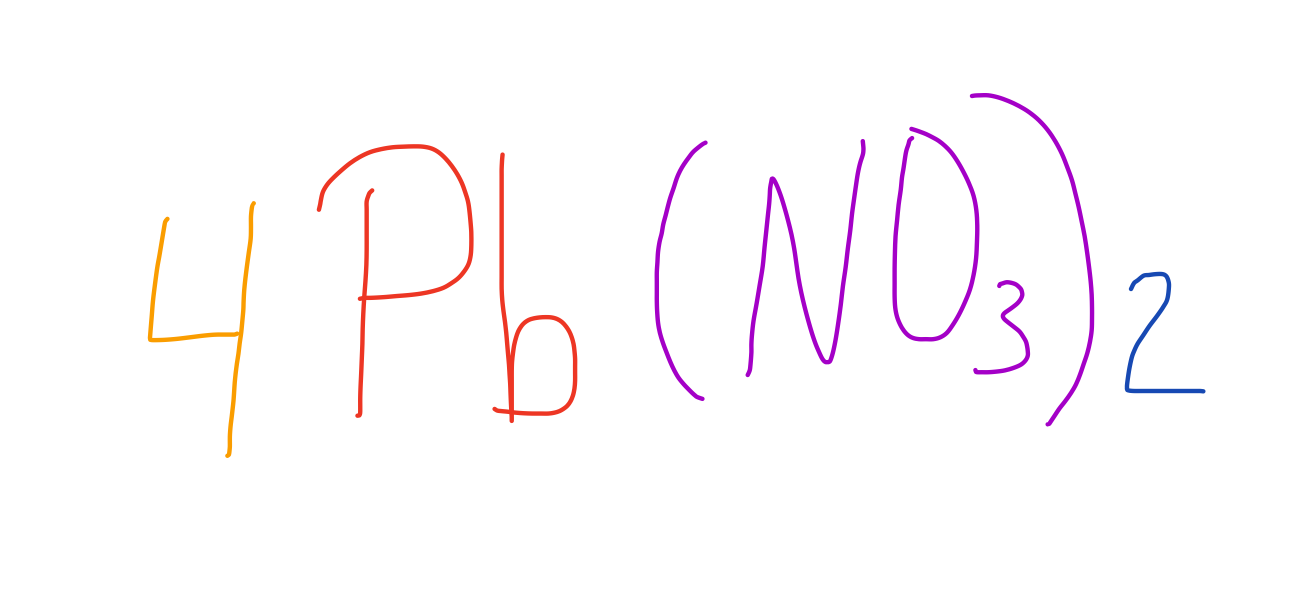
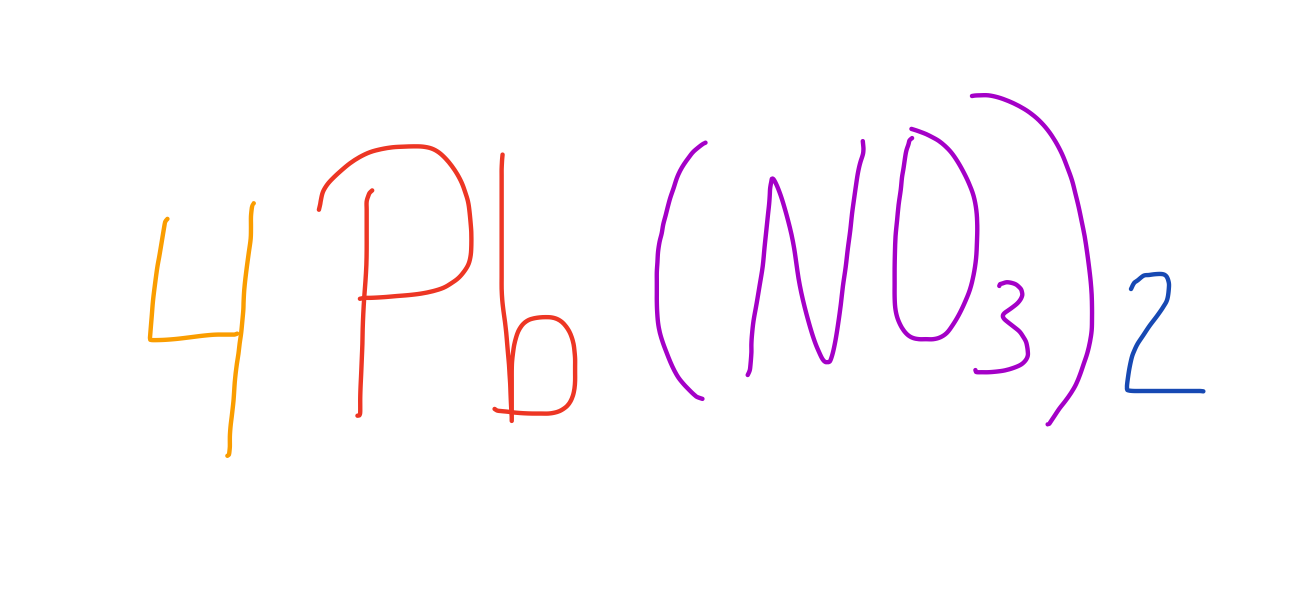
How many lead are represented?
?
How many nitrogen are represented ?
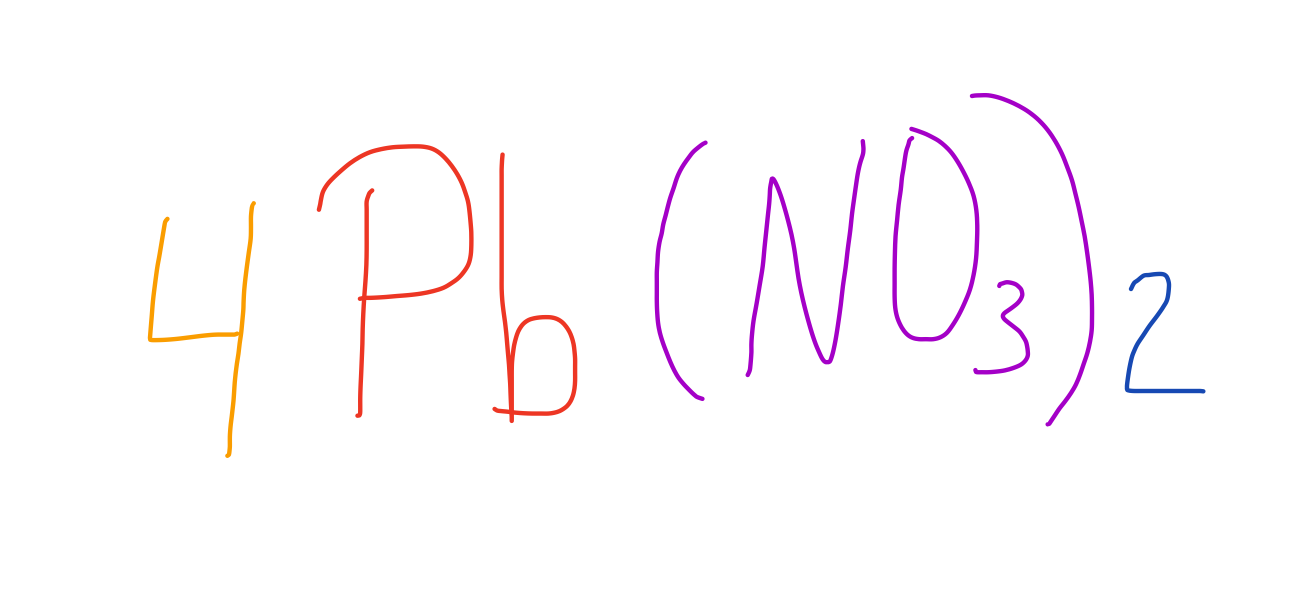
How many oxygen are represented?
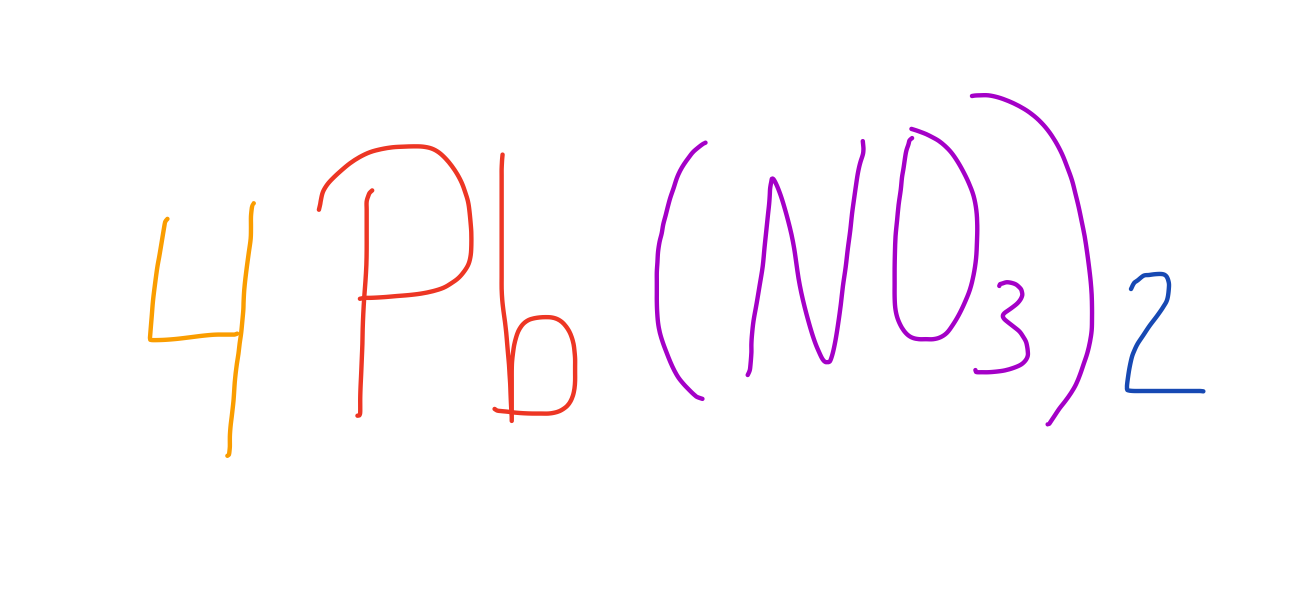
If this formula was in an equation, we would write it out as "four ________"