Log in
Sign up for FREE
arrow_back
Library
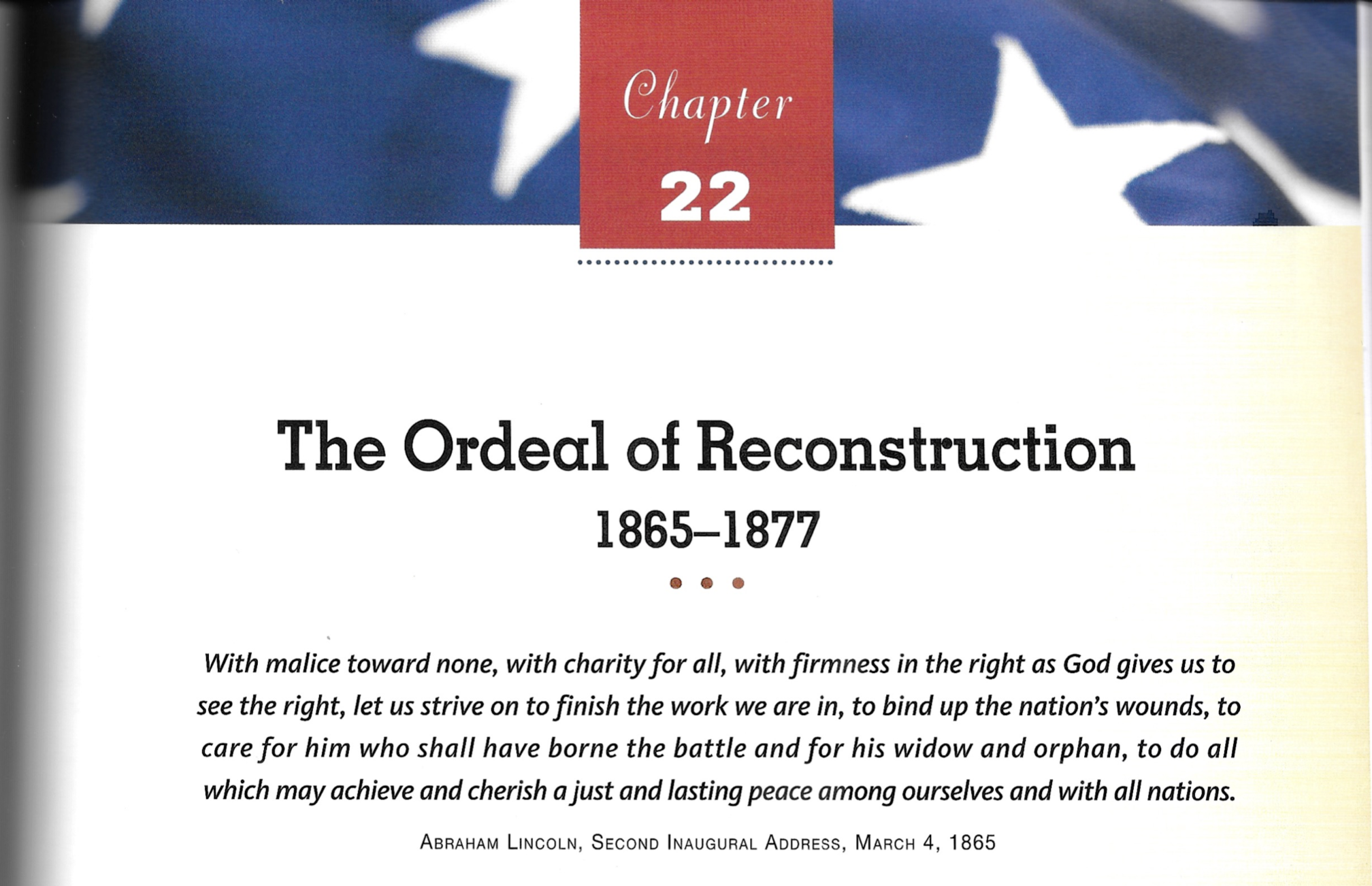
APUSH Chapter 22, Part 1 - The Ordeal of Reconstruction (1865-1877)
By Haiyen Truong
star
star
star
star
star
Share
share
Last updated over 1 year ago
11 questions
Add this activity
0
title
zoom_in
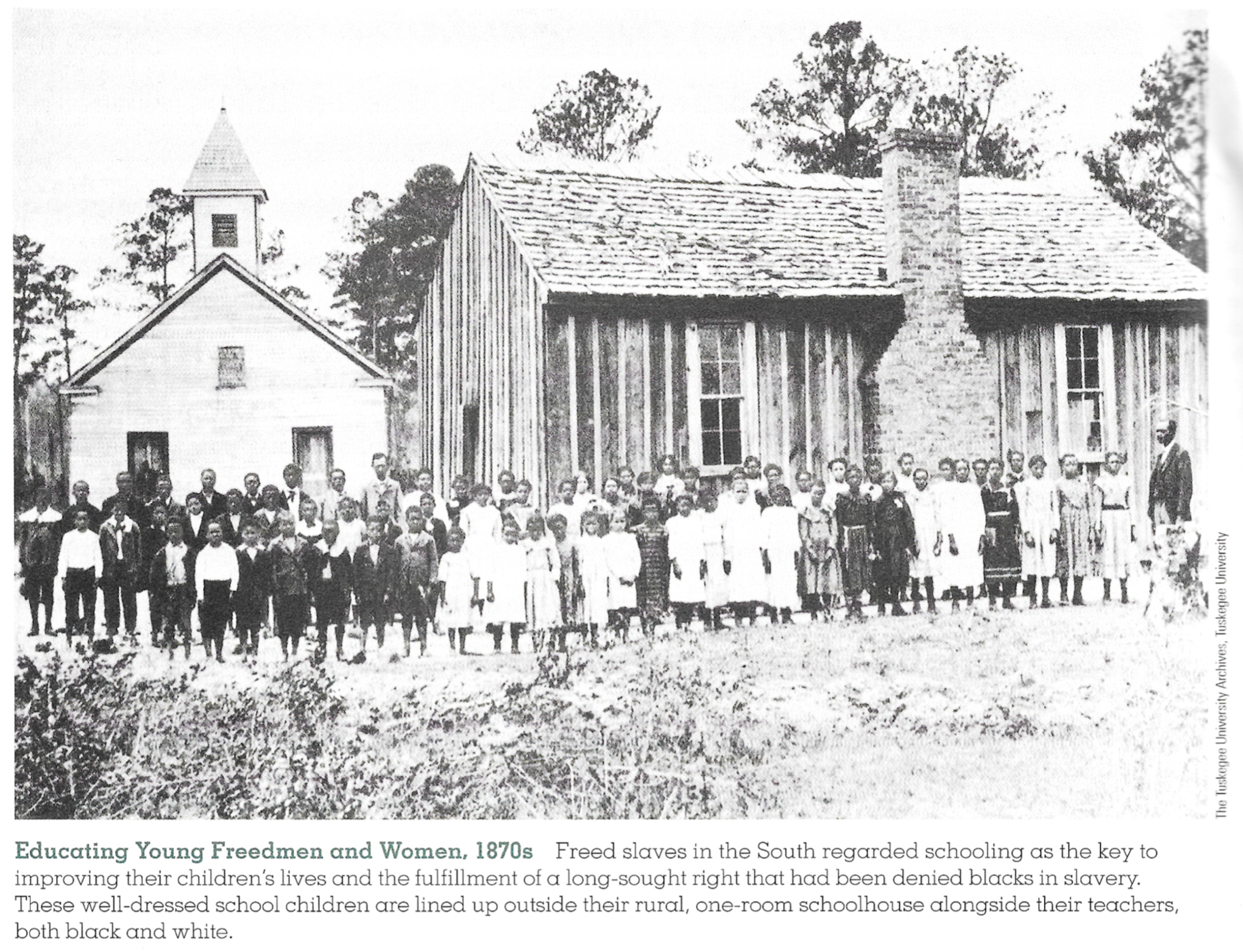
Welcome to your Chapter 22 reading!
As always, "Focus Questions" should guide your reading and notes, but you do not necessarily have to explicitly answer them.
1
zoom_in
1
Question 1
1.
What do you already know about the Reconstruction period? If you do not know anything, what questions do you have?
2
zoom_in
1
Question 2
2.
The passage indicates that, after the Civil War ended in 1865, Confederate leaders
were all pardoned by December 1868, even Davis and Lee.
were barred from holding political office ever again.
were all pardoned except Davis and Lee, who received life sentences.
were jailed for varied but extended periods of time.
IIRC.01
title
3
zoom_in
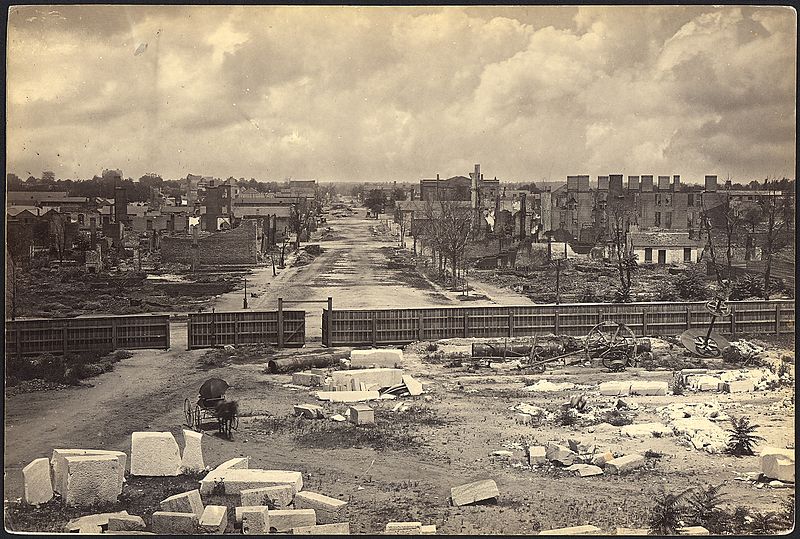
Figure A:
George S. Barnard, View from the State Capitol in South Carolina, c. 1861-65
1
SQN.01
4
5
zoom_in
1
IIRC.01
1
IITE.01
6
zoom_in
1
Question 6
6.
As used in line 1, "focus" most nearly means
target
attention
fixation
center
IIWD.01
7
zoom_in
1
RPV.01
8
9
zoom_in
1
IIRC.02
1
IITE.01
10
zoom_in
1
Question 10
10.
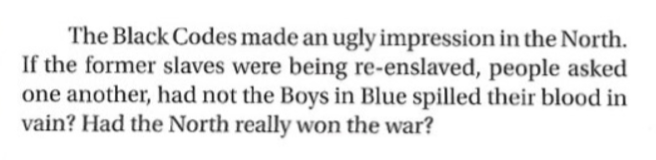
As used in line 1, "ugly" most nearly means
distasteful
unattractive
unseemly
hideous
IIWD.01
Question 11
11.
Do you have any feedback or questions about the Formative reading or comprehension questions that you want to go over in class?
Question 3
3.
Figure A provides the most direct support for which idea in the passage?
The postwar South was utterly devastated in terms of economic and social structures.
In the aftermath of the Civil War, white Southerners had a change of heart about their way of life.
The federal government confuscated land from former slaveowners at the end of the Civil War.
The postwar Southern economy suddenly shifted from agriculture to a commitment to industrialization.
Question 4
4.
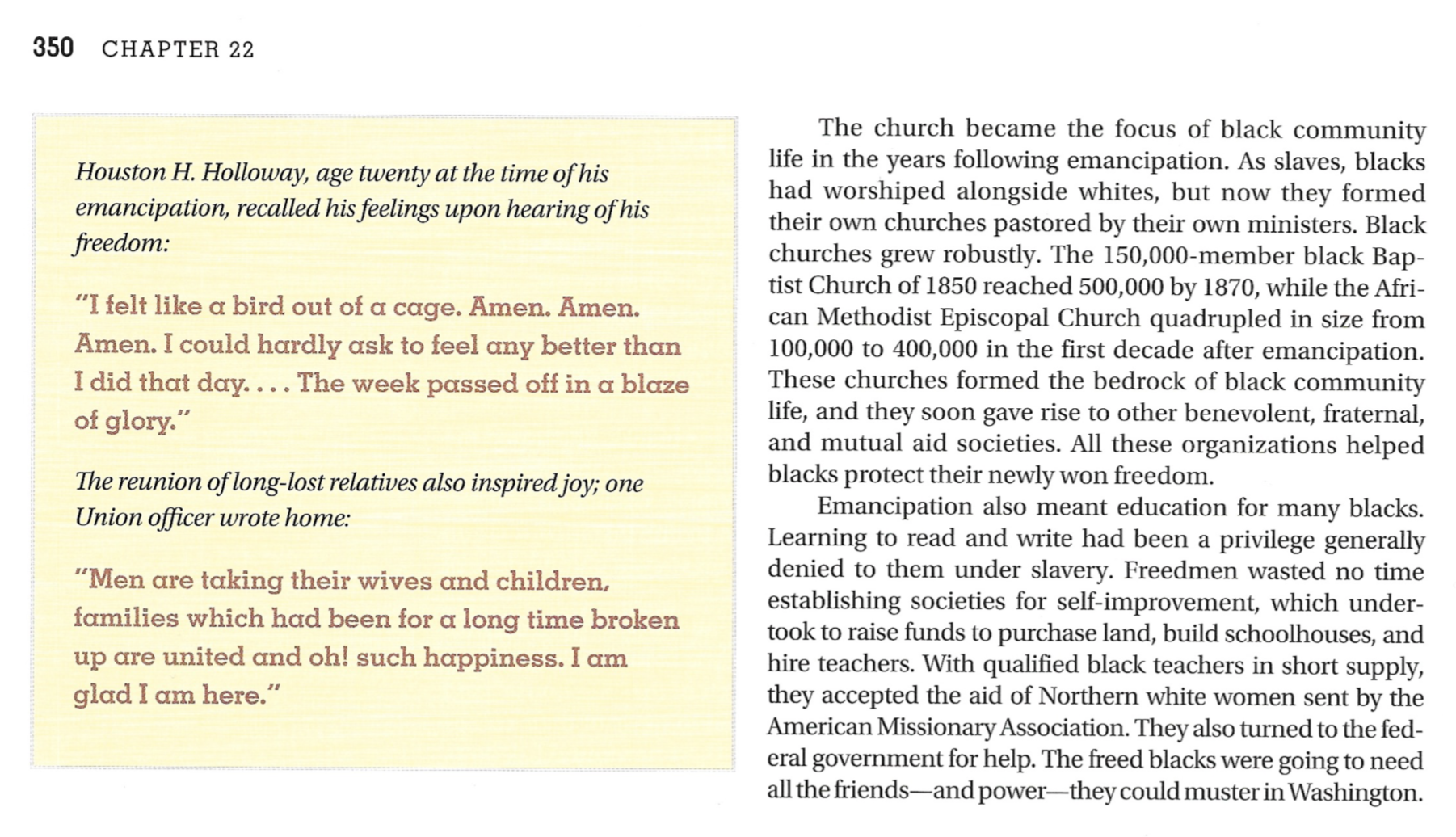
The passage suggests that freedom for Southern blacks at the end of the Civil War
led large numbers to move to the big cities in the North.
caused the widespread scattering of black families.
came haltingly and unevenly in different parts of the conquered Confederacy.
was officially recognized by the 15th Amendment.
Question 5
5.
Which choice provides the best evidence for the answer to the previous question?
Paragraph 1, Line 2-4 ("Emancipation took... conquered Confederacy")
Paragraph 3, Line 1-2 ("Prodded by... permanent freedom")
Paragraph 4, Line 1-2 ("Tens of... and children")
Paragraph 5, Line 1-3 ("From 1878... to Kansas")
visibility
View drawing
Question 7
7.
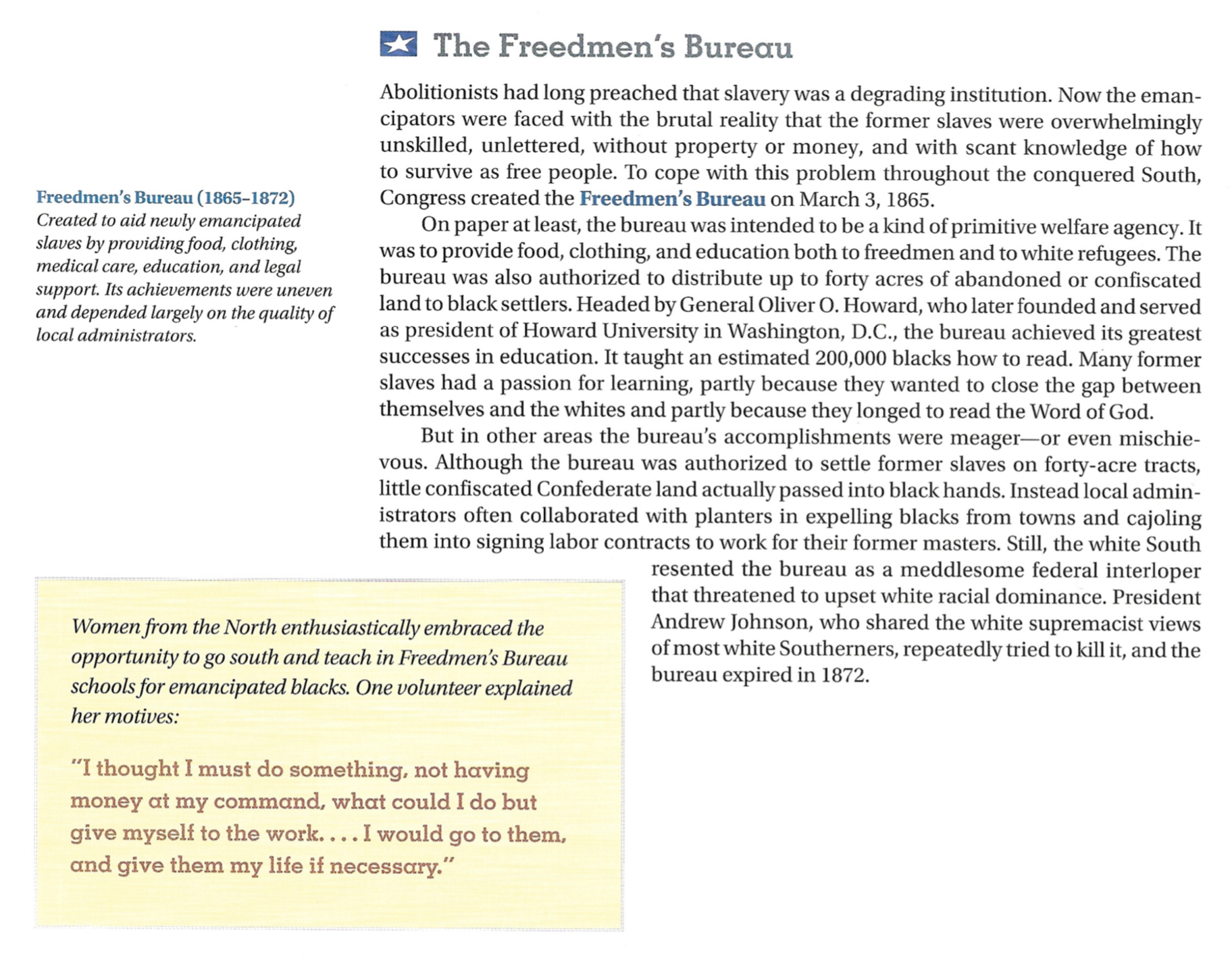
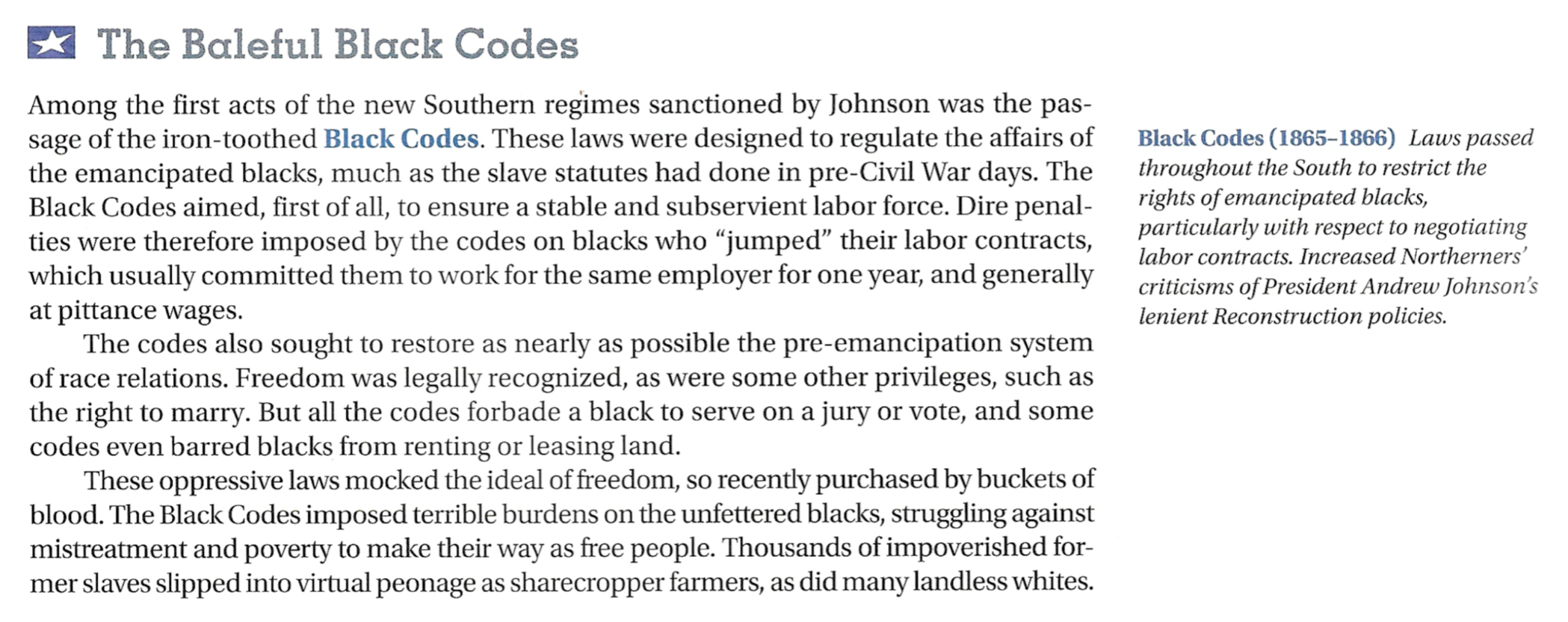
Which choice best reflects the perspective of the white South regarding the Freedmen's Bureau?
It was a threat to state social service agencies.
It was a meddlesome federal agency that threatened to upset white racial dominance.
It was an acceptable agency only because it also helped poor whites.
It was a valued partner in rebuilding the South.
Question 8
8.
It can be reasonably inferred that the main purpose of the Black Codes was to
prevent blacks from becoming sharecroppers.
allow blacks to legally register their marriages.
ensure that freed blacks were still reliable and subordinate workers.
create a system of justice for the formerly enslaved.
Question 9
9.
Which choice provides the best evidence for the answer to the previous question?
Paragraph 1, Line 1-2 ("Among the... Black Codes")
Paragraph 1, Line 3-4 ("The Black... labor force")
Paragraph 2, Line 3-4 ("Freedom was... to marry")
Paragraph 3, Line 3-4 ("Thousands of... landless whites")
visibility
View drawing