0.5
0.5
0.5
0.5
0.5
0.5
0.5
0.5
0.5
0.5
0.5
0.5
0.5
0.5
0.5
0.5
0.5
0.5
0.5
0.5
0.5
0.5
0.5
0.5
0.5
0.5
Change the indicative verb [in brackets] to subjunctive, keeping the TENSE and PERSON/NUMBER the same. Note that principal parts have been provided in the vocabulary help beneath the sentence.
Cum pater Sextī epistulam ______________________________ [legēbat], sollicitus factus est.
vocabulary help:
legō, legere, lēgī, lēctus: to read
sollicitus, -a, -um: worried, anxious
Change the indicative verb [in brackets] to subjunctive, keeping the TENSE and PERSON/NUMBER the same. Note that principal parts have been provided in the vocabulary help beneath the sentence.
Pater Sextī cogitābat quid Sextus ______________________________ [fēcerat].
vocabulary help:
cogitō, -āre, -āvī, -ātus: to think about, ponder
faciō, facere, fēcī, factus: to do
Change the indicative verb [in brackets] to subjunctive, keeping the TENSE and PERSON/NUMBER the same. Note that principal parts have been provided in the vocabulary help beneath the sentence.
Nesciēbam cur illī virī haec verba dūra ______________________________ [locūtī erant].
vocabulary help:
nesciō, nescīre, nescīvī, nescītus: to not know
verbum, -ī, n.: word
dūrus, -a, -um: harsh, hard
loquor, loquī, locūtus sum: to say, speak
Change the indicative verb [in brackets] to subjunctive, keeping the TENSE and PERSON/NUMBER the same. Note that principal parts have been provided in the vocabulary help beneath the sentence.
Nesciēbam cur haec verba dūra ______________________________ [dīcēbantur].
vocabulary help:
nesciō, nescīre, nescīvī, nescītus: to not know
verbum, -ī, n.: word
dūrus, -a, -um: harsh, hard
dīcō, dīcere, dīxī, dictus: to say
Translate this sentence into English.
Amīcī senātōris nesciēbant quōmodō prīnceps populum Rōmānum adiuvāre in animō habēret et quid in senātū dīxisset.
vocabulary help:
nesciō, -īre, -īvi, -ītus: to not know
prīnceps, prīncipis, m.: emperor
quōmodō: how, in what way
populum, -ī, n.: people, population
adiuvō, adiuvāre, adiūvī, adiūtus: to help
in animō habēre: to intend
What type of subjunctive clause does this sentence contain?
Amīcī senātōris nesciēbant quid quōmodō prīnceps populum Rōmānum in animō habēret et quid in senātū dīxisset.
Translate this sentence into English.
Cum senātor rem explicāret, amīcī īrātissimī erant.
vocabulary help:
rēs, reī, f.: thing, matter, situation
explicō, -āre, -āvī, -ātus: to explain
What type of subjunctive clause does this sentence contain?
Cum senātor rem explicāret, amīcī īrātissimī erant.
Translate this sentence into English.
Ego, cum senātor et amīcī in thermīs vehementer colloquerentur, constituī ē caldāriō ēgredī et in palaestrā mē exercēre.
vocabulary help:
vehementer: earnestly, vehemently
colloquor, colloquī, collocūtus sum: to converse, talk
cōnstituō, cōnstituere, cōnstituī, cōnstitūtus: to decide
caldārium, -ī, n.: hot room
exerceō, exercēre, exercuī, exercitus: to train, exercise, work out
What type of subjunctive clause does this sentence contain?
Ego, cum senātor et amīcī in thermīs vehementer colloquerentur, constituī ē caldāriō ēgredī et in palaestrā mē exercēre.
Translate this sentence into English.
Cum multī athlētae fortissimī in palaestrā sē exercērent, ego, eōs vidēns, solus in popīnā sedēre et vīnum bibere māluī.
vocabulary help:
athlēta, -ae, m.: athlete
fortis, -is, -e: strong
exerceō, exercēre, exercuī, exercitus: to train, exercise, work out
solus, -a, -um: alone
popīna, -ae, f.: snack bar, eatery
bibō, bibere, bibī: to drink
mālō, mālle, māluī: to prefer
What type of subjunctive clause does this sentence contain?
Cum multī athlētae fortissimī in palaestrā sē exercērent, ego, eōs vidēns, solus in popīnā sedēre et vīnum bibere māluī.
Translate this sentence into English.
Ego, in pace et quiēte sedēns, cum clāmōrēs athlētārum strēnuissimōrum et īrātissimōrum senātōrum audīre nōn iam possem, cogitābam cur illī virī ad thermās otiōsās ad laborandum et dissentiendum vēnissent.
vocabulary help:
pax, pacis, f.: peace
quiēs, quiētis, f.: quiet
clāmor, clāmōris, m.: shout, shouting
athlēta, -ae, m.: athlete
strēnuus, -a, -um: energetic
nōn iam: no longer
cogitō, -āre, -āvī, -ātus: to think about, ponder
otiōsus, -a, -um: relaxed, peaceful, work-free
ad laborandum et dissentiendum: for the purpose of working and disagreeing
capiō, capere, cēpī, captus ("take"): 3rd person pl. n.
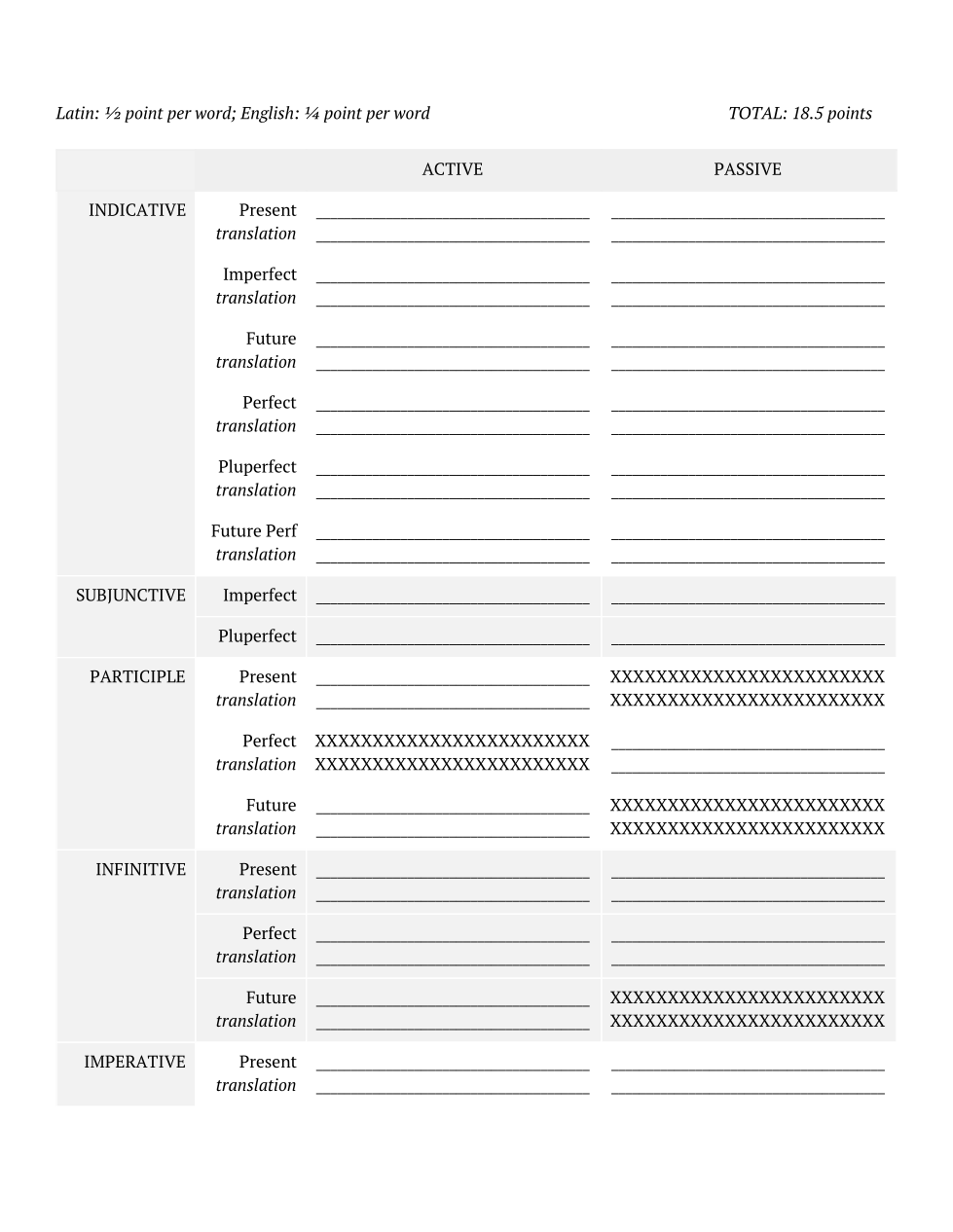
INDICATIVE: Present Active (Latin)
capiō, capere, cēpī, captus ("take"): 3rd person pl. n.
INDICATIVE: Present Passive (Latin)
capiō, capere, cēpī, captus ("take"): 3rd person pl. n.
INDICATIVE: Imperfect Active (Latin)
capiō, capere, cēpī, captus ("take"): 3rd person pl. n.
INDICATIVE: Imperfect Passive (Latin)
capiō, capere, cēpī, captus ("take"): 3rd person pl. n.
INDICATIVE: Future Active (Latin)
capiō, capere, cēpī, captus ("take"): 3rd person pl. n.
INDICATIVE: Future Passive (Latin)
capiō, capere, cēpī, captus ("take"): 3rd person pl. n.
INDICATIVE: Perfect Active (Latin)
capiō, capere, cēpī, captus ("take"): 3rd person pl. n.
INDICATIVE: Perfect Passive (Latin)
capiō, capere, cēpī, captus ("take"): 3rd person pl. n.
INDICATIVE: Pluperfect Active (Latin)
capiō, capere, cēpī, captus ("take"): 3rd person pl. n.
INDICATIVE: Pluperfect Passive (Latin)
capiō, capere, cēpī, captus ("take"): 3rd person pl. n.
INDICATIVE: Future Perfect Active (Latin)
capiō, capere, cēpī, captus ("take"): 3rd person pl. n.
INDICATIVE: Future Perfect Passive (Latin)
capiō, capere, cēpī, captus ("take"): 3rd person pl. n.
SUBJUNCTIVE: Imperfect Active (Latin)
capiō, capere, cēpī, captus ("take"): 3rd person pl. n.
SUBJUNCTIVE: Imperfect Passive (Latin)
capiō, capere, cēpī, captus ("take"): 3rd person pl. n.
SUBJUNCTIVE: Pluperfect Active (Latin)
capiō, capere, cēpī, captus ("take"): 3rd person pl. n.
SUBJUNCTIVE: Pluperfect Passive (Latin)
capiō, capere, cēpī, captus ("take"): 3rd person pl. n.
PARTICIPLE: Present Active (Latin)
capiō, capere, cēpī, captus ("take"): 3rd person pl. n.
PARTICIPLE: Perfect Passive (Latin)
capiō, capere, cēpī, captus ("take"): 3rd person pl. n.
PARTICIPLE: Future Active (Latin)
capiō, capere, cēpī, captus ("take"): 3rd person pl. n.
INFINITIVE: Present Active (Latin)
capiō, capere, cēpī, captus ("take"): 3rd person pl. n.
INFINITIVE: Present Passive (Latin)
capiō, capere, cēpī, captus ("take"): 3rd person pl. n.
INFINITIVE: Perfect Active (Latin)
capiō, capere, cēpī, captus ("take"): 3rd person pl. n.
INFINITIVE: Perfect Passive (Latin)
capiō, capere, cēpī, captus ("take"): 3rd person pl. n.
INFINITIVE: Future Active (Latin)
capiō, capere, cēpī, captus ("take"): 3rd person pl. n.
IMPERATIVE: Present Active (Latin)
capiō, capere, cēpī, captus ("take"): 3rd person pl. n.
IMPERATIVE: Present Passive (Latin)