ER 22 Practice Quiz
star
star
star
star
star
Last updated over 1 year ago
64 questions

0.25
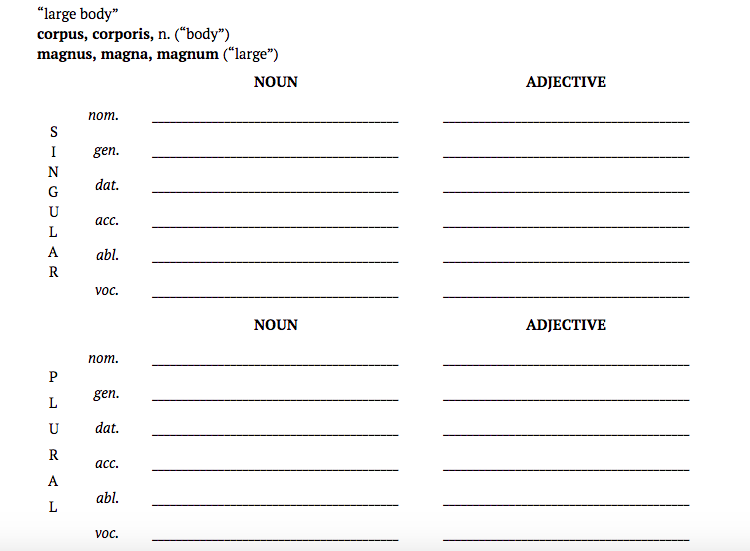
NOUN: nom. sing.
NOUN: nom. sing.
0.25
NOUN: gen. sing.
NOUN: gen. sing.
0.25
NOUN: dat. sing.
NOUN: dat. sing.
0.25
NOUN: acc. sing.
NOUN: acc. sing.
0.25
NOUN: abl. sing.
NOUN: abl. sing.
0.25
NOUN: voc. sing.
NOUN: voc. sing.
0.25
NOUN: nom. pl.
NOUN: nom. pl.
0.25
NOUN: gen. pl.
NOUN: gen. pl.
0.25
NOUN: dat. pl.
NOUN: dat. pl.
0.25
NOUN: acc. pl.
NOUN: acc. pl.
0.25
NOUN: abl. pl.
NOUN: abl. pl.
0.25
NOUN: voc. pl.
NOUN: voc. pl.
0.25
ADJ: nom. sing.
ADJ: nom. sing.
0.25
ADJ: gen. sing.
ADJ: gen. sing.
0.25
ADJ: dat. sing.
ADJ: dat. sing.
0.25
ADJ: acc. sing.
ADJ: acc. sing.
0.25
ADJ: abl. sing.
ADJ: abl. sing.
0.25
ADJ: voc. sing.
ADJ: voc. sing.
0.25
ADJ: nom. pl.
ADJ: nom. pl.
0.25
ADJ: gen. pl.
ADJ: gen. pl.
0.25
ADJ: dat. pl.
ADJ: dat. pl.
0.25
ADJ: acc. pl.
ADJ: acc. pl.
0.25
ADJ: abl. pl.
ADJ: abl. pl.
0.25
ADJ: voc. pl.
ADJ: voc. pl.

0.25
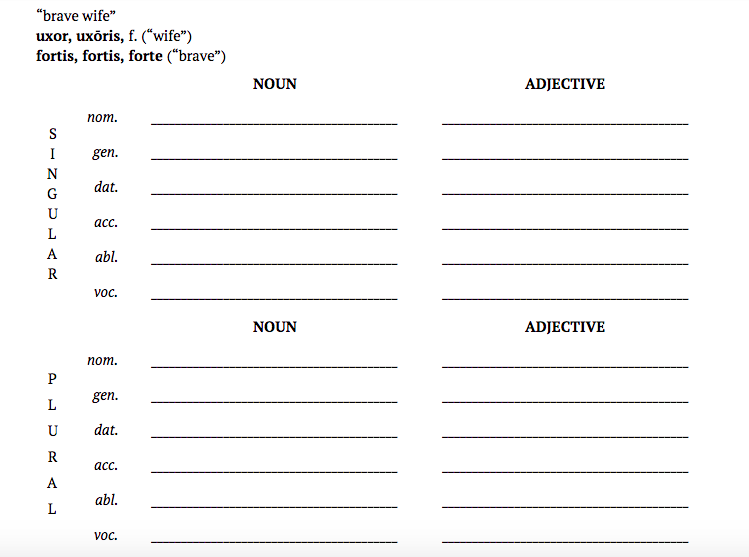
NOUN: nom. sing.
NOUN: nom. sing.
0.25
NOUN: gen. sing.
NOUN: gen. sing.
0.25
NOUN: dat. sing.
NOUN: dat. sing.
0.25
NOUN: acc. sing.
NOUN: acc. sing.
0.25
NOUN: abl. sing.
NOUN: abl. sing.
0.25
NOUN: voc. sing.
NOUN: voc. sing.
0.25
NOUN: nom. pl.
NOUN: nom. pl.
0.25
NOUN: gen. pl.
NOUN: gen. pl.
0.25
NOUN: dat. pl.
NOUN: dat. pl.
0.25
NOUN: acc. pl.
NOUN: acc. pl.
0.25
NOUN: abl. pl.
NOUN: abl. pl.
0.25
NOUN: voc. pl.
NOUN: voc. pl.
0.25
ADJ: nom. sing.
ADJ: nom. sing.
0.25
ADJ: gen. sing.
ADJ: gen. sing.
0.25
ADJ: dat. sing.
ADJ: dat. sing.
0.25
ADJ: acc. sing.
ADJ: acc. sing.
1
ADJ: abl. sing.
ADJ: abl. sing.
0.25
ADJ: voc. sing.
ADJ: voc. sing.
0.25
ADJ: nom. pl.
ADJ: nom. pl.
0.25
ADJ: gen. pl.
ADJ: gen. pl.
0.25
ADJ: dat. pl.
ADJ: dat. pl.
0.25
ADJ: acc. pl.
ADJ: acc. pl.
0.25
ADJ: abl. pl.
ADJ: abl. pl.
0.25
ADJ: voc. pl.
ADJ: voc. pl.
4
Translate the sentence. In the following question, identify the underlined word(s) as DATIVE or ABLATIVE, and pick the correct usage.
Puella puerō multa dē urbe explicāvit.
vocabulary help:- dē (+ abl.): about
- explicō, explicāre, explicāvī, explicātus: to explain
Translate the sentence. In the following question, identify the underlined word(s) as DATIVE or ABLATIVE, and pick the correct usage.
Puella puerō multa dē urbe explicāvit.
vocabulary help:
- dē (+ abl.): about
- explicō, explicāre, explicāvī, explicātus: to explain
1
Choose the correct CASE and USAGE for the underlined word.
Puella puerō multa dē urbe explicāvit.
vocabulary help:- dē (+ abl.): about
- explicō, explicāre, explicāvī, explicātus: to explain
Choose the correct CASE and USAGE for the underlined word.
Puella puerō multa dē urbe explicāvit.
vocabulary help:
- dē (+ abl.): about
- explicō, explicāre, explicāvī, explicātus: to explain
1
Choose the correct CASE and USAGE for the underlined word.
Puella puerō multa dē urbe explicāvit.
vocabulary help:- dē (+ abl.): about
- explicō, explicāre, explicāvī, explicātus: to explain
Choose the correct CASE and USAGE for the underlined word.
Puella puerō multa dē urbe explicāvit.
vocabulary help:
- dē (+ abl.): about
- explicō, explicāre, explicāvī, explicātus: to explain
4
Translate the sentence. In the following question, identify the underlined word(s) as DATIVE or ABLATIVE, and pick the correct usage.
Caupō scelestus corpus mortuum stercore cēlāvit.
vocabulary help:- caupō, caupōnis, m.: innkeeper
- scelestus, scelesta, scelestum: wicked
- corpus, corporis, n.: body
- mortuus, mortua, mortuum: dead
- stercus, stercoris, n.: manure
- cēlō, cēlāre, cēlāvī, cēlātus: to hide, conceal
Translate the sentence. In the following question, identify the underlined word(s) as DATIVE or ABLATIVE, and pick the correct usage.
Caupō scelestus corpus mortuum stercore cēlāvit.
vocabulary help:
- caupō, caupōnis, m.: innkeeper
- scelestus, scelesta, scelestum: wicked
- corpus, corporis, n.: body
- mortuus, mortua, mortuum: dead
- stercus, stercoris, n.: manure
- cēlō, cēlāre, cēlāvī, cēlātus: to hide, conceal
1
Choose the correct CASE and USAGE for the underlined word.
Caupō scelestus corpus mortuum stercore cēlāvit.
vocabulary help:- caupō, caupōnis, m.: innkeeper
- scelestus, scelesta, scelestum: wicked
- corpus, corporis, n.: body
- mortuus, mortua, mortuum: dead
- stercus, stercoris, n.: manure
- cēlō, cēlāre, cēlāvī, cēlātus: to hide, conceal
Choose the correct CASE and USAGE for the underlined word.
Caupō scelestus corpus mortuum stercore cēlāvit.
vocabulary help:
- caupō, caupōnis, m.: innkeeper
- scelestus, scelesta, scelestum: wicked
- corpus, corporis, n.: body
- mortuus, mortua, mortuum: dead
- stercus, stercoris, n.: manure
- cēlō, cēlāre, cēlāvī, cēlātus: to hide, conceal
4
Translate the sentence. In the following question, identify the underlined word(s) as DATIVE or ABLATIVE, and pick the correct usage.
Nocte Rōmānīs licuit plaustra intrā urbem agere.
vocabulary help:- nox, noctis, f.: night
- licet, licēre, licuit: it is permitted, it is allowed
- plaustrum, plaustrī, n.: cart
- intrā (+acc.): inside, within
- agō, agere, ēgī, āctus: to do, drive
Translate the sentence. In the following question, identify the underlined word(s) as DATIVE or ABLATIVE, and pick the correct usage.
Nocte Rōmānīs licuit plaustra intrā urbem agere.
vocabulary help:
- nox, noctis, f.: night
- licet, licēre, licuit: it is permitted, it is allowed
- plaustrum, plaustrī, n.: cart
- intrā (+acc.): inside, within
- agō, agere, ēgī, āctus: to do, drive
1
Choose the correct CASE and USAGE for the underlined word.
Nocte Rōmānīs licuit plaustra intrā urbem agere
vocabulary help:- nox, noctis, f.: night
- licet, licēre, licuit: it is permitted, it is allowed
- intrā (+acc.): inside, within
- agō, agere, ēgī, āctus: to do, drive
Choose the correct CASE and USAGE for the underlined word.
Nocte Rōmānīs licuit plaustra intrā urbem agere
vocabulary help:
- nox, noctis, f.: night
- licet, licēre, licuit: it is permitted, it is allowed
- intrā (+acc.): inside, within
- agō, agere, ēgī, āctus: to do, drive
1
Choose the correct CASE and USAGE for the underlined word.
Nocte Rōmānīs licuit plaustra intrā urbem agere
vocabulary help:- nox, noctis, f.: night
- licet, licēre, licuit: it is permitted, it is allowed
- intrā (+acc.): inside, within
- agō, agere, ēgī, āctus: to do, drive
Choose the correct CASE and USAGE for the underlined word.
Nocte Rōmānīs licuit plaustra intrā urbem agere
vocabulary help:
- nox, noctis, f.: night
- licet, licēre, licuit: it is permitted, it is allowed
- intrā (+acc.): inside, within
- agō, agere, ēgī, āctus: to do, drive
2
Translate the sentence. In the following question, identify the underlined word(s) as DATIVE or ABLATIVE, and pick the correct usage.
Appropinquāvistīne ingentī sepulcrō?
vocabulary help:- appropinquō, appropinquāre, appropinquāvī, appropinquātus (+dat.): to approach
- ingēns, gen. sing. ingentis: huge
- sepulcrum, sepulcrī, n.: tomb
Translate the sentence. In the following question, identify the underlined word(s) as DATIVE or ABLATIVE, and pick the correct usage.
Appropinquāvistīne ingentī sepulcrō?
vocabulary help:
- appropinquō, appropinquāre, appropinquāvī, appropinquātus (+dat.): to approach
- ingēns, gen. sing. ingentis: huge
- sepulcrum, sepulcrī, n.: tomb
1
Choose the correct CASE and USAGE for the underlined word.
Appropinquāvistīne ingentī sepulcrō?
vocabulary help:- appropinquō, appropinquāre, appropinquāvī, appropinquātus (+dat.): to approach
- ingēns, gen. sing. ingentis: huge
- sepulcrum, sepulcrī, n.: tomb
Choose the correct CASE and USAGE for the underlined word.
Appropinquāvistīne ingentī sepulcrō?
vocabulary help:
- appropinquō, appropinquāre, appropinquāvī, appropinquātus (+dat.): to approach
- ingēns, gen. sing. ingentis: huge
- sepulcrum, sepulcrī, n.: tomb
4
Translate the sentence. In the following question, identify the underlined word(s) as DATIVE or ABLATIVE, and pick the correct usage.
Cornēlius ad forum ambulāre cum Titō voluit.
vocabulary help:- forum, forī, n.: the forum, city center
- Titus, -ī, m.: Titus (brother of Cornelius)
Translate the sentence. In the following question, identify the underlined word(s) as DATIVE or ABLATIVE, and pick the correct usage.
Cornēlius ad forum ambulāre cum Titō voluit.
vocabulary help:
- forum, forī, n.: the forum, city center
- Titus, -ī, m.: Titus (brother of Cornelius)
1
Choose the correct CASE and USAGE for the underlined word.
Cornēlius ad forum ambulāre cum Titō voluit.
vocabulary help:- forum, forī, n.: the forum, city center
- Titus, -ī, m.: Titus (brother of Cornelius)
Choose the correct CASE and USAGE for the underlined word.
Cornēlius ad forum ambulāre cum Titō voluit.
vocabulary help:
- forum, forī, n.: the forum, city center
- Titus, -ī, m.: Titus (brother of Cornelius)
4
Translate the sentence. In the following question, identify the underlined word(s) as DATIVE or ABLATIVE, and pick the correct usage.
Mīles fēminās et līberōs magnā cum virtūte dēfendere temptābat.
vocabulary help:- mīles, mīlitis, m.: soldier
- fēmina, -ae, f.: woman
- līberī, līberōrum, m. pl.: children
- virtūs, virtūtis, f.: courage
- dēfendō, dēfendere, dēfendī, dēfēnsus: to defend
- temptō, temptāre, temptāvī, temptātus: to try, attempt
Translate the sentence. In the following question, identify the underlined word(s) as DATIVE or ABLATIVE, and pick the correct usage.
Mīles fēminās et līberōs magnā cum virtūte dēfendere temptābat.
vocabulary help:
- mīles, mīlitis, m.: soldier
- fēmina, -ae, f.: woman
- līberī, līberōrum, m. pl.: children
- virtūs, virtūtis, f.: courage
- dēfendō, dēfendere, dēfendī, dēfēnsus: to defend
- temptō, temptāre, temptāvī, temptātus: to try, attempt
1
Choose the correct CASE and USAGE for the underlined word.
Mīles fēminās et līberōs magnā cum virtūte dēfendere temptābat.
vocabulary help:- mīles, mīlitis, m.: soldier
- fēmina, -ae, f.: woman
- līberī, līberōrum, m. pl.: children
- virtūs, virtūtis, f.: courage
- dēfendō, dēfendere, dēfendī, dēfēnsus: to defent
- temptō, temptāre, temptāvī, temptātus: to try, attempt
Choose the correct CASE and USAGE for the underlined word.
Mīles fēminās et līberōs magnā cum virtūte dēfendere temptābat.
vocabulary help:
- mīles, mīlitis, m.: soldier
- fēmina, -ae, f.: woman
- līberī, līberōrum, m. pl.: children
- virtūs, virtūtis, f.: courage
- dēfendō, dēfendere, dēfendī, dēfēnsus: to defent
- temptō, temptāre, temptāvī, temptātus: to try, attempt
3
Translate the sentence. In the following question, identify the underlined word(s) as DATIVE or ABLATIVE, and pick the correct usage.
Sepulcrum pater puerīs mōnstrābat.
vocabulary help:- sepulchrum, -ī, n.: tomb
- mōnstrō, mōnstrāre, mōnstrāvī, mōnstrātus: to show
Translate the sentence. In the following question, identify the underlined word(s) as DATIVE or ABLATIVE, and pick the correct usage.
Sepulcrum pater puerīs mōnstrābat.
vocabulary help:
- sepulchrum, -ī, n.: tomb
- mōnstrō, mōnstrāre, mōnstrāvī, mōnstrātus: to show
1
Choose the correct CASE and USAGE for the underlined word.
Sepulcrum pater puerīs mōnstrābat.
vocabulary help:- sepulchrum, -ī, n.: tomb
- mōnstrō, mōnstrāre, mōnstrāvī, mōnstrātus: to show
Choose the correct CASE and USAGE for the underlined word.
Sepulcrum pater puerīs mōnstrābat.
vocabulary help:
- sepulchrum, -ī, n.: tomb
- mōnstrō, mōnstrāre, mōnstrāvī, mōnstrātus: to show