ER 23 Quiz
star
star
star
star
star
Last updated over 1 year ago
33 questions

1
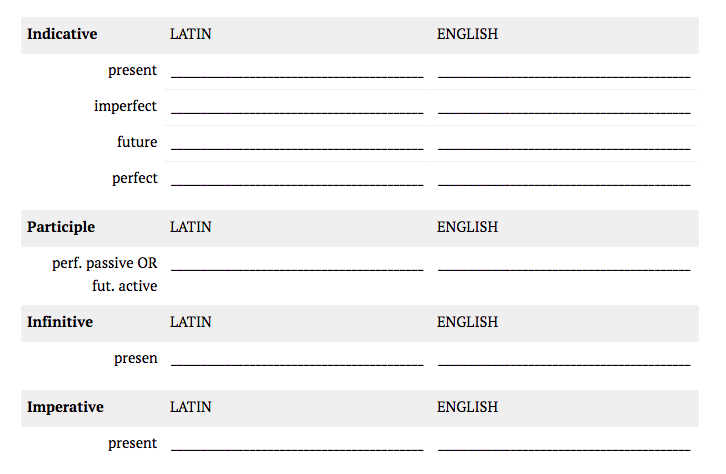
crēdō, crēdere, crēdidī, crēditus ("believe"): LATIN: PRESENT: 2nd person sing
crēdō, crēdere, crēdidī, crēditus ("believe"):
LATIN: PRESENT: 2nd person sing
0.5
crēdō, crēdere, crēdidī, crēditus ("believe"): ENGLISH: PRESENT: 2nd person sing
crēdō, crēdere, crēdidī, crēditus ("believe"):
ENGLISH: PRESENT: 2nd person sing
1
crēdō, crēdere, crēdidī, crēditus ("believe"): LATIN: IMPERFECT: 2nd person sing
crēdō, crēdere, crēdidī, crēditus ("believe"):
LATIN: IMPERFECT: 2nd person sing
0.5
crēdō, crēdere, crēdidī, crēditus ("believe"): ENGLISH: IMPERFECT: 2nd person sing
crēdō, crēdere, crēdidī, crēditus ("believe"):
ENGLISH: IMPERFECT: 2nd person sing
1
crēdō, crēdere, crēdidī, crēditus ("believe"): LATIN: FUTURE: 2nd person sing
crēdō, crēdere, crēdidī, crēditus ("believe"):
LATIN: FUTURE: 2nd person sing
0.5
crēdō, crēdere, crēdidī, crēditus ("believe"):ENGLISH: FUTURE: 2nd person sing
crēdō, crēdere, crēdidī, crēditus ("believe"):
ENGLISH: FUTURE: 2nd person sing
1
crēdō, crēdere, crēdidī, crēditus ("believe"):LATIN: PERFECT: 2nd person sing
crēdō, crēdere, crēdidī, crēditus ("believe"):
LATIN: PERFECT: 2nd person sing
0.5
crēdō, crēdere, crēdidī, crēditus ("believe"): ENGLISH: PERFECT: 2nd person sing
crēdō, crēdere, crēdidī, crēditus ("believe"):
ENGLISH: PERFECT: 2nd person sing
1
crēdō, crēdere, crēdidī, crēditus ("believe"): LATIN: PARTICIPLE
crēdō, crēdere, crēdidī, crēditus ("believe"):
LATIN: PARTICIPLE
0.5
crēdō, crēdere, crēdidī, crēditus ("believe"):ENGLISH: PARTICIPLE
crēdō, crēdere, crēdidī, crēditus ("believe"):
ENGLISH: PARTICIPLE
1
crēdō, crēdere, crēdidī, crēditus ("believe"):LATIN: INFINITIVE
crēdō, crēdere, crēdidī, crēditus ("believe"):
LATIN: INFINITIVE
0.5
crēdō, crēdere, crēdidī, crēditus ("believe"):ENGLISH: INFINITIVE
crēdō, crēdere, crēdidī, crēditus ("believe"):
ENGLISH: INFINITIVE
1
crēdō, crēdere, crēdidī, crēditus ("believe"):LATIN: IMPERATIVE: singular
crēdō, crēdere, crēdidī, crēditus ("believe"):
LATIN: IMPERATIVE: singular
0.5
crēdō, crēdere, crēdidī, crēditus ("believe"):ENGLISH: IMPERATIVE
crēdō, crēdere, crēdidī, crēditus ("believe"):
ENGLISH: IMPERATIVE
12
Categorize each verb as either PRESENT, FUTURE, or PERFECT tense, by dragging it to underneath the correct label. NOTE that principal parts are provided below.
iaciō, iacere, iēcī, iactusinveniō, invenīre, invēnī, inventusvertō, vertere, vertī, versussedeō, sedēre, sēdī, sessūrusparō, parāre, parāvī, parātus
Categorize each verb as either PRESENT, FUTURE, or PERFECT tense, by dragging it to underneath the correct label. NOTE that principal parts are provided below.
iaciō, iacere, iēcī, iactus
inveniō, invenīre, invēnī, inventus
vertō, vertere, vertī, versus
sedeō, sedēre, sēdī, sessūrus
parō, parāre, parāvī, parātus
- inveniam
- invēnit
- parābis
- vertis
- iacient
- iacitis
- iēcimus
- vertēs
- vertistī
- invenit
- sedent
- parātis
- PRESENT
- FUTURE
- PERFECT
1
Translate the bold word(s) into Latin, based on the context of the sentence.
The slaves will rest.
vocabulary help:- servus, servī, m.: slave
Translate the bold word(s) into Latin, based on the context of the sentence.
The slaves will rest.
vocabulary help:
- servus, servī, m.: slave
1
Translate the bold word(s) into Latin, based on the context of the sentence.
The slaves will rest.
vocabulary help:- quiescō, quiescere, quiēvī, quiētus
Translate the bold word(s) into Latin, based on the context of the sentence.
The slaves will rest.
vocabulary help:
- quiescō, quiescere, quiēvī, quiētus
1
Translate the bold word(s) into Latin, based on the context of the sentence.
We will send a letter.
vocabulary help:- mittō, mittere, mīsī, missus: to send
Translate the bold word(s) into Latin, based on the context of the sentence.
We will send a letter.
vocabulary help:
- mittō, mittere, mīsī, missus: to send
1
Translate the bold word(s) into Latin, based on the context of the sentence.
We will send a letter.
vocabulary help:- epistula, epistulae, f.: letter
Translate the bold word(s) into Latin, based on the context of the sentence.
We will send a letter.
vocabulary help:
- epistula, epistulae, f.: letter
1
Translate the bold word(s) into Latin, based on the context of the sentence.
You (pl.) will teach, and you (pl.) will learn.
vocabulary help:- doceō, docēre, docuī, doctus: to teach
Translate the bold word(s) into Latin, based on the context of the sentence.
You (pl.) will teach, and you (pl.) will learn.
vocabulary help:
- doceō, docēre, docuī, doctus: to teach
1
Translate the bold word(s) into Latin, based on the context of the sentence.
You (pl.) will teach, and you (pl.) will learn.
vocabulary help:- discō, discere, didicī, discitūrus: to learn
Translate the bold word(s) into Latin, based on the context of the sentence.
You (pl.) will teach, and you (pl.) will learn.
vocabulary help:
- discō, discere, didicī, discitūrus: to learn
4
Translate the sentence.
Ubi tandem ad urbem advenient, Cornēliī diū quiēscent.
vocabulary help: - tandem (adv.): at last, finally
- adveniō, advenīre, advēnī, adventus: to arrive
- ad (+ acc.): to, at
- diū (adv.): for a long time
- quiēscō, quiēscere, quiēvī, quiētus: to rest
Translate the sentence.
Ubi tandem ad urbem advenient, Cornēliī diū quiēscent.
vocabulary help:
- tandem (adv.): at last, finally
- adveniō, advenīre, advēnī, adventus: to arrive
- ad (+ acc.): to, at
- diū (adv.): for a long time
- quiēscō, quiēscere, quiēvī, quiētus: to rest
1
Answer any questions about the underlined word(s).
Ubi tandem ad urbem advenient, Cornēliī diū quiēscent.
vocabulary help:- adveniō, advenīre, advēnī, adventus: to arrive
Answer any questions about the underlined word(s).
Ubi tandem ad urbem advenient, Cornēliī diū quiēscent.
vocabulary help:
- adveniō, advenīre, advēnī, adventus: to arrive
3
Translate the sentence.
Domī manēbō, ubi cibum tibi parābō.
vocabulary help:- domī: at home
- maneō, manēre, mānsī, mānsūrus: to remain
- tibi: for you
- cibus, cibī, m.: food
- parō, parāre, parāvī, parātus: to prepare
Translate the sentence.
Domī manēbō, ubi cibum tibi parābō.
vocabulary help:
- domī: at home
- maneō, manēre, mānsī, mānsūrus: to remain
- tibi: for you
- cibus, cibī, m.: food
- parō, parāre, parāvī, parātus: to prepare
1
Answer any questions about the underlined word(s).
Domī manēbō, ubi cibum tibi parābō.
vocabulary help:- parō, parāre, parāvī, parātus: to prepare
Answer any questions about the underlined word(s).
Domī manēbō, ubi cibum tibi parābō.
vocabulary help:
- parō, parāre, parāvī, parātus: to prepare
5
Translate the sentence.
Gaudium pectora nostra complet, quod tū ades, amīce.
vocabulary help:- gaudium, gaudiī, n.: joy
- pecus, pecoris, n.: heart
- noster, nostra, nostrum: our
- compleo, complēre, complēvī, complētus: to fill
- adsum, adesse, adfuī, adfutūrus: to be here
- amīcus, amīcī, m.: friend
Translate the sentence.
Gaudium pectora nostra complet, quod tū ades, amīce.
vocabulary help:
- gaudium, gaudiī, n.: joy
- pecus, pecoris, n.: heart
- noster, nostra, nostrum: our
- compleo, complēre, complēvī, complētus: to fill
- adsum, adesse, adfuī, adfutūrus: to be here
- amīcus, amīcī, m.: friend
1
Answer any questions about the underlined word(s).
Gaudium pectora nostra complet, quod tū ades, amīce.
vocabulary help:- compleo, complēre, complēvī, complētus: to fill
Answer any questions about the underlined word(s).
Gaudium pectora nostra complet, quod tū ades, amīce.
vocabulary help:
- compleo, complēre, complēvī, complētus: to fill
5
Translate the sentence.
Prīnceps senātōribus epistulam mittet, quam pater meus leget.
vocabulary help: - prīnceps, prīncipis, m.: emperor
- epistula, epistulae, f.: letter
- mittō, mittere, mīsī, missus: to send
- quam (f. acc. sing.): which
- legō, legere, lēgī, lectus: to read
Translate the sentence.
Prīnceps senātōribus epistulam mittet, quam pater meus leget.
vocabulary help:
- prīnceps, prīncipis, m.: emperor
- epistula, epistulae, f.: letter
- mittō, mittere, mīsī, missus: to send
- quam (f. acc. sing.): which
- legō, legere, lēgī, lectus: to read
1
Answer any questions about the underlined word(s).
Prīnceps senātōribus epistulam mittet, quam pater meus leget.
Answer any questions about the underlined word(s).
Prīnceps senātōribus epistulam mittet, quam pater meus leget.
1
Answer any questions about the underlined word(s).
Prīnceps senātōribus epistulam mittet, quam pater meus leget.
vocabulary help:- legō, legere, lēgī, lectus: to read
Answer any questions about the underlined word(s).
Prīnceps senātōribus epistulam mittet, quam pater meus leget.
vocabulary help:
- legō, legere, lēgī, lectus: to read
5
Translate the sentence.
Nōn licēbat mīlitibus in urbem intrāre; exercitus igitur extrā mūrōs dormiet.
vocabulary help:- licet, licēre, licuit: to be allowed, be permitted
- mīles, mīlitis, m.: soldier
- exercitus (m. nom. sing.): army
- igitur (adv.): therefore
- extrā (+ acc.): outside, outside of
- mūrus, mūrī, m.: wall
- dormiō, dormīre, dormīvī, dormītus: to sleep
Translate the sentence.
Nōn licēbat mīlitibus in urbem intrāre; exercitus igitur extrā mūrōs dormiet.
vocabulary help:
- licet, licēre, licuit: to be allowed, be permitted
- mīles, mīlitis, m.: soldier
- exercitus (m. nom. sing.): army
- igitur (adv.): therefore
- extrā (+ acc.): outside, outside of
- mūrus, mūrī, m.: wall
- dormiō, dormīre, dormīvī, dormītus: to sleep
1
Answer any questions about the underlined word(s).
Nōn licēbat mīlitibus in urbem intrāre; igitur exercitus extrā mūrōs dormiet.
Answer any questions about the underlined word(s).
Nōn licēbat mīlitibus in urbem intrāre; igitur exercitus extrā mūrōs dormiet.
1
Answer any questions about the underlined word(s).
Nōn licēbat mīlitibus in urbem intrāre; igitur exercitus extrā mūrōs dormiet.
vocabulary help:- dormiō, dormīre, dormīvī, dormītus: to sleep
Answer any questions about the underlined word(s).
Nōn licēbat mīlitibus in urbem intrāre; igitur exercitus extrā mūrōs dormiet.
vocabulary help:
- dormiō, dormīre, dormīvī, dormītus: to sleep