ER 23 Practice Quiz
star
star
star
star
star
Last updated over 1 year ago
55 questions

1
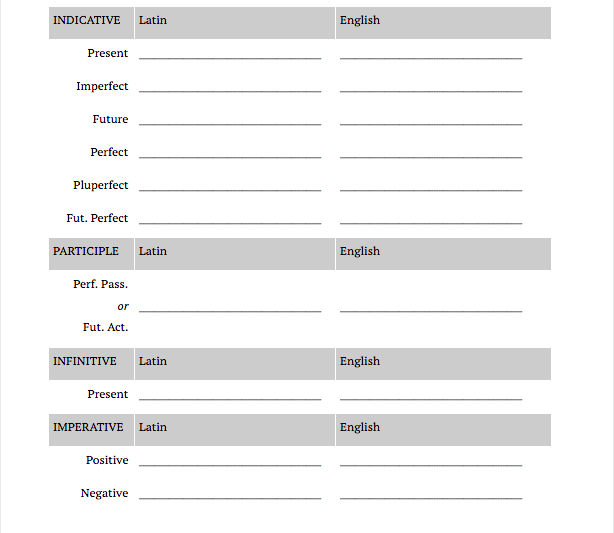
servō, servāre, servāvī, servātus ("save"): LATIN: PRESENT: 1st person singular
servō, servāre, servāvī, servātus ("save"):
LATIN: PRESENT: 1st person singular
0.5
servō, servāre, servāvī, servātus ("save"):ENGLISH: PRESENT: 1st person singular
servō, servāre, servāvī, servātus ("save"):
ENGLISH: PRESENT: 1st person singular
1
servō, servāre, servāvī, servātus ("save"):LATIN: IMPERFECT: 1st person singular
servō, servāre, servāvī, servātus ("save"):
LATIN: IMPERFECT: 1st person singular
0.5
servō, servāre, servāvī, servātus ("save"):ENGLISH: PRESENT: 1st person singular
servō, servāre, servāvī, servātus ("save"):
ENGLISH: PRESENT: 1st person singular
1
servō, servāre, servāvī, servātus ("save"):LATIN: FUTURE: 1st person singular
servō, servāre, servāvī, servātus ("save"):
LATIN: FUTURE: 1st person singular
0.5
servō, servāre, servāvī, servātus ("save"):ENGLISH: FUTURE: 1st person singular
servō, servāre, servāvī, servātus ("save"):
ENGLISH: FUTURE: 1st person singular
1
servō, servāre, servāvī, servātus ("save"):LATIN: PERFECT: 1st person singular
servō, servāre, servāvī, servātus ("save"):
LATIN: PERFECT: 1st person singular
0.5
servō, servāre, servāvī, servātus ("save"):ENGLISH: PERFECT: 1st person singular
servō, servāre, servāvī, servātus ("save"):
ENGLISH: PERFECT: 1st person singular
1
servō, servāre, servāvī, servātus ("save"):LATIN: PARTICIPLE
servō, servāre, servāvī, servātus ("save"):
LATIN: PARTICIPLE
0.5
servō, servāre, servāvī, servātus ("save"):ENGLISH: PARTICIPLE
servō, servāre, servāvī, servātus ("save"):
ENGLISH: PARTICIPLE
1
servō, servāre, servāvī, servātus ("save"):LATIN: INFINITIVE
servō, servāre, servāvī, servātus ("save"):
LATIN: INFINITIVE
0.5
servō, servāre, servāvī, servātus ("save"):ENGLISH: INFINITIVE
servō, servāre, servāvī, servātus ("save"):
ENGLISH: INFINITIVE
1
servō, servāre, servāvī, servātus ("save"):LATIN: POSITIVE IMPERATIVE: singular
servō, servāre, servāvī, servātus ("save"):
LATIN: POSITIVE IMPERATIVE: singular
0.5
servō, servāre, servāvī, servātus ("save"):ENGLISH: POSITIVE IMPERATIVE
servō, servāre, servāvī, servātus ("save"):
ENGLISH: POSITIVE IMPERATIVE
0.5
servō, servāre, servāvī, servātus ("save"):LATIN: NEGATIVE IMPERATIVE: singular
servō, servāre, servāvī, servātus ("save"):
LATIN: NEGATIVE IMPERATIVE: singular
0.5
servō, servāre, servāvī, servātus ("save"):ENGLISH: NEGATIVE IMPERATIVE
servō, servāre, servāvī, servātus ("save"):
ENGLISH: NEGATIVE IMPERATIVE

1
agō, agere, ēgī, āctus ("drive"): LATIN: PRESENT: 2nd person plural
agō, agere, ēgī, āctus ("drive"):
LATIN: PRESENT: 2nd person plural
0.5
agō, agere, ēgī, āctus ("drive"):ENGLISH: PRESENT: 2nd person plural
agō, agere, ēgī, āctus ("drive"):
ENGLISH: PRESENT: 2nd person plural
1
agō, agere, ēgī, āctus ("drive"):LATIN: IMPERFECT: 2nd person plural
agō, agere, ēgī, āctus ("drive"):
LATIN: IMPERFECT: 2nd person plural
0.5
agō, agere, ēgī, āctus ("drive"):ENGLISH: PRESENT: 2nd person plural
agō, agere, ēgī, āctus ("drive"):
ENGLISH: PRESENT: 2nd person plural
1
agō, agere, ēgī, āctus ("drive"):LATIN: FUTURE: 2nd person plural
agō, agere, ēgī, āctus ("drive"):
LATIN: FUTURE: 2nd person plural
0.5
agō, agere, ēgī, āctus ("drive"):ENGLISH: FUTURE: 2nd person plural
agō, agere, ēgī, āctus ("drive"):
ENGLISH: FUTURE: 2nd person plural
1
agō, agere, ēgī, āctus ("drive"):LATIN: PERFECT: 2nd person plural
agō, agere, ēgī, āctus ("drive"):
LATIN: PERFECT: 2nd person plural
0.5
agō, agere, ēgī, āctus ("drive"):ENGLISH: PERFECT: 2nd person plural
agō, agere, ēgī, āctus ("drive"):
ENGLISH: PERFECT: 2nd person plural
1
agō, agere, ēgī, āctus ("drive"):LATIN: PARTICIPLE (NOTE: Change -us ending to plural)
agō, agere, ēgī, āctus ("drive"):
LATIN: PARTICIPLE (NOTE: Change -us ending to plural)
0.5
agō, agere, ēgī, āctus ("drive"):ENGLISH: PARTICIPLE
agō, agere, ēgī, āctus ("drive"):
ENGLISH: PARTICIPLE
1
agō, agere, ēgī, āctus ("drive"):LATIN: INFINITIVE
agō, agere, ēgī, āctus ("drive"):
LATIN: INFINITIVE
0.5
agō, agere, ēgī, āctus ("drive"):ENGLISH: INFINITIVE
agō, agere, ēgī, āctus ("drive"):
ENGLISH: INFINITIVE
1
agō, agere, ēgī, āctus ("drive"):LATIN: POSITIVE IMPERATIVE: plural
agō, agere, ēgī, āctus ("drive"):
LATIN: POSITIVE IMPERATIVE: plural
0.5
agō, agere, ēgī, āctus ("drive"):ENGLISH: POSITIVE IMPERATIVE
agō, agere, ēgī, āctus ("drive"):
ENGLISH: POSITIVE IMPERATIVE
0.5
agō, agere, ēgī, āctus ("drive"):LATIN: NEGATIVE IMPERATIVE: plural
agō, agere, ēgī, āctus ("drive"):
LATIN: NEGATIVE IMPERATIVE: plural
0.5
agō, agere, ēgī, āctus ("drive"):ENGLISH: NEGATIVE IMPERATIVE
agō, agere, ēgī, āctus ("drive"):
ENGLISH: NEGATIVE IMPERATIVE
12
Categorize each verb as either PRESENT, FUTURE, or PERFECT tense, by dragging it to underneath the correct label. NOTE that principal parts are provided below.
admoveō, admovēre, admōvī, admōtuscōgitō, cōgitāre, cōgitāvī, cōgitātusdūcō, dūcere, duxī, ductusexcipiō, excipere, excēpī, exceptusfīniō, fīnīre, fīnīvī, fīnītus
Categorize each verb as either PRESENT, FUTURE, or PERFECT tense, by dragging it to underneath the correct label. NOTE that principal parts are provided below.
admoveō, admovēre, admōvī, admōtus
cōgitō, cōgitāre, cōgitāvī, cōgitātus
dūcō, dūcere, duxī, ductus
excipiō, excipere, excēpī, exceptus
fīniō, fīnīre, fīnīvī, fīnītus
- excēpimus
- dūcam
- fīniēmus
- dūxit
- fīniunt
- admovent
- excipit
- cōgitās
- excipiēmus
- dūcit
- cōgitābit
- admōvit
- PRESENT
- FUTURE
- PERFECT
1
Translate the bold word(s) into Latin, based on the context of the sentence.
You (pl.) will stay in the inn.
vocabulary help:- maneō, manēre, mānsī, mānsūrus: to stay
Translate the bold word(s) into Latin, based on the context of the sentence.
You (pl.) will stay in the inn.
vocabulary help:
- maneō, manēre, mānsī, mānsūrus: to stay
1
Translate the bold word(s) into Latin, based on the context of the sentence.
The Cornelii will stay in the inn.
vocabulary help:- in (+ abl.): in
- caupōna, caupōnae, f.: inn
Translate the bold word(s) into Latin, based on the context of the sentence.
The Cornelii will stay in the inn.
vocabulary help:
- in (+ abl.): in
- caupōna, caupōnae, f.: inn
1
Translate the bold word(s) into Latin, based on the context of the sentence.
She will see and will hear many things.
vocabulary help:- videō, vidēre, vīdī, vīsus: to see
Translate the bold word(s) into Latin, based on the context of the sentence.
She will see and will hear many things.
vocabulary help:
- videō, vidēre, vīdī, vīsus: to see
1
Translate the bold word(s) into Latin, based on the context of the sentence.
She will see and will hear many things.
vocabulary help:- videō, vidēre, vīdī, vīsus: to see
- audiō, audīre, audīvī, audītus: to hear
- multus, multa, multum: many
Translate the bold word(s) into Latin, based on the context of the sentence.
She will see and will hear many things.
vocabulary help:
- videō, vidēre, vīdī, vīsus: to see
- audiō, audīre, audīvī, audītus: to hear
- multus, multa, multum: many
1
Translate the bold word(s) into Latin, based on the context of the sentence.
She will see and will hear many things.
vocabulary help:- videō, vidēre, vīdī, vīsus: to see
- audiō, audīre, audīvī, audītus: to hear
- multus, multa, multum: many
Translate the bold word(s) into Latin, based on the context of the sentence.
She will see and will hear many things.
vocabulary help:
- videō, vidēre, vīdī, vīsus: to see
- audiō, audīre, audīvī, audītus: to hear
- multus, multa, multum: many
1
Translate the bold word(s) into Latin, based on the context of the sentence.
I will hear the wind, when it will blow.
vocabulary help:- audiō, audīre, audīvī, audītus: to hear
Translate the bold word(s) into Latin, based on the context of the sentence.
I will hear the wind, when it will blow.
vocabulary help:
- audiō, audīre, audīvī, audītus: to hear
1
Translate the bold word(s) into Latin, based on the context of the sentence.
I will hear the wind, when it will blow.
vocabulary help:- ventus, ventī, m.: wind
Translate the bold word(s) into Latin, based on the context of the sentence.
I will hear the wind, when it will blow.
vocabulary help:
- ventus, ventī, m.: wind
1
Translate the bold word(s) into Latin, based on the context of the sentence.
I will hear the wind, when it will blow.
vocabulary help:- ubi (adv.): when
- flō, flāre, flāvī, flātus: to blow
Translate the bold word(s) into Latin, based on the context of the sentence.
I will hear the wind, when it will blow.
vocabulary help:
- ubi (adv.): when
- flō, flāre, flāvī, flātus: to blow
1
Answer any questions about the underlined word(s).
Ubi magna aedificia et hominēs multōs cōnspiciet, Sextus stupēbit.
vocabulary help:- cōnspiciō, cōnspicere, cōnspēxī, cōnspectus: to catch sight of, see
Answer any questions about the underlined word(s).
Ubi magna aedificia et hominēs multōs cōnspiciet, Sextus stupēbit.
vocabulary help:
- cōnspiciō, cōnspicere, cōnspēxī, cōnspectus: to catch sight of, see
4
Translate the sentence.
Condūcam lectīcāriōs, quī omnēs dēfessōs domum dūcent.
vocabulary help:- condūcō, condūcere, condūxī, conductus: to hire
- lectīcārius, lectīcāriī, m.: litter-bearer, litter-carrier
- dēfessus, dēfessa, dēfessum: tired
- domum: home
- dūcō, dūcere, dūxī, ductus: to take
Translate the sentence.
Condūcam lectīcāriōs, quī omnēs dēfessōs domum dūcent.
vocabulary help:
- condūcō, condūcere, condūxī, conductus: to hire
- lectīcārius, lectīcāriī, m.: litter-bearer, litter-carrier
- dēfessus, dēfessa, dēfessum: tired
- domum: home
- dūcō, dūcere, dūxī, ductus: to take
1
Answer any questions about the underlined word(s).
Condūcam lectīcāriōs, quī omnēs dēfessōs domum dūcent.
vocabulary help:- condūcō, condūcere, condūxī, conductus: to lead, take
Answer any questions about the underlined word(s).
Condūcam lectīcāriōs, quī omnēs dēfessōs domum dūcent.
vocabulary help:
- condūcō, condūcere, condūxī, conductus: to lead, take
5
Translate the sentence.
"Ubi Circum Maximum vidēre poterimus, patrue?" rogābat Mārcus. Titus, "Crās illūc ībitis."
vocabulary help:- Circus Maximus, Circī Maximī, m.: Circus Maximus
- patruus, patruī, m.: uncle
- crās (adv.): tomorrow
- illūc (adv.): there, to that place
Translate the sentence.
"Ubi Circum Maximum vidēre poterimus, patrue?" rogābat Mārcus. Titus, "Crās illūc ībitis."
vocabulary help:
- Circus Maximus, Circī Maximī, m.: Circus Maximus
- patruus, patruī, m.: uncle
- crās (adv.): tomorrow
- illūc (adv.): there, to that place
1
Answer any questions about the underlined word(s).
"Ubi Circum Maximum vidēre poterimus, patrue?" rogābat Mārcus. Titus, "Crās illūc ībitis."
vocabulary help:- patruus, patruī, m.: uncle
Answer any questions about the underlined word(s).
"Ubi Circum Maximum vidēre poterimus, patrue?" rogābat Mārcus. Titus, "Crās illūc ībitis."
vocabulary help:
- patruus, patruī, m.: uncle
5
Translate the sentence.
Cornēlius cum Titō diū dīcere timet, nam ad Cūriam sērō adveniet.
vocabulary help: - diū (adv.): for a long time
- timeō, timēre, timuī: to fear, be afraid
- nam (conj.): for
- ad (+ acc.): to, at
- Cūria, -ae, f.: the Senate House
- sērō (adv.): late
- adveniō, advenīre, advēnī, adventus: to arrive
Translate the sentence.
Cornēlius cum Titō diū dīcere timet, nam ad Cūriam sērō adveniet.
vocabulary help:
- diū (adv.): for a long time
- timeō, timēre, timuī: to fear, be afraid
- nam (conj.): for
- ad (+ acc.): to, at
- Cūria, -ae, f.: the Senate House
- sērō (adv.): late
- adveniō, advenīre, advēnī, adventus: to arrive
1
Answer any questions about the underlined word(s).
Cornēlius cum Titō diū dīcere timet, nam ad Cūriam sērō adveniet.
Answer any questions about the underlined word(s).
Cornēlius cum Titō diū dīcere timet, nam ad Cūriam sērō adveniet.
1
Answer any questions about the underlined word(s).
Cornēlius cum Titō diū dīcere timet, nam ad Cūriam sērō adveniet.
vocabulary help:- timeō, timēre, timuī: to fear, be afraid
Answer any questions about the underlined word(s).
Cornēlius cum Titō diū dīcere timet, nam ad Cūriam sērō adveniet.
vocabulary help:
- timeō, timēre, timuī: to fear, be afraid
4
Translate the sentence.
Cornēlius senātōribus multa scrībet, quae prīnceps leget.
vocabulary help:- scrībō, scrībere, scrīpsī, scriptus: to write
- quae (n. pl. acc.): which
- prīnceps, prīncipis, m.: emperor
- legō, legere, lēgī, lectus: to read
Translate the sentence.
Cornēlius senātōribus multa scrībet, quae prīnceps leget.
vocabulary help:
- scrībō, scrībere, scrīpsī, scriptus: to write
- quae (n. pl. acc.): which
- prīnceps, prīncipis, m.: emperor
- legō, legere, lēgī, lectus: to read
1
Answer any questions about the underlined word(s).
Cornēlius senātōribus multa scrībet, quae prīnceps leget.
Answer any questions about the underlined word(s).
Cornēlius senātōribus multa scrībet, quae prīnceps leget.
1
Answer any questions about the underlined word(s).
Cornēlius senātōribus multa scrībet, quae prīnceps leget.
vocabulary help:- legō, legere, lēgī, lectus: to read
Answer any questions about the underlined word(s).
Cornēlius senātōribus multa scrībet, quae prīnceps leget.
vocabulary help:
- legō, legere, lēgī, lectus: to read
4
Translate the sentence.
Nōn licet Rōmānīs intrā urbem mortuōs sepelīre; sepulcrum igitur extrā mūrōs faciēmus.
vocabulary help: - licet, licēre, licuit: it is permitted, it is allowed
- intrā (+ acc.): inside, within
- mortuus, -a, -um: dead
- sepeliō, sepelīre, sepulīvī, sepultus: to bury
- sepulcrum, -ī, n.: tomb
- igitur (adv.): therefore
- extrā (+ acc.): outside
- mūrus, -ī, m.: wall
- faciō, facere, fēcī, factus: to do, make
Translate the sentence.
Nōn licet Rōmānīs intrā urbem mortuōs sepelīre; sepulcrum igitur extrā mūrōs faciēmus.
vocabulary help:
- licet, licēre, licuit: it is permitted, it is allowed
- intrā (+ acc.): inside, within
- mortuus, -a, -um: dead
- sepeliō, sepelīre, sepulīvī, sepultus: to bury
- sepulcrum, -ī, n.: tomb
- igitur (adv.): therefore
- extrā (+ acc.): outside
- mūrus, -ī, m.: wall
- faciō, facere, fēcī, factus: to do, make
1
Answer any questions about the underlined words.
Nōn licet Rōmānīs intrā urbem mortuōs sepelīre; sepulcrum igitur extrā mūrōs faciēmus.
Answer any questions about the underlined words.
Nōn licet Rōmānīs intrā urbem mortuōs sepelīre; sepulcrum igitur extrā mūrōs faciēmus.
1
Answer any questions about the underlined words.
Nōn licet Rōmānīs intrā urbem mortuōs sepelīre; sepulcrum igitur extrā mūrōs faciēmus.
Answer any questions about the underlined words.
Nōn licet Rōmānīs intrā urbem mortuōs sepelīre; sepulcrum igitur extrā mūrōs faciēmus.