0.5
0.5
0.5
0.5
0.5
0.5
0.5
0.5
0.5
0.5
0.5
0.5
0.5
0.5
0.5
0.5
0.5
0.5
0.5
0.5
0.5
0.5
0.5
0.5
0.5
0.5
Change the indicative verb [in brackets] to subjunctive, keeping the TENSE and PERSON/NUMBER the same. Note that principal parts have been provided in the vocabulary help beneath the sentence.
Cum virī post merīdiem lavārī ______________________________ [solēbant], mulierēs ante merīdiem ad thermās veniēbant; nam mulieribus lavārī cum virīs nōn licet.
vocabulary help:
post merīdiem: after noon
soleō, solēre, solitus sum: to be accustomed (to)
mulier, mulieris, f.: woman
ante merīdiem: before noon
nam: for, because
lavor, lavārī, lautus sum: to bathe, take a bath
licet, licēre, licuit: it is allowed
Change the indicative verb [in brackets] to subjunctive, keeping the TENSE and PERSON/NUMBER the same. Note that principal parts have been provided in the vocabulary help beneath the sentence.
Cornēlia mātrem rogāvit cur puellae ad lūdum nōn ______________________________ [ībant*].
*This verb is NOT irregular in the subjunctive.
vocabulary help:
rogō, -āre, -āvī, -ātus: to ask
lūdus, -ī, m.: school
eō, īre, iī / īvī, itūrus: to go
Change the indicative verb [in brackets] to subjunctive, keeping the TENSE and PERSON/NUMBER the same. Note that principal parts have been provided in the vocabulary help beneath the sentence.
Nesciēbam cur haec verba dūra ______________________________ [dicta erant].
vocabulary help:
nesciō, nescīre, nescīvī, nescītus: to not know
verbum, -ī, n.: word
dūrus, -a, -um: harsh, hard
dīcō, dīcere, dīxī, dictus: to say, speak, tell
Change the indicative verb [in brackets] to subjunctive, keeping the TENSE and PERSON/NUMBER the same. Note that principal parts have been provided in the vocabulary help beneath the sentence.
Cornēlia nescīvit quis Valerius esset aut quid ______________________________ [fēcerat].
vocabulary help:
nesciō, nescīre, nescīvī, nescītus: to not know
faciō, facere, fēcī, factus
Change the indicative verb [in brackets] to subjunctive, keeping the TENSE and PERSON/NUMBER the same. Note that principal parts have been provided in the vocabulary help beneath the sentence.
Cornēlia nescīvit quid ā patre et mātre ______________________________ [faciēbātur].
vocabulary help:
nesciō, nescīre, nescīvī, nescītus: to not know, be unaware of
faciō, facere, fēcī, factus
Translate this sentence into English.
Cum puerī ad lūdum cum Eucleide ēgressī essent, Cornēlia tamen nihil faciēns domī remanēbat.
vocabulary help:
ēgredior, ēgredī, ēgressus sum: to go out
tamen: however, nevertheless
domus, domī / domūs, f.: home
remaneō, remanēre, remānsī, remānsūrus: to remain
What type of subjunctive clause does this sentence contain?
Cum puerī ad lūdum cum Eucleide ēgressī essent, Cornēlia tamen domī faciēns nihil remanēbat.
Translate this sentence into English.
Cum pīrātae Valerium ferōciter adortī essent, ille iuvenis tamen ā servō fortī et audācī servātus est.
vocabulary help:
ferōciter: fiercely, viciously
adorior, adorīrī, adortus sum: to attack
iuvenis, -is, m.: young man
tamen: however
fortis, fortis, forte: brave
audax, audācis: daring
servō, -āre, -āvī, -ātus: to save
What type of subjunctive clause does this sentence contain?
Cum pīrātae Valerium ferōciter adortī essent, ille iuvenis tamen ā servō fortī et audācī servātus est.
Translate this sentence into English.
Ego cognōscere volēbam quōs ad thermās vīdissētis et dē quō collocūtī essētis.
vocabulary help:
cognōscō, cognōscere, cognōvī, cognōtus: to find out
dē (+ abl.): about
colloquor, colloquī, collocūtus sum: to converse, talk
What type of subjunctive clause does this sentence contain?
Ego cognōscere volēbam quōs ad thermās vīdissētis et dē quō collocūtī essētis.
Translate this sentence into English.
Nēmō scīvit quid heri in senātū actum esset aut quid prīnceps cogitāret.
vocabulary help:
sciō, scīre, scīvī, scītus: to know
heri (adv.): yesterday
ago, agere, ēgī, āctus: here, this verb means to discuss, to debate
prīnceps, prīncipis, m.: emperor
cogitō, -āre, -āvī, -ātus: to think, think about, consider
What type of subjunctive clause does this sentence contain?
Nēmō scīvit quid heri in senātū actum esset aut quid prīnceps cogitāret.
petō, petere, petīvī, petītus ("seek,"): 1st person pl. f.
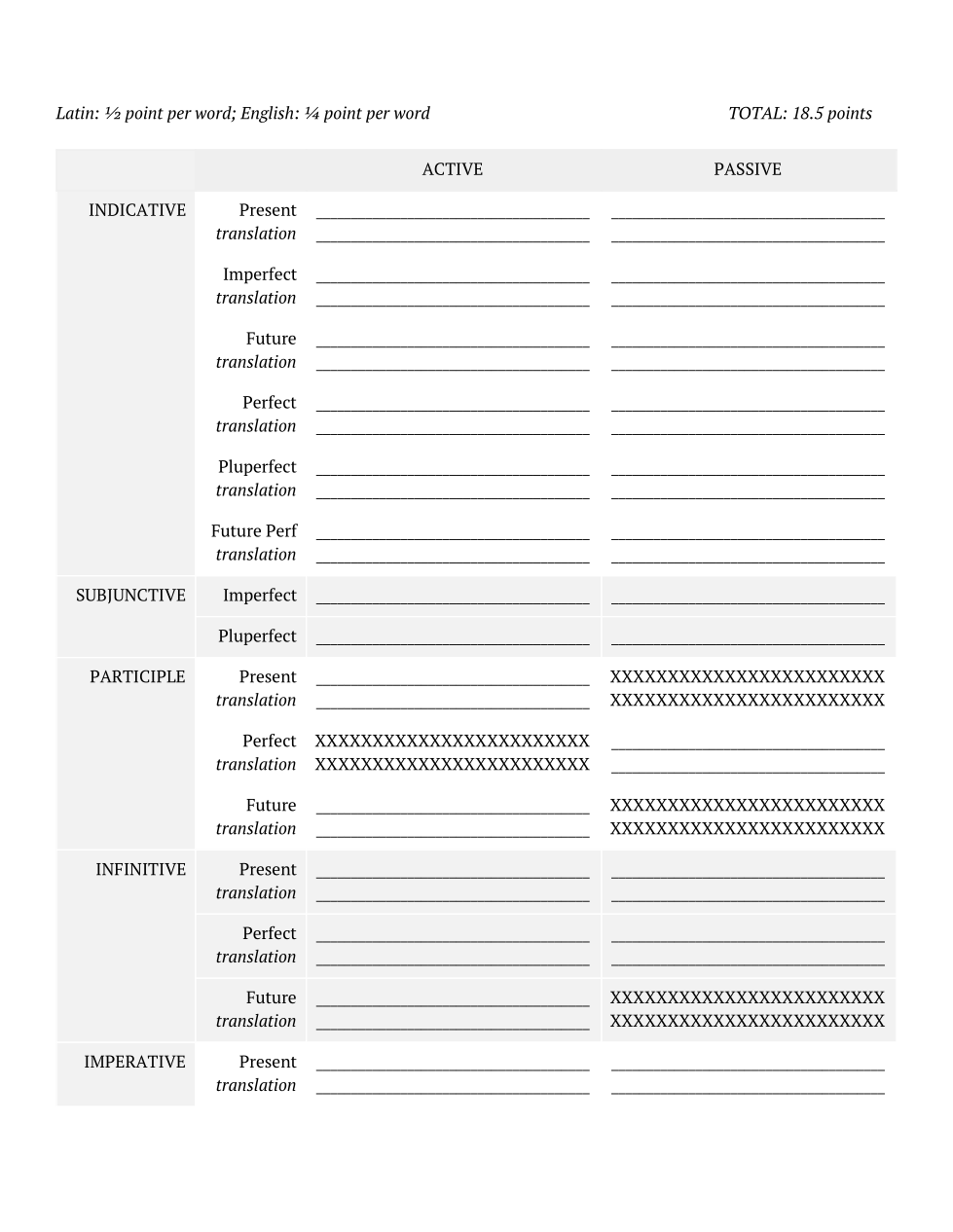
INDICATIVE: Present Active (Latin)
petō, petere, petīvī, petītus ("seek,"): 1st person pl. f.
INDICATIVE: Present Passive (Latin)
petō, petere, petīvī, petītus ("seek,"): 1st person pl. f.
INDICATIVE: Imperfect Active (Latin)
petō, petere, petīvī, petītus ("seek,"): 1st person pl. f.
INDICATIVE: Imperfect Passive (Latin)
petō, petere, petīvī, petītus ("seek,"): 1st person pl. f.
INDICATIVE: Future Active (Latin)
petō, petere, petīvī, petītus ("seek,"): 1st person pl. f.
INDICATIVE: Future Passive (Latin)
petō, petere, petīvī, petītus ("seek,"): 1st person pl. f.
INDICATIVE: Perfect Active (Latin)
petō, petere, petīvī, petītus ("seek,"): 1st person pl. f.
INDICATIVE: Perfect Passive (Latin)
petō, petere, petīvī, petītus ("seek,"): 1st person pl. f.
INDICATIVE: Pluperfect Active (Latin)
petō, petere, petīvī, petītus ("seek,"): 1st person pl. f.
INDICATIVE: Pluperfect Passive (Latin)
petō, petere, petīvī, petītus ("seek,"): 1st person pl. f.
INDICATIVE: Future Perfect Active (Latin)
petō, petere, petīvī, petītus ("seek,"): 1st person pl. f.
INDICATIVE: Future Perfect Passive (Latin)
petō, petere, petīvī, petītus ("seek,"): 1st person pl. f.
SUBJUNCTIVE: Imperfect Active (Latin)
petō, petere, petīvī, petītus ("seek,"): 1st person pl. f.
SUBJUNCTIVE: Imperfect Passive (Latin)
petō, petere, petīvī, petītus ("seek,"): 1st person pl. f.
SUBJUNCTIVE: Pluperfect Active (Latin)
petō, petere, petīvī, petītus ("seek,"): 1st person pl. f.
SUBJUNCTIVE: Pluperfect Passive (Latin)
petō, petere, petīvī, petītus ("seek,"): 1st person pl. f.
PARTICIPLE: Present Active (Latin)
petō, petere, petīvī, petītus ("seek,"): 1st person pl. f.
PARTICIPLE: Perfect Passive (Latin)
petō, petere, petīvī, petītus ("seek,"): 1st person pl. f.
PARTICIPLE: Future Active (Latin)
petō, petere, petīvī, petītus ("seek,"): 1st person pl. f.
INFINITIVE: Present Active (Latin)
petō, petere, petīvī, petītus ("seek,"): 1st person pl. f.
INFINITIVE: Present Passive (Latin)
petō, petere, petīvī, petītus ("seek,"): 1st person pl. f.
INFINITIVE: Perfect Active (Latin)
petō, petere, petīvī, petītus ("seek,"): 1st person pl. f.
INFINITIVE: Perfect Passive (Latin)
petō, petere, petīvī, petītus ("seek,"): 1st person pl. f.
INFINITIVE: Future Active (Latin)
petō, petere, petīvī, petītus ("seek,"): 1st person pl. f.
IMPERATIVE: Present Active (Latin)
petō, petere, petīvī, petītus ("seek,"): 1st person pl. f.
IMPERATIVE: Present Passive (Latin)