Who built the Colosseum? (HINT: Here's a bust of him.)
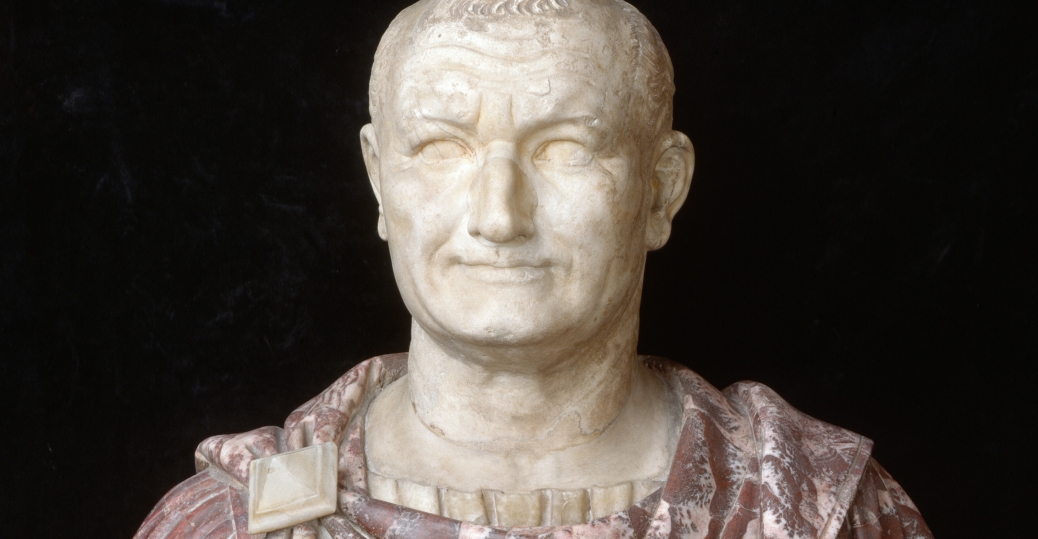
Who built the Colosseum? (HINT: Here's a bust of him.)
Watch this video, and answer the questions that follow.
Who built the Colosseum? (HINT: Here's a bust of him.)
The Romans called the Colosseum the ____________________.
What architectural features can be seen on the outside of the Colosseum? Check all that apply.
The Colosseum was built with money obtained from ______________________________.
What types of events were commonly held in the Colosseum? Check all that apply.
Thousands of Christians were executed in the Colosseum.
In the Greek word "amphitheater," "amphi" means ____________________.
The Colosseum had an awning that could be used to protect spectators from sun and rain.
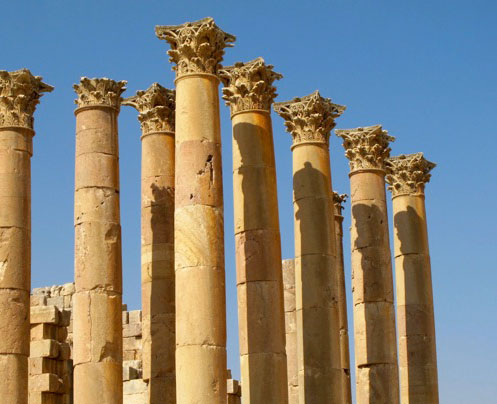
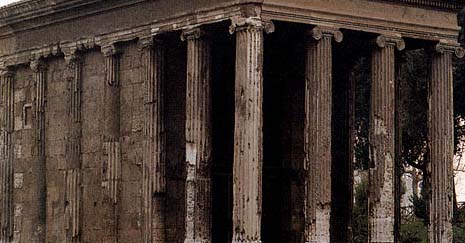
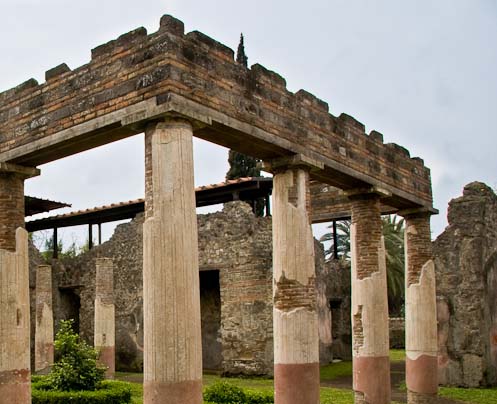
Match each column type to its image.
| Draggable item | arrow_right_alt | Corresponding Item |
|---|---|---|
Ionic | arrow_right_alt |
|
Tuscan | arrow_right_alt |
|
Corinthian | arrow_right_alt |
|
These images depict a(n) ____________________.
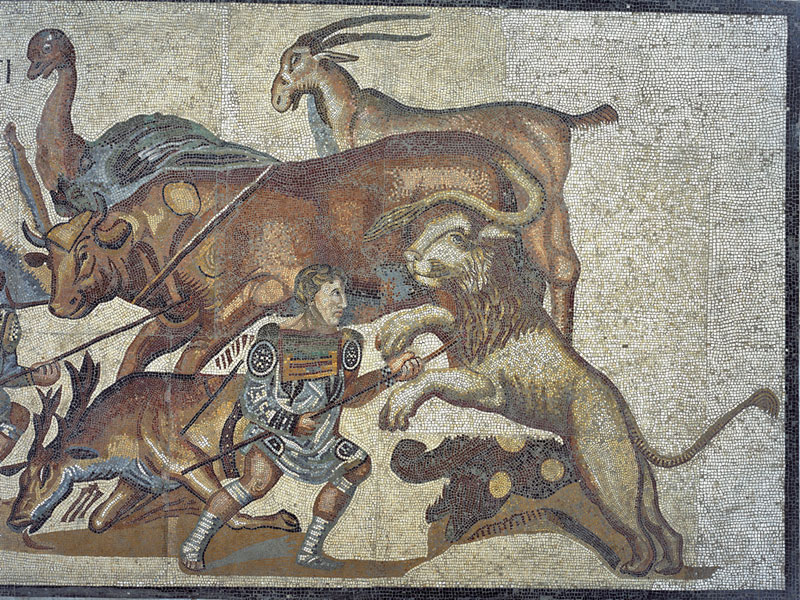
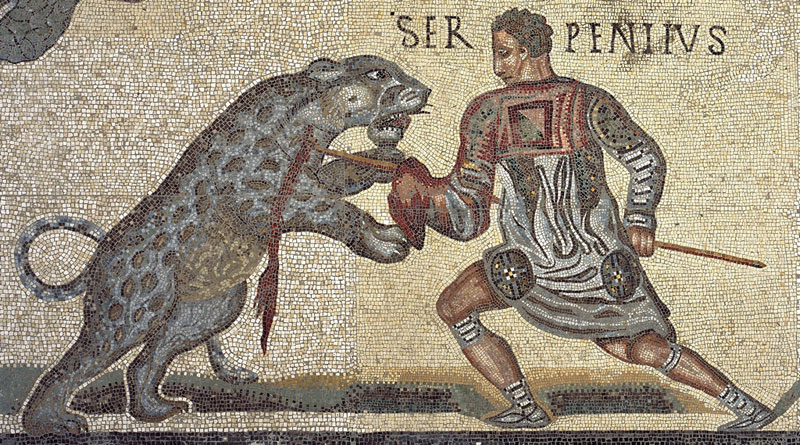
These images depict a(n) ____________________.
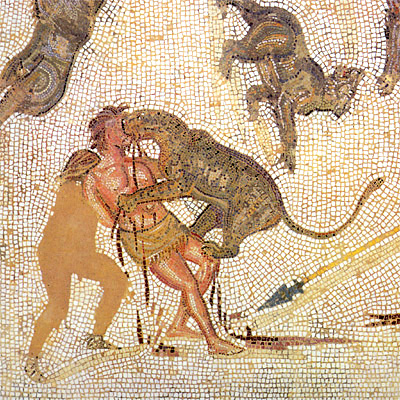
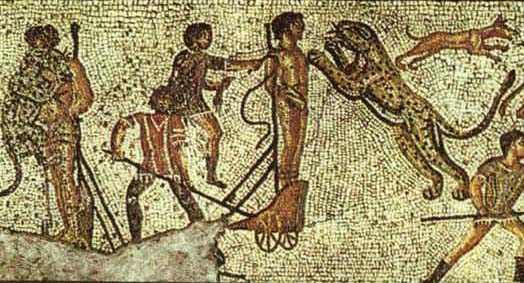
Read the passage below, and answer the following question(s).
Cicero, a Roman politician and orator and a contemporary of Caesar, wrote the following about gladiators (from "Tusculan Disputations").
What gladiator of moderate reputation ever groaned, or lost countenance, or showed himself a coward, as he stood in combat, or even as he lay down to die? Or what one of them, when he had lain down and was ordered to receive the fatal stroke, ever drew his neck back?
(It is interesting to note that Cicero himself, who was executed on the order of Octavian / Augustus, is said by Plutarch to have offered his neck to his assassin.)
Based on the passage above, Cicero believed that gladiators were . . .
Read the passage below, and answer the following question(s).
This excerpt is from Augustine's Confessions (written c. 400 A.D.), which describes his conversion to Christianity. Augustine, who was from N. Africa and studied at Carthage, eventually became a bishop and one of the most important theologians of the Christian church.
Here Augustine describes how his friend Alypius used to be obsessed with gladiator fights. (NOTE: "You" refers to God. The work is written as a confession to God, who is addressed in the second person.)
"Alypius . . . had arrived in Rome before I did to study law. There he had been seized by an incredible obsession for gladiatorial spectacles and to an unbelievable degree. He [had] held such spectacles in aversion and detestation; but some of his friends and fellow-pupils on their way back from a dinner happened to meet him in the street and, despite his energetic refusal and resistance, used friendly violence to take him into the amphitheatre during the days of the cruel and murderous games. . . . [In the arena,] a man fell in combat. A great roar from the entire crowd struck [Alypius] with such vehemence that he was overcome by curiosity. Supposing himself strong enough to despise whatever he saw and to conquer it, he opened his eyes. He was struck in the soul by a wound graver than the gladiator in his body, whose fall had caused the roar. The shouting entered by his ears and forced open his eyes. . . . As soon as he saw the blood, he at once drank in savagery and did not turn away. His eyes were riveted. He imbibed madness. Without any awareness of what was happening to him, he found delight in the murderous contest and was inebriated by bloodthirsty pleasure. He was not now the person who had come in, but just one of the crowd which he had joined, and a true member of the group which had brought him. What should I add? He looked, he yelled, he was on fire, he took the madness home with him so that it urged him to return not only with those by whom he had originally been drawn there, but even more than them, taking others with him. Nevertheless, from this you delivered him by your most strong and merciful hand. . . . But that was much later.”
The Confessions (pp. 99–100), translated by Henry Chadwick
From the passage above, it can be inferred that Christians believed gladiator fights to be . . .
If you are interested in reading more, you can find the first-hand account of the imprisonment and death of Perpetua, a young Christian woman who was executed in a beast fight in approximately 203 B.C.E. in Carthage, here: https://www.ssfp.org/pdf/The_Martyrdom_of_Saints_Perpetua_and_Felicitas.pdf.