USH SAT Practice Passage 5
star
star
star
star
star
Last updated about 2 years ago
15 Nsɛmmisa

1
1
IIWD.01
1
1
SMT.01
1
SMT.01
0
SMT.01
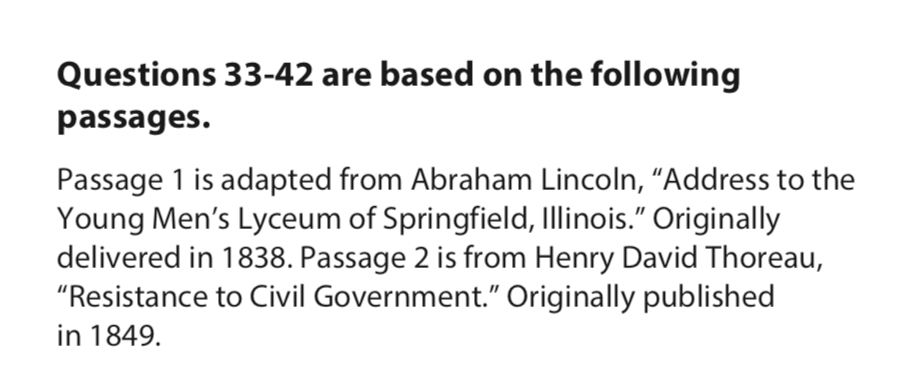
What do you already know about either the author of Passage 1 (Lincoln) or Passage 2 (Thoreau)?
Have you ever been asked to follow a rule that you don't believe in? Explain the rule and what you chose to do.
Welcome to SAT Practice Passage 5!
As your last practice passage before you take the SAT for real (😱), the formatting of this has changed to remind you to focus on process over perfection. This means you shouldn't try to get every question right, but rather focus on developing the reading strategies we've been working on all year!
Graded questions are marked (1) and ungraded questions with (0). Pay special attention to the following:
Written Response Full or Partial Credit: #1-2, 8-9, 12
SAT Full Credit: #3, 5, 7, 10
SAT Extra Credit: #4, 11, 13, 14
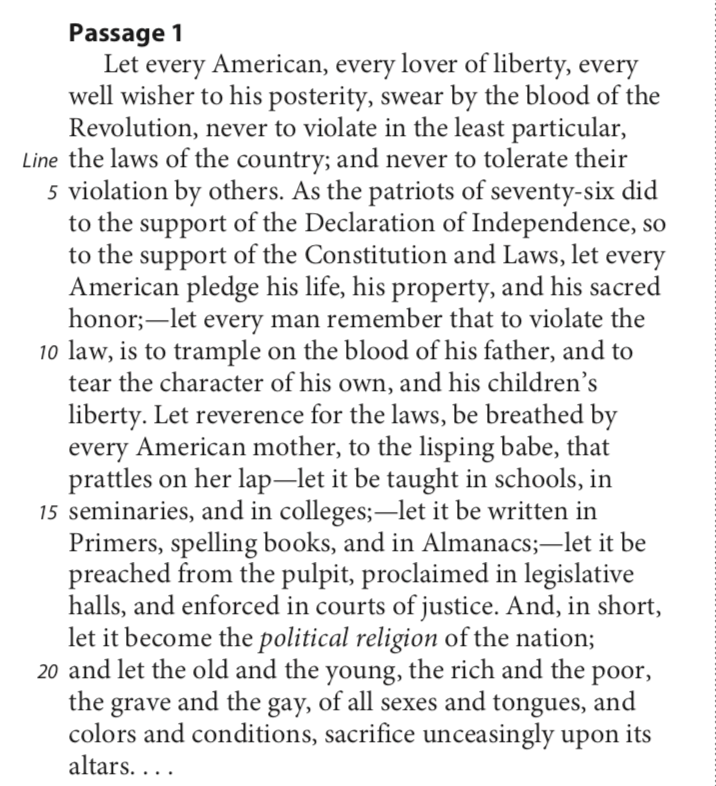
In Passage 1, Lincoln contends that breaking the law has which consequence?
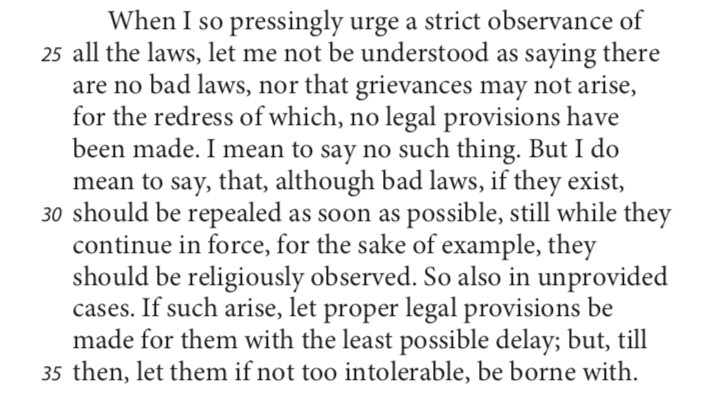
The sentence in lines 24-28 (“When . . . made”) primarily serves which function in Passage 1?
As used in line 32, “observed” most nearly means
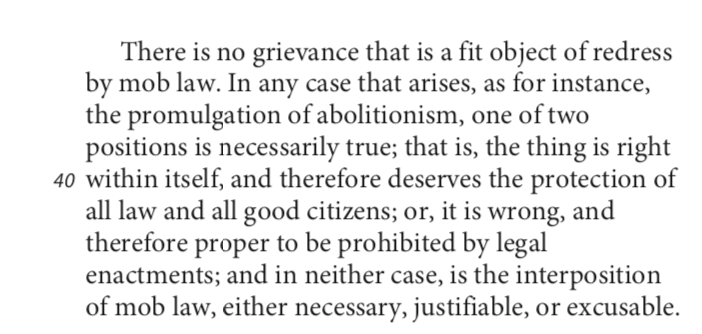
What is the author's claim in Passage 1 (Lincoln)?
Sentence Starters:
In Passage 1, Lincoln's claim is....
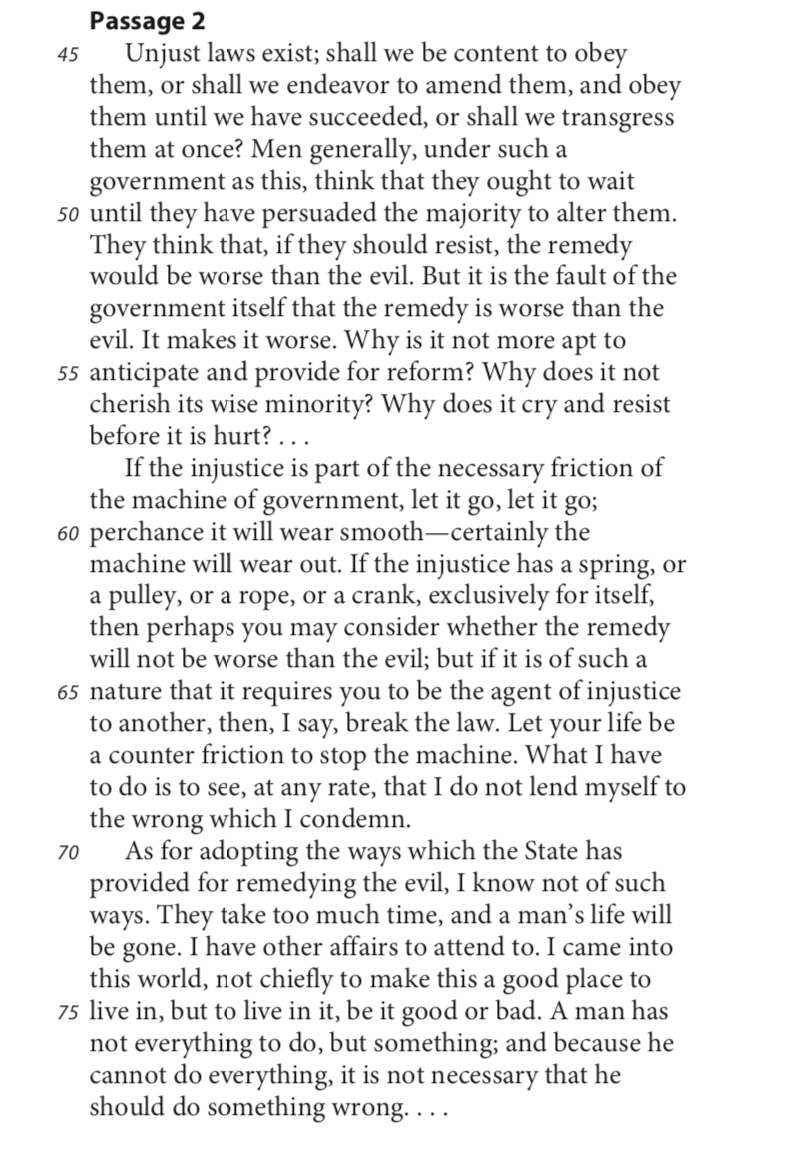
What is the author's claim in Passage 2 (Thoreau)?
Sentence Starters:
In Passage 2, Thoreau's claim is....
Do you think the authors would agree or disagree? Explain.
Sentence Starter:
After reading both passages, I believe that Lincoln and Thoreau {agree or disagree}. I believe they ______ because___________{explain why}______.
The primary purpose of each passage is to
Based on the passages, Lincoln would most likely describe the behavior that Thoreau recommends in lines 64-66 (“if it . . . law”) as
Based on the passages, one commonality in the stances Lincoln and Thoreau take toward abolitionism is that
Which choice provides the best evidence for the answer to the previous question?
As used in line 24, “urge” most nearly means
In Passage 2, Thoreau indicates that some unjust aspects of government are
Which choice provides the best evidence for the answer to the previous question?