
1
Look at Figure 1: What happened to the number of deer from 2005 to 2013?
Look at Figure 1: What happened to the number of deer from 2005 to 2013?
1
1
1
1
Look at Figure 1: What happened to the number of deer from 2005 to 2013?
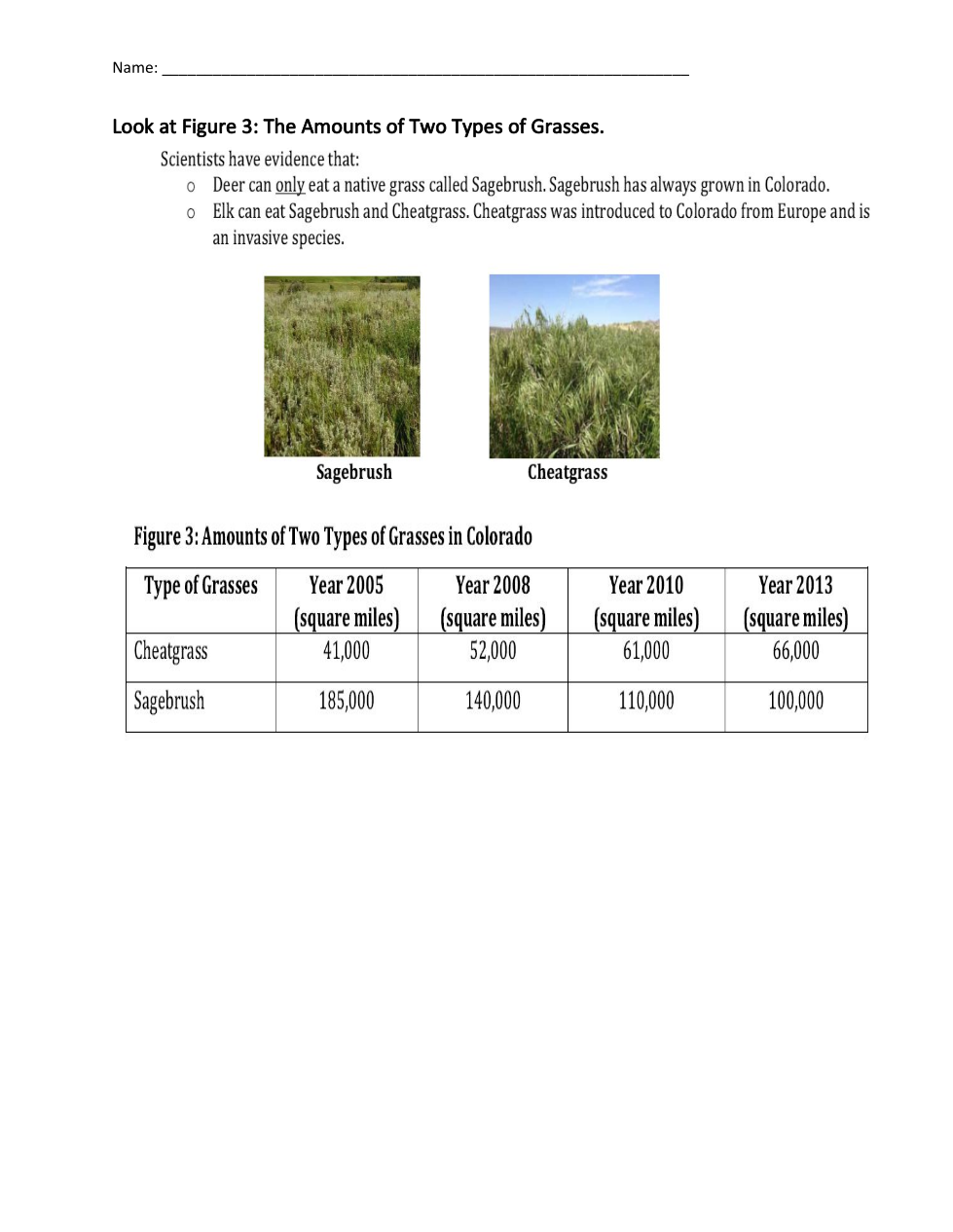
Which organism, the deer or elk, would be negatively affected by the change in grass type? Explain your answer.
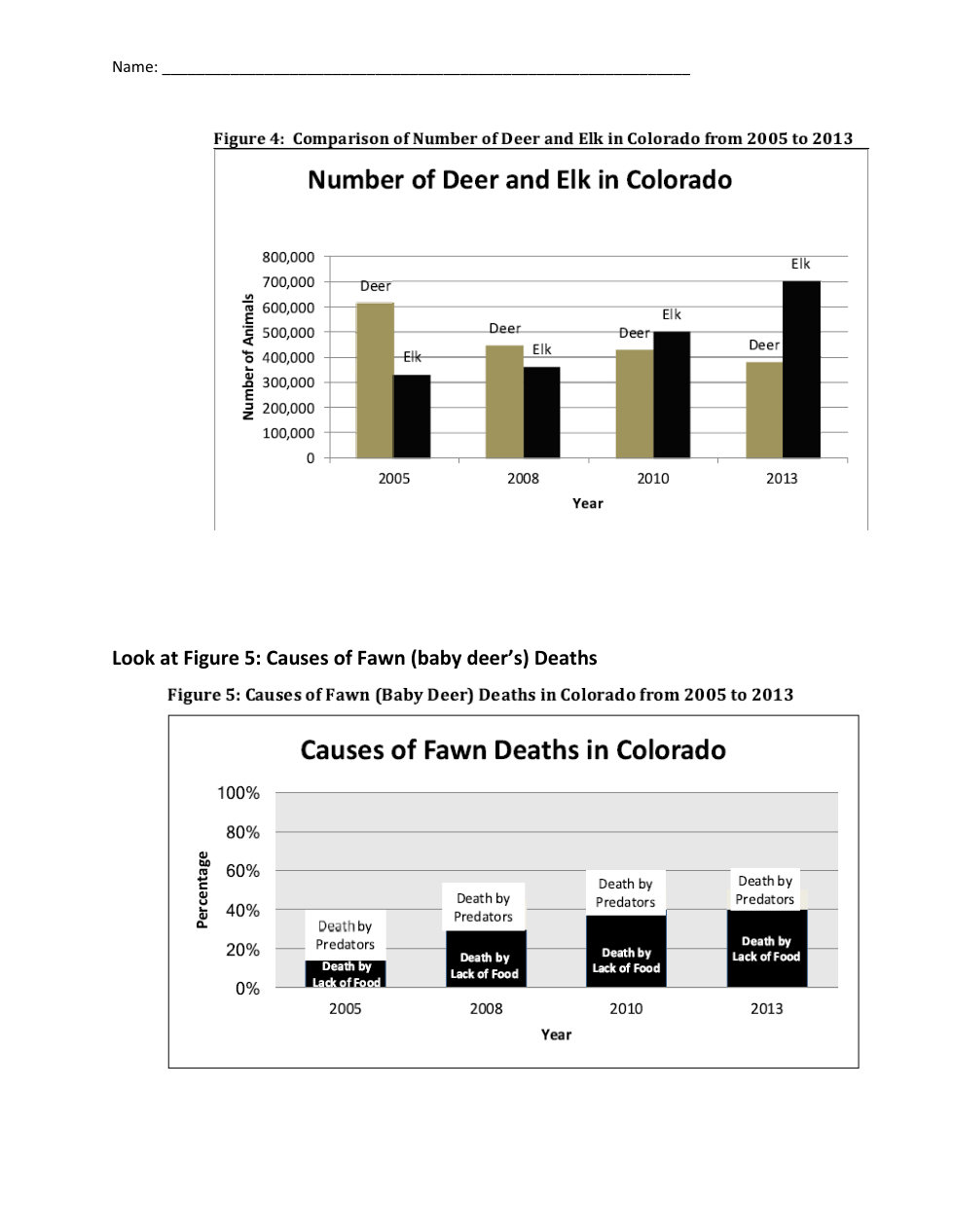
Look at Figure 4: What happened to the number of deer from 2005 to 2013?
Look at Figure 2:What year had the highest amount of rainfall?
Look at Figure 2:How much did it rain in 2004?
Look at Figure 2:What happened to the amount of rainfall from 2004 to 2006?
Look at Figure 2:What happened to the amount of rainfall from 2006 to 2010?
What type of grass do deer eat?
What type of grass do Elks eat?
Which grass is an invasive species, not native to Colorado?
What happened to the amount of cheatgrass from 2005 to 2013
What happened to the amount of sagebrush from 2005 to 2013
Look at Figure 4: What happened to the number of elk from 2005 to 2013?
Looking at Figure 5: in 2005, what caused the most of the fawn deaths?
Looking at Figure 5: From 2008 to 2013, what caused the most of the fawn deaths?
Looking at the amount of rain, the types of grasses, the number of deer and elk, what caused the change in number of deer in Colorado. Explain using two pieces of evidence from the worksheet.