NS: 1.3 (3/18) Version B
star
star
star
star
star
Last updated about 3 years ago
6 Nsɛmmisa

0

0
0
0
0
2
Think about what you have learned so far about populations in general and the rough-skinned newt population that has lots of predators in the park.
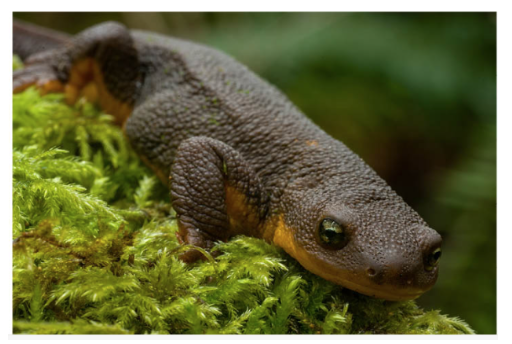
What prediction would you make about the poison-level traits in this population? Explain.
Vocabulary:
1. Distribution: the number of individuals with each trait in a population
2. Histogram: a graph that uses bars to show how characteristics or values are distributed within a group
3. Population: a graph that uses bars to show how characteristics or values are distributed within a group
4. Trait: a specific characteristic of an individual organism
5. Variation: any difference in traits between individual organisms
6. Abiotic: not living organisms
7. Biotic: living organisms
Video: Histograms
Check Your Understanding
| Draggable item | arrow_right_alt | Corresponding Item |
|---|---|---|
____________________________ help scientists easily see the traits in a poplation. | arrow_right_alt | Traits |
Fur, Color, Neck length, are all examples of different __________ | arrow_right_alt | Variation |
__________________________ of traits within a population help describe any changes or differences in group. | arrow_right_alt | Histograms |
Differences in neck length, color, and fur are all examples of how traits can have ______________________________ within a population. | arrow_right_alt | Distribution |
Why are histograms helpful?
"I think histograms are helpful because ... "
(Think: how do histogramps help you understand a population?)
Unit 8: Natural Selection
Chapter 1: Environmental Change and Trait Distribution
Lesson 1.3: Exploring Variation and Distribution in Populations
Complete each mission in the Sim by adjusting the trait-level and variation sliders. Zoom in to the environment to observe the individual organisms. draw the histogram of each mission, then mark each mission as complete as you go.
Complete the four chellenges below
How can histograms be used to help describe a population?
CFS:
Accurately identifies relationship and trends in the data set
Accurately describes the relationship between different variables in a population
"I think histograms are helpful because ... "
(Think: how do histogramps help you understand a population?)
Draw the following histograms with a population of 12 individuals on the graphs plots below: