Which part of the open ocean zone has
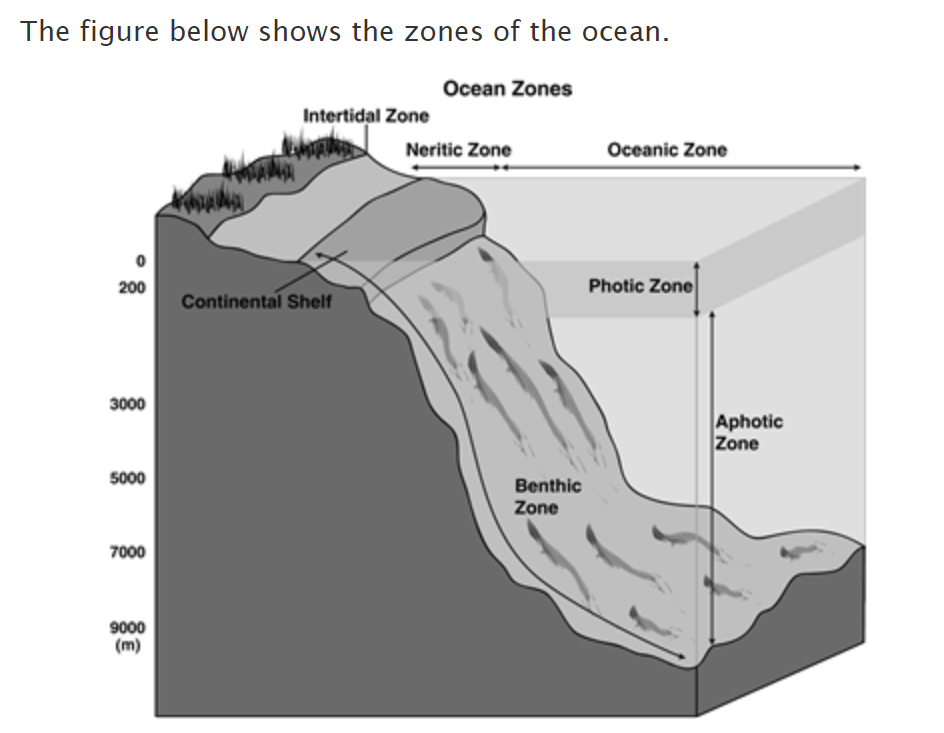
predators that scavenge carcasses or organic detritus?
Which part of the open ocean zone has
predators that scavenge carcasses or organic detritus?
Most organisms live in the ____________________zone.
Temperature, light and oxygen are examples of _______________factors
What are areas where freshwater meets saltwater called?
What are coral reefs?
What special adaptations do intertidal species have?
Wetlands and esturaries purify water and filter out_______
This is the ocean shore between the lowest low tide and the highest high tide.
The distribution of life in aquatic ecosystems is determined by geography, light, depth, temperature, salinity, and dissolved oxygen.
Where is most dissolved oxygen located
Aquatic ecosystem that recharges the aquifers and filters pollutants.
Ecosystem that prevents soil erosion and flooding.
Organisms living in this type of ecosystem can tolerate high changes in salinity and temperature.
Which ocean ecosytem has extremes in temp, moisture, sun exposure, salinity, predation, and nutrients?
This ocean ecosystem is at the edge of the continental shelf and contains few nutrients and 90% of the water.
Which part of the open ocean zone has
predators that scavenge carcasses or organic detritus?

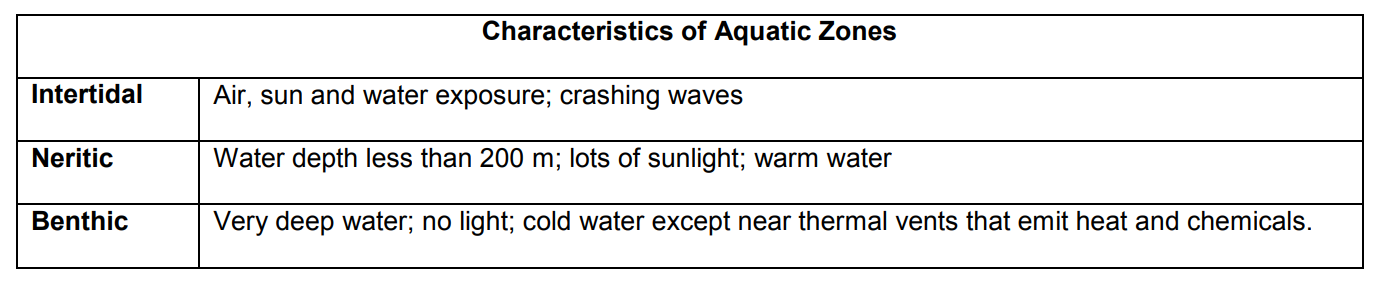
Coral reefs require sunlight because reef-building coral contain photosynthetic algae in their tissues. The reefs must sit on the ocean floor for support and must remain underwater to survive. In which ocean zone does a reef most likely thrive?
Based on Jill’s observations, which conclusion could you draw?