Base "e" (shortened)
star
star
star
star
star
Last updated about 3 years ago
24 Nsɛmmisa
1
1
1
1
1
1
1
1
1
1
1
1
1
1
1
1
1
1
1
1
1
1
1
1
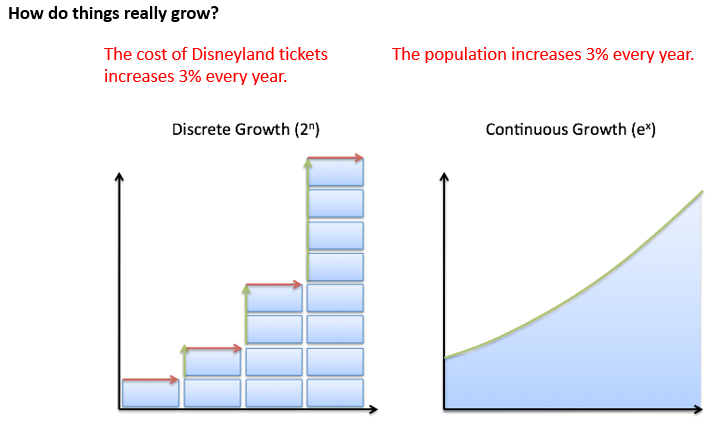
For continuous growth, instead of the base being a number it is a letter. Look at the image above and find where it says "continuous growth". What is the base of the exponent in the parentheses? Type the letter below.
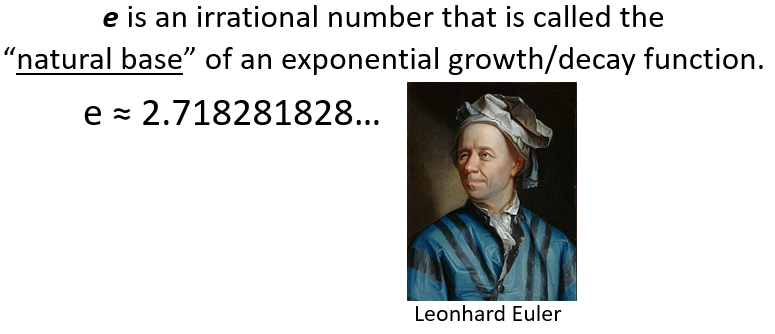
"e" is similar to "pi"
It's a never-ending number:
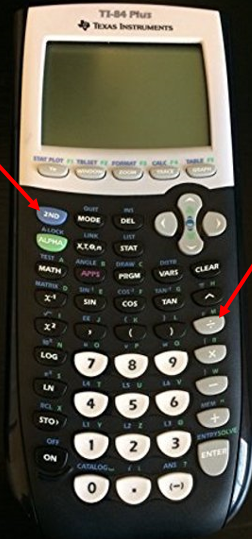
Find "e" on your calculator. It is in blue above the division key. This means you need to click the "2nd" key first to get to "e".
Type "e" in the calculator and then click enter.
What is the value of e rounded to 3 decimal places?
Evaluate
Round to 2 decimal places
Evaluate
Round to 2 decimal places
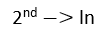
A quicker way to raise "e" to an exponent is to type "2nd" and then the "ln" key which is next to "4".
Evaluate
Round to the nearest whole.
Evaluate
Round to 2 decimal places
Natural growth uses base "e"
Write this formula in your notes:
A represents an amount after time "t"
P represents the principle or "initial" amount
r represents rate (change % to decimal)
t represents time
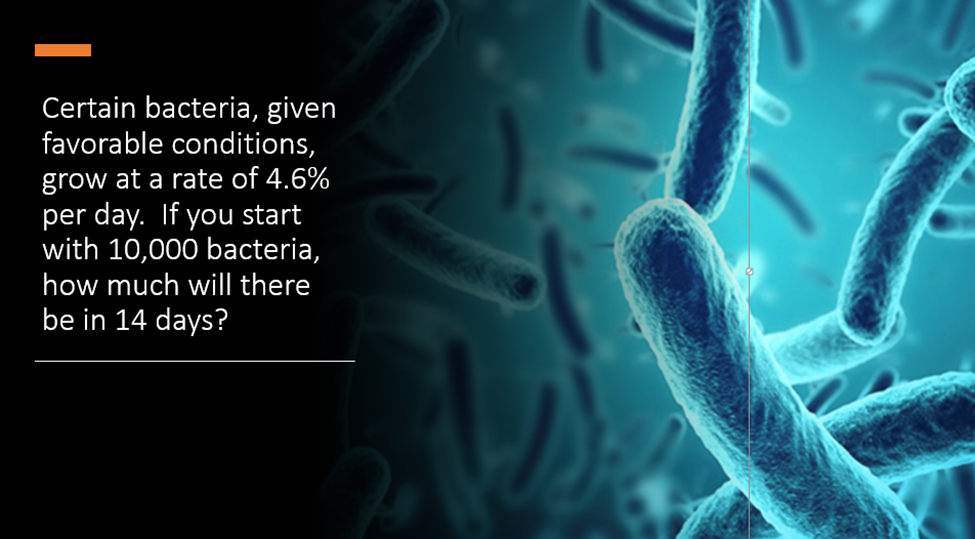
We use this equation when money is being compounded continuously, or with anything that grows "naturally" for example, bacteria, population, radioactive decay, etc.
Round to the nearest hundredth.
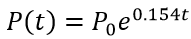
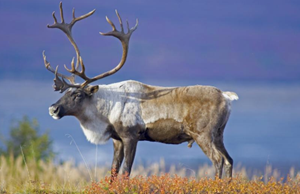
The George River herd of caribou in Canada was estimated to be about 4,700 in 1974 and grew at an exponential rate. Use the exponential growth function below, where
Round to the nearest whole.
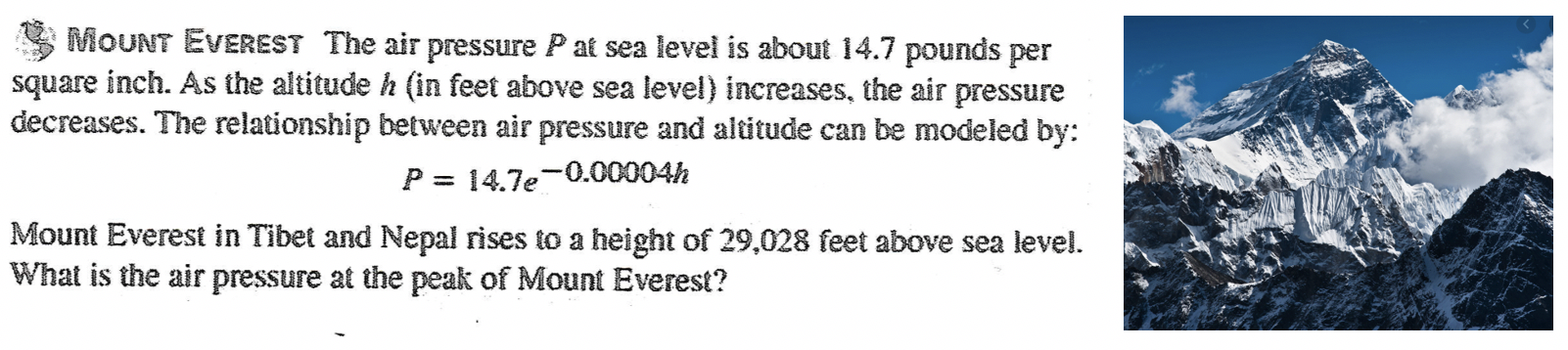
Round to 2 decimal places.
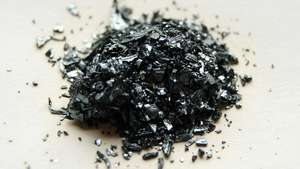
Radiocarbon Dating
The formula for radioactive decay is important in radiocarbon dating, which is used to calculate the approximate date a plant or animal died. Radiocarbon dating was discovered in 1949 by Willard Libby, who won a Nobel Prize for his discovery. It compares the difference between the ratio of two isotopes of carbon in an organic artifact or fossil to the ratio of those two isotopes in the air. It is believed to be accurate to within about 1% error for plants or animals that died within the last 60,000 years.
After the break, I'll show you a video that explains radiocarbon dating in further detail.

How much radium is left after 10,000 years? Round to 2 decimal places.
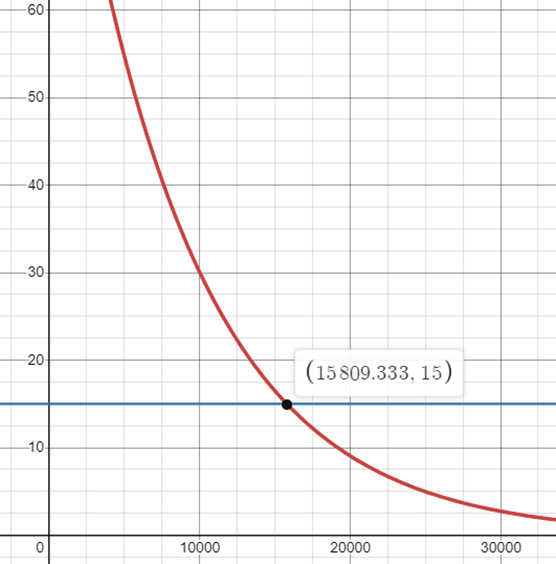
A paleontologist uncovers a fossil of a saber-toothed cat in California. The paleontologist analyzes the fossil and concludes that the specimen contains 15% of its original carbon-14. The percent of original carbon-14 in a specimen after t years can be modeled by the function below, where
Round to the nearest whole.

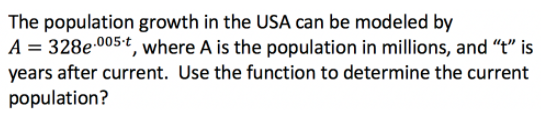
Use the function to determine the level of carbon dioxide in year 2022. (Remember, "t" is how many years AFTER the year given in the problem)
Round to the nearest hundredth.
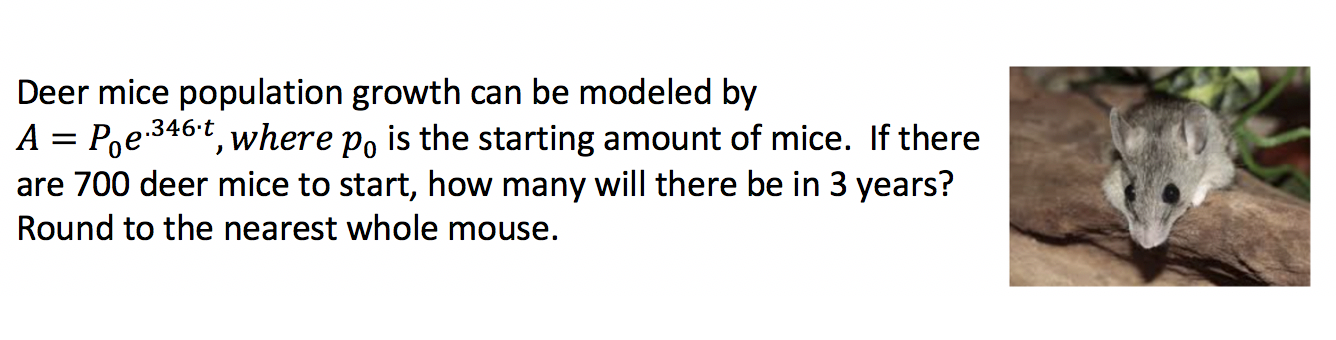
Remember, A is the population in millions
Round to the nearest whole.
Round to the nearest thousandth.
The population of a colony of mosquitos grows according to the function
Round to the nearest whole.
Continuously compounded interest means that the principal amount is constantly earning interest and the interest keeps earning on the interest earned!
We use the same formula for money compounded continuously.
On January 2, 2014 Alyssa put $2,000 into an IRA account earning 7% compounded continuously. What will the IRA be worth on January 1, 2034?
Round to the nearest hundredth.
When Violet was 6 years old, her parents started a college fund for her and invested money into an account where interest is compounded continuously at a rate of 2.44%. Now that she is 16, there is $32,000 in the account. How much money did her parents initially invest?
Round to the nearest hundredth
I recently found an account with $5,000 in it that my parents opened for me 29 years ago. The account earned 2.75% compounded continuously. How much money did my parents invest for me all those years ago? Round to the nearest hundredth.
A deposit of $10,000 is made into a savings account where the interest is compounded continuously. At a rate of 7%, what will the balance be after 2 years?
Round to the nearest hundredth.
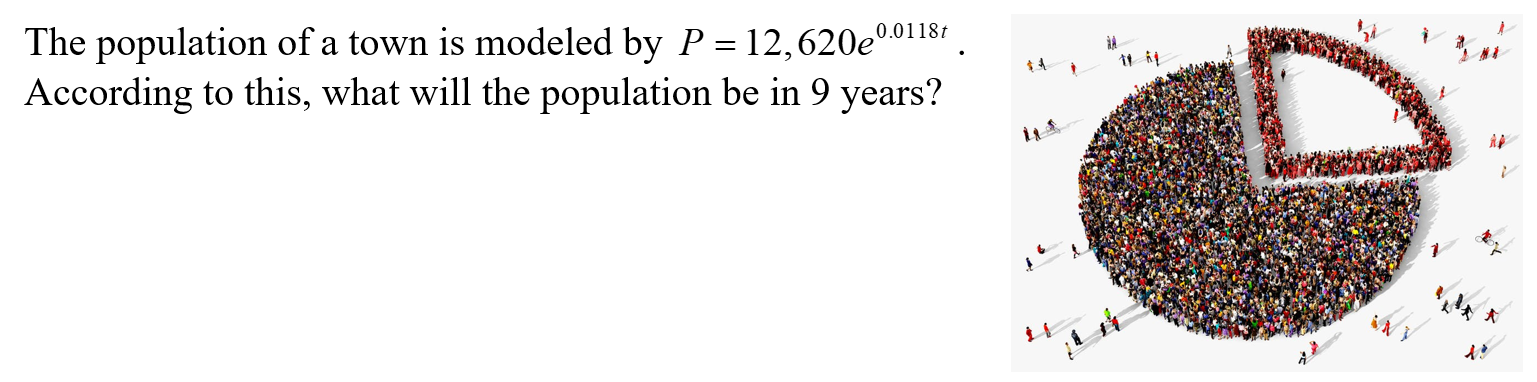
The exponential growth model
Round to the nearest whole.
Round to the nearest whole.
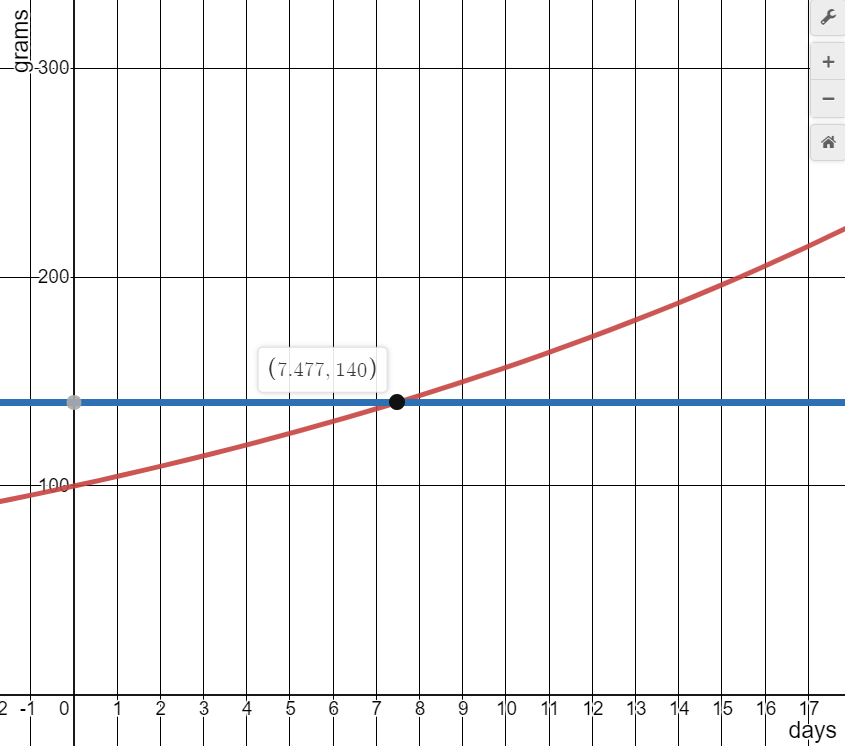
Use the graph to answer the question.
Round to the nearest whole day.