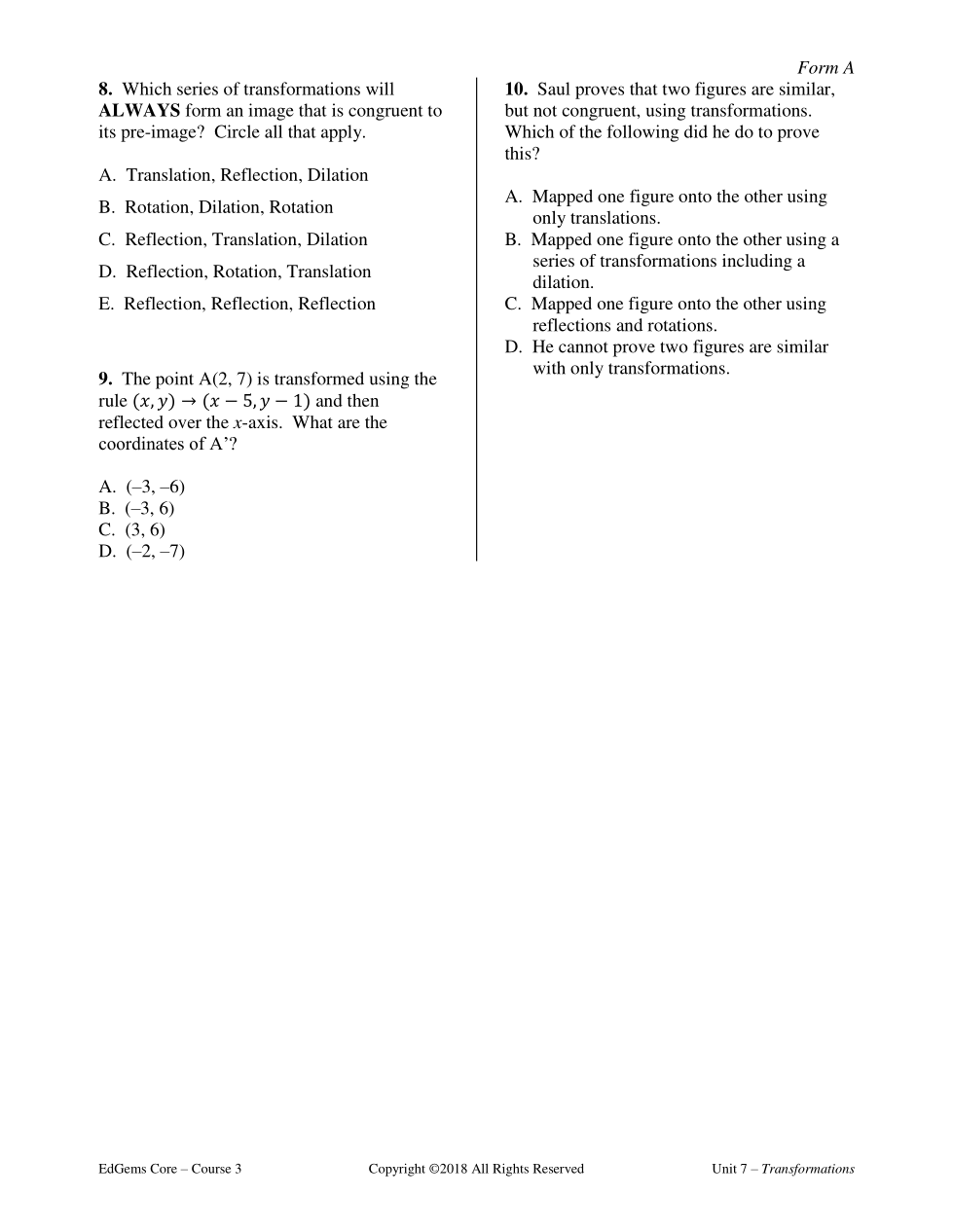
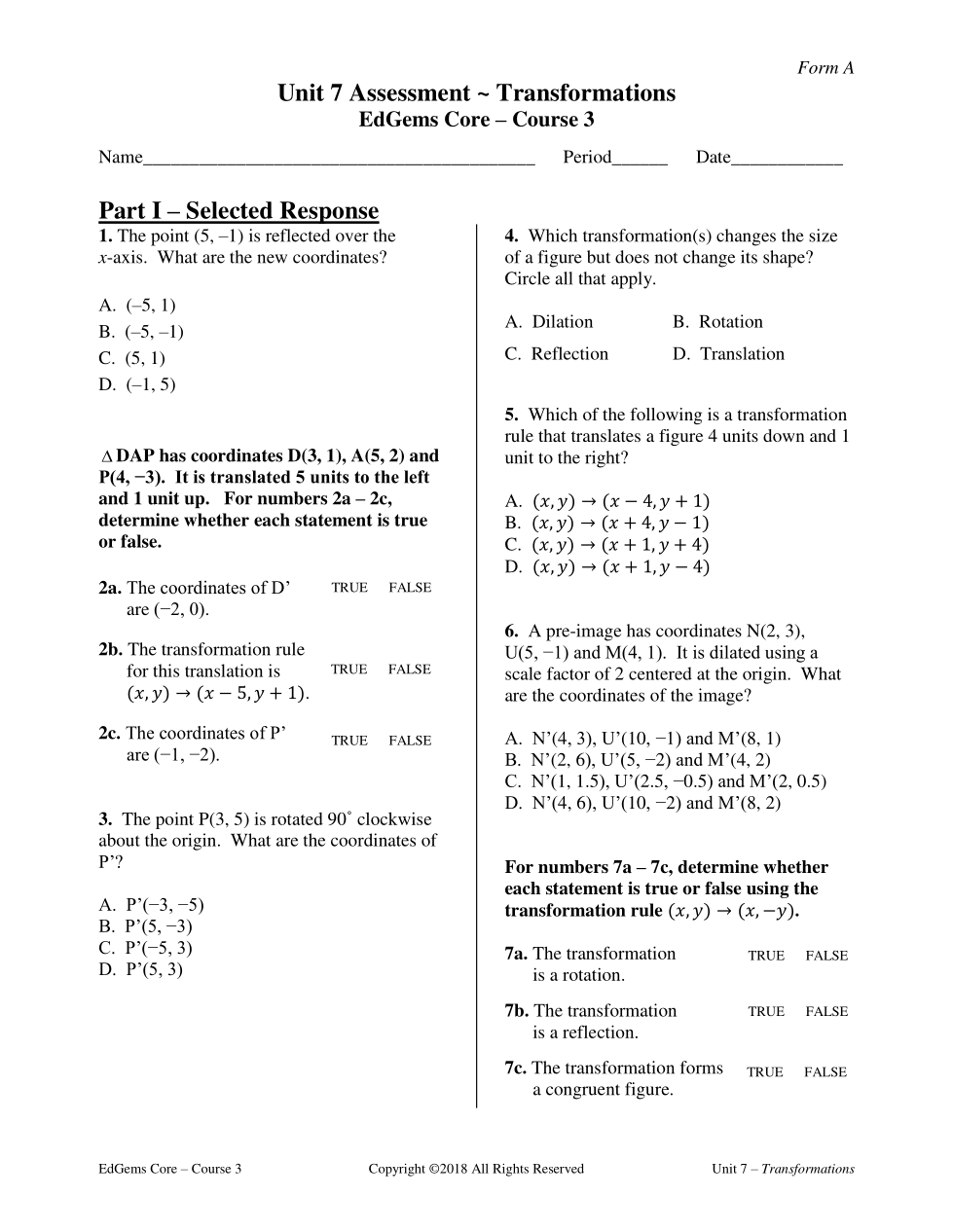
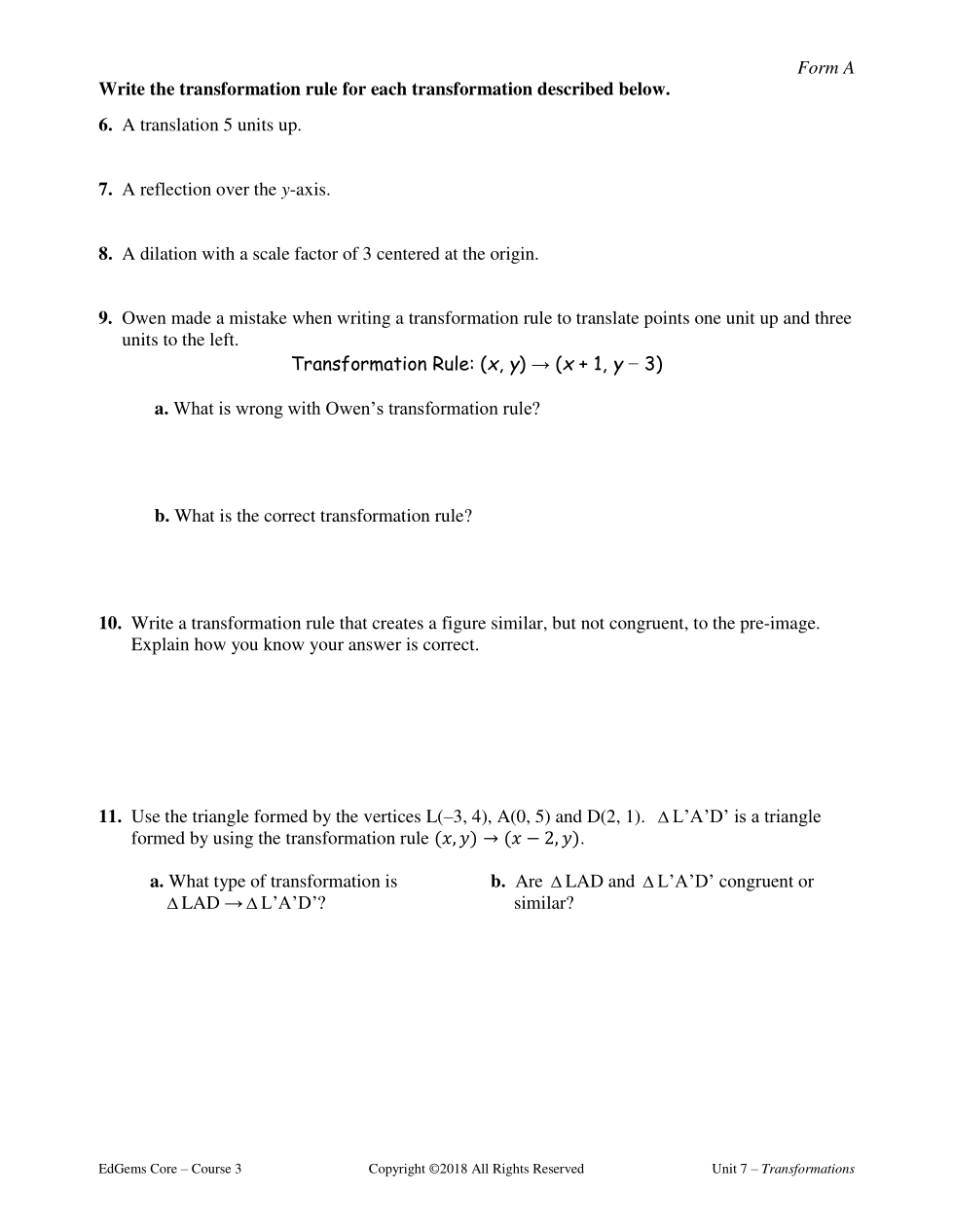
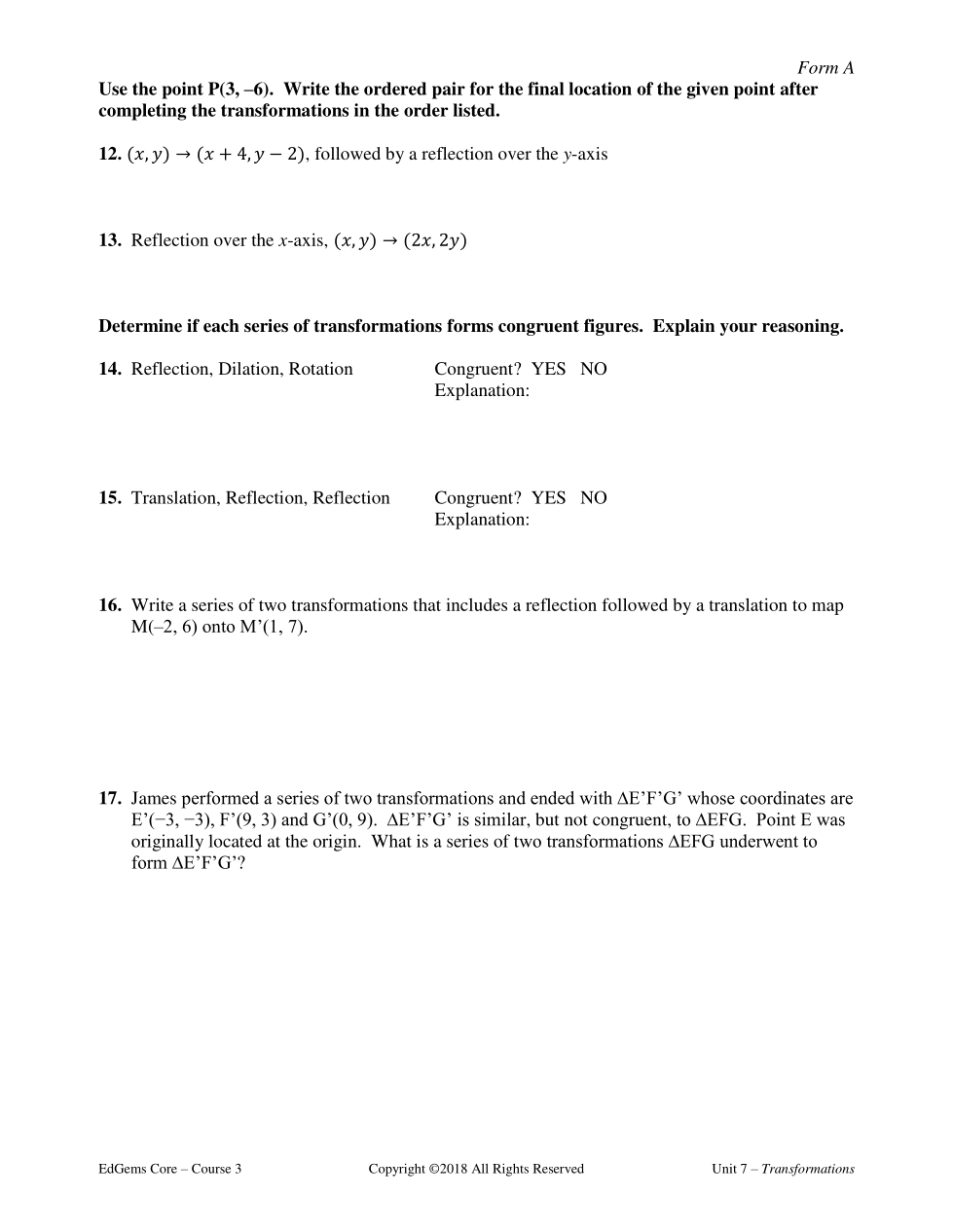
A
B
C
D
E
(1,-8)
(7,-8)
(-7,-8)
(-7,8)
Nokorɛ
Ɛnyɛ ampa
(x+5,y)
(x,y-5)
(x-5,y)
(x,y+5)
(-y,x)
(y,-x)
(x,-y)
(-x,y)
(x-3)
(x+3)
(1/3x,1/3y)
(3x,3y)
The correct answer is
(x-3,y-2)
(x+3,y-1)
(x-3,y+1)
(x+3,y+1)
(3x,3y) followed by (x+1,y-2)
(x+2,y-2) followed by a 180 degree rotaiton
Rotate (y,-x) followed by (x+1,y-2)
(-y,x) followed by (-x,y)
Why is your previous answer similar and not congruent?
Dilations create similar images
Rotations create similar images
Reflection create similar images
Translations create similar images
Dilation
Reflection
Rotation
Translation
congruent
similar
(-6,12)
(6,-12)
(6,12)
(-6,-12)
Similar because dilations change size but preserve shape.
Congruent because rotations, reflections, and dilations preserve size and shape
Congruent - Translations and reflections preserve size and shape
Similar - Translations and reflections create the same shape but different sizes.