EOC - Biodiversity and Conservation

Last updated over 4 years ago
8 questions
1

Which region would likely have the greatest amount of biodiversity?

1

Corals, and the zooxanthellae algae they contain, form the base of a coral reef ecosystem. Organisms like sea urchins feed on microorganisms that grow on the corals. Organisms including seahorses feed on plankton and fish that also inhabit the reef. Larger animals like sea turtles frequently enter the reef to forage. Seaweeds, which are competitors of corals, may grow along the reef bottom.
The biodiversity in a coral reef ecosystem can be changed by both natural and human activities. What is a natural factor that would have the greatest negative impact on the ecosystem's biodiversity?

1

Wheat crops are grown in a field. The seeds are genetically identical. Which of the following is the most likely effect of planting an entire field with these seeds?

1

How is the changing balance of cost to benefits helping to speed the development of hybrid motor vehicles that utilize both gas and electrical motors?

1

Wind farms use turbines to generate electricity without using fossil fuels. What is one negative consequence of using wind turbines to generate electricity?

https://scitechdaily.com/wind-farms-cause-more-environmental-impact-than-previously-thought/

https://physicsworld.com/a/wind-turbine-impacts-deplored/

https://www.audubon.org/news/can-painting-wind-turbine-blades-black-really-save-birds

1

Students were investigating the advantages and disadvantages of solar power. According to the information in the chart, which statement describes an advantage of using fossil fuels over solar power?
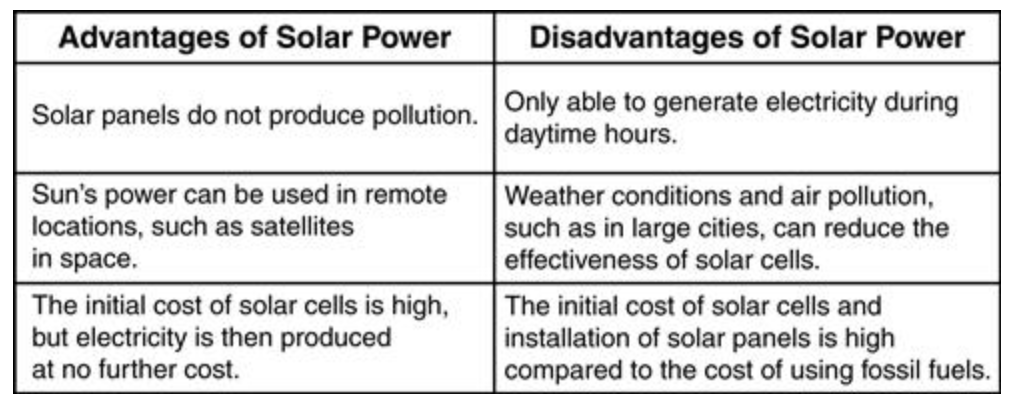
1

In winter, Monarch butterflies migrate to forests that have relatively warm winters. The butterflies are still sensitive to cold, however, and they hibernate on tree branches, bunched together to conserve heat. Which environmental regulation would directly preserve the monarch butterfly population in winter?

1

Wild horses called mustangs roam acres of federally owned land in the western United States. These horses have overgrazed the local vegetation to the extent that plants and soils are being lost entirely.
When the number of mustangs that roam the land exceeds the number of horses that the land can sustain, the government organizes helicopter-driven roundups. The horses are guided into a roped-off area and then are sold to the public or brought to pastures in the Midwest. About one percent of the horses captured die from injuries or accidents that occur during roundups.
The risk to the horses during roundups compared to the entire loss of plants and soils is considered