Part 1: Warm Up
Use the image below to help you answer your warm up!
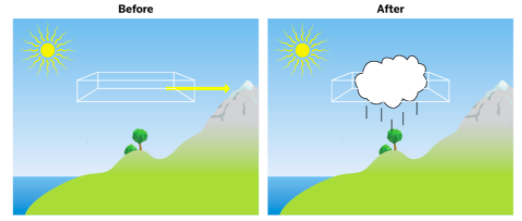
Use the image below to help you answer your warm up!
What is the Before image showing?
What is the After image showing?
We know that yellow arrows in our work symbolize ENERGY.
Tell me the process of how energy transfers out of the air parcel and the outcome of this energy transfer.
Sentence Starter:
When energy transfers out of the air parcel....
Hint: think about the temperature of air parcel and water vapor!
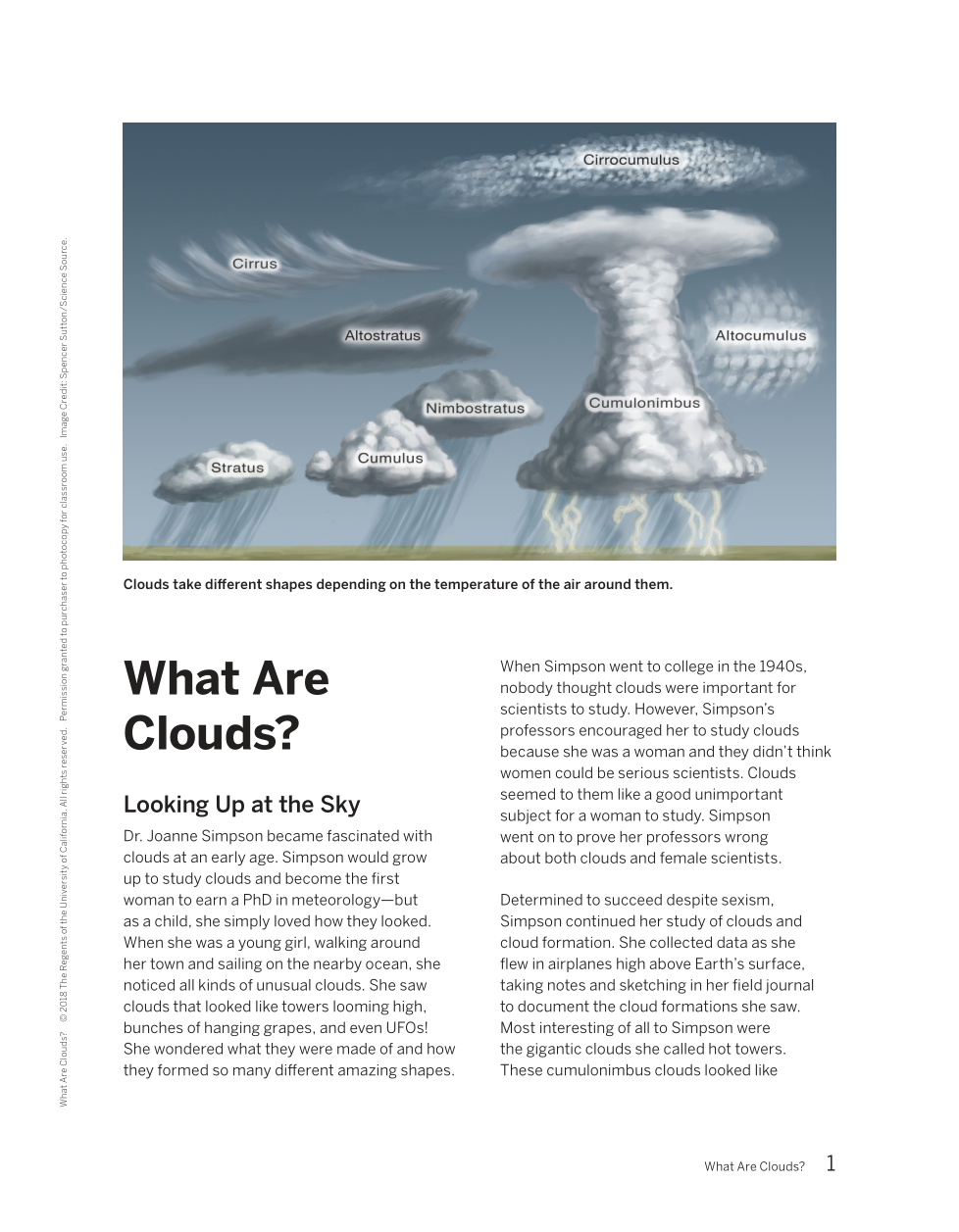
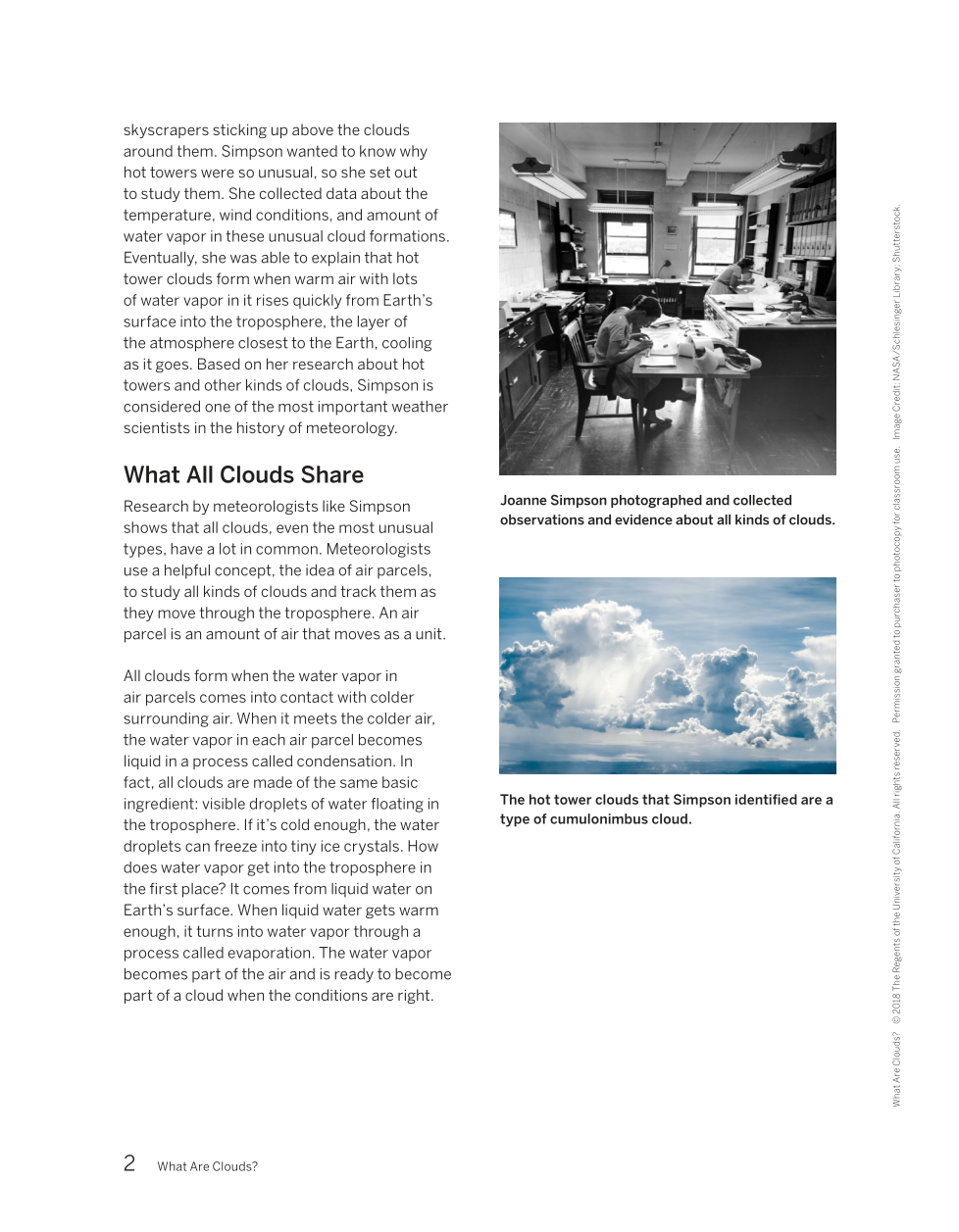
Find a quote that answers this question:
How do "hot tower clouds" form?
Find a quote that answers this question.
How do clouds form?
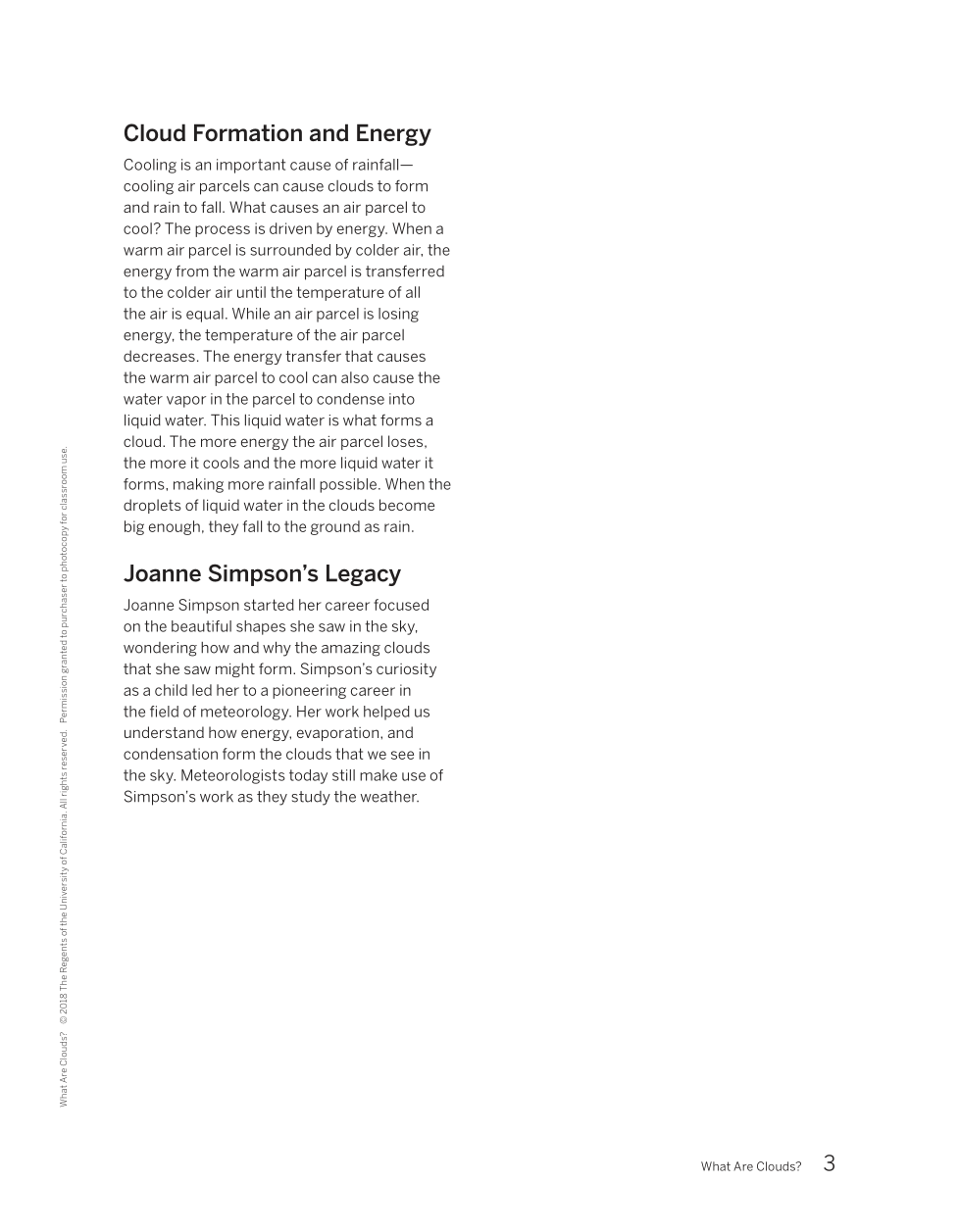
Cooling air parcels causes clouds to form and rain to fall.
Find a quote that answers this question.
Describe what happens when a warm air parcel is surrounded by colder air.
Describe what happens when an air parcel loses energy.
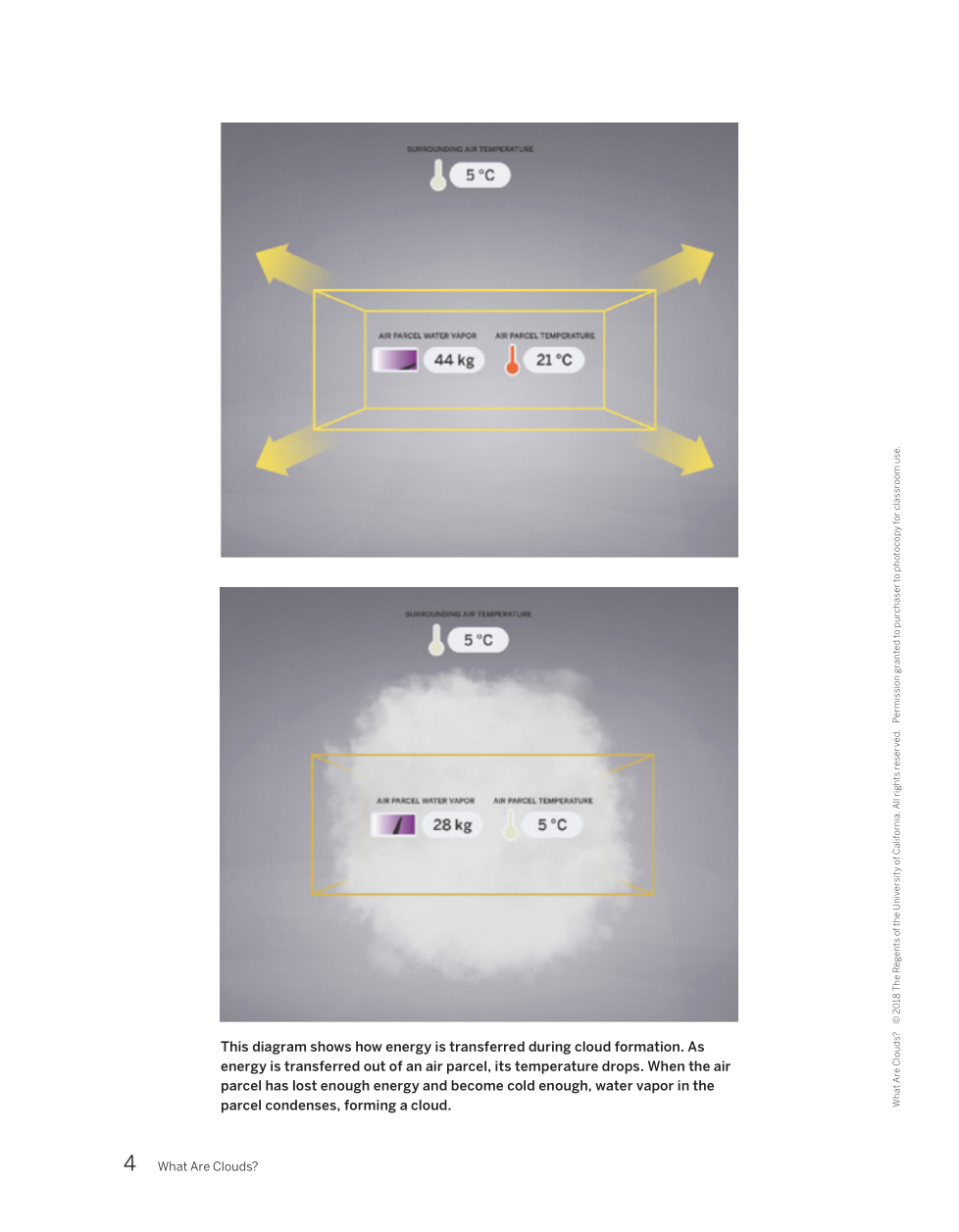
Summarize what is happening in this diagram.
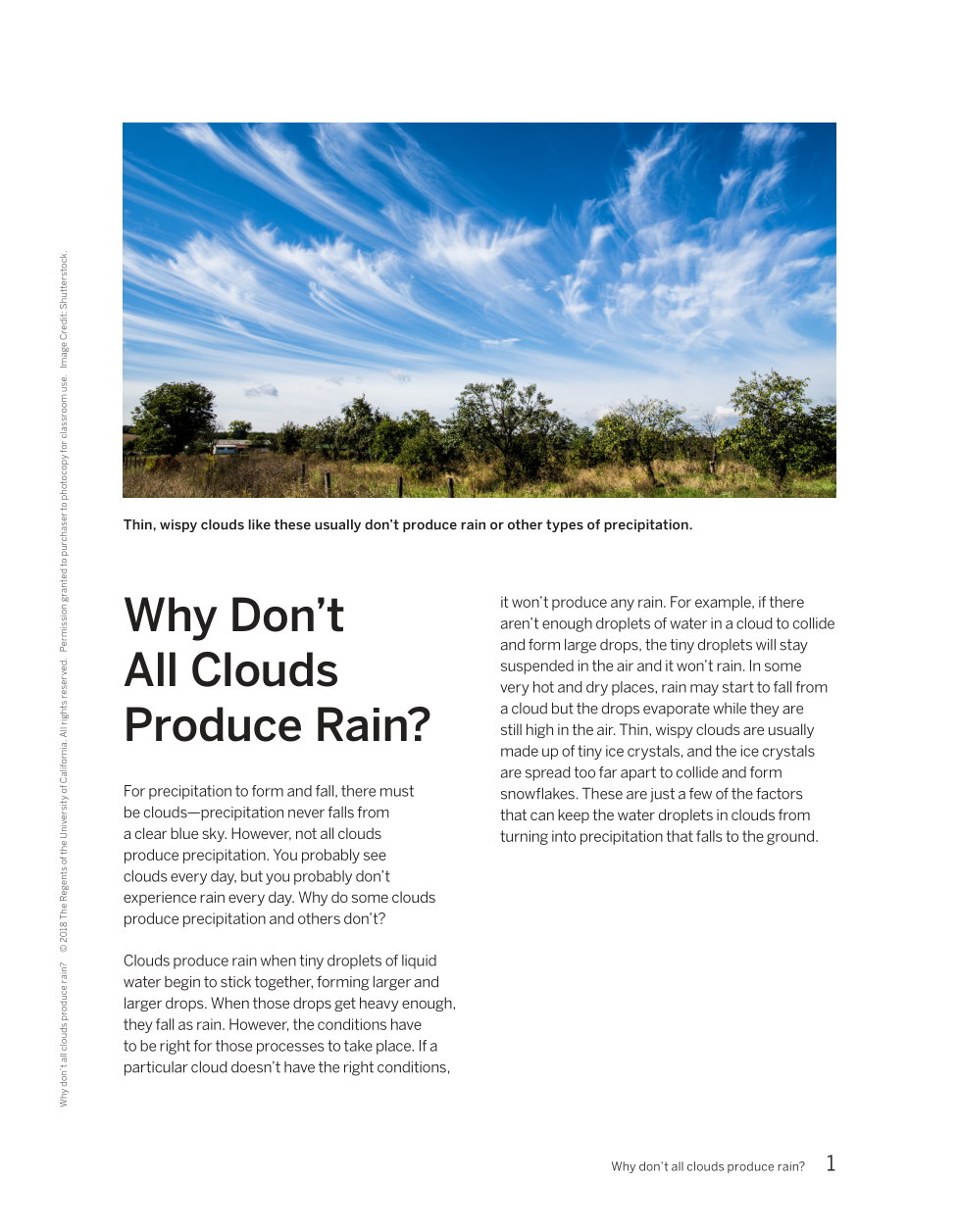
All clouds, no matter their size or shape produce rain.
Clouds produce rain when tiny droplets of begins to , forming larger and larger drops.
When water vapor in an air parcel cools and condenses, which way does energy transfer?
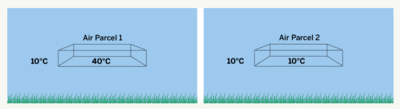
There are two air parcels. Air parcel 1 and air parcel 2 both have the same amount of water vapor. Which one will have more energy transferred out?
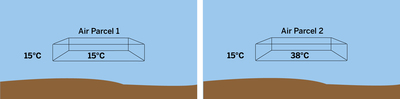
Air parcel 1 is at the same temperature as the surrounding air. Air parcel 2 is warmer than the surrounding air. Air parcel 1 and Air parcel 2 started with the same amount of water vapor in them.
Which air parcel will have more rainfall and why?
OPTIONAL: What slide was the symbol on?
One point extra credit if correct!
What type of data did Dr. Simpson collect to determine cloud formations?
Select all that apply!
What is an air parcel?
When a warm air parcel meets colder surrounding air, the water vapor in the air parcel becomes liquid in a process called evaporation.
Water vapor is an important part of cloud formation, where does it come from?
When the drops get heavy enough they....
Which quote answers this question -
What happens when there aren't enough droplets of water in a cloud?