WP 3.2
star
star
star
star
star
Last updated over 3 years ago
20 Nsɛmmisa
0
1
1
1
0
1
0
0
0
1
1
1
0
0
0
0
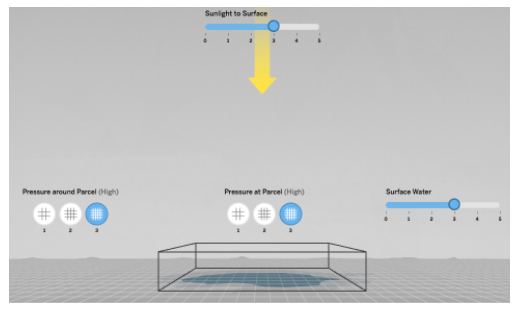
Use the image above to answer the question: Why did wind not form?
Lilah left a cup of hot chocolate in a cool room. Her mother tells her that her hot chocolate will get cold if she forgets to drink it.
How cold could it get?

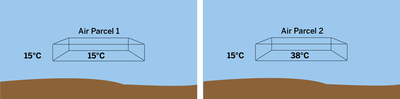
Air parcel 1 is at the same temperature as the surrounding air.
Air parcel 2 is warmer than the surrounding air. Air parcel 1 and Air parcel 2 started with the same amount of water vapor in them.
Which air parcel will have more rainfall and why?
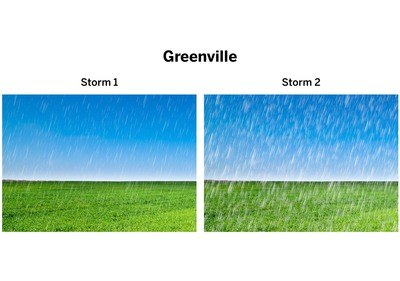
The town of Greenville had two rainstorms in March. Storm 2 had more rainfall than Storm 1.
The temperature of the surrounding area was the same before both storms.
What could explain why Storm 2 had more rainfall than Storm 1?
Before Storm 2, the air parcel at the surface could have been:
Set the sliders for Sunlight to Surface and Surface Water to level 3.
Set Pressure at Parcel and Pressure around Parcel to create wind that blows toward the parcel.
Press RUN, and then ANALYZE.
Record data on the first row of the table below.
Repeat the process to create a parcel with no wind.
Record data on the second row of the table below.
Which air parcel rose higher?
Why did that air parcel rise higher?
Sentence Starter:
Parcel _ rose higher because...
Analyze: Use your data table to describe how wind can affect the cooling of an air parcel.
Hint: Think about Troposphere!
Sentence Starter:
Wind can affect the cooling of an air parcel...
Interpret: How does wind affect the amount of rain? What's the relationship between wind amount and amount of rain?
Sentence Starter:
The relationship between wind and rain is that...
Two air parcels started with the same air temperature and are surrounded by colder air.
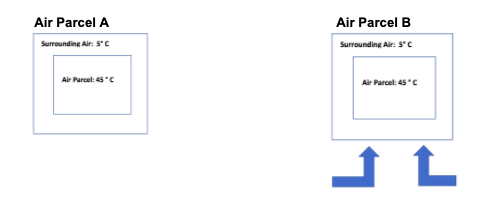
Which air parcel will rise the highest?
Why did that air parcel rise higher?
Energy transfers from the ___ heats the land. The land then warms the ____.
Why does warm air rise?

Which detail MOST CLEARLY shows what air pressure does to a balloon?
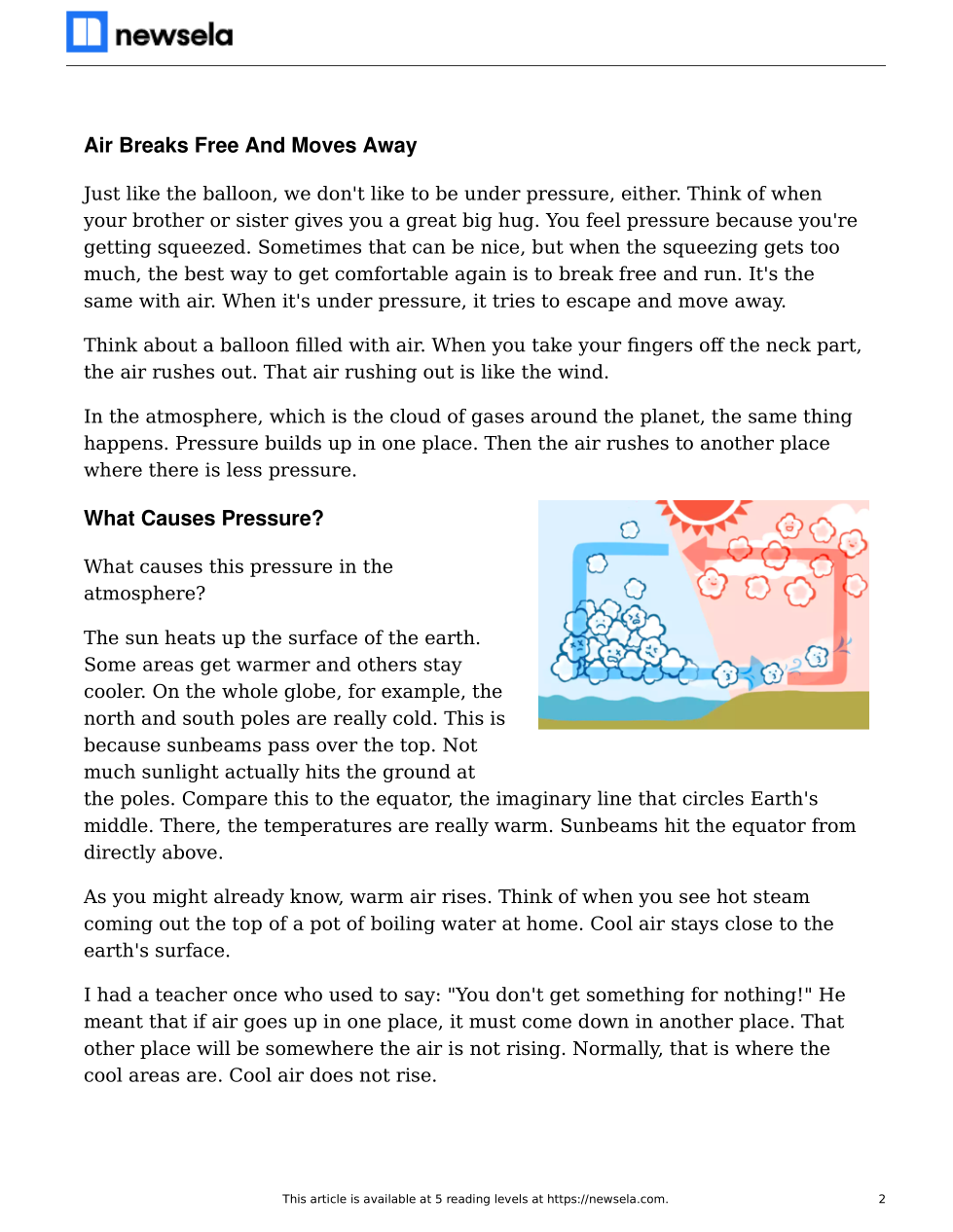
Warm air rises.
Wind is just air moving from a place to a .
Kimberly studied the weather in Atlanta for two days.
On day 1, she noticed it was very windy outside.
On day 2, she noticed there was no wind at all.
It was cloudy and the same temperature outside on both days.

On which day will the air parcel rise the highest? How will this impact the amount of rain?
Which Air parcel will go higher into the troposphere? Model two air parcels using the provided background. :


OPTIONAL:
What slide is the symbol on?
Read the paragraph below from the section "What Causes Pressure?"
I had a teacher once who used to say: "You don't get something for
nothing!"
He meant that if air goes up in one place, it must come down in another place. That other place will be somewhere the air is not rising.
Normally, that is where the cool areas are. Cool air does not rise.
What conclusion can the reader make based on this paragraph?