0.5
0.5
0.5
0.5
0.5
0.5
0.5
0.5
0.5
0.5
0.5
0.5
0.5
0.5
0.5
0.5
0.5
0.5
0.5
0.5
0.5
0.5
0.5
0.5
Translate the sentence. In the following question, identify the underlined word(s) as DATIVE or ABLATIVE, and pick the correct usage.
vocabulary help:
ingēns, gen sing. ingentis: huge
aedificium, aedificiī, n.: building
mōnstrō, mōnstrāre, mōnstrāvī, mōnstrātus: to show, point out
iter, itineris, n.: journey
faciō, facere, fēcī, factus: to make
Choose the correct CASE and USAGE for the underlined word.
Cornēlius ingentia aedificia Sextō mōnstrābat, ubi in urbe iter faciēbant.
Choose the correct CASE and USAGE for the underlined word.
Cornēlius ingentia aedificia Sextō mōnstrābat, ubi in urbe iter faciēbant.
Translate the sentence. In the following question, identify the underlined word(s) as DATIVE or ABLATIVE, and pick the correct usage.
vocabulary help:
fābula, fābulae, f.: story
līberī, līberōrum, m. pl.: children
dē (+ abl.): about
mercātor, mercātōris, m.: merchant
immemor, gen. sing. immemoris: forgetful
nārrō, nārrāre, nārrāvī, nārrātus: to tell
Choose the correct CASE and USAGE for the underlined word.
Aurēlia fābulam līberīs dē mercātōribus immemoribus nārrāvit.
Choose the correct CASE and USAGE for the underlined word.
Aurēlia fābulam līberīs dē mercātōribus immemoribus nārrāvit.
Translate the sentence. In the following question, identify the underlined word(s) as DATIVE or ABLATIVE, and pick the correct usage.
vocabulary help:
medius, media, medium: mid-, middle of
nox, noctis, f.: night
epistula, -ae, f.: letter
frāter, frātris, m.: brother
mittō, mittere, mīsī, missus: to send
in quā: in which
rem explicāre: to explain the situation
Choose the correct CASE and USAGE for the underlined word.
Mediā nocte Cornēlius epistulam frātrī mīsit, in quā rem explicāvit.
Choose the correct CASE and USAGE for the underlined word.
Mediā nocte Cornēlius epistulam frātrī mīsit, in quā rem explicāvit.
Translate the sentence. In the following question, identify the underlined word(s) as DATIVE or ABLATIVE, and pick the correct usage.
vocabulary help:
prīnceps, prīncipis, m.: emperor
senātōr, senātōris, m.: senator
statim: immediately
cōnsulō, cōnsulere, cōnsuluī, cōnsultus: to consult
Choose the correct CASE and USAGE for the underlined word.
Necesse est prīncipī senātōrēs statim cōnsulere.
Translate the sentence. In the following question, identify the underlined word(s) as DATIVE or ABLATIVE, and pick the correct usage.
vocabulary help:
caupō, caupōnis, m.: innkeeper
saltātrīx, saltātrīcis, f.: dancer
hospes, hospitis, m.: guest
condūcō, condūcere, condūxī, conductus: to hire
quae: who
ars, artis, f.: skill
saltō, saltāre, saltāvī, saltātus: to dance
Choose the correct CASE and USAGE for the underlined word.
Caupō saltātrīcēs hospitibus condūxit, quae multā cum arte saltābant.
Choose the correct CASE and USAGE for the underlined word.
Caupō saltātrīcēs hospitibus condūxit, quae multā cum arte saltābant.
Translate the sentence. In the following question, identify the underlined word(s) as DATIVE or ABLATIVE, and pick the correct usage.
vocabulary help:
ad (+ acc.): to, toward; at
Porta Capēna, Portae Capēnae, f.: the Porta Capena (one of the gates leading to Rome)
occurrō, occurrere, occurrī, occursūrus (+ dat.): to meet
temptō, temptāre, temptāvī, temptātus: to try, attempt
Choose the correct CASE and USAGE for the underlined word.
Titus ad Portam Capēnam Cornēliō occurrere temptat.
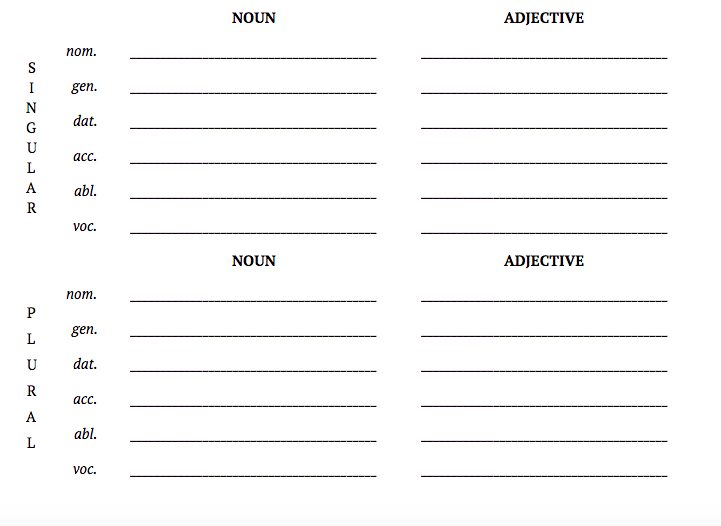
NOUN: tempus, temporis, n.
nom. sing.
NOUN: tempus, temporis, n.
gen. sing.
NOUN: tempus, temporis, n.
dat. sing.
NOUN: tempus, temporis, n.
acc. sing.
NOUN: tempus, temporis, n.
abl. sing.
NOUN: tempus, temporis, n.
voc. sing.
NOUN: tempus, temporis, n.
nom. pl.
NOUN: tempus, temporis, n.
gen. pl.
NOUN: tempus, temporis, n.
dat. pl.
NOUN: tempus, temporis, n.
acc. pl.
NOUN: tempus, temporis, n.
abl. pl.
NOUN: tempus, temporis, n.
voc. pl.
ADJ: brevis, brevis, breve
nom. sing.
ADJ: brevis, brevis, breve
gen. sing.
ADJ: brevis, brevis, breve
dat. sing.
ADJ: brevis, brevis, breve
acc. sing.
ADJ: brevis, brevis, breve
abl. sing.
ADJ: brevis, brevis, breve
voc. sing.
ADJ: brevis, brevis, breve
nom. pl.
ADJ: brevis, brevis, breve
gen. pl.
ADJ: brevis, brevis, breve
dat. pl.
ADJ: brevis, brevis, breve
acc. pl.
ADJ: brevis, brevis, breve
abl. pl.
ADJ: brevis, brevis, breve
voc. pl.