Log in
Sign up for FREE
arrow_back
Library
Y9 HT4 Knowledge check
By Annabelle Kelshaw
star
star
star
star
star
Share
share
Last updated almost 5 years ago
20 questions
Add this activity
1
1
1
1
1
1
1
1
1
1
1
1
1
1
1
1
1
1
1
1
Question 1
1.
The primary colours are...
green, red, orange
blue, red, green
yellow, orange, blue
red, blue, yellow
blue, yellow, purple
Question 2
2.
The secondary colours are...
red, blue, yellow
blue, yellow, purple
orange, purple, green
orange, purple, blue
purple, yellow, blue
Question 3
3.
The lighest and brightest areas on a drawing are called...
highlights
shadows
Question 4
4.
The darkest most shaded areas on a drawing are called...
highlights
shadows
Question 5
5.
A drawing, painting or photograoph of someone else is called a self- portrait.
True
False
Question 6
6.
A drawing, painting or photograoph of someone else is called a portrait.
True
False
Question 7
7.
A landscape is a piece of art that is representitive of...
a person
a place or destination
nature
Question 8
8.
A contemporary artist is an artits that...
has previously created work, but has passed away.
is still living and active in creating art work.
Question 9
9.
Which of the following ARE characteristics of the Brazilian Favelas? Select 4.
Long term governmental neglect
poverty
education opportunity
poor santiation
good weather
great art resources
high level of gang influence
Question 10
10.
What kind of artist is Mattias Adolfsson?
architect
Fashion designer
graphic designer
illustrator
painter
Question 11
11.
Which of the following statements best describes a macro photograph.
A close up colourful image
A close up low, resolution image, blurred out image
A close up high resoultion, detailed image
Question 12
12.
Mandalas offically represent...
Mehndi
Never ending human life
The infinate universe
Planet earth
Question 13
13.
which TWO faiths are associated with Mandalas?
buddhism
Christianty
Judaism
Hinduism
Question 14
14.
Which of the following describes embossing?
mark making onto a material
creating raised or recessed patterns or designs onto an artistic material
scratching the surface of a material
Question 15
15.
Which country was Edvard Munch from?
Netherlands
Norway
Nepal
New Zealand
Question 16
16.
Which description best matches the work of Edvard Munch
Gloomy work created using distortion giving the viewer a sense of melancholy
Gloomy work giving the viewer a sense of melancholy
Bright distoriton work with a purpose of concealing identity
Question 17
17.
Which of the following are reasons why artists would use distortion within their work.
To conceal or hide the idtentity of someone or something
to add extra interest
to create an optical illusion
to create a creepy/ distrubing appearance
Question 18
18.
Why specifically did Edvard Munch use distortion within his work? Discuss your answer within full sentences.
Question 19
19.
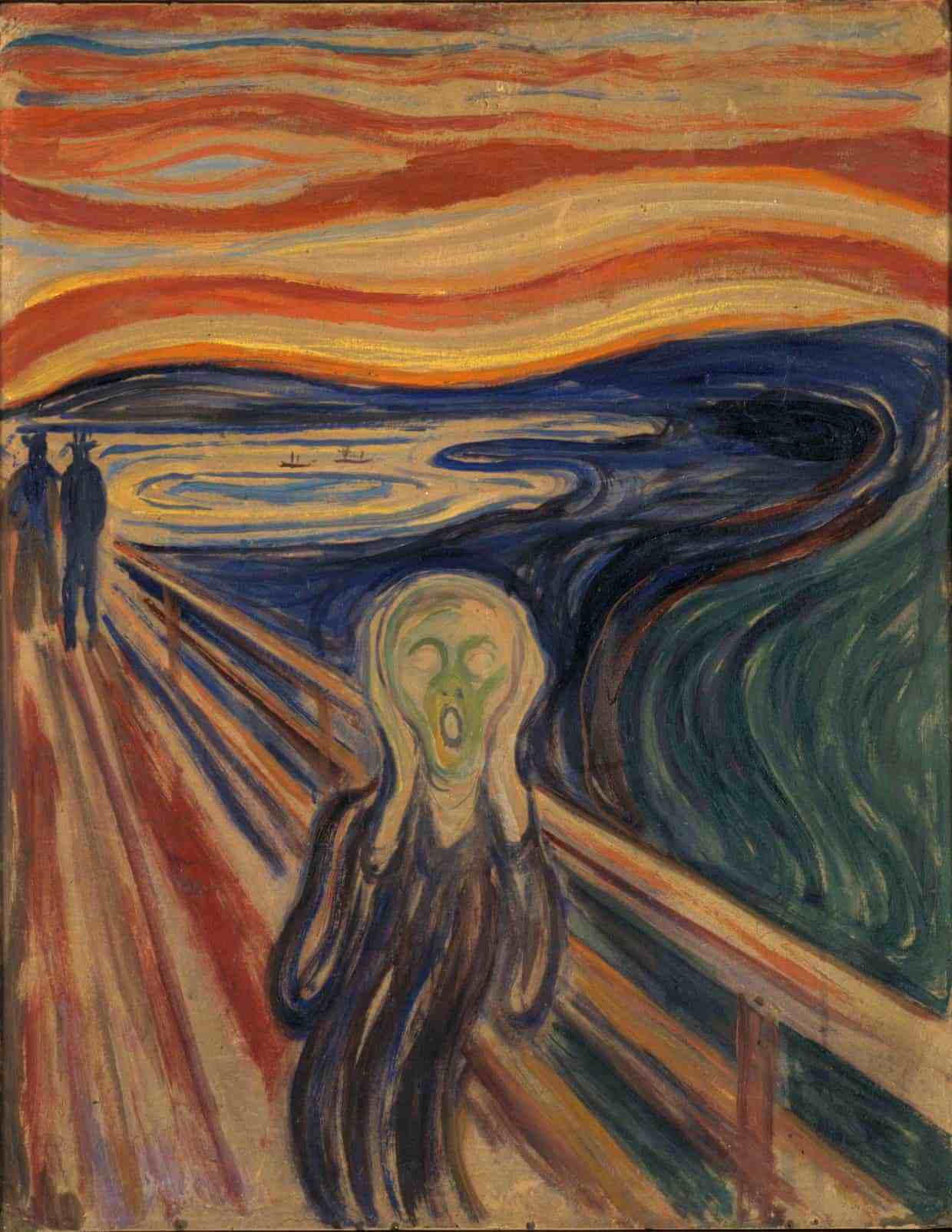
Look at the following image, annotate using see, know, think.
SEE - what can you see?
KNOW- what do you know about the piece/ artist?
THINK - what other comments can you add? What are your personal opinions?
Question 20
20.
What are manadalas? What faiths are they associated with? What is their purpose? Discuss within full sentences.