Asemmisa {{asɛmmisaAhyɛnsode}}
1.
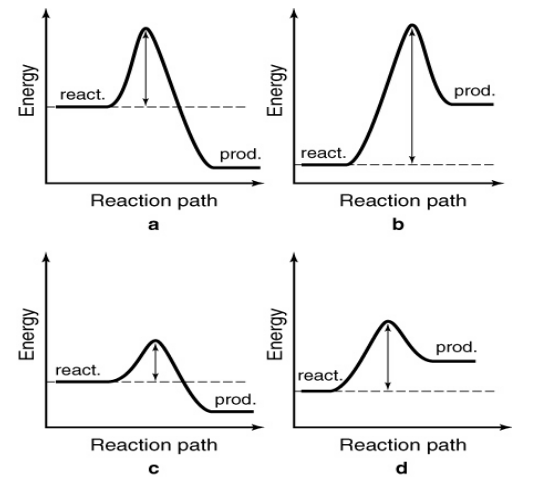
The following energy profiles for four different reactions are shown below.
Which reaction is the most exothermic?
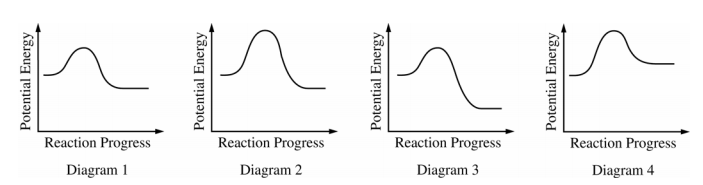
Consider the four energy profile graphs shown below:
Identify the two diagrams that could represent the same reaction catalysed and uncatalysed.
graph 1
graph 2
graph 3
graph 4
Graph showing reaction with catalyst present
Graph showing reaction with NO catalyst present
Which of the following reactions releases the most energy to the surroundings?
Is the following statement True or False?
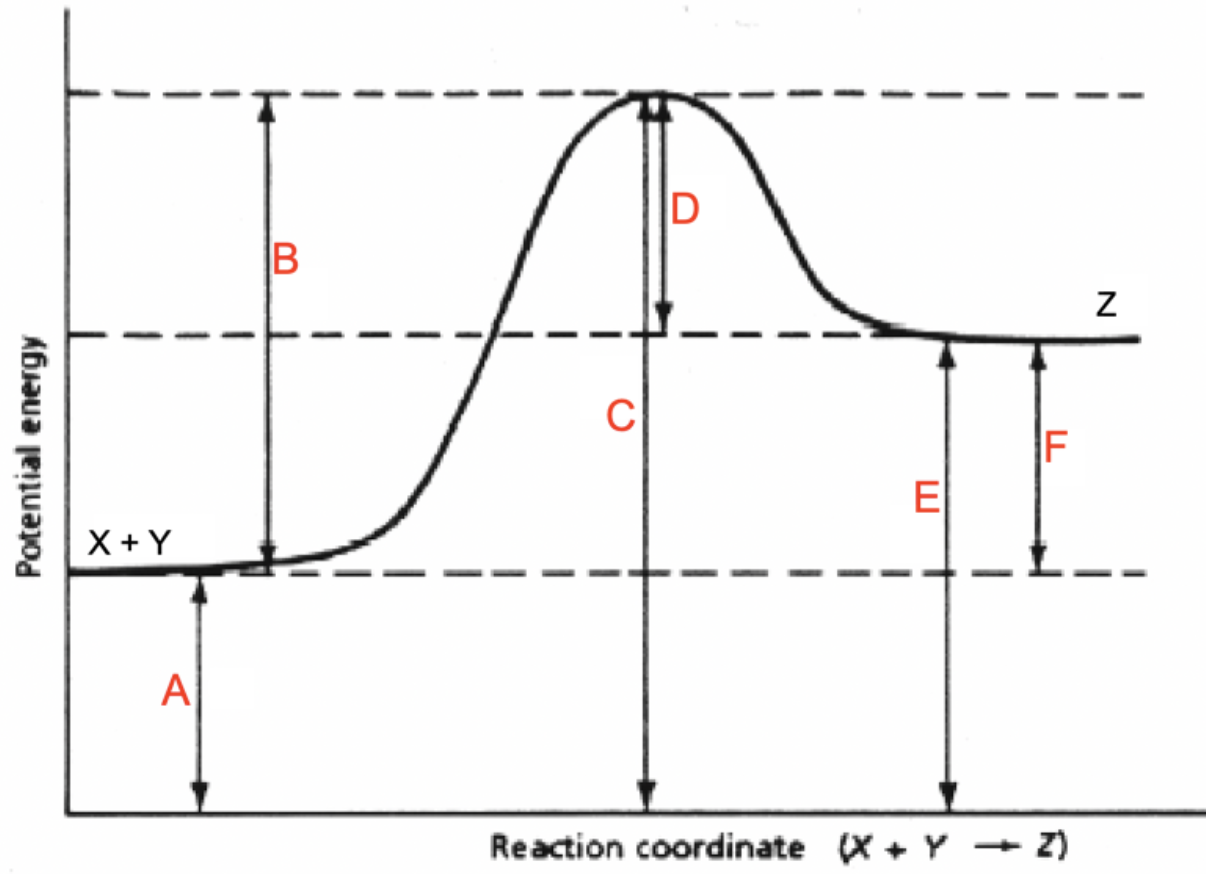
Consider the following potential energy profile with labels A - F.
Which label (A - F) matches each of the following?
A
B
C
D
E
F
The energy of the products?
The energy of the activated complex?
The activation energy (forward reaction)?
Heat of reaction/change in enthalpy?
The activation energy for the reverse reaction?
What TWO requirements are there for a collision to be effective/successful?
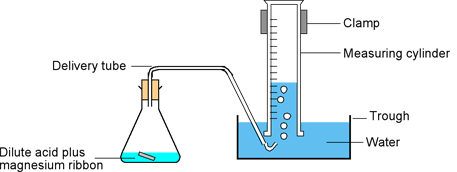
EXPT 1 - Consider the following experiment conducted to measure the rate of reaction between a metal and acid.
What change will DECREASE the rate of reaction?
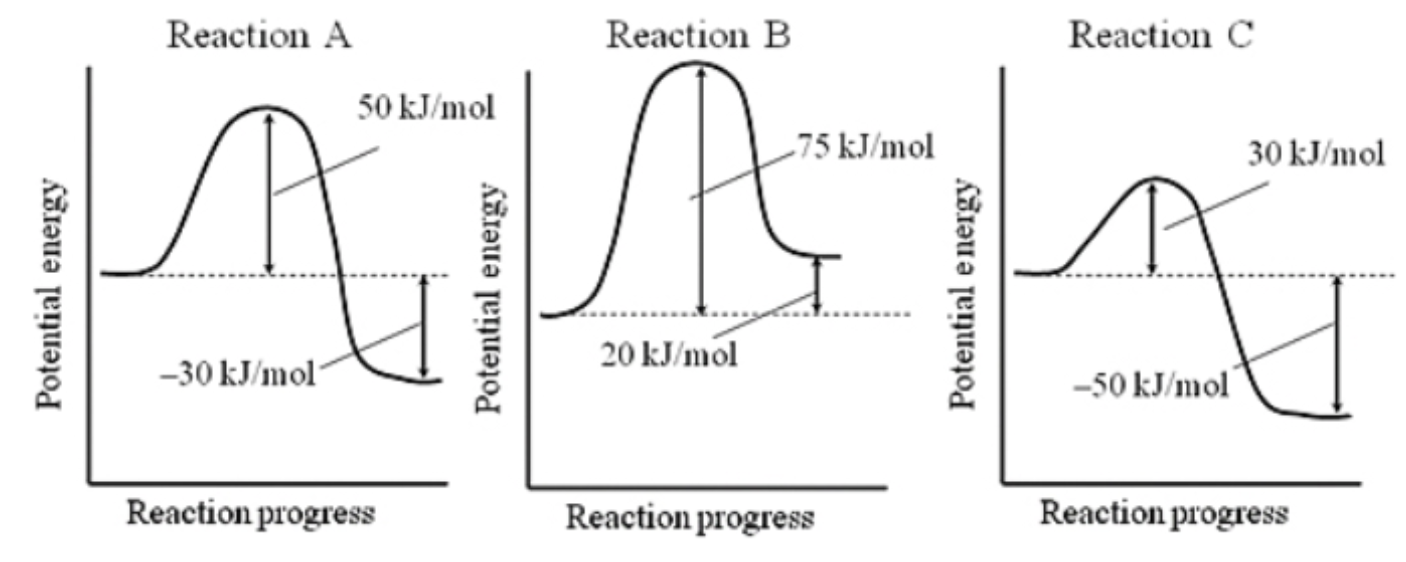
Consider the energy profile diagrams representing three different chemical reactions.
Which of these reactions is likely to proceed at the slowest rate?
Which of the following units can be used to express the rate of a chemical reaction?
An 8 g piece of magnesium was placed into 6 mol.dm-3 HCl. After 25 s, 3,50 g of unreacted magnesium remained.
The average rate at which magnesium was used up is:
Note that HCl is in excess.
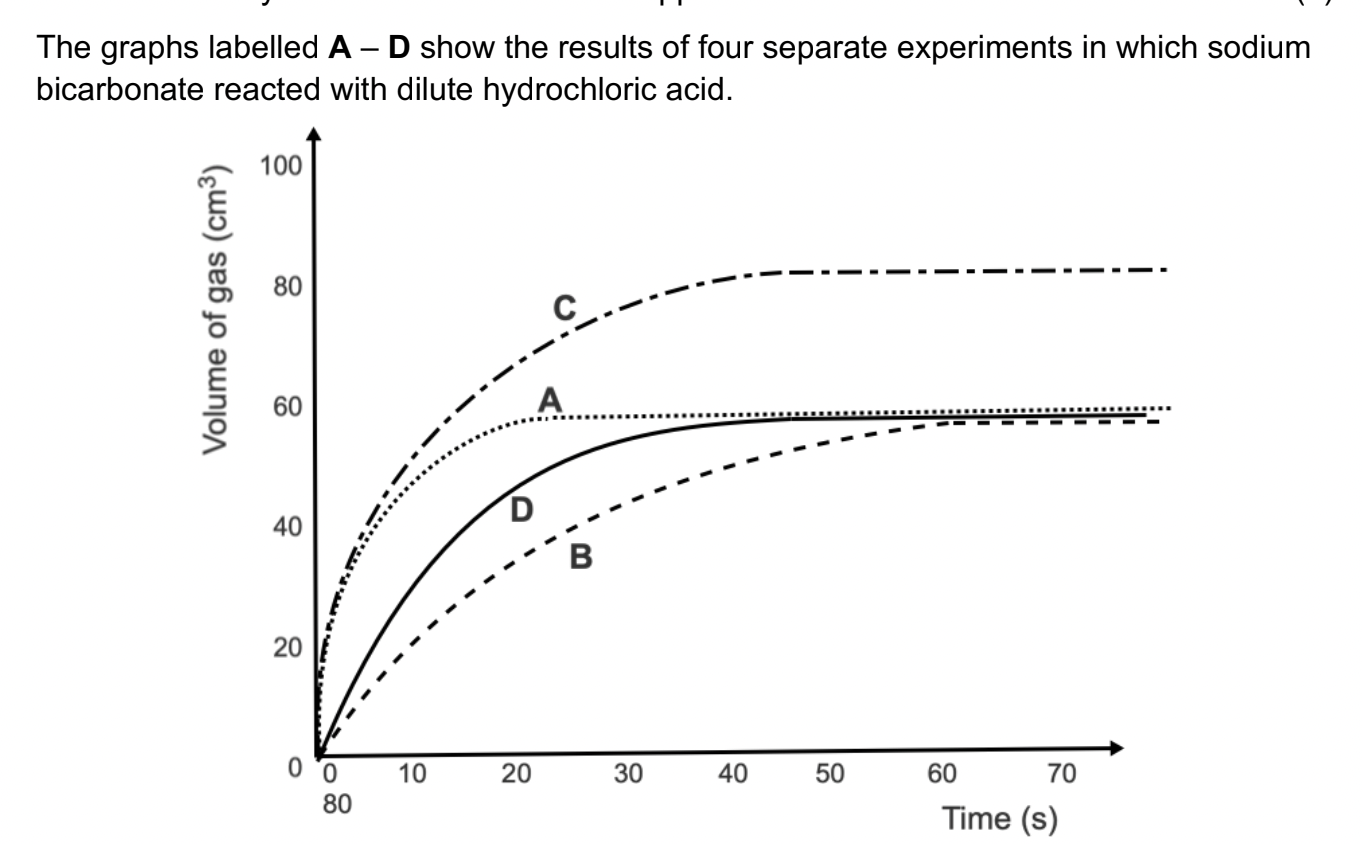
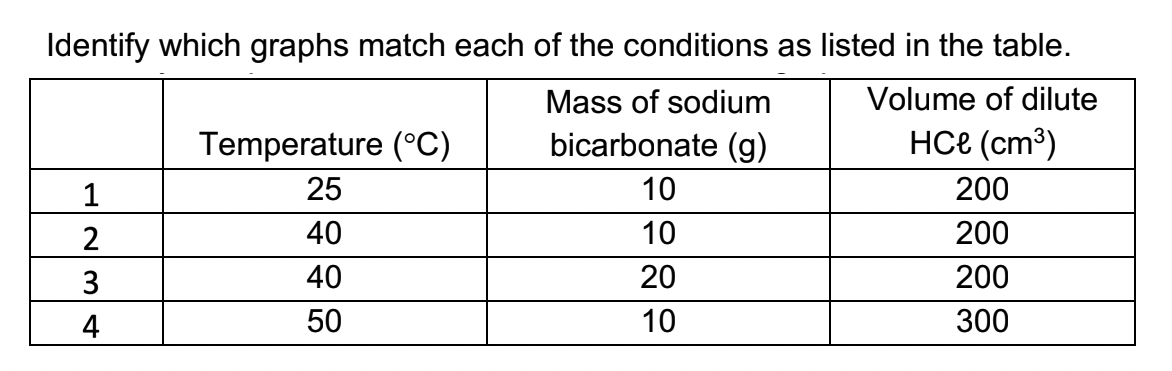
Experiment 1 corresponds to graph B.
Experiment 2 is graph ....
Which of these Boltzmann distributions represents the effect of increasing the temperature of acid?
Assume the that reaction C is a reaction between hydrogen and nitrogen to form ammonia.
The equation for Reaction C can be written as:
Experiment 3 is graph .....
Experiment 4 is graph ....