APUSH Chapter 34, Part 1 - America in WWII (1941-1945)
star
star
star
star
star
Last updated over 1 year ago
13 questions
1
IITE.01
1
IITE.01
1
SMT.01
0
Welcome to part 1 of your Chapter 34 reading! As you read, you should consider the following essential question:
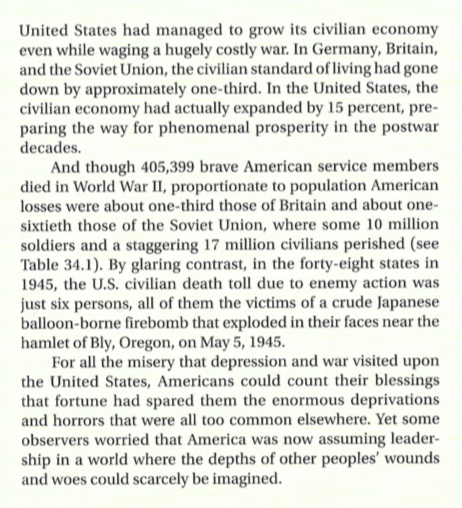
What were the effects of World War II on the U.S. economy and American citizens?
As always, "Focus Questions" should guide your reading and notes, but you do not necessarily have to explicitly answer them.
0
Question 1
1.
In sharp contrast to World War I, U.S. entry into WWII received near unanimous support from Americans. Why do you think this was the case after the U.S. had a long history of isolationism?
1
Question 2
2.
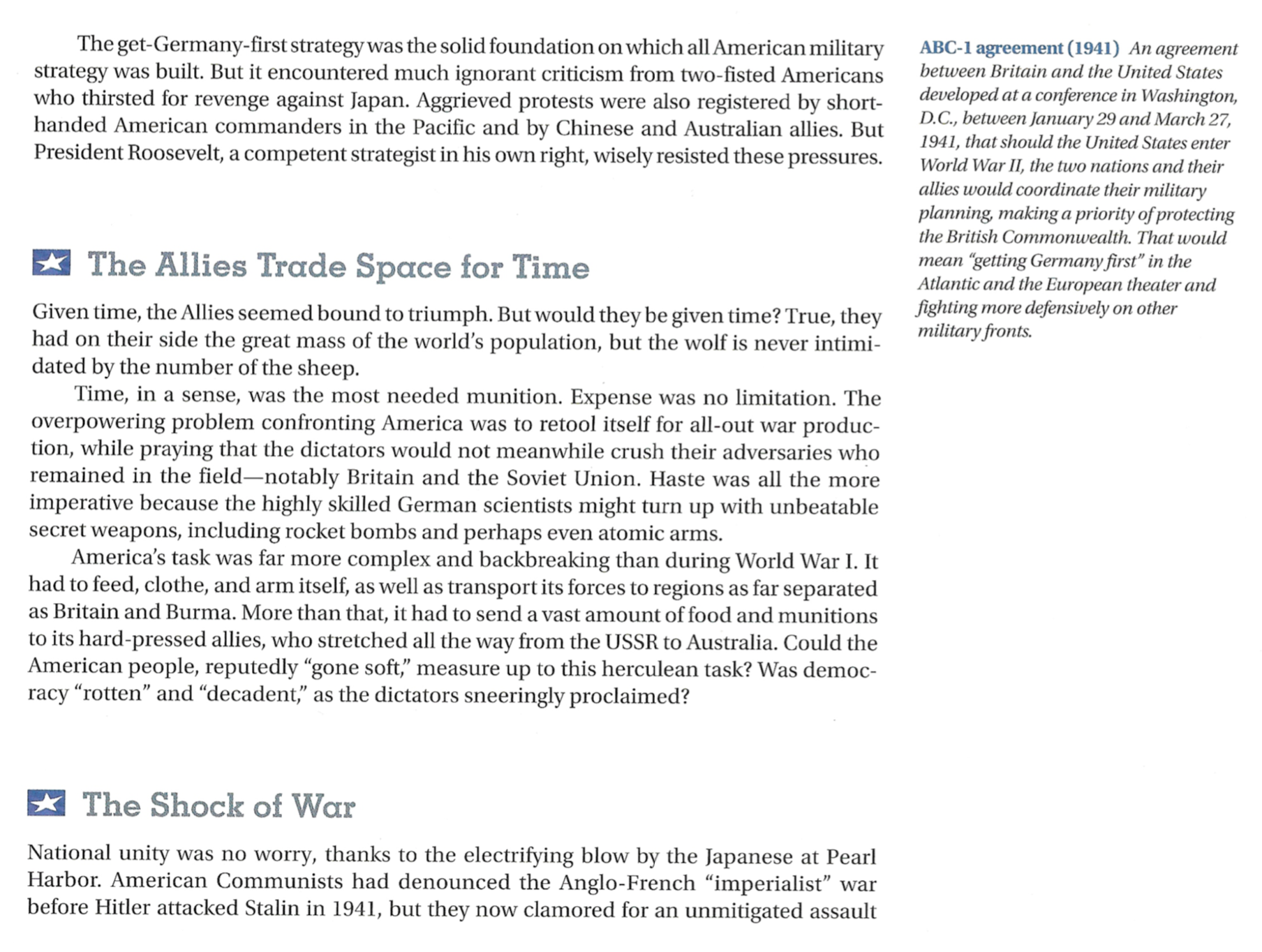
Once at war, America's first overpowering challenge was to
IIUR.01
1
Question 3
3.
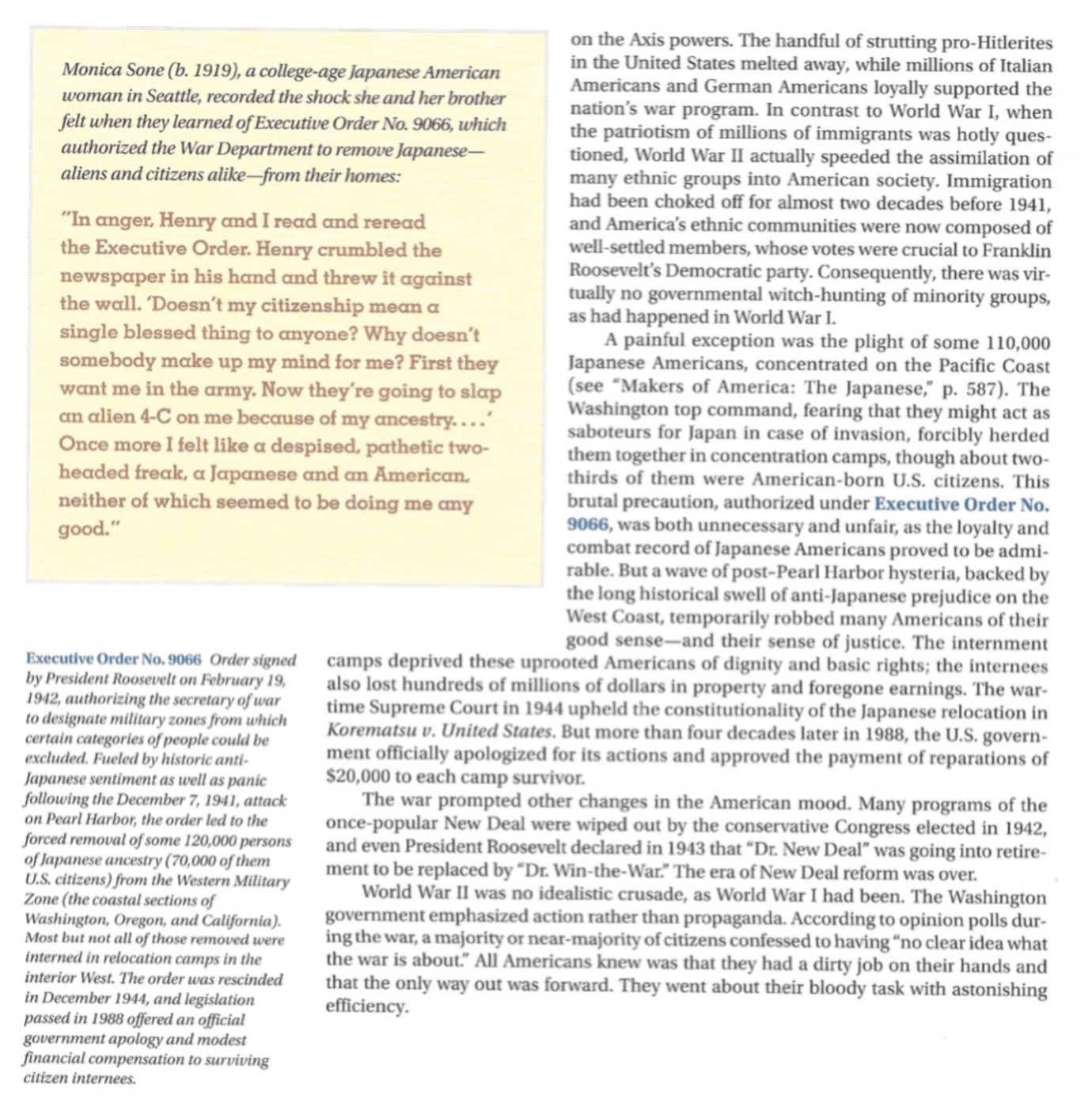
The passage indicates that Japanese relocation to concentration camps during World War II was mainly due to
IIUR.01
Question 4
4.
Which choice provides the best evidence for the answer to the previous question?
1
Question 5
5.
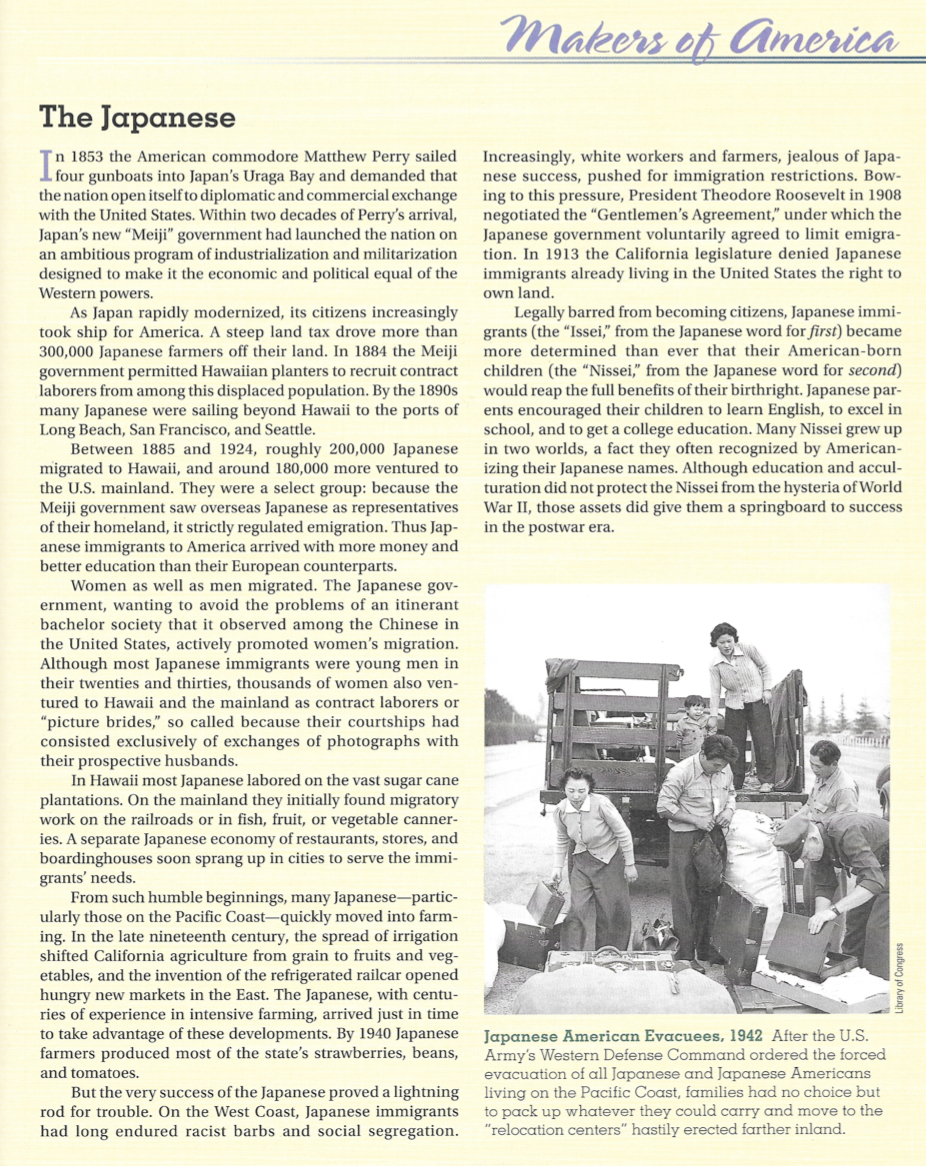
All of the following are true statements about the effect of Executive Order #9066 EXCEPT
IIRC.01
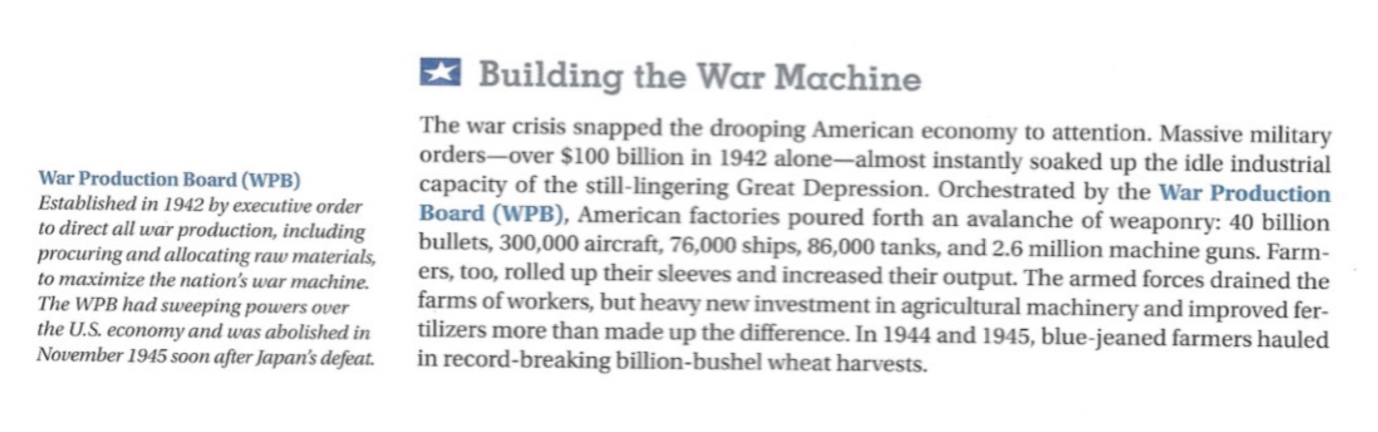
A common theme in APUSH is that entering war is expensive. Can you think of any previous wars we've studied that resulted in tons of war debt?
1
Question 6
6.
IIWD.01
1
Question 7
7.
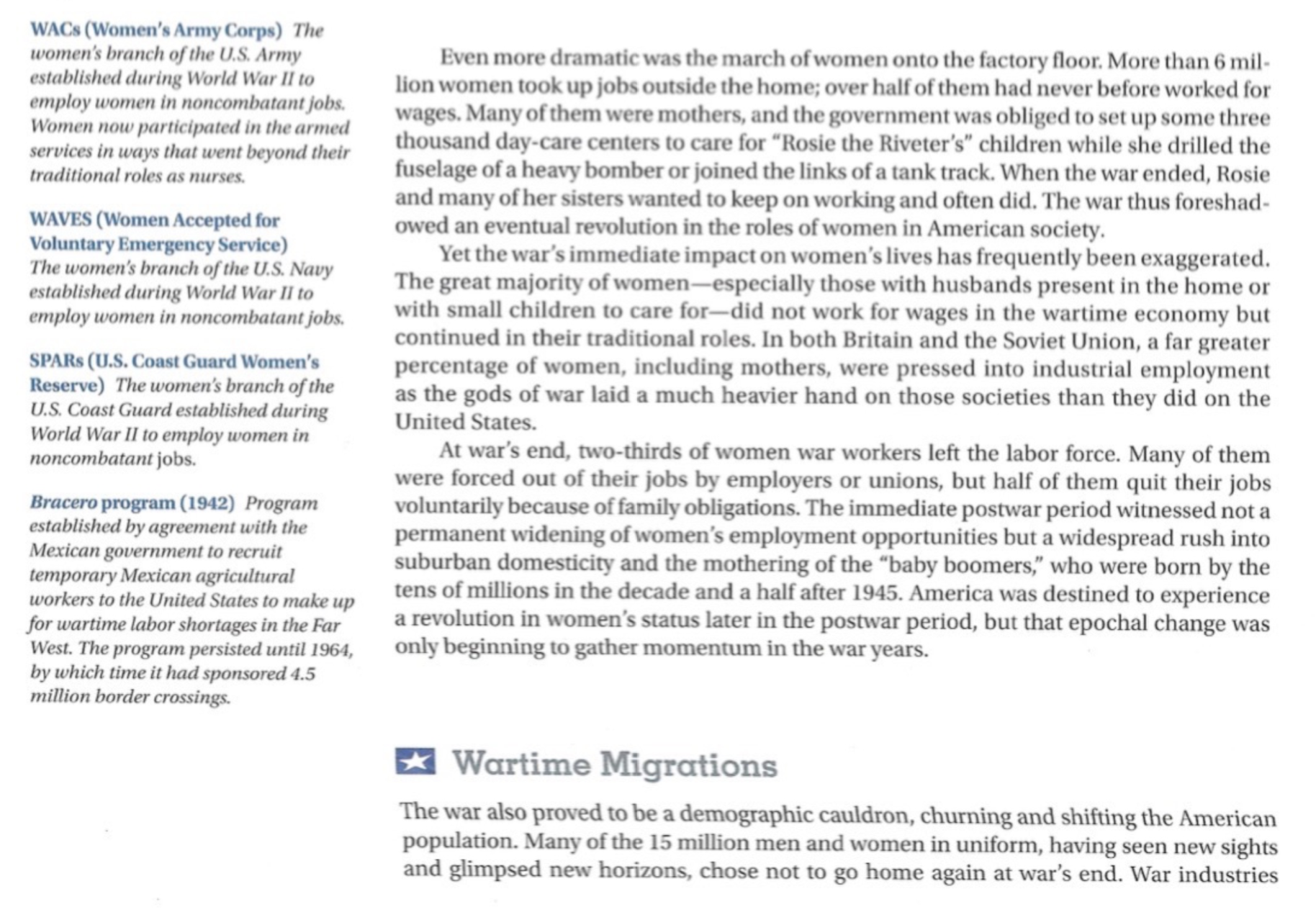
The employment of more than six million women in American industry during World War II led to
IIUR.01
Question 8
8.
Which choice provides the best evidence for the answer to the previous question?
1
Question 9
9.
During WWII, some Native Americans contributed to the war effort by
IIRC.01
1
Question 10
10.
IIWD.01
Supporters of New Deal would point to the programs in the above video, yet critiques of the New Deal would argue that it was World War II - not the New Deal - that got the U.S. out of the Great Depression.
0
Question 12
12.
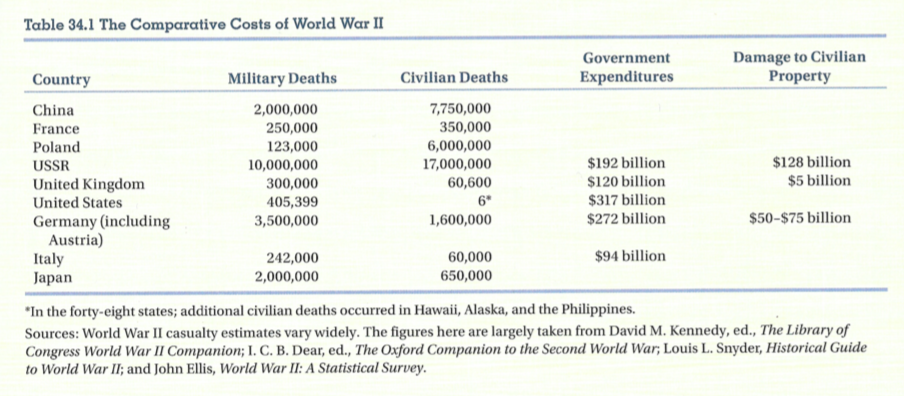
Which statement is best supported by the table and the information in the passage?
Question 13
13.
Do you have any feedback or questions about the Formative reading or comprehension questions that you want to go over in class?
raise an army and navy from scratch.
retool industry for all-out war production.
develop atomic weapons.
pass a conscription [draft] law.
widespread anti-Japanese prejudice and fear in the United States.
retaliation for the Japanese government's placement of Americans in concentration camps.
continued loyalty to the Japanese government from Japanese Americans.
numerous acts of sabotage from U.S. citizens of Japanese ancestry.
Line 28-30 (All Americans... astonishing efficiency")
The U.S. Supreme Court declared that Japanese relocation to internment camps was unconstitutional.
The U.S. government officially apologized four decades later and gave each camp survivor $20,000.
Japanese Americans lost hundreds of millions of dollars in property and expected wages.
Japanese Americans living in the U.S. were put in internment camps.
As used in line 6, "fixed" most nearly means
altered.
repaired.
flexible.
enduring.
a greater percentage of women in U.S. war industries than any other country.
the establishment of day care centers by the U.S. government.
equal pay for equal work between men and women.
a strong desire of most women to work for wages.
Line 11-14 ("In both... United States")
demanding that President Roosevelt end discrimination in defense industries.
transmitting radio messages in their native languages for the U.S. military.
remaining on their reservations to promote the recovery of tribal language and culture.
As used in line 7, "intimately" most nearly means
informally
privately
personally
secretly
Question 11
11.
Class Poll: What do you think rescued the U.S. from the Great Depression?