Log in
Sign up for FREE
arrow_back
Library

APUSH Chapter 30, Part 1 - American Life in the Roaring 20's (1920-1929)

star
star
star
star
star
Last updated almost 2 years ago
11 questions
1
IIWD.01
0
Welcome to your Chapter 30 reading! As you read, you should consider the following essential question:
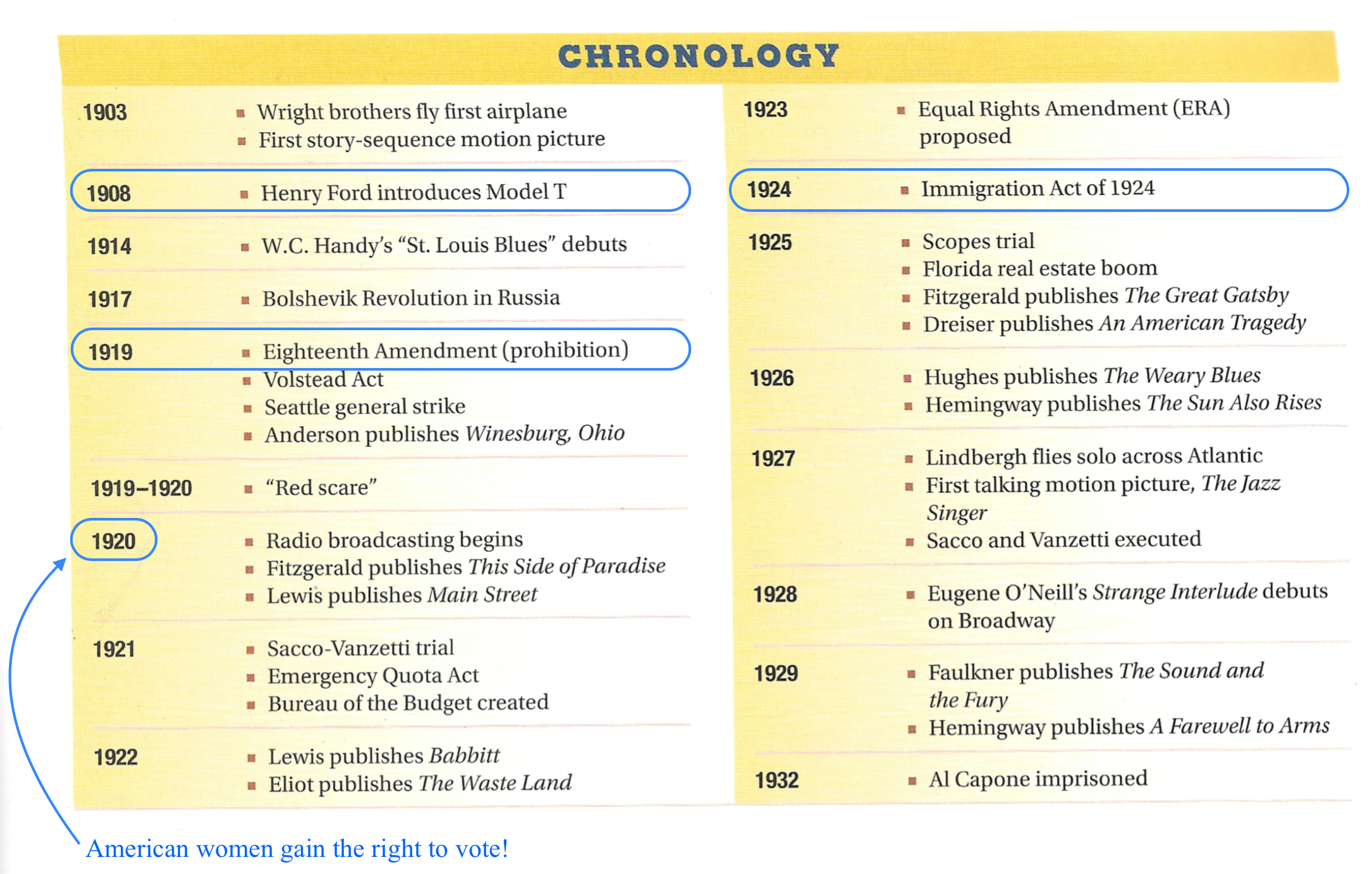
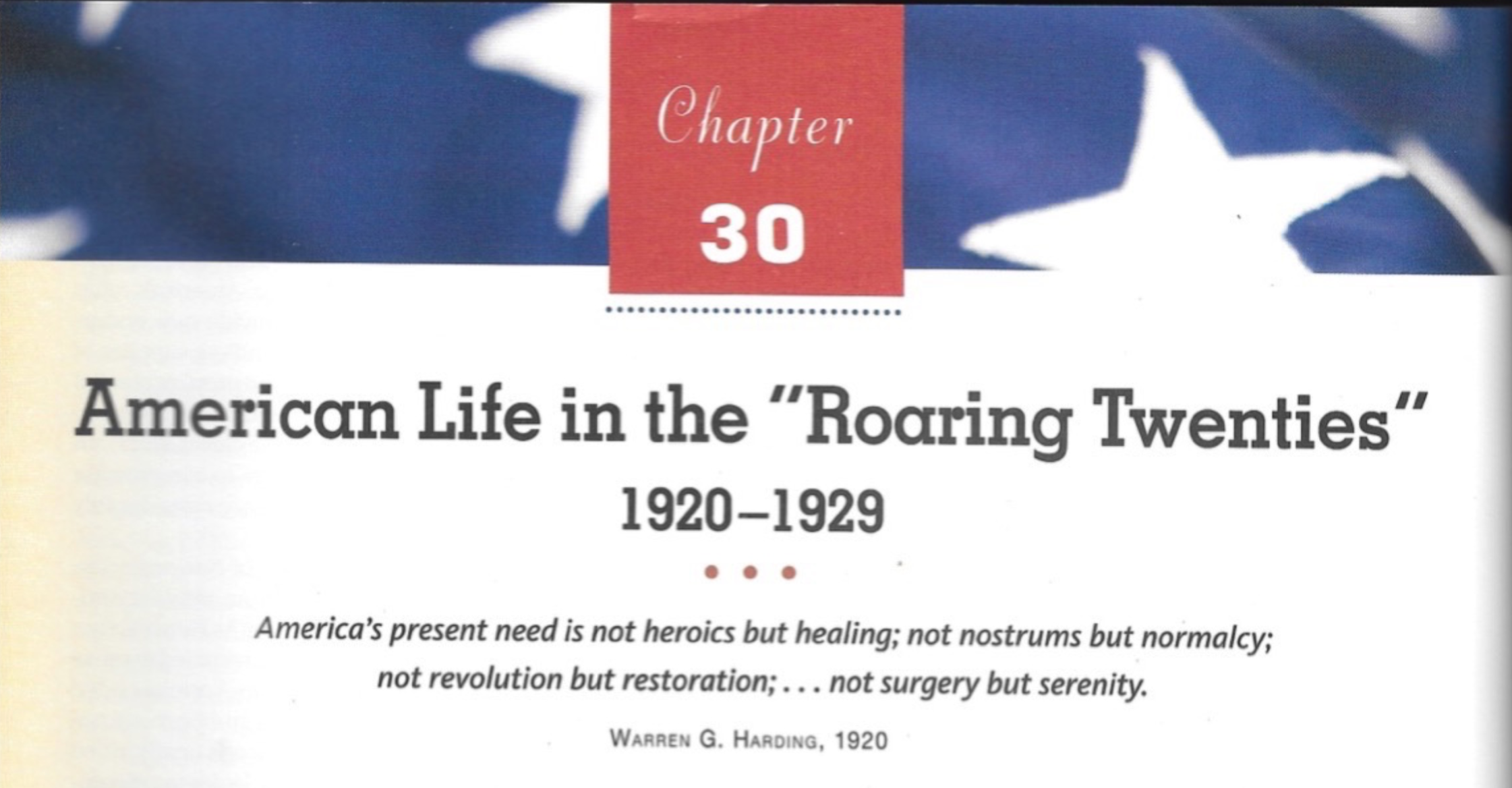
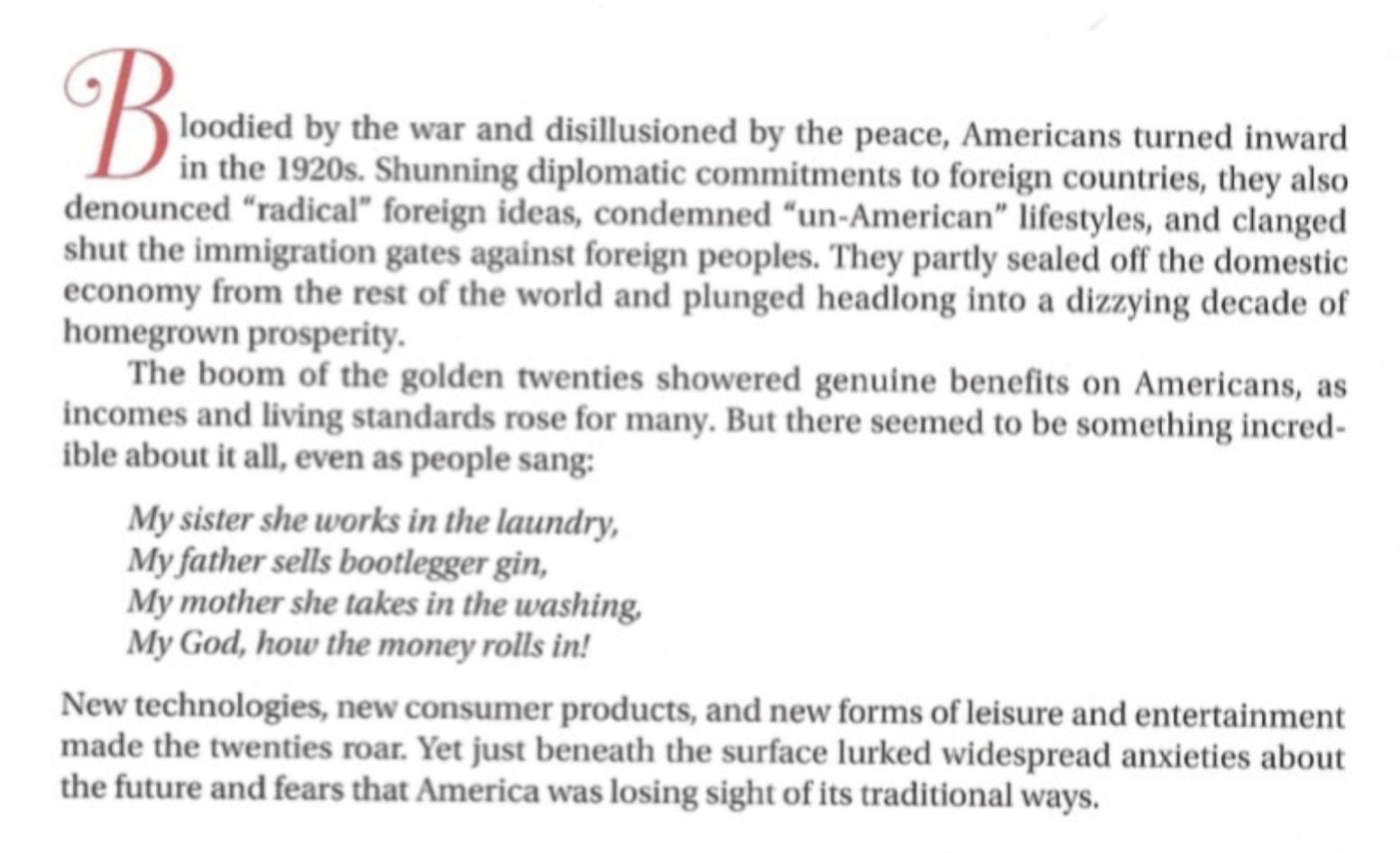
  • Was the Roaring 20's truly a period of economic growth and cultural prosperity?
As always, "Focus Questions" should guide your reading and notes, but you do not necessarily have to explicitly answer them.

Press play for a brief explanation from Ms. Truong:
"The war" in this case refers to World War I, which we are skipping in the interest of time.

Press Play for commentary from Ms. Truong
World War I tldr; America was initially reluctant to enter the First World War due to isolationism stemming all the way back to Washignton's Farewell Address and the "America first" mentality of nativism. We eventually joined WWI after discovery of the Zimmerman telegram, which revealed a potential alliance between Germany and Mexico to regain territories lost in the Mexican-American War.

Allied Powers: Won
  • Great Britain, the United States, France
Axis Powers: Lost
  • Germany, Austria-Hungary, and the Ottoman Empire (which no longer exists)
1
IIRC.01
1
IIRC.02
1
IITE.01
1
SQN.01
Question 5
5.

1
1
IICI.01
1
IICI.01
1
IIRC.01
1
Lastly, some foreshadowing...
Question 11
11.

Do you have any feedback or questions about the Formative reading or comprehension questions that you want to go over in class?

Question 1
1.

Question 2
2.

Question 3
3.

Question 4
4.

As used in line 5, "chorus" most nearly means
choir.
burden.
ensemble.
consensus.
Question 6
6.

Question 7
7.

Question 8
8.

Question 9
9.

Question 10
10.

The passage indicates that, at its peak in the mid-1920s, the revived Ku Klux Klan
was only active in the Deep South, but ruled many small towns there.
wielded considerable political influence with around 5 million members in the Midwest and South.
abandoned its older hatred of African Americans in order to form a biracial alliance against immigrants.
was far smaller and less influential than the Klan of the post-Civil War era.
The passage suggests that the restrictive immigration laws of the 1920s reflected
the nativist belief that northern Europeans were superior to southern and eastern Europeans.
the widespread desire to halt immigration from Latin America.
an accommodation to increased migration of blacks to the North.
a growing desire to rid the country of the quota system.
Which choice provides the best evidence for the answer to the previous question?
Line 14-16 ("A flagrantly... quota system")
Line 19-21 ("The Immigration... from Europe")
Line 1-3 ("Isolationist America... war-torn world")
Line 5-8 ("The 'one-hundred-percent... teeming shore'")
Data in the graph provides the most direct support for which idea in the passage?
The vast majority of immigrants who entered the U.S. between 1920-1929 came from Southern and Eastern Europe.
Two-percent of immigrants who entered the U.S. came from Northern and Western Europe.
Japanese immmigrants were barred from entering the United States between 1901-1914.
35 million newcomers arrived in the U.S. between 1901 and 1614.
Review: The Prohibition movement stemmed from
the rise of utopian social experiments in the early 1800s.
post-Civil War efforts to secure civil rights for newly emancipated Blacks.
increasing sectional divisions between the North and South in the Antebellum era.
the Reform Era Movement following religious revivals of the nineteenth century.
It can be reasonably inferred that, during the Prohibition era, organized crime
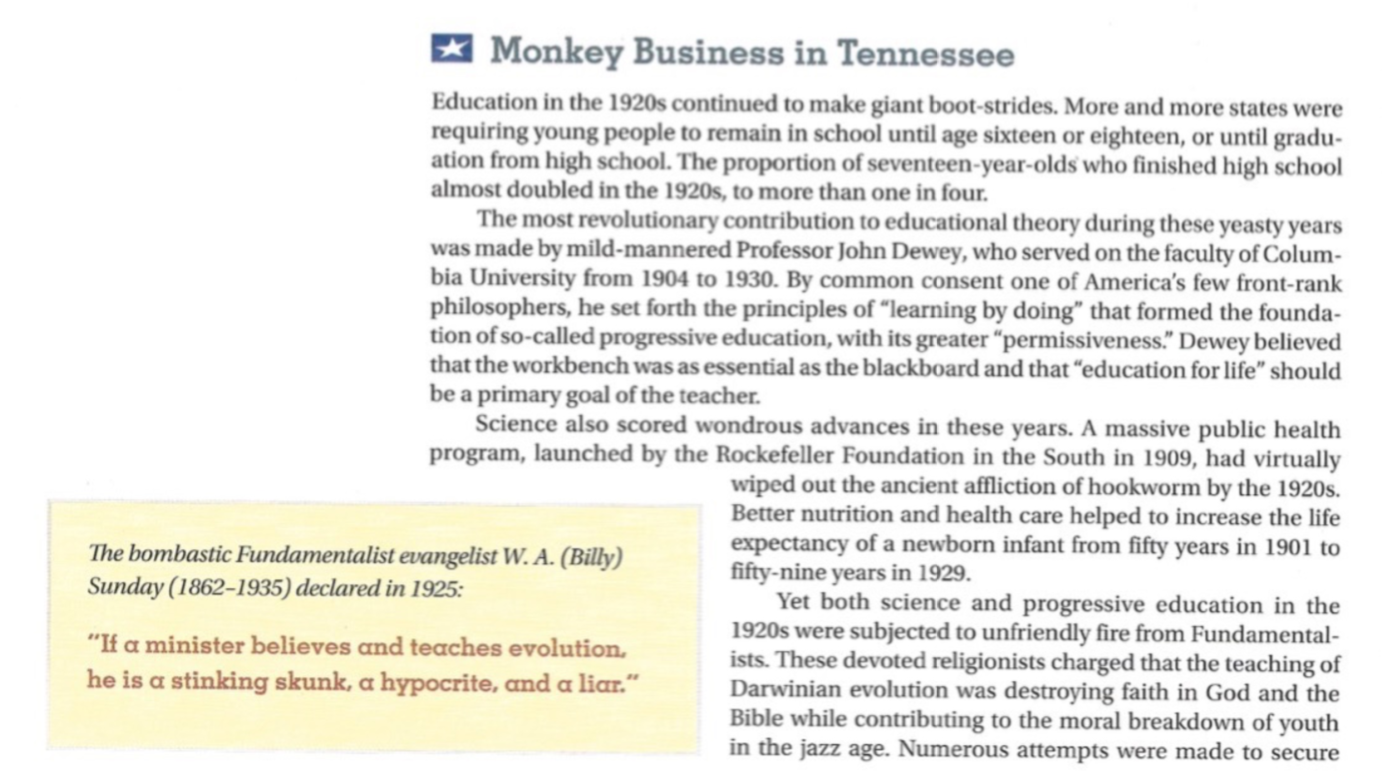
became one of the nation’s biggest and most lucrative businesses.
enjoyed one of its most peaceful and prosperous eras.
withered under heavier police scrutiny.
became exclusively associated with bootlegging.
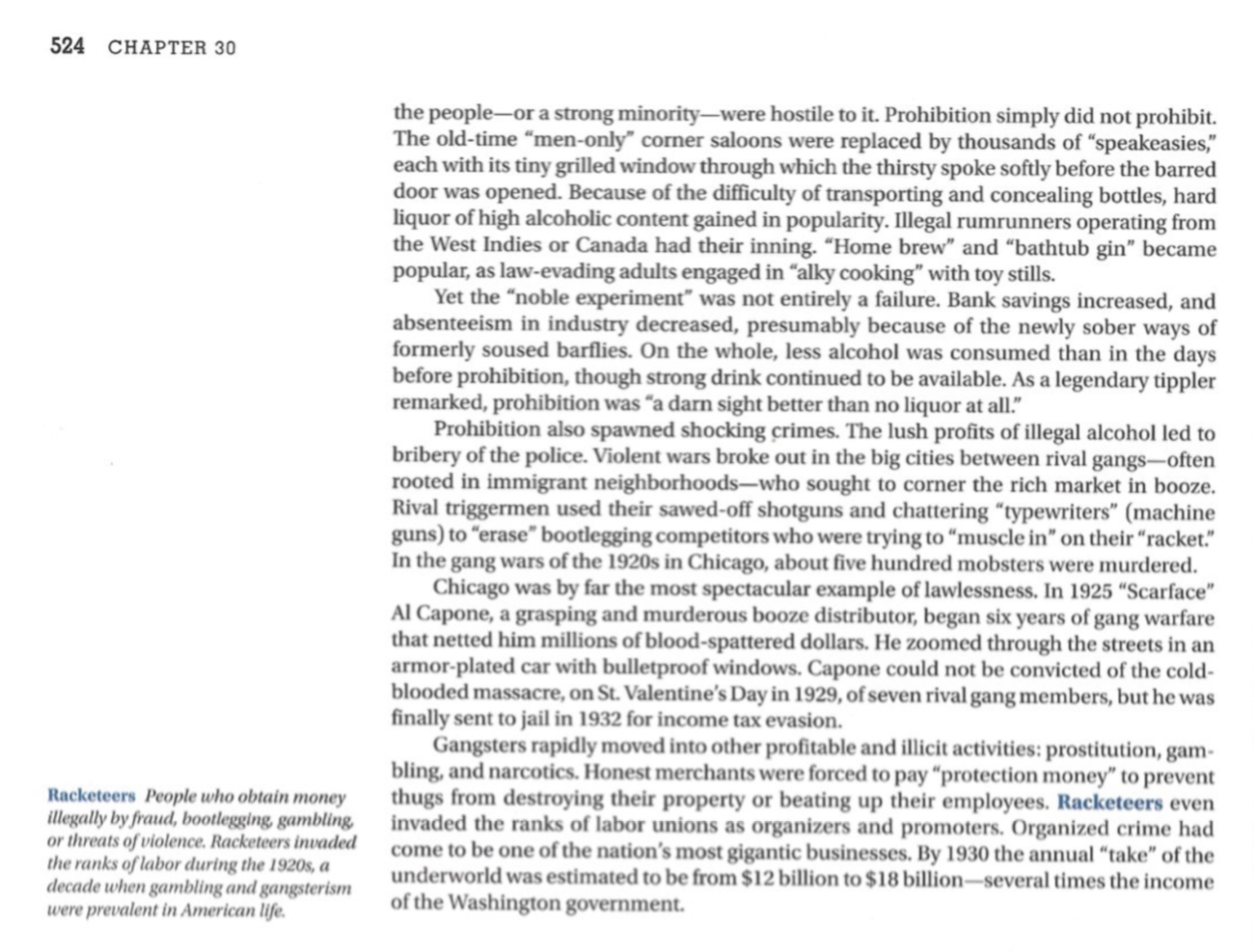
The central issue of the Scopes "Monkey Trial" was
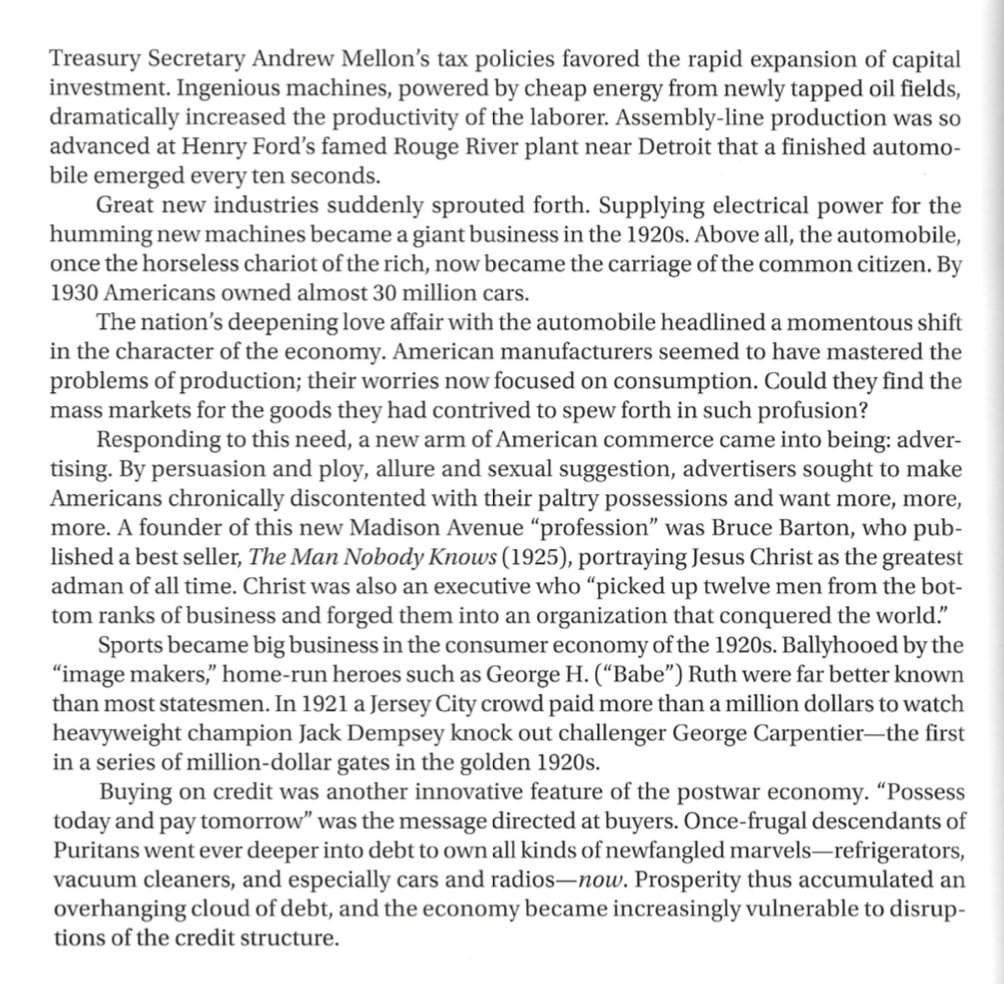
the constitutionality of Catholic schools.
progressive reforms for education.
teaching evolution in public schools.
prayer in the public schools.
A significant cloud that hung over the prosperity of the 1920s was the
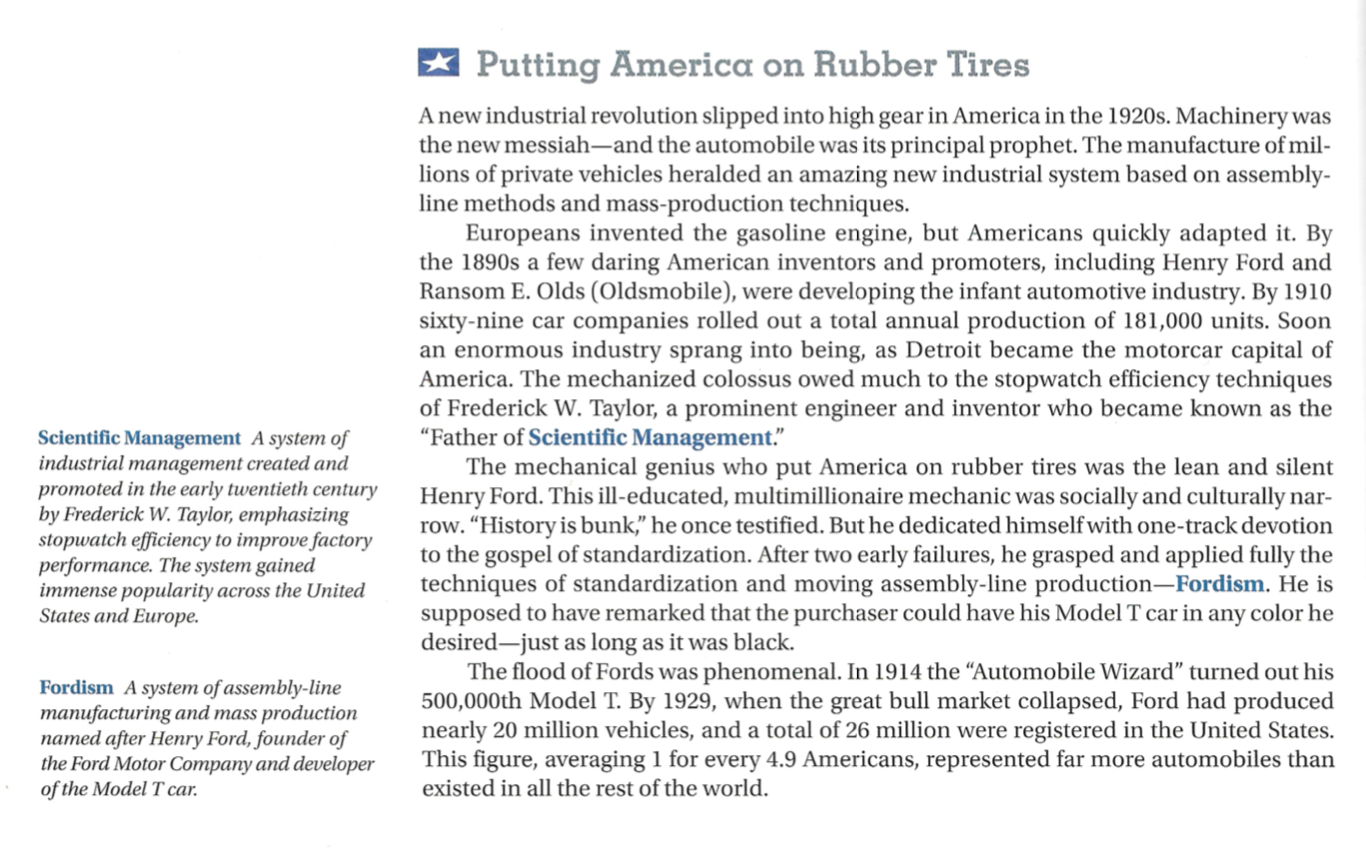
large accumulation of consumer debt.
growing strength of labor unions.
heavy load of taxation on the middle class.
increasing competition among business people.
As used in line 9, "badge" most nearly means
brand.
device.
symbol.
medallion.