EH: 1.2 (4/12)
star
star
star
star
star
Last updated about 3 years ago
5 Nsɛmmisa

0


0
0
0
2
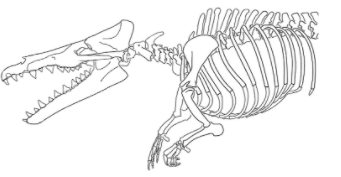
Above is a drawing of a fossil that is millions of years old. This fossil was just taken out of the ground, and no one knows what kind of organism it is. One way scientists identify a fossil of an animal with bones is to compare the bones of the fossil to the bones of other animals.
Do any of this fossil’s bones look like bones of other animals? Describe your thinking.
Vocabulary:
Species: a group of organisms of the same kind (in one or more populations) that do not reproduce with organisms from any other group
Body structure: a part of an organism (for example, one or more bones)
Common ancestor: an older population from which two or more newer species descended
Paleontologist: a scientist who studies fossils in order to understand the ancient history of life on Earth
When it comes to fossils, cases of mistaken identity are not uncommon. Paleontologists might think that they have found a fossil from one species, when it actually turns out to be from different species. Often, these mistakes are corrected as paleontologists make closer and more careful observations.
One interesting case of mistaken fossil identity happened in 1796, when workers dug up a pile of strange-looking fossilized bones. A scientist observed the fossils and noticed long limbs and big claws. Without making careful comparisons to other fossils, the scientist guessed that the bones belonged to a huge cat, much bigger than a lion. He named it Megalonyx (“giant claw”), and believed it might still exist in the western part of North America at the time.
Years later, another scientist studied the fossils and made more careful observations. After making close comparisons with fossils from other species, this scientist determined that the animal often walked on its hind legs. Cats do not walk on their hind legs, so this discovery probably meant that the fossil was not a cat.
The scientist discovered that the fossils actually belonged to a giant sloth. This species had been extinct for a long time— since the last Ice Age, more than 10,000 years earlier. Even though the mistake became clear with time, the name of the giant sloth was never changed. The Megalonyx jeffersonii (which isn’t a cat at all!) is a reminder that it is important to make careful and precise observations in science.

The first scientist misidentified the fossil as that of a big cat. What body structure did he use to make his observations?
CFS:
student describes the relationship between anatomical similarities and differences in animal species
student cites evidence from the best source
What body structure did the second scientist use to determine that the first scientist had misidentified the fossil?
CFS:
student describes the relationship between anatomical similarities and differences in animal species
student cites evidence from the best source

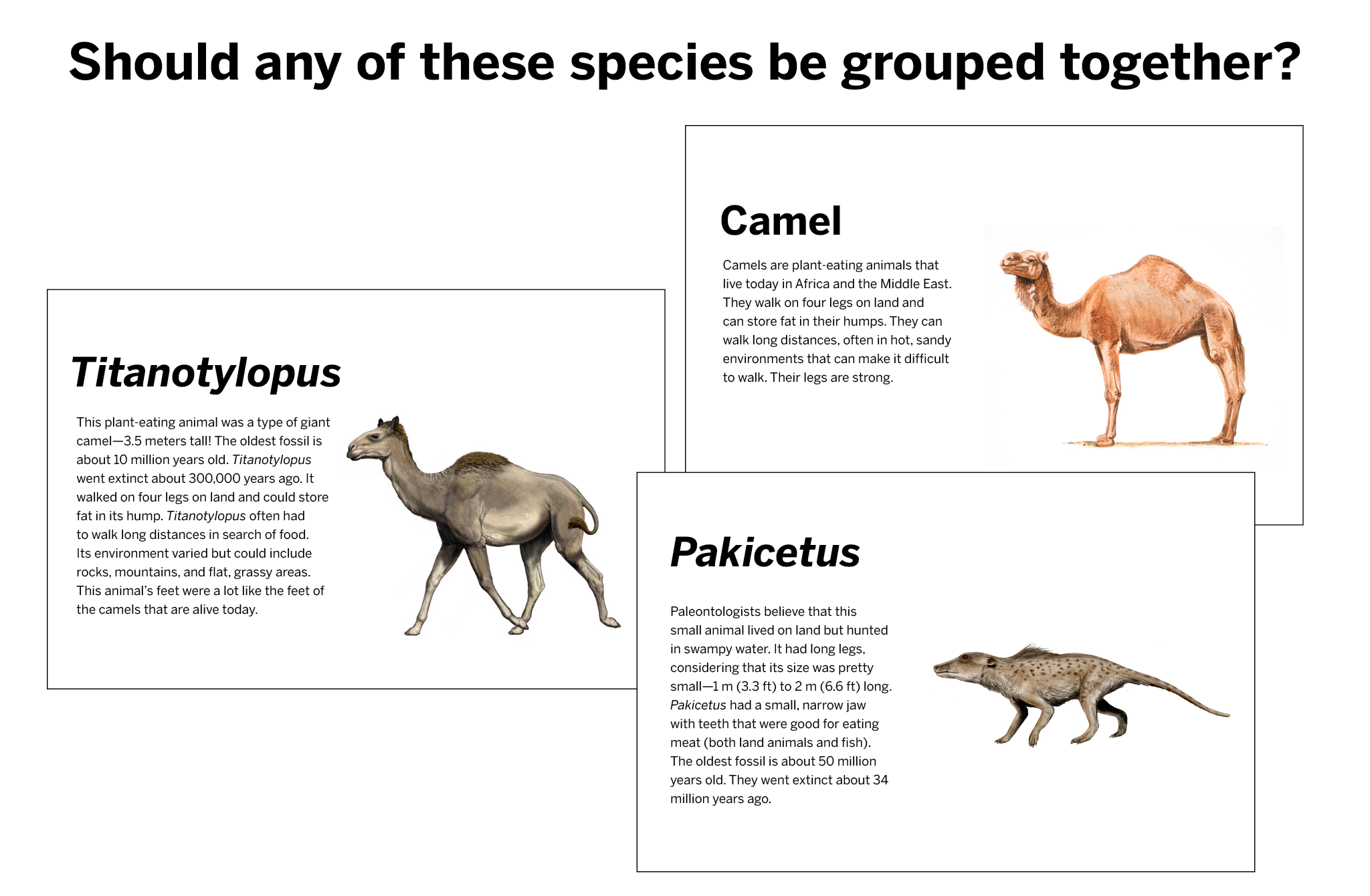
Make as many observations and you can identifying similarities and differences between the species.
What evidence do you have that the 3 animals listed above are related or unrelated species?
CFS:
student describes the relationship between anatomical similarities and differences in animal species
student cites evidence from the best sources of data