This test is open note and open book. You may NOT do a Google search and ALL WORK MUST BE YOUR OWN understanding. If you have paper copy notes, you may use those as well.GoGuardian will be running a blocked scene that will only allow the test, & resources posted through GC.
Read each question carefully.
If a question has boxes to check, that means there are multiple correct answers. If a question has a circle to select, it means there is one correct answer.
If asked a short answer question, follow the RACE strategy (restate, answer, cite, explain) and make sure you follow the rules of English conventions (spelling, grammar/usage, capitalization, punctuation) as errors do impact meaning.
Do your best. When finished, submit the test on Formative and Google Classroom.
You have the length of the class period to complete this test; if you need extended time you MUST communicate with Mrs. Richardson BEFORE THE END OF THE TEST!!
Unit Learning Targets: Students will be able to…
Identify important historical events and eras on a timeline.
Explain the purpose for treaties with the Native Americans.
Explain the process for creating treaties between the US Government & Native American tribes.
Analyze primary sources (visual & written).
Explain the concept and actions of “assimilation” and its lasting effects to tribal cultures today.
Explain how Washington became an official state.
Explain how new technologies and their availability impact growth to WA and the economy.
Explain the role of immigration in the change and growth to WA’s economy.
Analyze the perception of minority groups and women and how they impacted those groups.
Analyze the growth of new cities in WA and the idea of “urbanization”.
Evaluate the impact of labor unions on the economy.
Explain the need for reform during the “Gilded Age” of the US and in Washington.
Analyze the impact of WWI on Washington’s economy, politics, and social change.
Connect past ideas and events to present day problems and movements.
Explain how cultural differences led to conflict and violence between native tribes, minority groups, and white.
Chapter Topics:
Chapter 4: Treaties & Indian Wars, Statehood, pages 82-102
Chapter 4 Terminology Part 1: Match the terms to their definitions/descriptions
Draggable item
arrow_right_alt
Corresponding Item
Assimilation
arrow_right_alt
Isaac Stevens, the first governor of Washington Territory and Superintendent of Indian Affairs, negotiated and signed 10 treaties with indigineous tribes to give up their land and live on reservations in Washington Territory.
Yakama War
arrow_right_alt
The act of a dominant culture forcing another smaller culture to change and become the same as the dominate culture
Stevens Treaties
arrow_right_alt
When gold seekers tresspassed on native reservation land, violence ensued with a band of Yakama killing the white settlers who intruded upon their land. Chief Kamiakin and followers were captured by the US Army. They were forced to sign a peace treaty.
3 points
3
Question 2
2.
Chapter 4 Terminology Part 2: Match the terms to their definitions/descriptions
Draggable item
arrow_right_alt
Corresponding Item
Indian Homestead Act
arrow_right_alt
White settlers killed Nez Perce tribesmen when they entered upon the Nez Perce land. A few sons of the killed tribesmen retailated and killed the white settlers. Chief Joseph knew there would be consequences of this action and took his people to the Bear Paw Mountains, where bloody battles raged until Chief Joseph reconigzed he could not win and too much had been lost, and he surrendered to the US Army. They were eventually returned to the Colville Reservation.
Dawes Act
arrow_right_alt
In an effort to encourage ownership of land while also protecting native rights, Congressed passed this act. It gave natives a piece of land to own, but because of the difference of cultural values, this was not successful. This was especially true when land given to the natives to own was taken back and given to white settlers through coersion or fraud. Natives did not have a way to defend themselves in court.
Nez Perce War
arrow_right_alt
Also known as the "General Allotment Act", this law divided reservation land into individual allotments and encouraged natives to become farmers. However, lands given to the natives were not good for farming. Also, natives could apply to become citizens once they got the land, but only if they gave up all of their rights and tribal ties. This led to encouragement of assimilation and the idea of bording schools where young native children learned the white ways.
5 points
5
Question 3
3.
Chapter 5 Terminology: Match the terms to their definitions/descriptions
Draggable item
arrow_right_alt
Corresponding Item
Northern Pacific Railroad
arrow_right_alt
the process of transforming smaller, rural areas into bigger cities
Chinese Exclusion Act
arrow_right_alt
Congrass passed this act to curb the number of Chinese immigrants coming to America to work on the railroads and the factories. Violent riots broke out to attack Chinese immigrants. As a result of this act, many Chinese went to Canada to escape the racism of America.
Nativisit
arrow_right_alt
White, Protestant Americans born in the United States who wanted to keep America the same as it had been- they disagreed with the wave of immigration. They were anti-Catholic and anti-Semitic. They feared the loss of jobs due to immigrants.
Urbanization
arrow_right_alt
Discovery of gold in the Yukon Territory of Canada spurred a rush of people seeking it. Seattle benefitted from this rush as they were the main port to the Yukon Territory and sold outfits of everything that the miners needed for their journey.
Klondike Gold Rush
arrow_right_alt
Rail line from Great Lakes to Puget Sound, joined together in 1883. This railroad made it so a person could travel across the country in 5 days. This particular railroad was purchased by the Great Northern Railroad after it went bankrupt.
4 points
4
Question 4
4.
Chapter 6 Terminology Part 1: Match the terms to their definitions/descriptions
Draggable item
arrow_right_alt
Corresponding Item
Capitalism
arrow_right_alt
Change for the better; fixing a systemic problem in government, economy, or society
Strike
arrow_right_alt
Refusing to work until demands for better conditions are met
Reform
arrow_right_alt
A list containing the names of workers who are considered troublemakers who should not be hired; shared between companies to prohibit the person being hired
Blacklist
arrow_right_alt
An economic system in which individuals, rather than the government, own land, property, and business. The ability to make money from one's own work
4 points
4
Question 5
5.
Chapter 6 Terminology Part 2: Match the terms to their definitions/descriptions
Draggable item
arrow_right_alt
Corresponding Item
Labor union
arrow_right_alt
An organization of workers whose goal is to improve working conditions for the laborers
Progressive Movement
arrow_right_alt
The right to vote or have a voice in democracy
Suffrage
arrow_right_alt
A period in history between 1865-1900, characterized by a growth in industries and production, a large divide between the upper and lower classes of people, and corruption in business and politics.
Gilded Age
arrow_right_alt
A period in history between 1900 and 1920, characterized by the attempt to fix the problems of corruption in business and politics, the creation of the middle class economically, and new legislation to create more voices in democracy.
5 points
5
Question 6
6.
Mark all the cultural conflicts recognized between indiginous tribes and white populations
1 point
1
Question 7
7.
What was the main goal of the Indian boarding schools?
1 point
1
Question 8
8.
What year did Washington officially become a state?
1 point
1
Question 9
9.
How were most railroad companies able to finance the building of their rail lines?
1 point
1
Question 10
10.
Which of the following is one reason for urbanization in Washington?
4 points
4
Question 11
11.
Seattle benefited from the gold rush in the Klondike because:
1 point
1
Question 12
12.
In what ways did Washington help contribute to the nation's World War I efforts?
1 point
1
Question 13
13.
Why were some Americans fearful of labor unions?
1 point
1
Question 14
14.
Washington's economy boomed during WWI and created many jobs for people. Which group of people benefitted the most from the creation of jobs?
1 point
1
Question 15
15.
Women in Washington earned the right to vote in which years?
Analyze the lasting effects of forced assimilation through Indian boarding schools, treaty negotiations, and US legislation such as the Dawes Act and the Indian Homestead Act.
Use this for Question 18: Excerpt from Treaty of Point No Point, 1855:
ARTICLE 9.
The said tribes and bands acknowledge their dependence on the Government of the United States, and promise to be friendly with all citizens thereof; and they pledge themselves to commit no depredations on the property of such citizens. And should any one or more of them violate this pledge, and the fact be satisfactorily proven before the agent, the property taken shall be returned, or in default thereof, or if injured or destroyed, compensation may be made by the
Government out of their annuities. Nor will they make war on any other tribe, except in self-defence, but will submit all matters of difference between them and other Indians to the Government of the United States, or its agent, for decision, and abide thereby. And if any of the said Indians commit any depredations on any other Indians within the Territory, the same rule shall prevail as that prescribed in this article in cases of depredations against citizens. And the said tribes agree not to shelter or conceal offenders against the United States, but to deliver them up for trial by the authorities.
Excerpt Vocabulary:
Depredations: an act of attacking or plundering.
Pledge: promise
violate: break
2 points
2
Question 17
17.
Using the excerpt written above from the Point No Point Treaty of 1855, explain the main idea of Article 9, and explain why this main idea was most likely included within the treaty. What is the perception of Native Americans from the white's perspective?
3 points
3
Question 18
18.
Unit Question, Chapter 4: Why were treaties made with Native Americans and what was the impact of the treaty-making period? Provide two specific reasons and their impacts to both side of the negotiating parties.
1 point
1
Question 19
19.
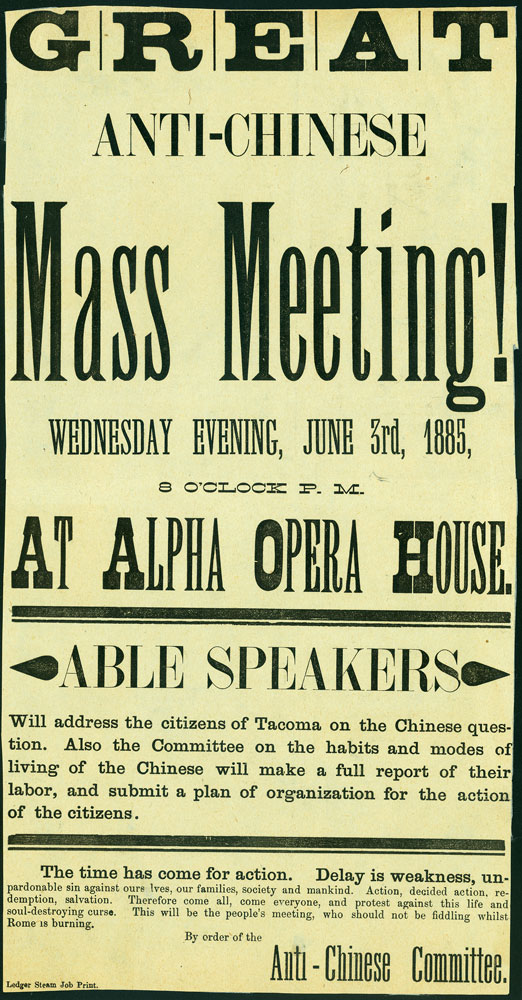
What does this meeting plan to address?
…
1 point
1
Question 20
20.
How does the information on the poster outline the public's view of the Chinese immigrants?
1 point
1
Question 21
21.
What do nativists believe about the Chinese?
3 points
3
Question 22
22.
Unit Question Chapter 5: Why did Washington’s economy and population change in the era following statehood? Provide all applicable reasons with an explanation for each one.
3 points
3
Question 23
23.
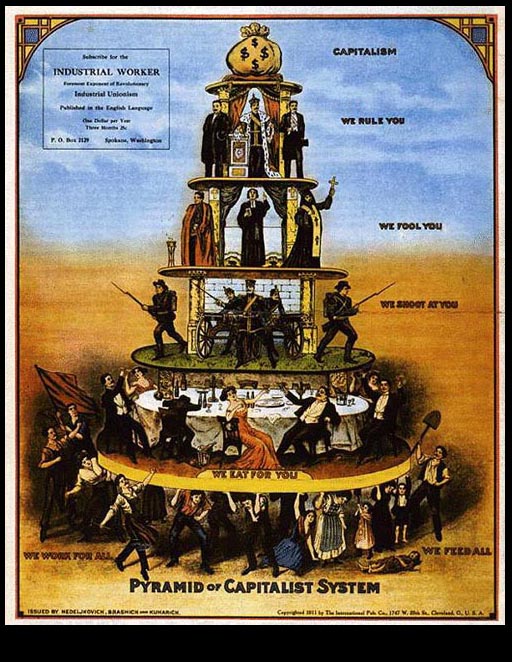
Using the IWW poster, also on page 155 of your textbook, explain how each level of the pyramid differs. How did the IWW demonstrate their perspective of capitalism in society? Provide specific examples to support your answer.
…
2 points
2
Question 24
24.
Explain how WWI affected Washington State economically and socially. Provide two examples to support your explanation.
3 points
3
Question 25
25.
Unit Question Chapter 6: Why did the turn of the century become an era of reform? Provide at least three specific examples of reform and their outcomes. Make sure to explain why they are examples of reform.
Level 4: Connection, Application, Synthesis
3 points
3
Question 26
26.
Evaluate whether prohibition (the 18th Amendment) should be reinstated (re-made into law), drawing from your understanding of its original intent and purposes and whether that is still relevant today. Support your position with facts and details from your learning.
Standards Based Grading Proficiency Cut-Scale: The Proficiency level is from 1-4 (1= basic, 4= above standard). The point values are next to each proficiecy level.
Profiency Level Point Value from Test Skyward Value