4/15 Global Climate Change
star
star
star
star
star
Last updated about 1 year ago
29 Nsɛmmisa
1
1
1
1
2
8.ESS.1
2
2
2
4
1
2
8.ESS.1
6
2
8.ESS.1
2
2
2
1
1
1
1
1
1
1
1
1
1
1
1
1
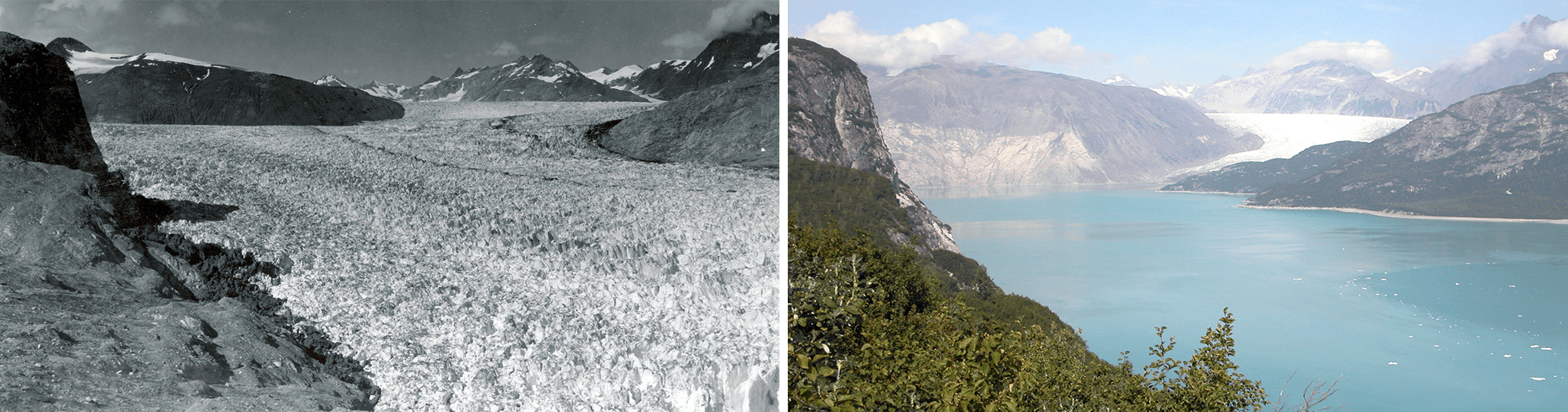
Alaska's Muir Glacier in August 1941 and August 2004. Significant changes occurred in the 63 years between these two photos. Credit: USGS
Earth’s climate has constantly been changing — even long before humans came into the picture. However, scientists have observed unusual changes recently. For example, Earth’s average temperature has been increasing much more quickly than they would expect over the past 150 years. 20,000 years ago, much of the United States was covered in glaciers(ice). In the United States today, we have a warmer climate and fewer glaciers.
Climate Change refers to the average long-term changes over the entire Earth. These include warming temperatures and changes in precipitation, as well as the effects of Earth’s warming, such as:
Rising sea levels
Shrinking mountain glaciers
Ice melting at a faster rate than usual in Greenland, Antarctica, and the Arctic
Changes in flower and plant blooming times.
When we talk about climate change on earth, we are talking about...
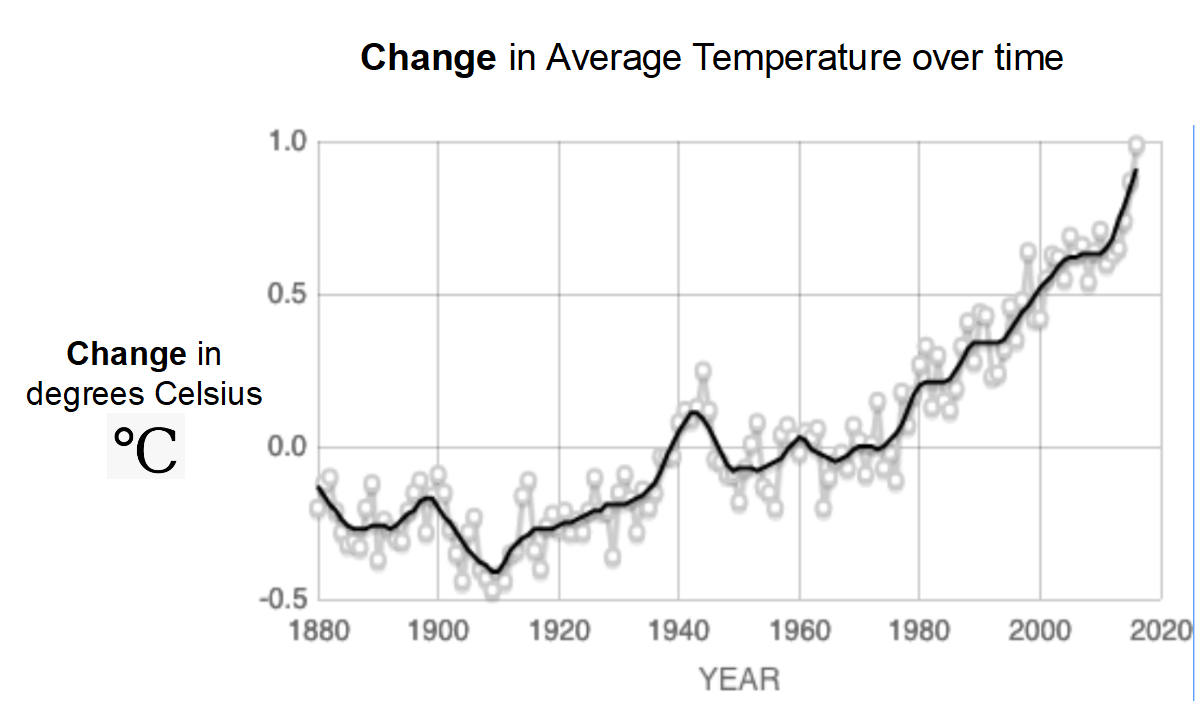
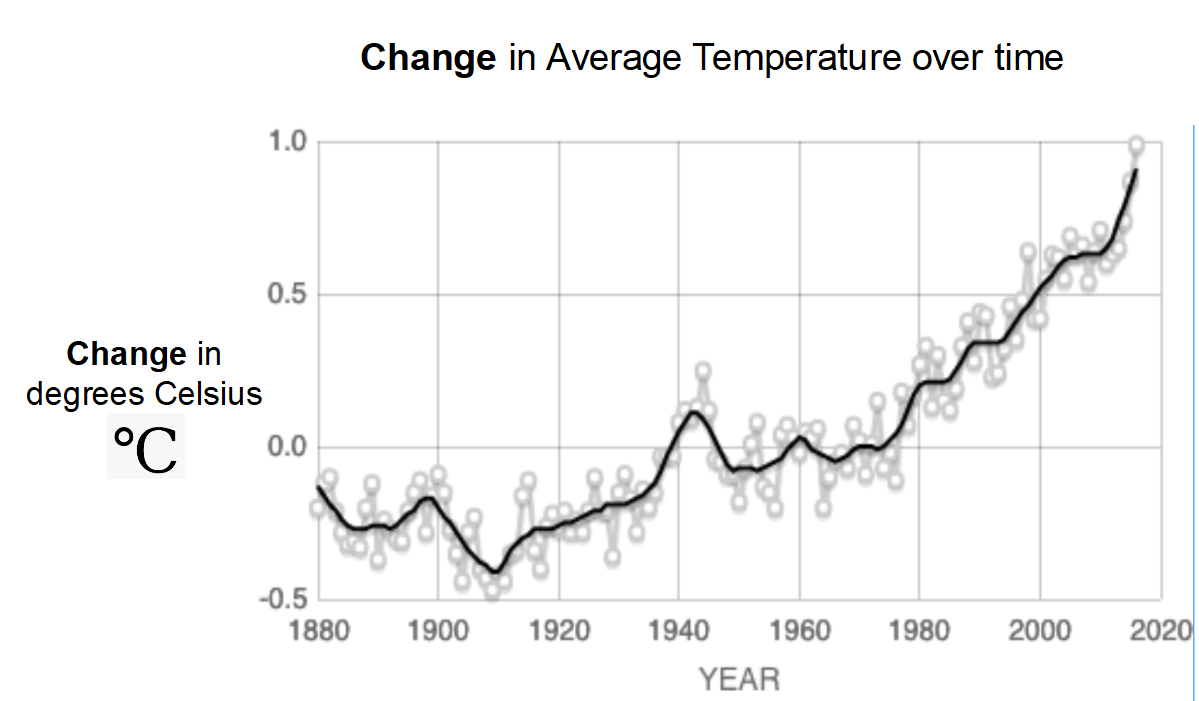
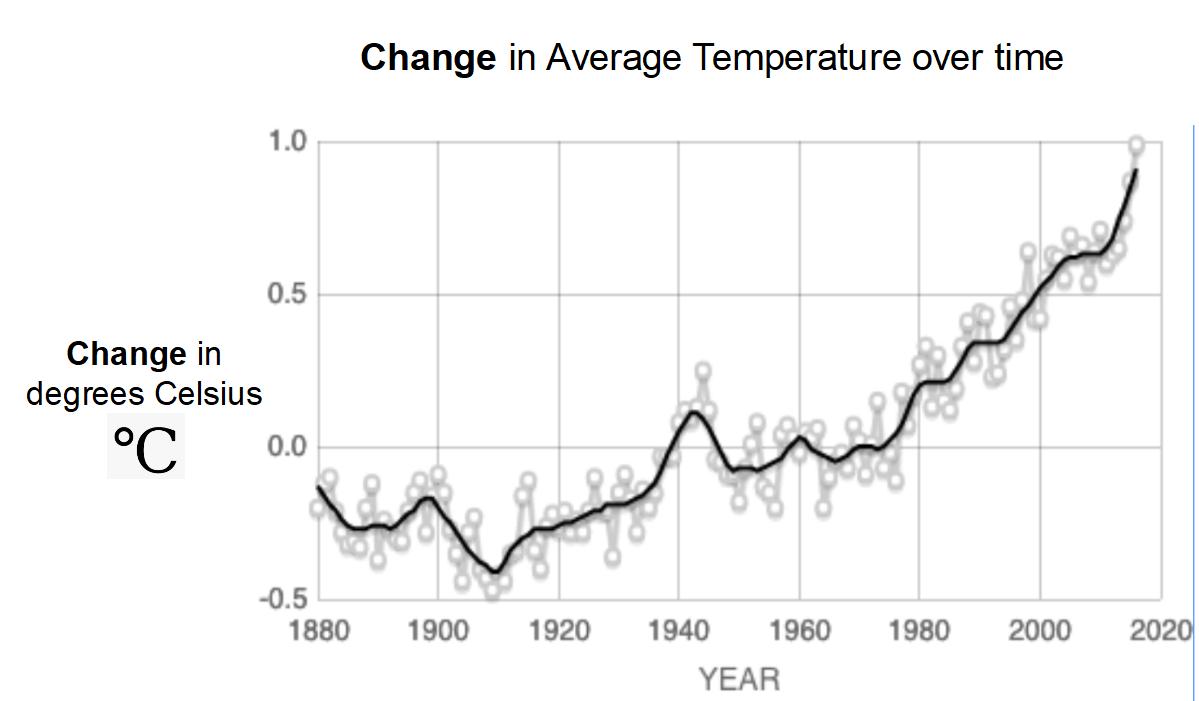
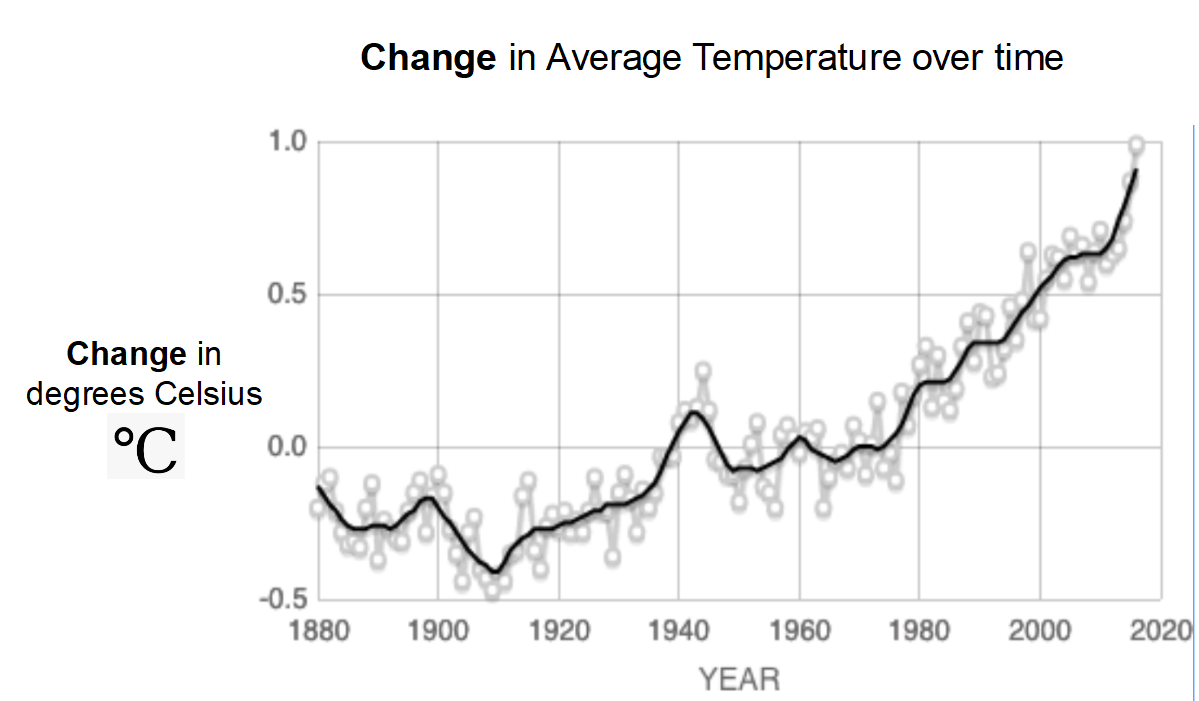
The graph above shows the average temperature change on earth over time since the industrial revolution which ended around 1840-1860.
Scientists refer to the earth's temperature BEFORE the industrial revolution as "the Earth's normal temperature". The reason for this is because the industrial revolution is when we first started releasing large amounts of carbon dioxide and other gases into the air - which leads to climate change.
Which of the following is NOT true?
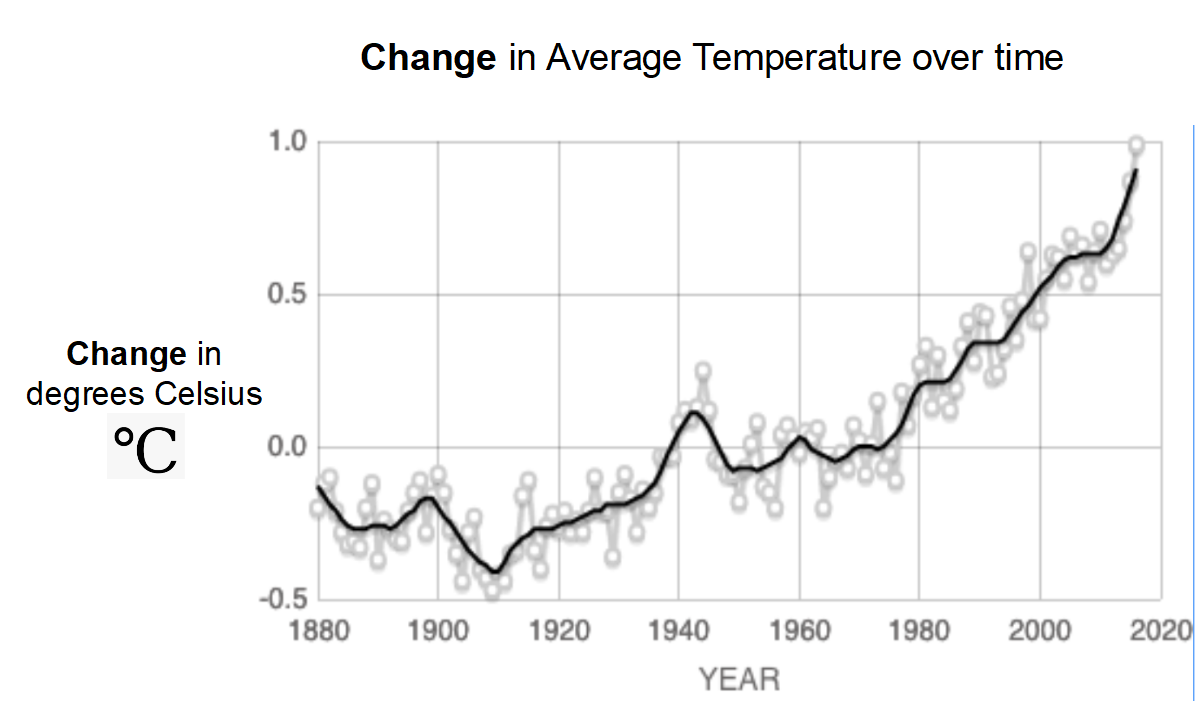
The graph above shows the average temperature change on earth over time since the industrial revolution which ended around 1840-1860.
To determine if the earth is getting hotter or colder, we compare the earth's temperature each year to its "normal temperature" (before the industrial revolution). If the temperature of the earth is higher than the "normal temperature" then scientists say it is getting hotter.
If you look at the graph above you can see that in the year 2000 the earth's temperature is .5°C (about 1°F) higher than its normal temperature. What does this mean?
What is the change in the Earth's temperature (how far away from 0.0) in 2019/2020?
The average global temperature has been on a rising trend (getting hotter) since the 1960s.
In the last 100 years, about how much has the average global temperature changed from 1880 to 2020 (To the nearest tenth)
What do you think might be the cause of this change in the average global temperature?
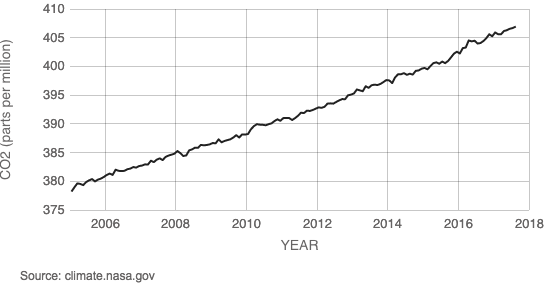
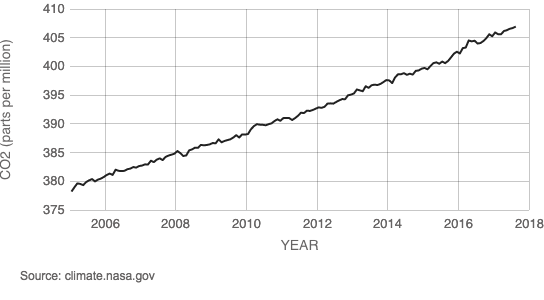
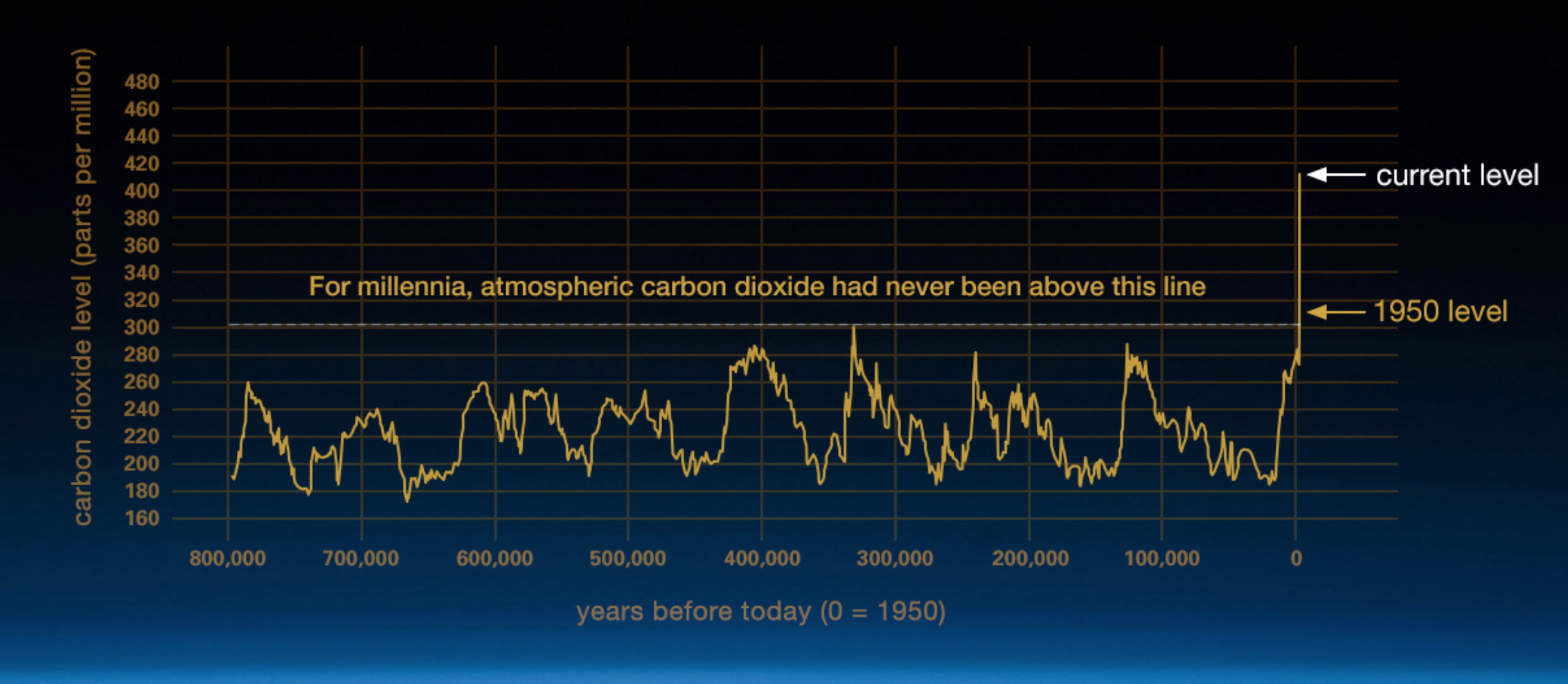
How much more carbon dioxide was in our atmosphere in 2017 than in 2006 (answer in ppm)?
What is our carbon dioxide level now?
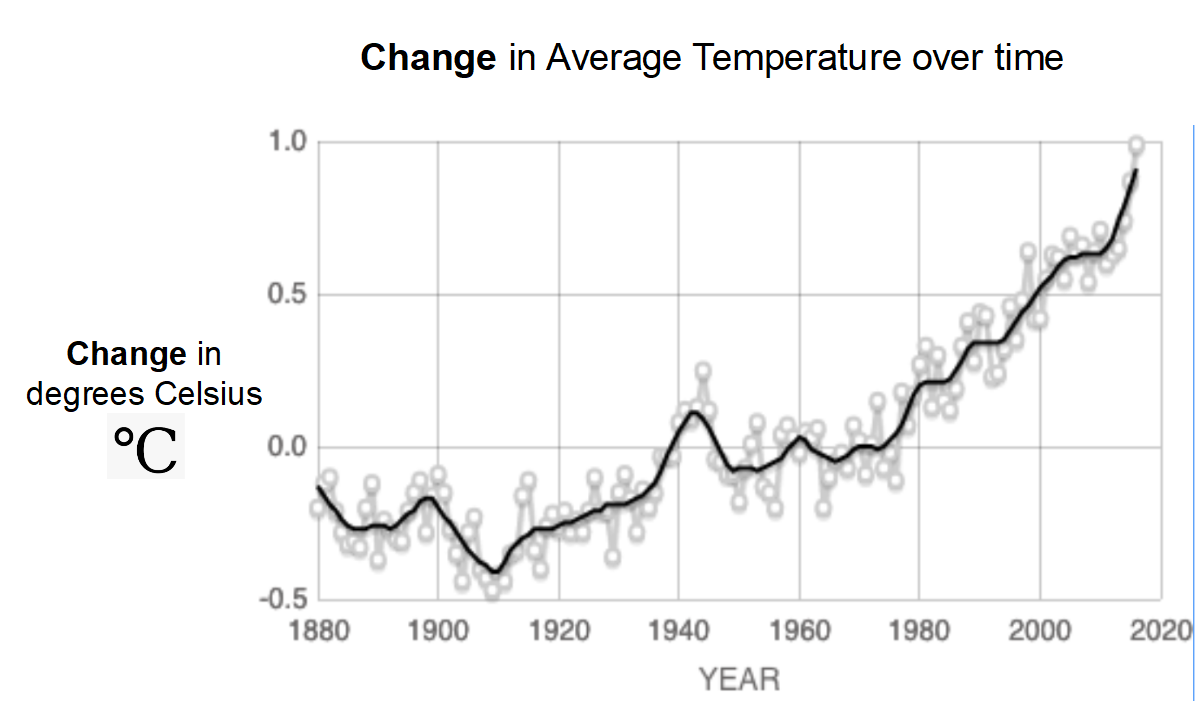
Average change in Earth's Temperature over time
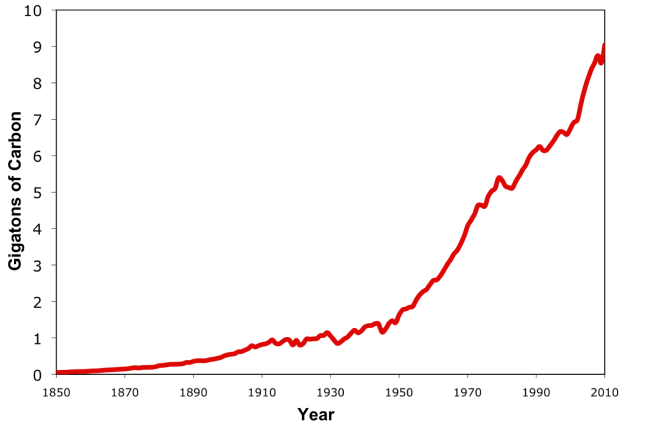
Amount of Carbon in the Atmosphere over time
Compare the two graphs above. Which of the following statements is true?
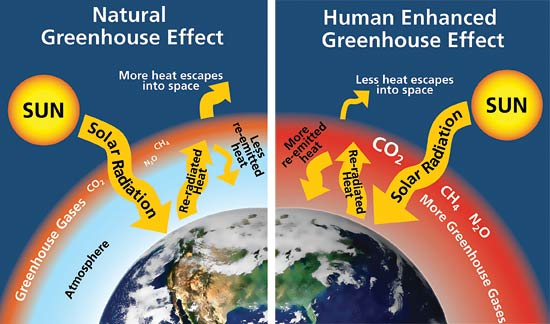
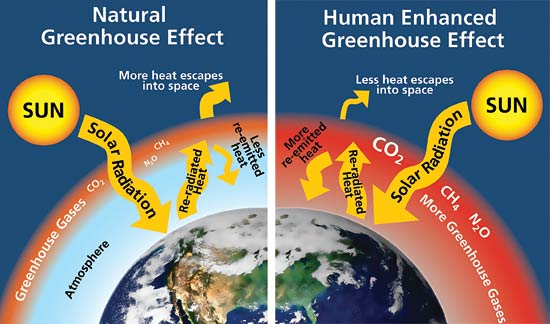
Carbon dioxide is considered a greenhouse gas. Based on the picture above what do you think greenhouse gases do?
Carbon dioxide is considered a greenhouse gas. Based on the picture, what do you think happens when there is a lot of extra greenhouse gases in our atmosphere (look at the picture to the right)?
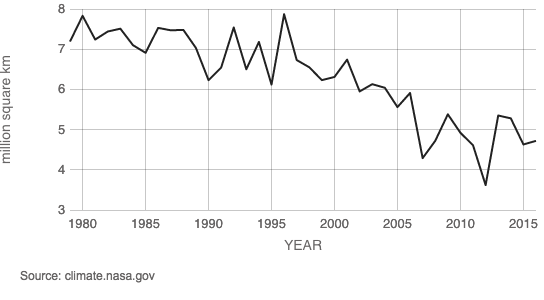
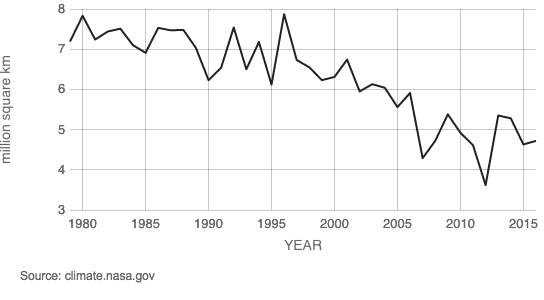
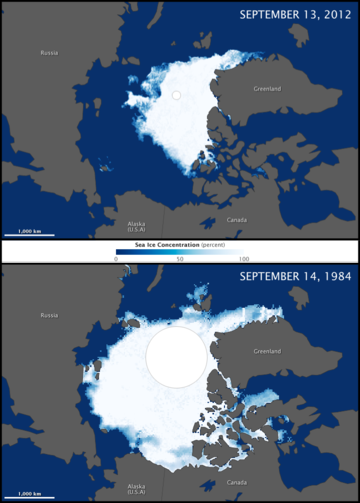
Amount of ice on Earth over time
Which best describes what is happening to the amount of ice on earth ?
Amount of ice On Earth over Time
Compare the amount of ice on earth over time to the change in temperature over time. What do you suppose is causing this general trend in the amount of ice on Earth?
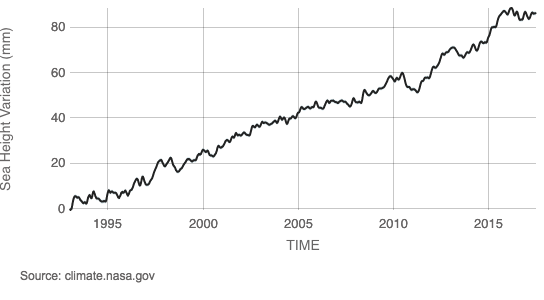
The graph above shows the height of the Earth's seas/oceans over time.
About how much of the Earth's average sea level changed since 1993 (in mm)?
What do you suppose is causing this change in the Earth's average sea level?
What trend does the NASA graph above show?
What is the cause of the trend found in the NASA graph above show?
“Global warming” refers to the long-term warming of the planet. Global temperature shows a well-documented rise since the early 20th century and most notably since the late 1970s. Worldwide, since 1880 the average surface temperature has risen about 1 °C (about 2 °F).
“Climate change” includes global warming, but refers to all of the changes that are happening to our planet due to changes in conditions like temperature, precipitation, etc. These include: rising sea levels; shrinking mountain glaciers; accelerating ice melt in Greenland, Antarctica and the Arctic; and shifts in flower/plant blooming times. These are all consequences of the warming.
What is the difference between global warming and climate change?
What is the main cause behind global warming and our changing climate?
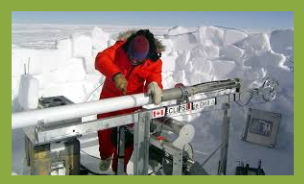
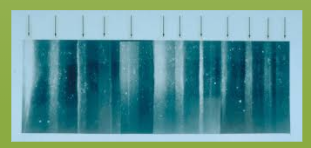
Ice cores contain an abundance of climate information — more so than any other natural recorder of climate, such as tree rings or sediment layers. Although their record is short (in geologic terms), it can be highly detailed. An ice core from the right site can contain an uninterrupted, detailed climate record extending back hundreds to almost a million years. This record can include temperature, precipitation, chemistry and gas composition of the lower atmosphere, volcanic eruptions, solar variability, sea-surface productivity, and a variety of other climate indicators. It is the simultaneity of these properties recorded in the ice that makes ice cores such a powerful tool in paleoclimatic research.,
Ice core samples can store information about what from the past?
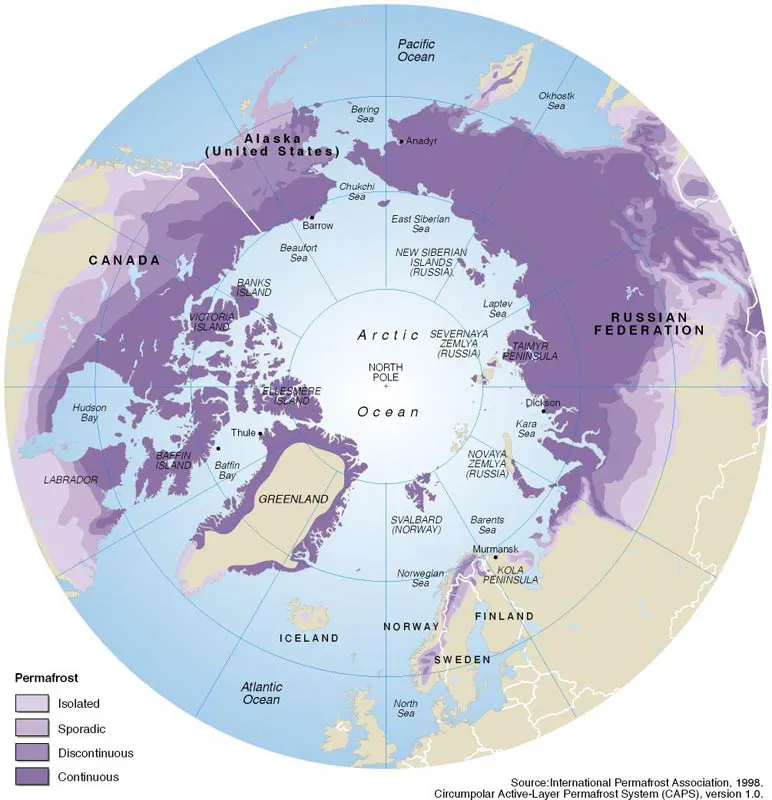
You can think of the Arctic permafrost as a giant kitchen freezer.
If you put the organic (carbon-based) matter in your freezer, the food will stay intact. But if the freezer compressor breaks, it will slowly heat up. As it heats up, bacteria begin to eat your food. The bacteria make the food go rotten. And as the bacteria consume the food, they produce carbon dioxide, methane, and other gases and chemicals that smell terrible.
For tens of thousands of years, permafrost has acted as a freezer, keeping 1,400- to 1,600 gigatons (billion tons) of plant matter carbon trapped in the soil. (That’s more than double the amount of carbon currently in the atmosphere.) Some of the plant matter is more recent, and some is from glacial ice ages that radically transformed a lush landscape into a tundra.
When the permafrost thaws, “it starts to rot, it starts to decompose, and that's what's releasing carbon dioxide and methane."
This is one reason scientists are so worried about the melting Arctic: When the bacteria turn the carbon in the Arctic into CO2 and methane, it accelerates a feedback loop. The more methane and carbon released the more warming. The more warming ... you get it.
What is released when permafrost melts?
You can think of the Arctic permafrost as a giant kitchen freezer.
If you put the organic (carbon-based) matter in your freezer, the food will stay intact. But if the freezer compressor breaks, it will slowly heat up. As it heats up, bacteria begin to eat your food. The bacteria make the food go rotten. And as the bacteria consume the food, they produce carbon dioxide, methane, and other gases and chemicals that smell terrible.
For tens of thousands of years, permafrost has acted as a freezer, keeping 1,400- to 1,600 gigatons (billion tons) of plant matter carbon trapped in the soil. (That’s more than double the amount of carbon currently in the atmosphere.) Some of the plant matter is more recent, and some is from glacial ice ages that radically transformed a lush landscape into a tundra.
When the permafrost thaws, “it starts to rot, it starts to decompose, and that's what's releasing carbon dioxide and methane."
This is one reason scientists are so worried about the melting Arctic: When the bacteria turn the carbon in the Arctic into CO2 and methane, it accelerates a feedback loop. The more methane and carbon released the more warming. The more warming ... you get it.
When the permafrost melts it releases greenhouse gases (GHG) such as CO2 and CH4. More GHGs in the atmosphere leads to a warmer world, and a warmer world melts more permafrost. What type of feedback loop is this?
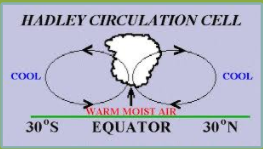
Large-scale atmospheric circulation is driven by dynamic processes including wind and pressure systems that determine where it is dry, where it is wet, where it is hot and so on. In recent decades, global atmospheric circulation structure and associated winds have been displaced toward the poles. Trends associated with these displacements are important signals of climate change. Observed trends include the poleward expansion of the Hadley cell, the poleward shift, and increase in mid-latitude westerly winds, and contraction of the northern polar vortex.
Which of the following would be affected by the changing circulation patterns?
Where would the changing ocean currents have the largest impact on Earth?
With a warming climate, what happens to soil?
With a warming climate, microbes in the soil work harder and faster. What does this cause in the soil?
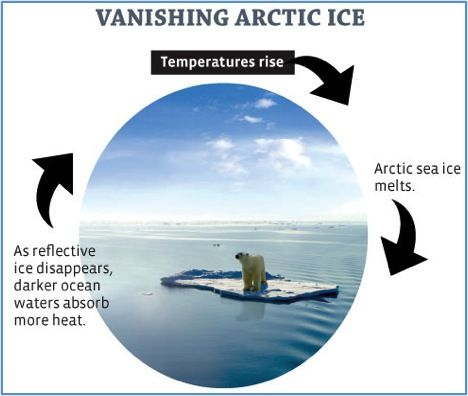
As the climate warms, sea ice melts. As sea ice (white = high albedo) melts, the ocean (dark blue = low albedo) is exposed to sunlight. This is which type of feedback loop?
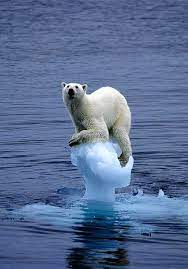
Some species depend on the surface ice for food and living conditions. As the climate warms, there is less and less sea ice every year. How does this impact these species?