NS: EOU Assessment
star
star
star
star
star
Last updated about 3 years ago
6 Nsɛmmisa
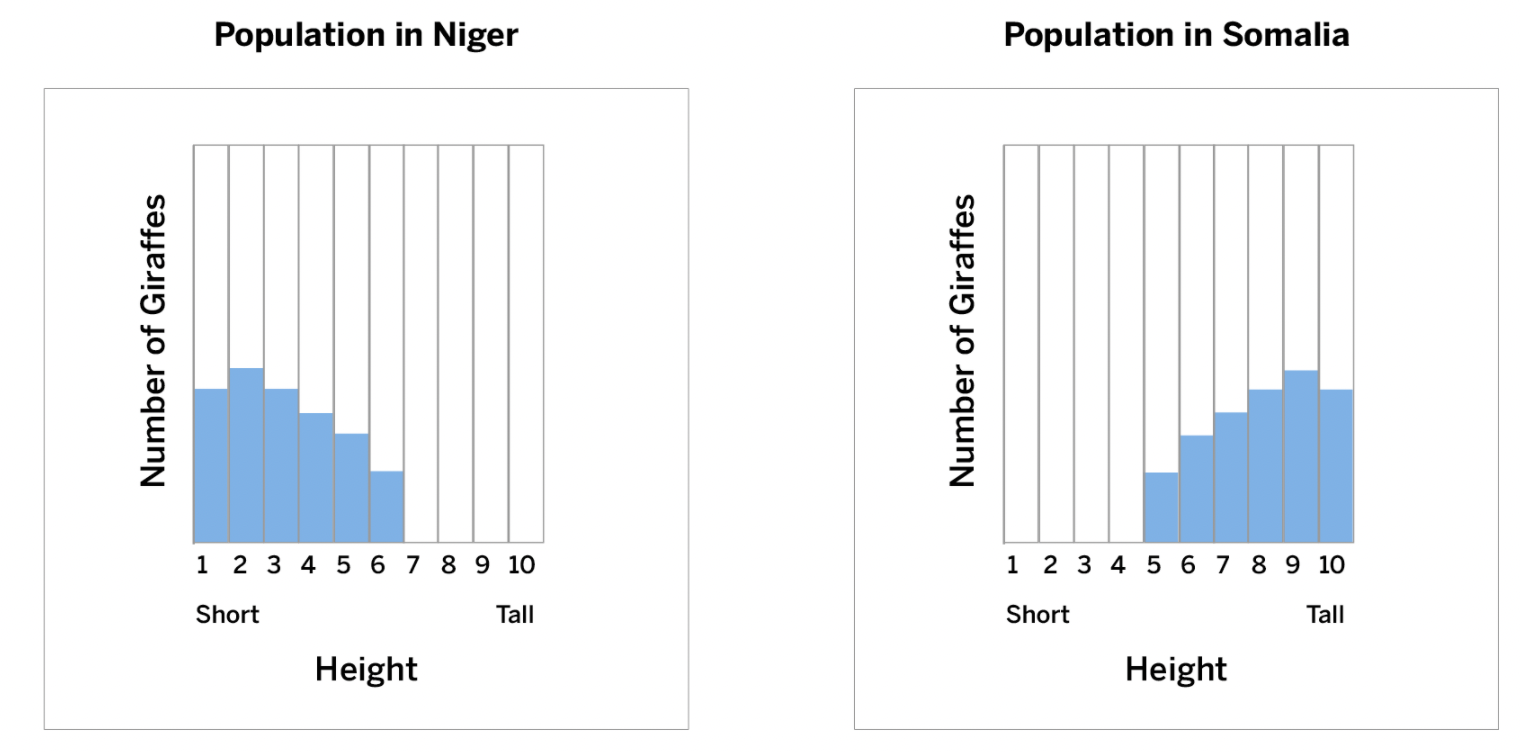
Scientists measured the height of the giraffes in two different populations. Which population has the largest number of tall giraffes?
1
1
Scientists measured the height of the giraffes in two different populations. Which population has the largest number of tall giraffes?
Which population has the largest number of tall giraffes?
Harbor seals live in northern oceans and have a layer of blubber (fat) that keeps them warm. Seals can have blubber of different thicknesses.
Seals with thicker blubber are more likely to stay warm and survive in cold ocean waters. But, in warm ocean waters, thicker blubber can make the seals overheat and die.
The diagrams below show three possible seal populations.
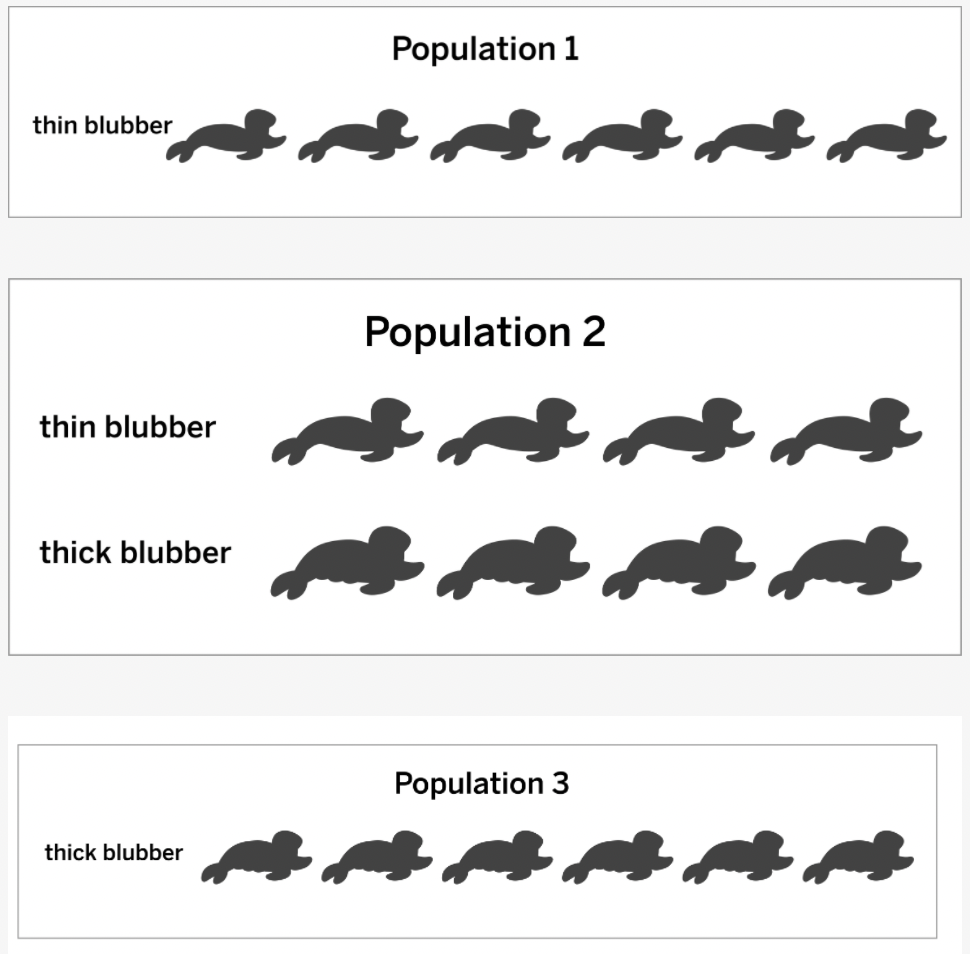
If their environment changes to have warm water, which of the following seal populations will most likely survive?
Guppies are small fish that live in South American rivers. They can have different-sized spots on their bodies.
The river bottoms are covered in rocks. Guppies with spots that are the same size as the rocks on the bottom are harder for bigger fish to see and catch.
The diagram below shows a population of guppies that live in a river. At time 1, the population had the same number of guppies with small and large spots. At time 2, after many generations, there were many more guppies with small spots and fewer guppies with large spots in the population.
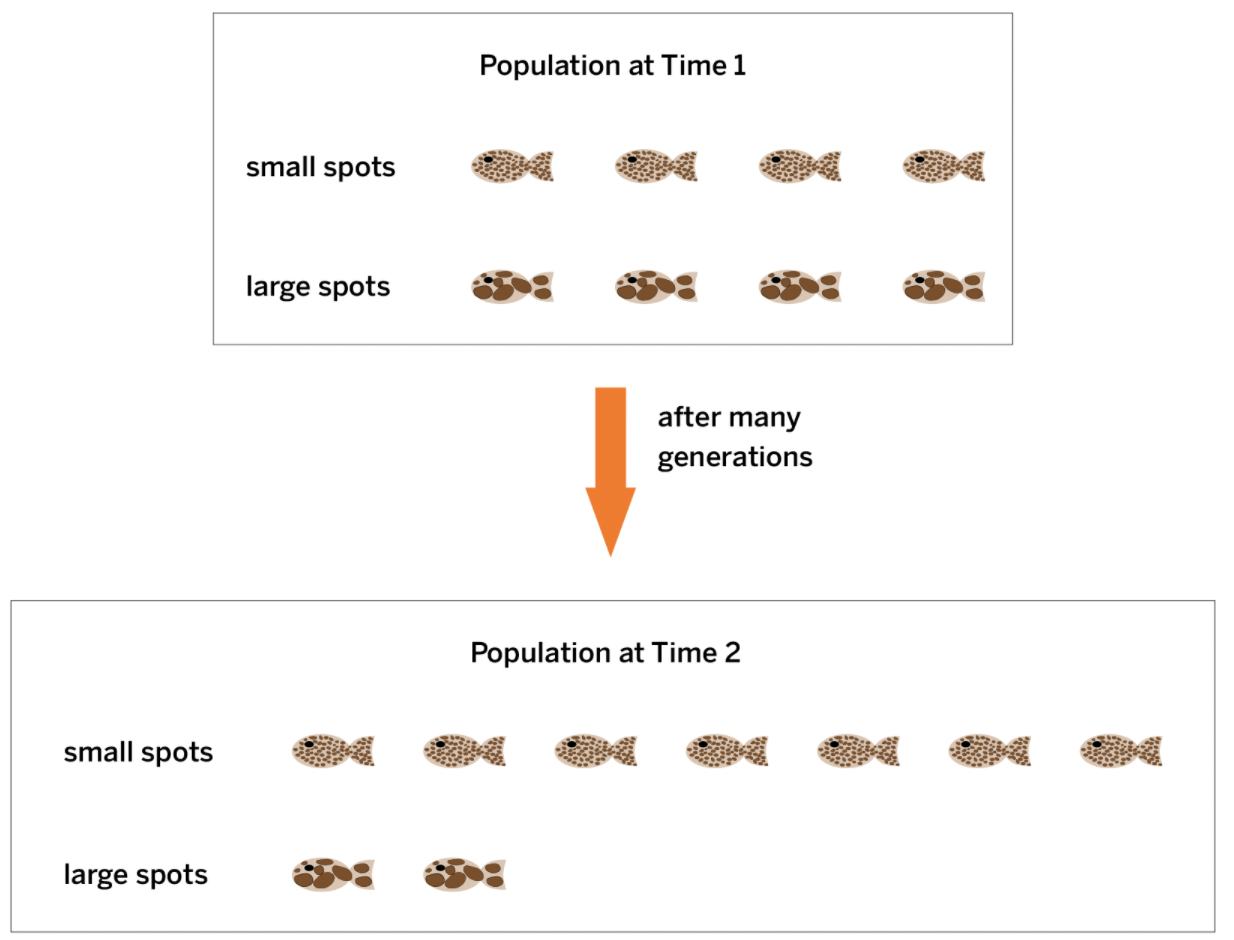
How did the environment change between time 1 and time 2? How did the population change?
Northern foxes can have different fur colors.
The foxes hunt squirrels for food. Foxes that have fur the same color as their environment are better at getting closer to squirrels and catching them.
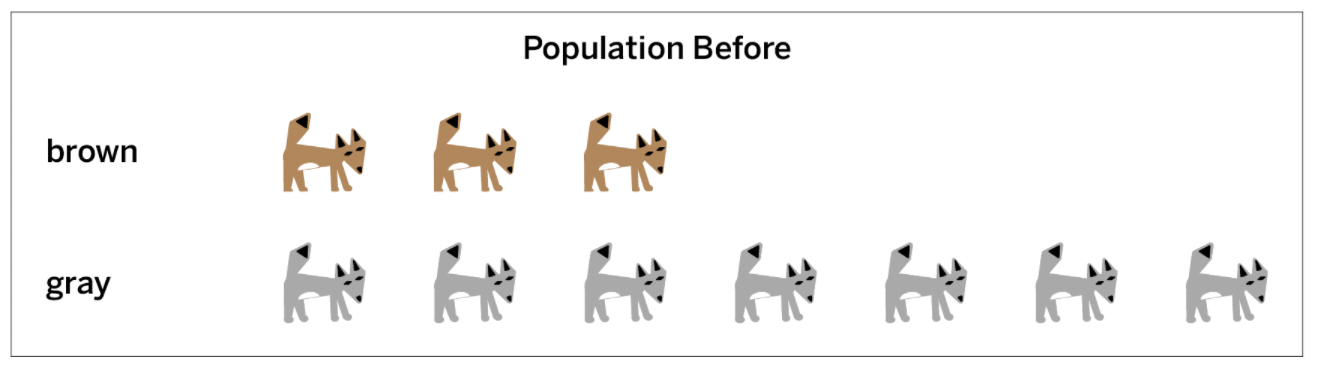
A population of foxes once lived in an environment where there was not very much snow. The image above shows what the population looked like then. The environment changed so it is now very snowy.
The diagrams below show two predictions for what the population could be like after many generations.
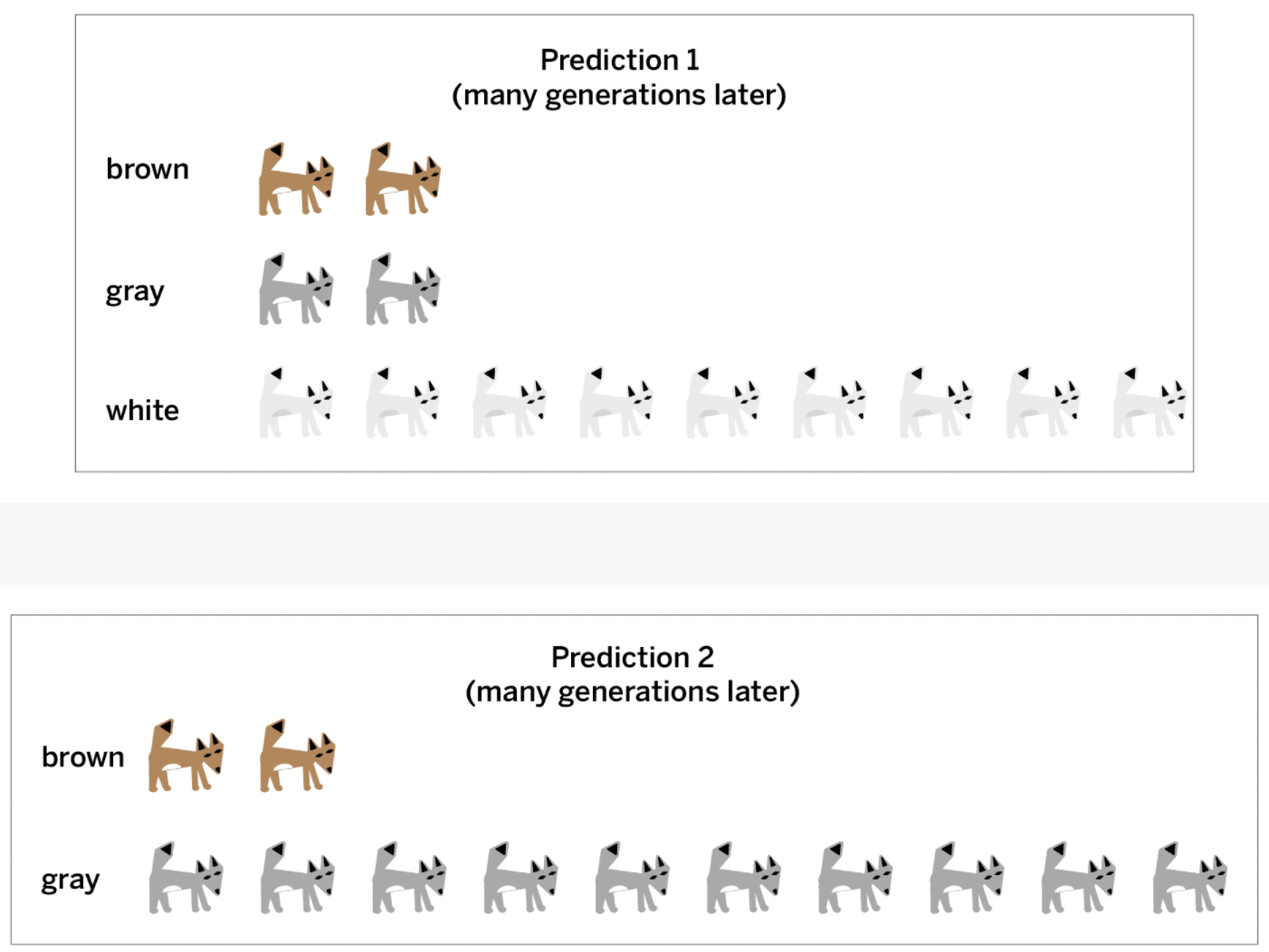
Which prediction best shows what the population could look like after many generations? What caused it to change?
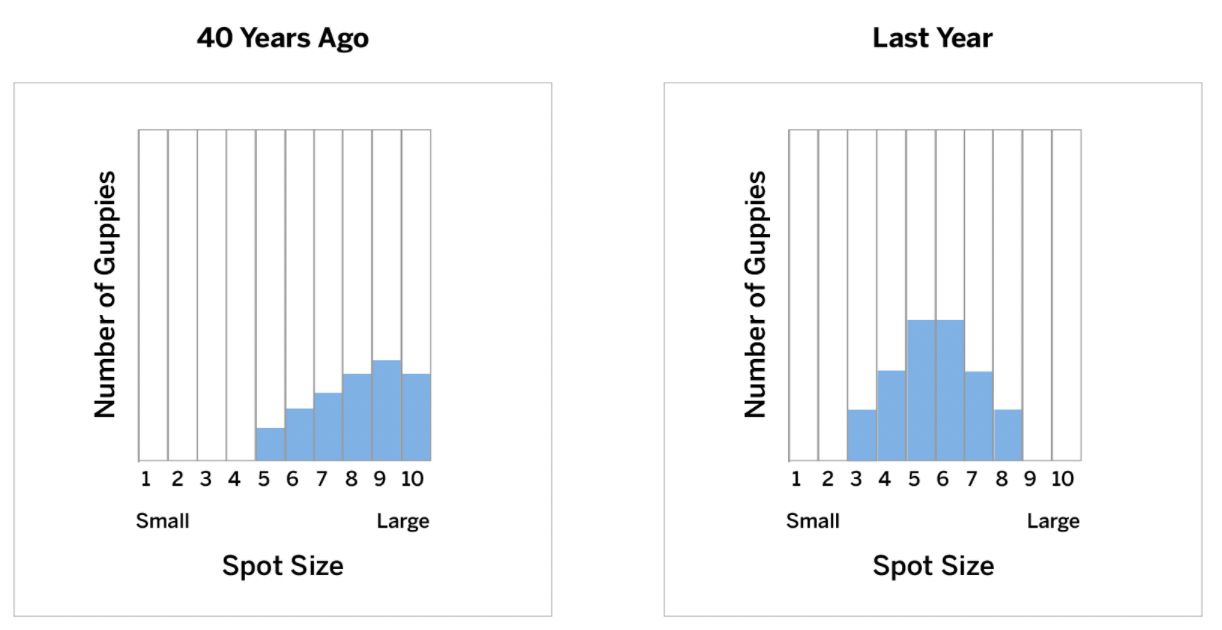
Scientists measured the spot size of all the guppies (small fish) that lived in a river 40 years ago. They measured the spot size of the guppy population again last year.
When was there more variation (number of traits) in the spot size of guppies in the river?
Tree squirrels can have different fur colors.
Squirrels live in forests where foxes also live. Foxes hunt squirrels for food. Squirrels that have fur the same color as the trees are harder for the foxes to see and catch.

The diagram above shows a population of squirrels that lived in a forest. Scientists had previously only seen brown and gray squirrels in this forest; they had never seen squirrels of any other color.
The diagram below shows how the population changed after many generations.
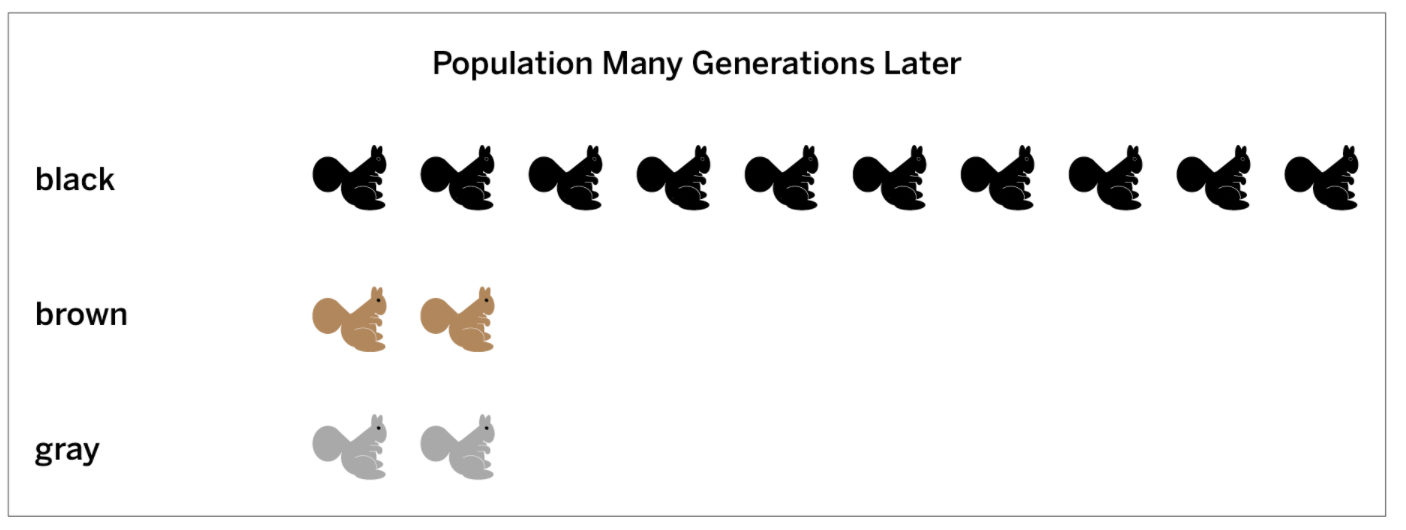
How did the color of the trees in the squirrels’ environment change? Explain what happened to the squirrels over many generations.
CFS:
accurately identifies the adaptive trait in the environment
accurately identifies traits based mutations or natural selection
accurately describes the environment in which a trait is adaptive
accurately describes how adaptive traits become more common in an environment