Log in
Sign up for FREE
arrow_back
Library

Sound Waves

star
star
star
star
star
Last updated about 4 years ago
31 questions
Vocabulary
1
1
1
1
1
1
1
1
1
1
1
1
1
2
4
3
Parts of Waves
4
8
8
Comparing Waves
1
2
1
3
3
Questions
1
1
1
1
1
Video
Question 1
1.
__________ The part of a longitudinal wave where the particles are pushed together.
Question 2
2.
__________ When sound appears to change frequency as it moves past a listener.
Question 3
3.
__________ Something that a wave travels through.
Question 4
4.
__________ The rate at which work is done. This is equal to the amount of energy being produced.
Question 5
5.
__________ A part of a longitudinal wave where the particles are spread apart
Question 6
6.
__________ The increase in the amplitude of a wave when it comes into contact with external vibrations that match the object's natural frequency.
Question 7
7.
__________ The lowest part of a wave
Question 8
8.
__________ The maximum distance a point is moved from the rest position
Question 9
9.
__________ The highest part of a wave
Question 10
10.
__________ The number of waves that pass a point each second.
Question 11
11.
__________ Repeated back-and-forth or up-and-down motion
Question 12
12.
__________ Distance between two neighboring corresponding points on a wave (two crests, two troughs, etc)
Question 13
13.
__________ The distance a wave travels in a given amount of time.
Question 14
14.
__________ The distance moved up or down as the wave passes through

__________ The distance moved left or right as the wave passes through
Question 15
15.
Match the definition to the vocabulary word.

__________ A disturbance that transfers sound energy from place to place.

__________ A wave that moves through a medium in the same direction (parallel) to the wave (appears to move from left to right)

__________ A wave in which the motion of the medium is perpendicular to the direction of the wave (Usually shown on graphs in an up/down movement)

__________ A wave that requires a medium to move through
Question 16
16.

Draggable itemarrow_right_altCorresponding Item
arrow_right_alt
arrow_right_alt
arrow_right_alt
Question 17
17.

Draggable itemarrow_right_altCorresponding Item
arrow_right_alt
arrow_right_alt
arrow_right_alt
arrow_right_alt
Question 18
18.

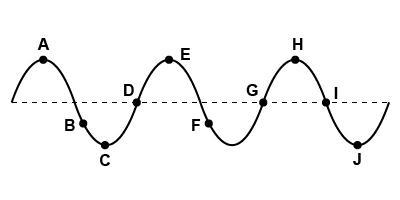
Check ALL answers that show one wavelength.

A and C B and F D and E G and I D and G A and H E and H C and J
Question 19
19.
Type in a point that will make a wavelength with the given wavelength

H and _______
F and _______
Question 20
20.

Question 21
21.
High-Frequency __________

Low-Frequency __________
Question 22
22.
High Pitch: __________
Low Pitch: __________

High Volume: __________
Low Volume: __________
Question 23
23.

Draggable itemarrow_right_altCorresponding Item
arrow_right_alt
arrow_right_alt
arrow_right_alt
Question 24
24.

Draggable itemarrow_right_altCorresponding Item
arrow_right_alt
arrow_right_alt
arrow_right_alt
Question 25
25.

Question 26
26.

Question 27
27.

Question 28
28.

Question 29
29.

Video

3
Question 30
30.
2
Match the definition to the vocabulary word.
*You will have to click and drag the definition to it's matching vocabulary word.
The unit used to measure power.
Decibel (dB)
The unit of measurement used for loudness
Hertz (Hz)
The unit of measurement used for frequency
Watt (W)
Match the part of the wave to its name using below
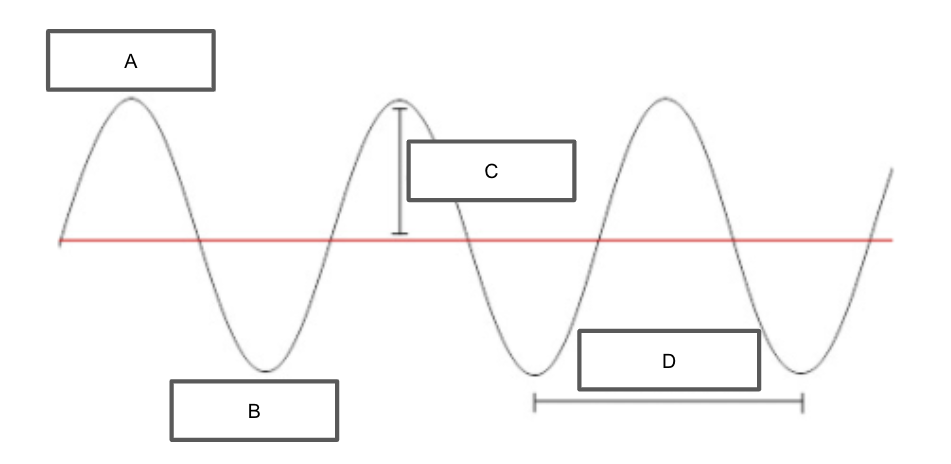
Amplitude
A
Crest
B
Wavelength
C
Trough
D
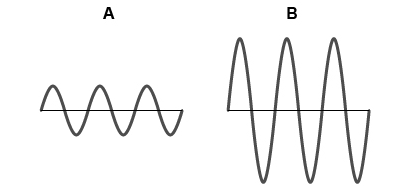
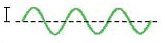
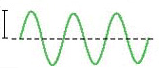
Which wave has a larger amplitude?
A
B
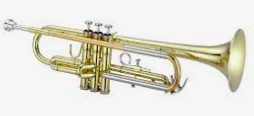
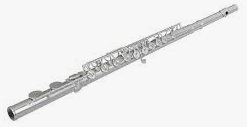
Match the graph to the instrument that most likely made it.
Measuring Loudness
Match the graph to the item that most likely made it.
Measuring Pitch
Dog Whistle
Fog Horn
Person Talking
When the frequency of a wave decreases (gets smaller), then the...
amplitude decreases
speed increases
wavelength increases
What do all waves transmit?
mass
matter
radiation
energy
Sound is caused by
Instruments
Vibrations
Force
When comparing amplitude...
The larger the amplitude the higher the pitch
The larger the amplitude the louder the sound
The larger the amplitude the lower the pitch
The larger the amplitude the quiter the sound
The higher the pitch the.....
Larger the amplitude
Higher the wavelength (high/short frequency)
Smaller the amplitude
Lower the wavelength (low/long frequency)
What do you see happening in this video?
- Write down at least 3 things
_______
_______
_______
Question 31
31.
Why do you think this is happening.
*If you don't know then ask some questions that you would need to be answered first.
- Write down at least 2 ideas or questions
_______
_______